Bristol has one of England’s most distinctive waterfront drinking scenes. Its bars occupy historic harbour buildings, converted boats, quayside terraces and riverside sites around the Floating Harbour. The setting combines Bristol’s maritime history with modern food, drink, culture and evening entertainment.
- What makes Bristol’s waterfront bars distinctive?
- Where are the main waterfront bars in Bristol?
- Which Bristol waterfront bars are best for harbour views?
- Which waterfront bars are located on boats?
- Which Bristol waterfront bars are best for cider?
- Which waterfront bars are best for craft beer?
- Which waterfront bars are suitable for cocktails?
- Which waterfront bars have outdoor terraces?
- Which waterfront bars are good for food as well as drinks?
- How does Bristol’s waterfront history shape its bars?
- What can visitors see near Bristol’s waterfront bars?
- How can visitors plan a Bristol waterfront bar walk?
- What is the best time to visit Bristol’s waterfront bars?
- How does Bristol’s waterfront drinking scene fit into the wider city?
- Why are Bristol waterfront bars important for the city’s future?
The main waterfront drinking areas include Bristol Harbourside, Wapping Wharf, Welsh Back, Redcliffe, Hotwell Road and sections of the River Avon. Each area provides a different type of waterside experience, from specialist cider boats and craft-beer barges to contemporary cocktail venues and cultural café bars.
Bristol Harbour is commonly called the Floating Harbour because its water level remains relatively constant instead of following the River Avon’s tidal changes. Bristol City Council describes the harbour as a modern waterfront area containing cafés, restaurants, shops, bars, museums and cultural attractions.
What makes Bristol’s waterfront bars distinctive?
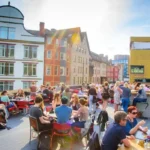
Bristol’s waterfront bars combine historic harbour infrastructure, floating venues, outdoor terraces, local drinks and views across the Floating Harbour. Their locations connect drinking spaces with museums, ships, restaurants, walking routes and Bristol’s maritime heritage.
The waterfront is not a single entertainment district. It is a connected collection of areas surrounding the Floating Harbour and River Avon.
Harbourside forms the main visitor-facing section. Millennium Square provides a central reference point, with attractions including M Shed, Bristol Aquarium, Arnolfini, Watershed and Brunel’s SS Great Britain nearby.
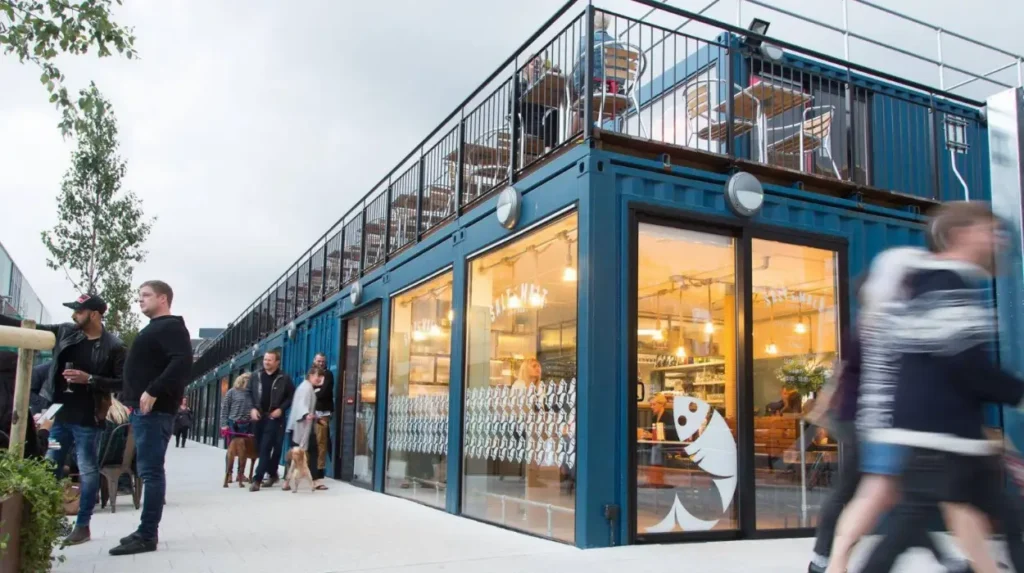
Wapping Wharf sits on the western side of the central harbour and combines independent food businesses, cafés, shops and bars. Its converted shipping-container development places several drinking and dining venues close to the water.
The waterfront also contains bars on boats. The Grain Barge occupies a converted 1930s barge, while The Apple operates from a specialist cider boat. Under the Stars provides another boat-based venue close to the harbour.
This mixture gives Bristol’s waterfront its defining structure: historic waterside buildings, working harbour infrastructure, cultural attractions and modern hospitality venues operate within the same area.
Where are the main waterfront bars in Bristol?
The main waterfront drinking areas are Harbourside, Wapping Wharf, Welsh Back, Redcliffe and Hotwell Road. Each provides different views, venue types and access to attractions around Bristol’s Floating Harbour and River Avon.
Harbourside is the easiest starting point for visitors because several bars sit directly beside the water. No.1 Harbourside, Harbour House, Riverstation, Mud Dock and Arnolfini Café Bar are among the established waterfront venues identified by Visit Bristol.
Wapping Wharf is particularly useful for visitors who want independent food and drink businesses within a compact area. Junction is a craft-beer venue located close to the Floating Harbour, with outdoor seating overlooking the waterfront.
Welsh Back provides another waterside setting near Bristol city centre. Boat-based businesses and quayside seating create direct views of the harbour.
Hotwell Road is associated with The Grain Barge and views towards Brunel’s SS Great Britain and the harbour. The converted barge provides both indoor and outdoor drinking areas.
Redcliffe provides riverside venues close to the southern side of the central waterfront. Riverstation is located in a former police station and has a riverside terrace and upper-level balcony.
Which Bristol waterfront bars are best for harbour views?
Harbour House, Riverstation, No.1 Harbourside, Mud Dock, The Grain Barge, Arnolfini Café Bar and The Apple provide direct waterside settings. Their terraces, quayside positions or boat locations give visitors clear views across Bristol Harbour.
Harbour House has a rear terrace facing the colourful houses of Redcliffe and the water. Its position makes the waterfront part of the venue rather than simply a nearby attraction.
Riverstation provides another elevated viewpoint. The restaurant and bar occupy a former police station and include a riverside terrace and balcony. A pontoon also allows boat arrivals.
Mud Dock occupies a prominent harbour position and has a balcony overlooking the water. The venue has operated in Bristol since 1994 and combines food, drinks and waterfront seating.
The Grain Barge offers one of the clearest boat-based viewpoints. Its upper deck overlooks the harbour towards the SS Great Britain and Bristol Marina.
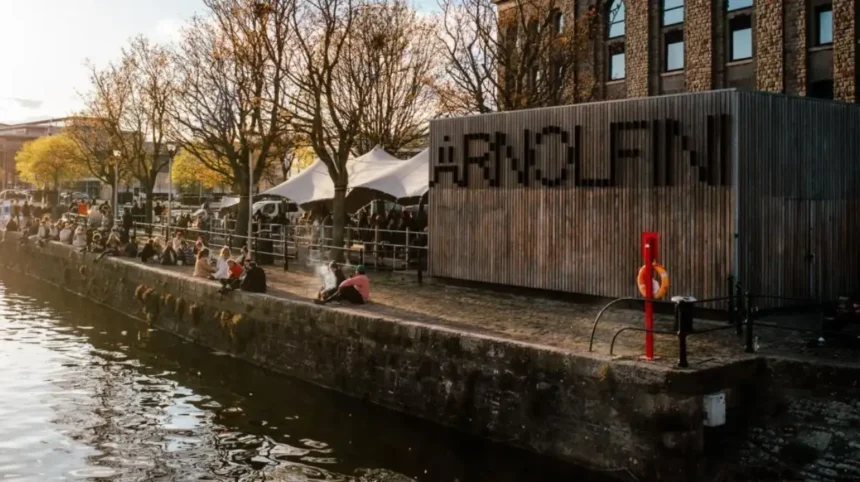
Arnolfini Café Bar occupies the waterfront at 16 Narrow Quay. Its outdoor bar and beer garden provide another direct connection with the harbour. The venue currently operates in partnership with Wiper and True and includes beers, cocktails, wines and non-alcoholic options.
Which waterfront bars are located on boats?
The Apple, The Grain Barge and Under the Stars are prominent boat-based drinking venues around Bristol Harbour. They use converted or purpose-adapted vessels to provide distinctive settings for cider, craft beer, cocktails, food and outdoor waterfront drinking.
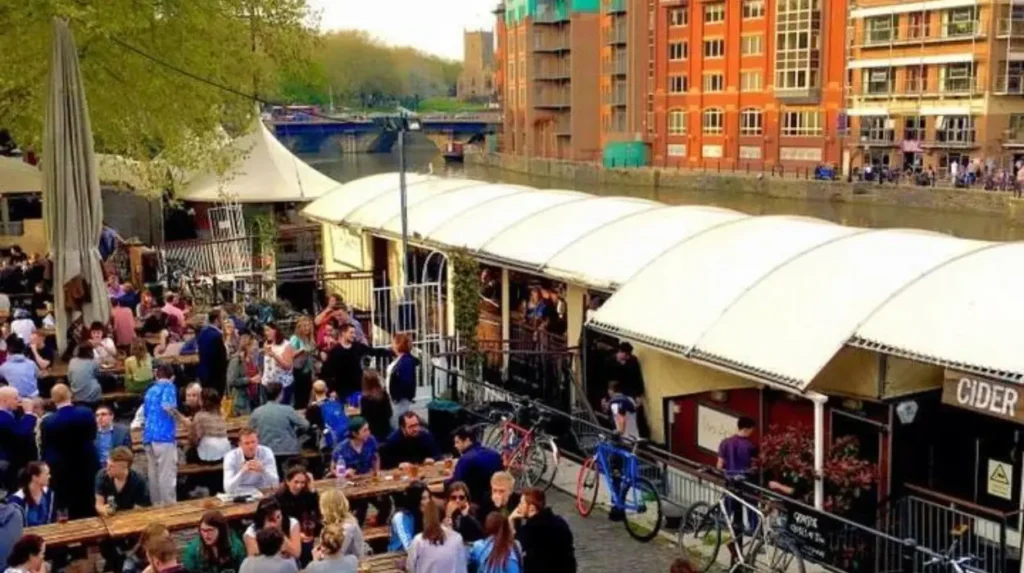
The Apple is one of Bristol’s best-known cider boats. It offers local and international ciders and perries, alongside cider-based cocktails. Seating is available on the boat and on the quayside terrace.
The Grain Barge is a converted 1930s engineless barge operated by Bristol Beer Factory. It serves craft beers, local ciders, wines and seasonal food. The venue is also dog friendly.
Under the Stars combines a boat setting with a tapas restaurant. Its upper terrace provides views across the waterfront and is positioned close to Cascade Steps. Visit Bristol identifies it as one of Bristol’s boat-based bars and restaurants.
These venues demonstrate the practical relationship between Bristol’s maritime infrastructure and its modern hospitality economy. Historic vessels and harbour locations have become active parts of the city’s leisure landscape.
Which Bristol waterfront bars are best for cider?
The Apple is the most directly cider-focused waterfront venue, while The Grain Barge and other Harbourside bars provide local cider alongside beer, wine and spirits. Bristol’s wider drinking culture also gives cider an important role across its waterfront hospitality scene.
The Apple specialises in cider and perry, with a selection covering local and international producers. Perry is a fermented alcoholic drink made primarily from pears and forms part of the West Country’s traditional drinks culture.
The venue’s quayside terrace creates a direct connection between Bristol’s cider culture and the harbour. Its location also places it within walking distance of other central waterfront attractions.
The Grain Barge provides a broader drinks menu. Bristol Beer Factory operates the venue, which serves craft beer, local cider and wine. Its food menu uses seasonal ingredients sourced from local farms and suppliers.
For visitors interested in Bristol’s drinks identity rather than a single beverage, the waterfront provides opportunities to compare cider, beer, cocktails and wine within a relatively compact walking area.
Which waterfront bars are best for craft beer?
The Grain Barge and Junction are prominent choices for craft beer beside Bristol’s waterfront. The Grain Barge is operated by Bristol Beer Factory, while Junction combines Bristol Beer Factory products with an independent Wapping Wharf setting close to the water.
The Grain Barge provides a dedicated harbour setting for craft beer. Its drinks selection includes Bristol Beer Factory beers alongside local cider and wine.
Junction is located at Wapping Wharf and is associated with Bristol Beer Factory. The venue sits close to the water and has outdoor seating where customers can view the boats and harbour activity.
Arnolfini Café Bar also adds locally brewed beer to the waterfront scene. Its current partnership with Wiper and True includes freshly brewed beers, cocktails, wines and non-alcoholic options.
Bristol’s craft-beer scene therefore extends directly into its waterfront. Visitors can experience locally produced beer without leaving the central harbour district.
Which waterfront bars are suitable for cocktails?
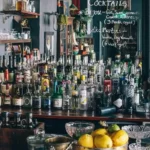
Riverstation, Arnolfini Café Bar, Under the Stars and other Harbourside venues provide cocktail options in waterfront settings. These venues combine mixed drinks with terraces, balconies, boat decks or cultural surroundings overlooking Bristol’s historic harbour.
Riverstation is a notable cocktail-focused waterfront venue because it combines a bar and restaurant with a riverside terrace and upper-level balcony. The setting provides views over the harbour while remaining close to central Bristol.
Arnolfini Café Bar provides cocktails alongside beer, wine and non-alcoholic drinks. Its location inside Arnolfini, a major contemporary arts centre, connects waterfront drinking with exhibitions and cultural programming.
Under the Stars adds a boat-based cocktail option. The venue combines drinks with Mediterranean-style food and a waterfront terrace.
For a broader cocktail-focused evening, visitors can combine a waterfront venue with central Bristol cocktail bars. This approach keeps the waterfront as the starting point while expanding the choice of drinks beyond the harbour.
Which waterfront bars have outdoor terraces?
Harbour House, Riverstation, No.1 Harbourside, Mud Dock, The Grain Barge, Arnolfini Café Bar and other waterfront venues provide outdoor seating. Their terraces and quayside areas create direct views of boats, harbour buildings and waterfront activity.
Outdoor seating is a major feature of Bristol’s waterfront drinking culture. Visit Bristol specifically highlights No.1 Harbourside, The Grain Barge, Harbour House, Mud Dock, Riverstation and Arnolfini Café Bar among venues with waterside outdoor areas.
The Grain Barge provides an elevated deck on a converted vessel. Harbour House uses a terrace facing the water. Mud Dock provides balcony seating. Riverstation has a riverside terrace and balcony.
Arnolfini Café Bar has both an outdoor bar and beer garden. Its published opening information currently lists the café bar and outdoor space from 9am to 10pm, with outdoor operations dependent on weather.
Outdoor seating is particularly relevant during warmer months, but waterfront venues operate throughout the year. Visitors should check individual opening hours before travelling because seasonal schedules and outdoor operations change.
Which waterfront bars are good for food as well as drinks?
Bristol’s waterfront bars commonly combine drinks with food, including seasonal British dishes, tapas, burgers, light meals, Mediterranean food and casual snacks. This makes the Harbourside suitable for visitors planning an entire meal and drinks around the water.
The Grain Barge serves food based around seasonal ingredients from local farms and suppliers. Its menu includes vegetarian and vegan choices alongside its drinks selection.
Under the Stars combines its bar with a tapas restaurant. Its boat setting provides both food and waterfront views.
Wapping Wharf expands the food options further. The area contains independent restaurants, cafés and bars within a short distance of the Floating Harbour. Junction is one of the drinking venues positioned close to these food businesses.
Harbourside also provides larger dining venues and restaurants. Visit Bristol lists Harbour House, No.1 Harbourside, Riverstation, Mud Dock, Za Za Bazaar and other venues as waterside food-and-drink options.
This makes Bristol’s waterfront suitable for a combined itinerary rather than a single bar visit.
How does Bristol’s waterfront history shape its bars?
Bristol’s waterfront bars occupy a former commercial port landscape created around the Floating Harbour. The harbour opened on 1 May 1809 after engineers created a non-tidal waterway to keep ships afloat despite Bristol’s large tidal range.
The River Avon historically experienced a tidal range of about 9 metres, or 30 feet. Ships could navigate during high tide but faced difficult conditions when water levels dropped. Bristol’s growing commercial activity increased pressure to improve harbour operations.
Engineer William Jessop developed the scheme that created the Floating Harbour. Construction began in the early nineteenth century, with the harbour officially opening on 1 May 1809. The scheme included Cumberland Basin, locks and the New Cut, which carried the tidal river around the harbour.
Bristol Museums records that the scheme converted approximately two miles of tidal river into a non-tidal floating harbour. The harbour supported Bristol’s commercial growth for approximately 150 years.
Today’s bars form part of a wider regeneration of this historic dock landscape. Former industrial and maritime spaces now contain hospitality businesses, cultural venues, residential areas and visitor attractions.
What can visitors see near Bristol’s waterfront bars?
Bristol’s waterfront bars sit close to major attractions including Brunel’s SS Great Britain, M Shed, Bristol Aquarium, Arnolfini, Watershed, Spike Island and Underfall Yard. This makes the harbour suitable for combining drinks with museums, historic ships, culture and walking.
Brunel’s SS Great Britain is one of the most important maritime attractions beside the harbour. The ship was designed by Isambard Kingdom Brunel and launched in 1843. Its dockside location gives visitors direct access to Bristol’s industrial and maritime history.
M Shed is Bristol’s city museum on the harbourside. Its collections explore Bristol’s people, places and history.
Arnolfini is a major contemporary arts venue at Narrow Quay. Its Café Bar provides a direct connection between cultural activity and waterfront drinking.
Watershed is a cultural cinema and digital-media venue on the waterfront. Its Café/Bar provides another drinking location directly beside the Floating Harbour. Visit Bristol describes its outdoor terrace as a place to watch boats and waterfront activity.
Underfall Yard provides another important connection with Bristol’s maritime infrastructure. The historic site remains associated with harbour maintenance and engineering.
How can visitors plan a Bristol waterfront bar walk?
A practical waterfront bar walk starts around Millennium Square, continues along the Harbourside towards Wapping Wharf, crosses towards Welsh Back or Redcliffe, and finishes at a selected boat bar or riverside venue according to opening hours and personal interests.
Millennium Square provides a useful starting point because it sits close to several major attractions. From there, visitors can walk along the water towards M Shed, Arnolfini and other Harbourside venues.
Wapping Wharf is a logical continuation. The neighbourhood sits close to the water and contains independent restaurants, bars and cafés.
Visitors interested in boat-based drinking can then continue towards The Apple, Under the Stars or The Grain Barge, depending on the preferred route and opening times.
A waterfront walk also provides an alternative to spending the entire evening inside one venue. Bristol’s harbour is compact enough for several distinct waterfront areas to be explored on foot.
Visitors should check current venue hours before starting a bar walk. Seasonal opening patterns, private events, weather conditions and temporary changes affect some outdoor waterfront spaces.
What is the best time to visit Bristol’s waterfront bars?
The best time depends on the intended experience. Daytime suits harbour walks and food, late afternoon suits outdoor terraces and sunset views, while evening suits cocktails, live entertainment and longer drinks sessions around Bristol’s illuminated waterfront.
Daytime provides the strongest opportunity to combine drinking with Bristol’s attractions. Museums, cultural venues and harbour walks can be incorporated before or after a meal.
Late afternoon works well for outdoor seating. The changing light across the harbour creates different views from terraces, decks and quayside tables.
Evening shifts the focus towards cocktails, beer, cider, food and entertainment. Several venues remain open into the evening, while some boat and outdoor spaces operate according to seasonal conditions.
The waterfront is also useful during colder months because many venues provide indoor seating. The Grain Barge, for example, operates throughout the year with published opening hours extending into the evening.
Visitors should distinguish between a venue’s indoor opening hours and outdoor seating availability. Arnolfini Café Bar specifically notes that outdoor bar operations are weather-dependent.
Explore More Area Guide
Best Rooftop Bars in Bristol: Bambalan & Clifton Views
Best Sunday Roast Pubs in Bristol | Bristol Food Guide
How does Bristol’s waterfront drinking scene fit into the wider city?
Bristol’s waterfront bars form one part of a wider food-and-drink network extending into the city centre, Old City, Clifton, Bedminster and other neighbourhoods. The waterfront stands out through its direct relationship with the harbour, boats, maritime attractions and outdoor spaces.
Bristol has a broad bar scene that includes specialist cocktail venues, traditional pubs, breweries, cider-focused businesses and independent restaurants.
The waterfront adds a specific geographic identity. Drinking takes place beside water that was once central to Bristol’s commercial port economy.
The area also benefits from strong pedestrian connections. Visitors can move between bars, museums, restaurants and cultural venues without relying entirely on private transport.
Wapping Wharf strengthens the independent food-and-drink character of the waterfront. Its businesses occupy a regenerated area near Bristol’s historic harbour and include bars, restaurants, cafés and shops.
The combination of heritage and modern hospitality makes the waterfront an important part of Bristol’s visitor economy and everyday leisure culture.
Why are Bristol waterfront bars important for the city’s future?
Bristol’s waterfront remains important because its historic harbour infrastructure supports tourism, culture, hospitality, recreation and public activity. Bars and restaurants contribute to the continued use of former dock areas while connecting visitors with Bristol’s maritime identity.
Bristol City Council identifies the harbour as an active modern part of the city containing hospitality, cultural attractions and public waterfront spaces.
The Bristol Harbour Place Shaping Strategy records the transformation of the former industrial waterfront and recognises the Floating Harbour as a major component of Bristol’s urban development.
Modern waterfront bars contribute to this continuing transformation by occupying historic buildings, boats and dockside spaces.
The result is a drinking scene that is strongly connected to place. The water itself is central to the experience, while the surrounding architecture, ships, bridges, museums and quays preserve the historical context.
For visitors, the main attraction is therefore not simply the availability of drinks. Bristol’s waterfront provides a concentrated combination of harbour views, independent hospitality, local cider and beer, boat venues, cultural attractions and historic infrastructure.
The most useful way to explore the area is to treat Bristol Harbour as a connected destination. Start with the Harbourside, continue towards Wapping Wharf or the western harbour, and select venues according to interests such as cider, craft beer, cocktails, food, outdoor seating or boat-based drinking.
Bristol’s waterfront bars remain closely tied to the city’s maritime history while serving a modern audience. The Floating Harbour, opened in 1809, continues to provide the physical setting for one of Bristol’s most recognisable leisure districts.
What are the best waterfront bars in Bristol?
The best-known waterfront bars in Bristol include The Grain Barge, The Apple, Harbour House, Riverstation, Mud Dock, Arnolfini Café Bar and Under the Stars. They offer different combinations of harbour views, local drinks, food, terraces and boat-based settings.