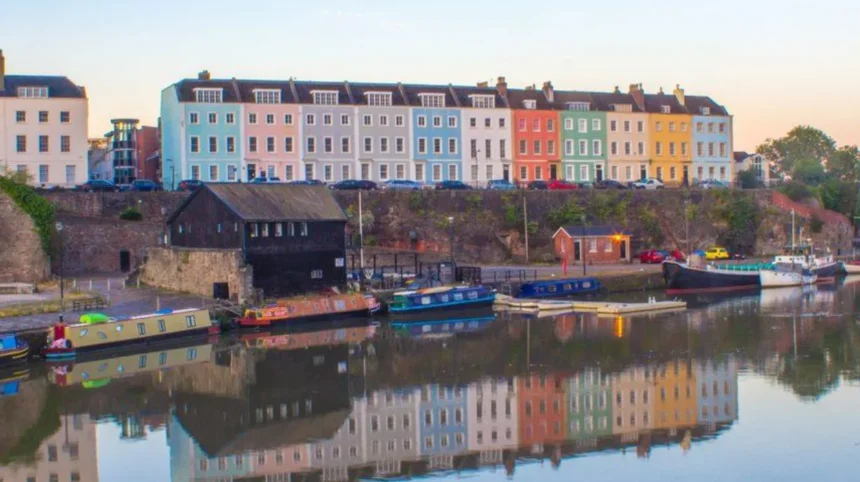
Bristol is one of the largest cities in South West England and an important centre for employment, education, technology, aerospace, creative industries and professional services. The city combines a strong economy with high housing costs, making accommodation the largest expense for many households.
- What is the average cost of living in Bristol?
- Why is housing the biggest part of the cost of living in Bristol?
- How much rent do you need to budget for in Bristol?
- How much is council tax in Bristol?
- How much do food and groceries cost in Bristol?
- How much do utilities cost in Bristol?
- How much does public transport cost in Bristol?
- How much income do you need to live comfortably in Bristol?
- Is Bristol more expensive than other parts of the UK?
- How can you reduce the cost of living in Bristol?
- What should you include in a Bristol cost-of-living budget?
- What does the future of the cost of living in Bristol look like?
- What is the overall cost of living in Bristol?
The cost of living in Bristol depends on household size, location, housing type, transport choices and lifestyle. Rent is the most significant variable. Food, council tax, utilities and transport form the next major spending categories.
Official housing data shows that the average private rent in Bristol reached £1,883 per month in August 2026, up 5.9% from £1,778 in August 2025. The average Bristol house price was £352,000 in July 2026, while the average price paid by first-time buyers was £313,000.
Bristol therefore sits among the more expensive housing markets outside London. However, living costs vary considerably between areas such as Clifton, Redland, Bishopston, Southville, Bedminster, Easton, Fishponds, Horfield, Brislington and areas farther from the city centre.
Understanding each spending category gives residents, students, workers, families and people planning a move to Bristol a clearer picture of the income required.
What is the average cost of living in Bristol?
The average cost of living in Bristol is driven primarily by housing, with rent, council tax, utilities, food and transport forming the main household expenses. A single adult generally needs a substantially larger budget when living alone than when sharing accommodation.
Housing creates the biggest difference between Bristol households. A person renting a room in a shared property has a very different monthly budget from someone renting a one-bedroom flat or a family home.
The Office for National Statistics reported an average Bristol private rent of £1,883 per month in August 2026. The corresponding average was £1,245 across the South West and £1,400 across the UK. Bristol’s average was therefore substantially above the regional and national figures.
Average rents also differ by bedroom count. In the latest ONS figures, one-bedroom properties averaged £1,223 per month, two-bedroom properties averaged £1,541, three-bedroom properties averaged £1,755 and properties with four or more bedrooms averaged £2,542.
These averages describe the whole Bristol local authority. Individual streets and neighbourhoods have different rental markets.
A realistic personal budget therefore needs to separate fixed costs from flexible costs. Rent, council tax and basic utilities are recurring commitments. Food, leisure and discretionary shopping offer more control.
For a single renter, sharing accommodation can reduce the largest monthly expense. For families, the cost of a larger property, childcare, transport and food creates a much higher overall budget.
Why is housing the biggest part of the cost of living in Bristol?
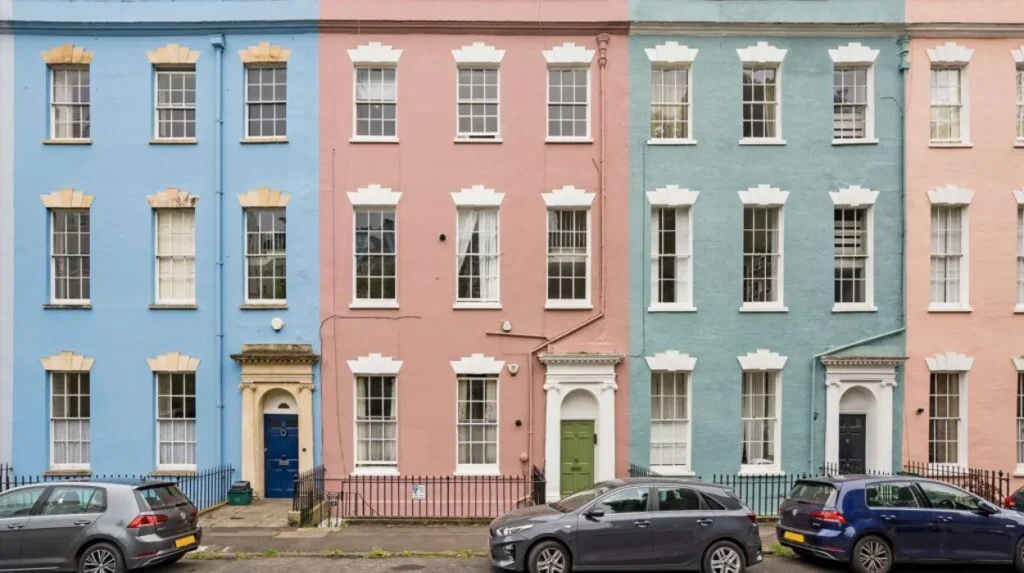
Housing is Bristol’s largest living-cost pressure because rents and property prices exceed South West and UK averages. Average private rent reached £1,883 in August 2026, while the average house price was £352,000 in July 2026.
Bristol’s housing market reflects the city’s employment base, universities, transport connections and demand for homes. The city attracts students, professionals, families and workers commuting within the West of England.
The latest ONS figures show a clear difference between property types. In June 2026, the average Bristol house price was £357,000. Detached homes averaged £696,000, semi-detached properties £452,000, terraced properties £388,000 and flats or maisonettes £246,000.
The latest monthly ONS release subsequently placed the average Bristol house price at £352,000 in July 2026. The average first-time buyer price was £313,000.
Rental costs also vary according to bedroom count. A one-bedroom property averaged £1,223 per month, compared with £1,541 for two bedrooms and £1,755 for three bedrooms in the ONS August 2026 data.
Location has an additional effect. Central and highly sought-after neighbourhoods generally command stronger prices because of proximity to employment, universities, amenities and transport. Outer neighbourhoods provide a wider range of housing and commuting choices.
Buying requires additional costs beyond the property price. Buyers need to account for deposits, mortgage payments, legal costs, surveys, insurance, maintenance and transaction costs.
The affordability question is therefore not simply whether a Bristol property fits a purchase budget. Monthly housing costs must also fit comfortably alongside council tax, utilities, food, transport and other commitments.
How much rent do you need to budget for in Bristol?
Rent in Bristol depends on property size, location and housing type. In August 2026, ONS average rents were £1,223 for one bedroom, £1,541 for two bedrooms, £1,755 for three bedrooms and £2,542 for four or more bedrooms.
A person living alone usually faces the highest housing cost per person because there is no housemate sharing the rent or household bills.
A shared house changes the calculation. Several adults divide rent and common household expenses, reducing the individual housing burden. This model is particularly important for students and younger workers.
The ONS figures provide useful benchmarks, but they are not quotes for a specific property. Advertised rents vary by neighbourhood, condition, furnishing, parking, outdoor space and proximity to transport.
Bristol’s average private rent increased from £1,778 in August 2025 to £1,883 in August 2026, representing a 5.9% annual increase.
That increase has direct implications for people moving into the city. A household entering the rental market needs to assess current advertised rents rather than relying on older budgets.
Rent also interacts with commuting costs. A cheaper home farther from the centre can create additional transport expenditure. A more expensive property closer to employment can reduce daily travel costs.
Students often evaluate accommodation according to distance from university campuses, shared-house arrangements and included bills. Professionals frequently compare rent against salary and commuting time. Families generally place greater emphasis on bedrooms, schools, outdoor space, parking and local services.
The most useful Bristol housing budget is therefore based on the actual neighbourhood and property type rather than the citywide average alone.
How much is council tax in Bristol?
Bristol council tax depends on the property’s valuation band and household circumstances. For 2026–27, the total annual charge ranges from £1,809.12 for Band A to £5,427.36 for Band H.
Council tax is a local charge used to help fund services provided by Bristol City Council and other public authorities. Properties are assigned bands according to their historical valuation.
For 2026–27, Bristol’s total council tax charges are:
- Band A: £1,809.12
- Band B: £2,110.64
- Band C: £2,412.17
- Band D: £2,713.68
- Band E: £3,316.72
- Band F: £3,919.76
- Band G: £4,522.80
- Band H: £5,427.36
These figures include the relevant council, police and fire authority charges. Bristol City Council states that the Band D equivalent is £2,713.68 for 2026–27.
The monthly equivalent of the Band D annual charge is approximately £226 per month when divided across 12 months.
Council tax is not simply another rent-related fee. It is a separate household cost that needs to be included in a complete Bristol living budget.
Some households qualify for reductions or exemptions under applicable rules. Students, for example, can receive council tax exemptions when the household meets the relevant criteria.
The actual amount payable therefore depends on the property band and household circumstances.
People renting a room in a shared property also need to understand how council tax is handled. In some arrangements, the landlord or another household member manages the liability. The tenancy agreement should clarify which costs are included.
How much do food and groceries cost in Bristol?
Food costs in Bristol depend on household size, shopping habits and dietary requirements. A careful grocery budget is generally lower than a restaurant-based lifestyle, while families spend more because food consumption increases with household size.
Groceries form a recurring part of household spending. The main categories include fresh food, packaged products, household supplies, toiletries and drinks.
Supermarket choice affects the final bill. Shopping at discount supermarkets, using supermarket own-brand products and planning meals can reduce spending. Premium products, convenience foods and frequent small purchases increase costs.
A single adult cooking most meals at home can structure food spending around a controlled weekly grocery budget. A couple needs more food but also benefits from shared purchases. Families have larger grocery requirements, particularly where children need packed lunches, snacks and specialist products.
Food costs also increase when meals are regularly purchased outside the home. Bristol has a large hospitality sector, including cafés, restaurants, takeaway businesses and pubs. These services add discretionary spending rather than replacing the basic grocery requirement.
A practical Bristol budget should separate groceries from eating out. This makes it easier to identify which costs are essential and which are lifestyle choices.
Households can also reduce waste by planning meals, comparing supermarket prices and using food before its use-by date. These measures are particularly relevant when rent and energy costs already consume a large proportion of household income.
The most important factor is consistency. A household that tracks its grocery spending for several weeks can establish a more accurate Bristol-specific budget than a generic national estimate.
How much do utilities cost in Bristol?
Utility costs in Bristol depend on property size, energy efficiency, occupancy, heating requirements and household consumption. Electricity, gas, water, broadband and mobile services should be treated as separate recurring expenses when calculating monthly living costs.
Energy is usually one of the largest household bills after housing. Electricity and gas consumption varies significantly between flats, terraced homes, semi-detached houses and detached properties.
Property size matters because larger homes generally require more energy to heat and illuminate. Energy efficiency also affects consumption. Insulation, glazing, heating systems and appliance efficiency influence household bills.
Occupancy creates another major difference. A single person living in a small flat normally uses less energy than a family occupying a larger house.
Water is another recurring cost. Broadband and mobile services add communications expenditure.
Renters should establish exactly which utilities are included in the tenancy agreement. Some shared accommodation is advertised with bills included, while other properties require tenants to arrange electricity, gas, water and internet services separately.
Energy costs also change over time because national price regulation and supplier tariffs change. For that reason, a long-term Bristol budget should use a realistic allowance rather than assuming one permanent monthly figure.
Households should also consider seasonal variation. Heating demand is higher during colder months, while summer electricity consumption can follow a different pattern.
The most accurate approach is to obtain previous bills for an existing property or request estimated consumption information when possible. This gives a better indication than applying one citywide average to every home.
How much does public transport cost in Bristol?
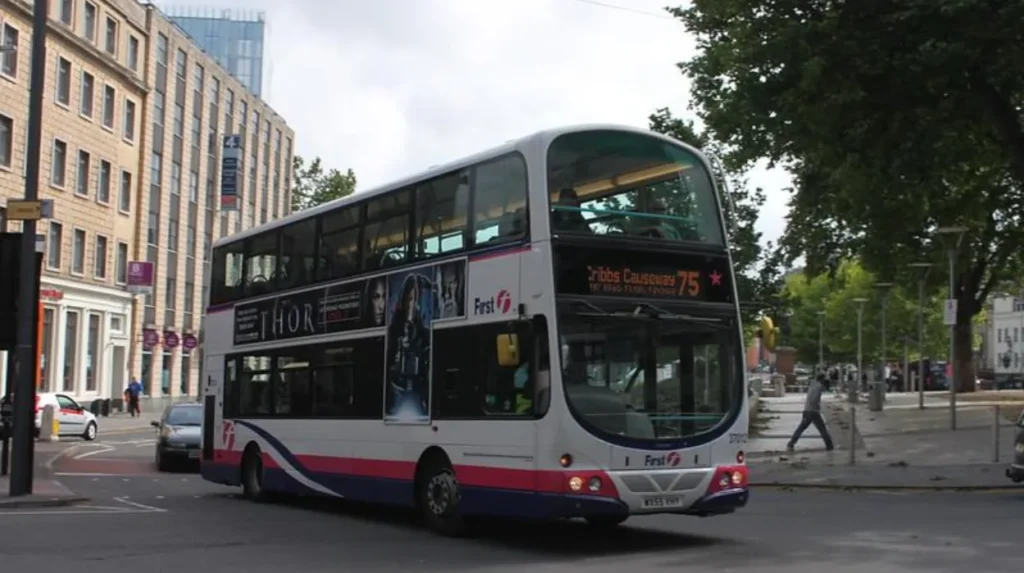
Public transport is an important Bristol living expense, particularly for residents commuting to employment, universities and city-centre services. First Bus Bristol fares from January 2026 include a £2.60 Bristol single fare and a £6.80 Bristol day cap.
Bristol has an extensive bus network operated by First Bus and supported by the wider West of England transport system. Metrobus services also connect parts of the city and surrounding areas.
First Bus introduced updated Bristol fares from January 2026. Tap On Tap Off customers have a £2.60 Bristol fare for one trip, while three or more trips in the Bristol zone can reach the £6.80 daily cap. The seven-day Bristol cap is £28.
These figures demonstrate why travel frequency matters. Someone making occasional journeys has a different transport budget from someone travelling to work five days a week.
The wider West of England fare zone covers Bristol, Bath and other surrounding areas. First Bus also operates fare products for longer regional journeys.
For students, travel products can be structured differently. First Bus lists student and university travel products for the Bristol and West of England areas, including weekly, monthly and academic-year options.
Cycling and walking can reduce transport spending for residents who live close to employment, education or services. Car ownership introduces additional expenses including fuel, insurance, servicing, parking, road tax and depreciation.
A household should therefore calculate transport according to actual travel patterns rather than assuming a universal Bristol transport cost.
How much income do you need to live comfortably in Bristol?
The income required to live in Bristol depends mainly on housing costs, household size and lifestyle. A person living alone needs more disposable income than a house sharer, while families require additional budgets for larger housing, food, childcare and transport.
Income should be assessed against essential monthly expenditure rather than salary alone.
A single person renting a one-bedroom property faces a substantially different cost structure from someone renting a room in shared accommodation. Housing alone can account for a large share of take-home income.
The statutory National Living Wage for workers aged 21 and over is £12.71 per hour from April 2026. The rate for workers aged 18 to 20 is £10.85, while the rate for under-18 workers is £8. Apprentices have a separate statutory rate of £8.
At £12.71 per hour, a standard 37.5-hour working week produces gross weekly earnings of approximately £476.63 before deductions. A 40-hour week produces approximately £508.40 before deductions. Actual take-home pay depends on tax, National Insurance, pension contributions and individual circumstances.
The statutory minimum wage does not represent a recommended Bristol household budget. It demonstrates the relationship between earnings and local housing costs.
A household with two earners can spread housing and other fixed expenses across two incomes. A single-income family faces a different financial structure.
Salary also varies substantially across Bristol’s economy. Professional services, engineering, technology, finance, healthcare and specialist occupations have different earnings profiles from hospitality, retail and entry-level service roles.
The strongest way to assess affordability is to calculate net monthly income and subtract rent, council tax, utilities, food, transport, debt repayments and other fixed costs. The remaining amount represents the household’s capacity for savings and discretionary spending.
Is Bristol more expensive than other parts of the UK?
Bristol is relatively expensive compared with the wider South West and the UK, particularly for housing. In August 2026, Bristol’s average private rent was £1,883, compared with £1,245 across the South West and £1,400 across the UK.
Housing creates the clearest difference between Bristol and many other UK locations.
The August 2026 ONS figures put Bristol’s average monthly private rent at £1,883. The South West average was £1,245, while the UK average was £1,400.
This means Bristol’s average rent was £638 higher than the South West average and £483 higher than the UK average.
House prices show a similar pattern. The average Bristol house price was £352,000 in July 2026, while the average price paid by first-time buyers was £313,000.
However, comparisons need context. Bristol is an economically important city with major employers, universities, research institutions and transport connections. Higher housing demand is linked to these urban functions.
The comparison also changes according to household type. A student sharing a property does not experience Bristol’s cost structure in the same way as a family renting a three-bedroom home.
Transport can also change the overall calculation. A person living close to work can reduce commuting expenditure, while someone living farther away can face higher transport costs despite paying less rent.
Bristol therefore needs to be assessed as a complete household economy rather than by rent alone.
How can you reduce the cost of living in Bristol?
The most effective ways to reduce Bristol living costs are controlling housing expenditure, sharing accommodation, reducing unnecessary car use, managing energy consumption, planning grocery spending and choosing services according to actual usage.
Housing normally offers the largest opportunity for savings. Sharing accommodation spreads rent and household bills between residents. Choosing a smaller property also reduces recurring costs.
Location is another major factor. A property outside the most expensive neighbourhoods can reduce rent while remaining connected to the city by bus or other transport.
Transport costs can be controlled through walking, cycling, public transport and careful use of cars. First Bus’s Bristol Tap On Tap Off system automatically applies daily and weekly caps within its fare structure.
Food spending can be reduced by meal planning, supermarket comparison and limiting food waste. Preparing meals at home also reduces the additional cost of restaurant and takeaway purchases.
Energy efficiency can reduce household consumption. Residents can use heating controls, efficient appliances and appropriate insulation to manage energy use.
Council tax should be checked against the property’s official band. Bristol publishes current charges for Bands A to H, allowing households to identify the annual liability attached to their property.
Subscriptions are another controllable expense. Streaming platforms, gym memberships, premium mobile packages and unused memberships can collectively create significant recurring costs.
The strongest cost-control strategy is a monthly budget divided into essential and discretionary spending. Essential categories include housing, council tax, utilities, food and transport. Discretionary categories include entertainment, dining out, shopping and leisure.
What should you include in a Bristol cost-of-living budget?
A complete Bristol budget should include rent or mortgage payments, council tax, utilities, groceries, transport, communications, insurance, healthcare-related costs, leisure spending, debt payments and savings. Housing deserves the largest planning priority.
A basic budget begins with accommodation. The ONS August 2026 data provides useful Bristol rental benchmarks, including £1,223 for one-bedroom properties and £1,541 for two-bedroom properties.
Council tax comes next. A Band D property carries a 2026–27 total charge of £2,713.68 before any applicable household reduction or exemption.
Utilities should include electricity, gas where applicable, water, broadband and mobile communications.
Food should be divided between groceries and meals purchased outside the home. This distinction provides better control over discretionary spending.
Transport should include bus fares, rail fares, cycling costs or car ownership expenses. First Bus Bristol’s current fare structure provides a useful reference for regular bus users.
Insurance can include contents insurance, vehicle insurance and other relevant policies. Healthcare-related expenditure can include prescriptions, dental treatment, optical care or private services where applicable.
Households should also include irregular costs. Examples include clothing, household repairs, annual subscriptions, travel, gifts and emergency expenses.
Savings should be treated as a planned budget category rather than an amount left over at the end of the month. An emergency fund provides protection against unexpected bills and income changes.
The correct Bristol budget is personal. A student, single professional, couple, family and retiree each have different financial priorities.
Explore More Area Guide
How Much Money Do You Need to Live in Bristol?
What Is Bristol Like to Live In? Cost, Jobs and Lifestyle
What does the future of the cost of living in Bristol look like?
Bristol’s future cost of living will remain closely linked to housing supply, rents, wages, inflation, transport costs and household energy prices. Housing affordability is likely to remain the central issue for residents and people planning to move to the city.
Current data already shows continued pressure in the housing market. Bristol’s average private rent increased by 5.9% year on year to £1,883 in August 2026.
House prices also remained substantial. The July 2026 average was £352,000, with the average first-time buyer price at £313,000.
Income growth is therefore important to household affordability. The statutory National Living Wage increased to £12.71 per hour for workers aged 21 and over from April 2026.
Transport pricing also changes over time. First Bus updated Bristol fares in January 2026 and introduced its current Tap On Tap Off fare structure.
Council tax is reviewed annually. Bristol’s 2026–27 Band D total is £2,713.68, compared with £2,583.89 in 2025–26.
These changes demonstrate why an evergreen Bristol cost-of-living guide should focus on the main spending mechanisms rather than one fixed monthly figure.
For residents, the key variables remain housing, income and transport. For people considering relocation, current rents and salaries should be checked before committing to a move.
Bristol remains a major South West employment and education centre. Its economic role supports continued demand for housing and services. The practical affordability question is therefore whether household income grows sufficiently to keep pace with essential costs.
What is the overall cost of living in Bristol?
The overall cost of living in Bristol is shaped primarily by housing, followed by council tax, utilities, food and transport. Current ONS data confirms that Bristol rents are substantially above South West and UK averages, making accommodation the key budget priority.
Bristol is not a low-cost UK city. Housing represents the largest financial commitment for many residents, with the average private rent reaching £1,883 per month in August 2026.
The cost of renting depends heavily on household size and property type. A one-bedroom property has a lower average rent than a three-bedroom or four-bedroom property, while shared accommodation changes the individual cost.
Council tax adds another significant recurring payment. Bristol’s 2026–27 Band D charge is £2,713.68, with lower and higher amounts applying to other bands.
Transport can remain manageable for residents who use public transport, walk or cycle. First Bus currently provides capped Bristol fares, including a £2.60 single fare and £6.80 daily cap under its Tap On Tap Off system.
Food and utilities require consistent monthly budgeting. Their final cost depends on household size, consumption and lifestyle.
Income is the other side of the affordability equation. The National Living Wage is £12.71 per hour for workers aged 21 and over from April 2026, while higher-paid sectors provide greater capacity for Bristol’s housing costs.
The best way to understand the cost of living in Bristol is therefore to combine current housing data with an individual household budget. Rent, council tax, utilities, food and transport should be calculated before discretionary spending.
For anyone planning to live in Bristol, the most important step is to compare expected net income with actual housing costs in the chosen neighbourhood. That approach provides a more accurate picture than a single citywide cost estimate.
Is Bristol expensive to live in?
Yes. Bristol is relatively expensive compared with the wider South West and the UK, particularly for housing. Average private rent in Bristol reached £1,883 per month in August 2026, according to the Office for National Statistics.