Key Points
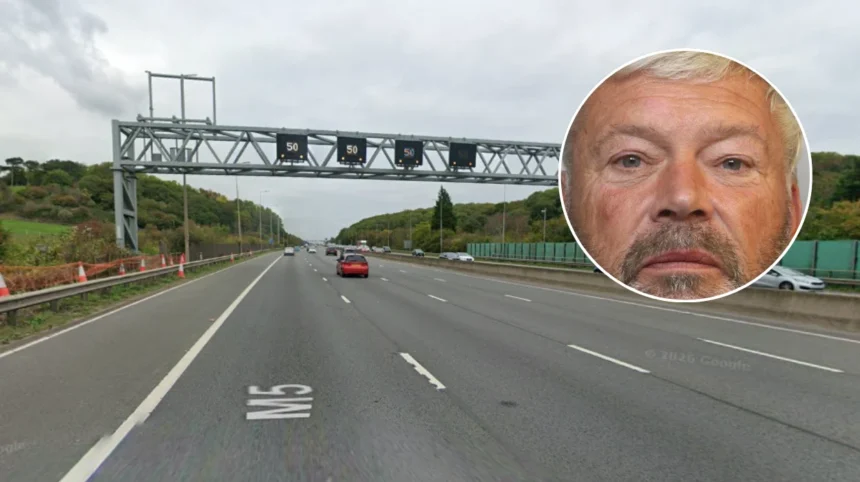
- Offender Arrested: The suspect, Bryan Househam, aged 69, from Brant Broughton, Lincoln, has been arrested by officers from Michaelwood Services on the M5 Southbound carriageway.
- Citizens’ Response: An alert citizen contacted Gloucestershire Police following their observation of a grey Toyota RAV4 weaving between lanes and the hard shoulder between Junction 13 and Junction 14.
- Extremely Drunk Driver: Househam tested positive for an initial roadside breath test, registering a value of 142 micrograms of alcohol per 100 millilitres of breath, which was more than four times the legal limit of 35 micrograms. On further testing while in custody, his breath test score was 100 micrograms.
- Court Hearing: The hearing held in court on Thursday, 8 October 2026, resulted in Househam receiving a 23-month ban on driving (subject to a reduction of 23 weeks after taking a driver education course) along with £2,885 in fines and costs.
- Comment from Police: PC Jack Keane appreciated citizens for coming forward with information about dangerous driving, stressing how crucial information is when arresting such offenders.
South Gloucestershire (Bristol Express News) October 10, 2026 – A 69-year-old motorist who was caught more than four times over the legal alcohol limit on the M5 motorway has avoided a custodial sentence, receiving a 23-month driving ban and fines approaching £3,000 following a court appearance on Thursday, 8 October 2026.
- Key Points
- How Was Bryan Househam Located by Police Officers on the M5?
- What Were the Specific Alcohol Test Readings Recorded in Custody?
- What Financial Penalties and Disqualifications Were Imposed by the Court?
- What Is the Background of Drink-Driving Enforcement on Major UK Motorways?
- How Will This Legal Outcome and Enforcement Strategy Affect UK Road Users and Motorists?
As reported by reporter Ellie Kendall of Bristol Live, Bryan Househam, a resident of Brant Broughton, Lincoln, was arrested at Michaelwood Services on the southbound carriageway of the M5 after a member of the public raised concerns regarding erratic driving.
How Was Bryan Househam Located by Police Officers on the M5?
According to details released by Avon and Somerset Police and reported by Ellie Kendall of Bristol Live, emergency services were first notified on Sunday, 13 September 2026. A concerned motorist contacted law enforcement after observing a grey Toyota RAV4 SUV veering repeatedly between lane two and the hard shoulder on the M5 southbound stretch connecting Junction 13 (Stroud) and Junction 14 (Thornbury/Falfield).
The emergency call was initially received by Gloucestershire Police, who promptly transferred the details to Avon and Somerset Police to enable cross-border coordination. Patrol officers conducted targeted enquiries along the route and subsequently located the parked vehicle within the grounds of Michaelwood Services on the southbound side of the motorway.
Upon approaching the parked SUV, attending officers found Househam seated in the driver’s seat with the vehicle’s ignition key in place. A dog was also discovered inside the vehicle. The officer on the scene noted an immediate smell of alcohol emanating from Househam and instructed him to perform a preliminary roadside breath sample.
What Were the Specific Alcohol Test Readings Recorded in Custody?
As detailed by Ellie Kendall of Bristol Live, the initial roadside breath test provided by Househam registered a reading of 142 micrograms of alcohol per 100 millilitres of breath. In the United Kingdom, the legal driving threshold is 35 micrograms of alcohol per 100 millilitres of breath, placing Househam’s initial reading at more than four times the legal allowance.
Following his immediate arrest on suspicion of driving while over the prescribed limit for alcohol, Househam was transported to police custody. Whilst at the station, an official evidential breath test was administered, which recorded a formal concentration of 100 micrograms of alcohol per 100 millilitres of breath—nearly triple the lawful limit.
During the custody procedure, law enforcement personnel made specific arrangements to ensure the welfare of the animal found in the vehicle. The dog was collected from the service station site by a member of Househam’s family following his detention.
What Financial Penalties and Disqualifications Were Imposed by the Court?
Following formal charges, Househam attended court proceedings on Thursday, 8 October 2026. The court sentenced Househam to a 23-month driving disqualification. The court stipulated that the length of the ban could be reduced by 23 weeks provided the offender successfully completes an approved driver rehabilitation and education course.
In addition to the driving prohibition, Househam was ordered by the court to pay financial penalties and associated court costs totalling £2,885. He did not receive an immediate or suspended prison sentence.
Highlighting the crucial role of public cooperation in preventing road traffic collisions, PC Jack Keane of Avon and Somerset Police stated in an official release cited by Ellie Kendall of Bristol Live:
“This case highlights the importance of members of the public reporting concerns about the standard of someone’s driving. The information provided enabled officers to quickly locate the vehicle and take positive action. Driving under the influence of alcohol puts not only the driver at risk, but also other road users and passengers.”
Explore more Bristol Crime News:
Bristol Rapists Jailed For 36 Years After Lorry Escape Video in Bristol 2026
Speedwell Shooting Trial Examines Point Blank Gun Attack Bristol 2026
What Is the Background of Drink-Driving Enforcement on Major UK Motorways?
Drink-driving remains one of the primary targeted offences under the UK’s National Police Chiefs’ Council (NPCC) road safety strategy. Under the Road Traffic Act 1988, driving or being in charge of a motor vehicle with an alcohol concentration above the prescribed limit carries stringent statutory penalties, including mandatory driving bans, substantial fines, and potential custodial sentences of up to six months for severe or repeated infractions.
The M5 corridor, which serves as a critical strategic arterial route connecting the West Midlands to South West England, is heavily monitored by regional forces, including Gloucestershire Constabulary and Avon and Somerset Police. Multi-force operations frequently rely on automated number plate recognition (ANPR) systems alongside immediate reports from the travelling public to detect impaired drivers on high-speed roads. High-speed motorways represent a particularly severe risk environment for alcohol-impaired driving due to the reduced reaction times and potential severity of collisions at speeds up to 70 mph.
How Will This Legal Outcome and Enforcement Strategy Affect UK Road Users and Motorists?
This judicial decision and public enforcement outcome carry several potential implications for various stakeholders across the transport and legal sectors:
- For Motorway Commuters and Road Users: The successful apprehension of an impaired driver following a citizen report reinforces public confidence in emergency call handling and multi-force police responses. It demonstrates that reports regarding erratic vehicle control on major thoroughfares are acted upon swiftly, mitigating the risk of serious collisions.
- For Drivers Seeking Mitigation Through Education: The inclusion of a 23-week reduction in exchange for completing a driver education course emphasizes the judicial system’s focus on rehabilitation alongside deterrence, aiming to reduce reoffending rates among first-time or high-level offenders.
- For Law Enforcement and Public Surveillance: The outcome underscores the essential partnership between public vigilance and police response protocols. It is likely to encourage continued reporting of suspected drink or drug-driving by fellow motorists, aiding police forces in maintaining safety standards across high-speed transport routes.