Key Points
- Eleven firefighters or their families told the BBC they fear an August 1980 fire at Llwyneinion lagoon affected their health.
- Families reported concerns about cancers and miscarriages after firefighters attended the blaze near Wrexham.
- Jilska Williams believes chemicals involved in the fire contributed to her husband Steve Williams’s rare lung cancer.
- Wrexham Council said the site does not meet the legal definition of contaminated land but is inspected and monitored.
- North Wales Fire and Rescue Service said it could not comment on the 1980 fire but recognised the importance of understanding long-term occupational health risks.
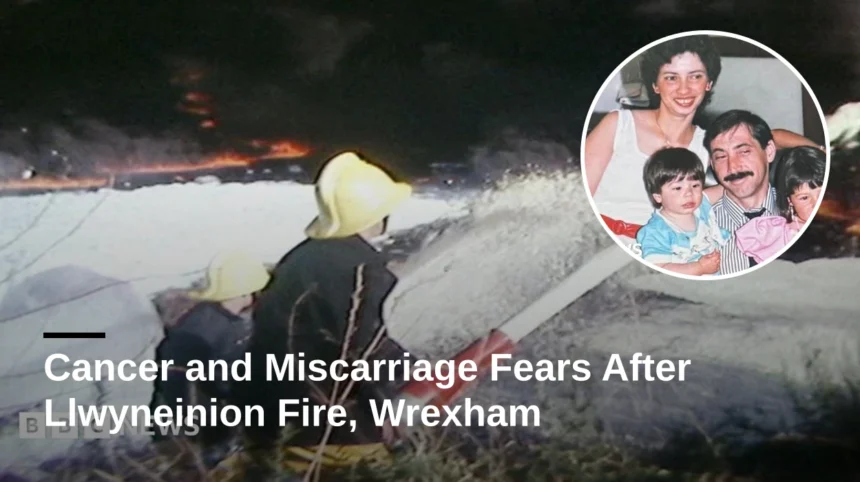
Wrexham (BBC) November 17, 2026 – Eleven firefighters or their families have raised concerns that an August 1980 fire at the former Llwyneinion toxic waste lagoon near Wrexham may have contributed to cancer and miscarriages. The concerns were reported by the BBC after interviews with former firefighters and relatives, including Jilska Williams, whose husband, Steve Williams, later died from a rare lung cancer. The BBC reported that about 60 firefighters attended the blaze, while the site contained chemicals suspected to have included cancer-causing polychlorinated biphenyls.
- Key Points
- What health concerns have firefighters and families raised?
- What was at the Llwyneinion site?
- How have authorities and the Fire Brigades’ Union responded?
- What could the development mean for affected communities?
- Background to the Llwyneinion fire
- What happens next for firefighters and residents?
What health concerns have firefighters and families raised?
As reported by the BBC, former firefighter Jim MacGrane said six wives of firefighters had miscarriages within 12 to 15 months of the incident. The families also raised concerns about cancer among firefighters who attended the blaze.
Jilska Williams told the BBC she believed her husband’s rare lung cancer could have been linked to chemicals he swallowed after falling into the burning lagoon. Steve Williams died at the age of 39, according to reports summarising the BBC investigation.
The reported accounts do not establish that the fire caused the illnesses. The BBC reported that firefighters were concerned they had not been provided with chemical protective equipment and fought the blaze in standard uniforms.
What was at the Llwyneinion site?
The BBC reported that Llwyneinion had been used as a dumping ground for chemicals suspected to include polychlorinated biphenyls, or PCBs, associated with Monsanto’s former operations in the area. A report summarising the investigation said elevated PCB levels were found in soil samples beyond the fenced-off lagoon.
Wrexham Council owns the site. The authority said the location does not meet the legal definition of contaminated land, while stating that it carries out regular inspections and monitoring. The council also said an emergency response plan for the site was reviewed in 2017.
How have authorities and the Fire Brigades’ Union responded?
North Wales Fire and Rescue Service said it was not in a position to comment on the 1980 fire. The service said approaches to occupational health, wellbeing and health monitoring continue to develop nationally as evidence and understanding evolve.
Gareth Tovey of the Fire Brigades’ Union said the union was taking the concerns seriously, consulting scientists about ways to support retired firefighters and contacting Welsh fire and rescue services about protections at sites associated with historic toxic waste dumping.
Wrexham Council said it took public health and environmental responsibilities extremely seriously. The authority also said concerns about the firefighters’ health had previously been raised with its contaminated land officer.
What could the development mean for affected communities?
The BBC report is likely to increase calls from former firefighters and residents for clearer information about historic chemical sites, exposure records and long-term health monitoring. It may also prompt further discussion between the Fire Brigades’ Union, public authorities and scientists about protective equipment and procedures at legacy waste locations.
Public Health Wales has said there is no indication, based on currently available evidence, that historical environmental pollution in the relevant areas is responsible for an increased risk of cancer or other illness. It does not recommend blood testing as a public health measure because such tests cannot establish when exposure occurred, where PCBs came from or what they mean for an individual’s health.
Background to the Llwyneinion fire
The Llwyneinion lagoon was a former chemical waste site near Wrexham in north Wales. A major fire broke out there in August 1980 and sent thick black smoke over a nearby village. Around 60 firefighters attended, according to reports of the BBC investigation. The site has remained subject to inspections, monitoring and continuing public concern about historic chemical waste.
What happens next for firefighters and residents?
Former firefighters and relatives are expected to continue seeking answers about possible exposure and health effects. The Fire Brigades’ Union is considering scientific advice and intends to ask Welsh fire and rescue services how they protect personnel at historic waste sites. Wrexham Council is also dealing with increased enquiries about contaminated land following wider reporting on the issue.