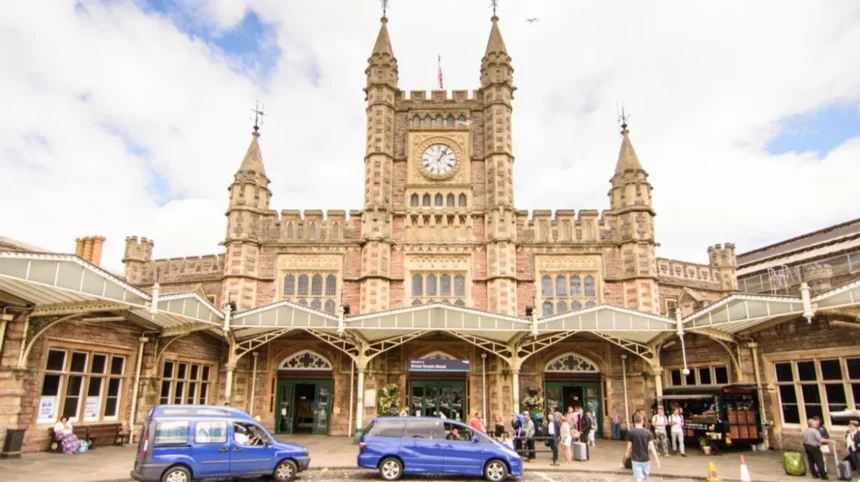
Bristol Temple Meads is the main railway gateway to Bristol and one of the city’s most historically important transport sites. The station opened in 1840 as the western terminus of the Great Western Railway and expanded substantially as Bristol’s railway network developed. Today, the station sits at the centre of a large regeneration area known as Bristol Temple Quarter.
- Why is Bristol Temple Meads an important starting point for exploring Bristol?
- Which areas are closest to Bristol Temple Meads?
- Is Temple Quarter the best area to stay near Bristol Temple Meads?
- What makes Redcliffe a useful area near Bristol Temple Meads?
- Why should visitors consider Old Market near Bristol Temple Meads?
- What can visitors expect from St Philip’s Marsh near Temple Meads?
- Is Temple Gate worth visiting when staying near Temple Meads?
- Which nearby areas are best for history and heritage?
- Which areas near Bristol Temple Meads are important for future development?
- How can visitors choose the right area near Bristol Temple Meads?
- What is the future relevance of the areas around Bristol Temple Meads?
For visitors, the areas near Bristol Temple Meads provide access to historic streets, restaurants, workplaces, riverside routes, cultural venues, residential neighbourhoods and major transport connections. The most relevant nearby areas include Temple Quarter, Redcliffe, Old Market, St Philip’s Marsh, Temple Gate, St George’s, and Totterdown.
The character of these areas changes quickly as you move away from the station. Temple Quarter focuses on transport, employment and regeneration. Redcliffe connects the station with Bristol’s historic central area. Old Market provides an established urban neighbourhood with independent businesses and community activity. St Philip’s Marsh has an industrial past and forms a major part of Bristol’s long-term regeneration plans.
Why is Bristol Temple Meads an important starting point for exploring Bristol?
Bristol Temple Meads is Bristol’s oldest and largest railway station and a major transport gateway into the city. Its central position connects visitors with Temple Quarter, Redcliffe, Old Market, St Philip’s Marsh, the city centre and surrounding neighbourhoods.
Bristol Temple Meads opened on 31 August 1840, with trains initially operating between Bristol and Bath. London services followed in 1841. The original station was designed by Isambard Kingdom Brunel, the engineer responsible for major Victorian infrastructure projects including the Great Western Railway.
The station expanded because passenger and railway activity increased. A new joint station designed by Matthew Digby Wyatt began construction in 1871, with the full station opening in 1878. Further expansion between 1930 and 1935 increased the number of platforms from nine to fifteen.
The station is now a Grade I listed building. The wider Temple Quarter contains several other listed structures, including Brunel’s Old Station and Bristol and Exeter House.
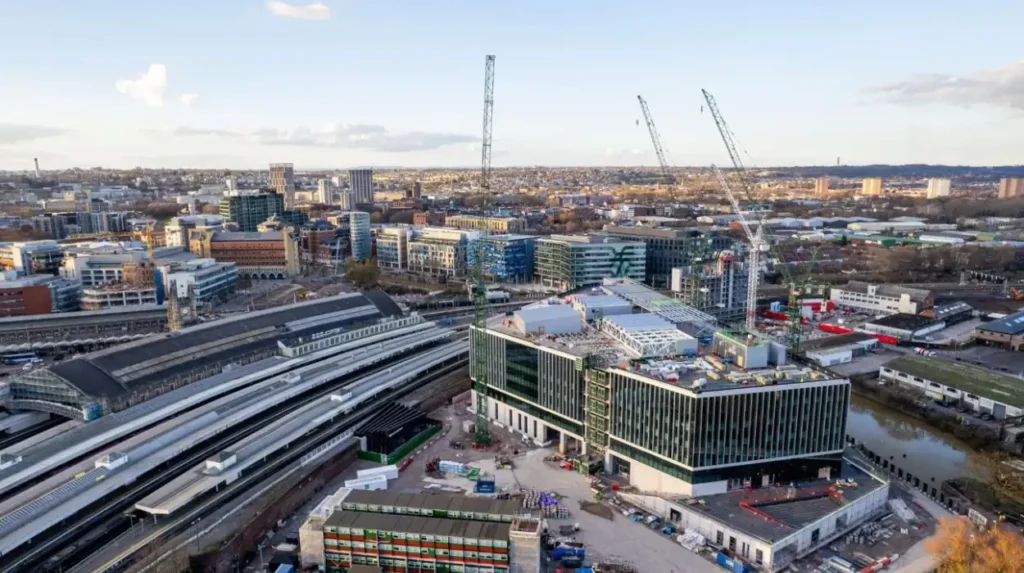
Its location also explains why nearby neighbourhoods are changing. Bristol Temple Quarter covers more than 130 hectares of brownfield land and forms one of Bristol’s largest regeneration programmes. The programme includes housing, employment, public spaces, transport improvements and new connections around the station.
For visitors, this makes Temple Meads more than a railway stop. It is a practical base for exploring several distinct parts of Bristol.
Which areas are closest to Bristol Temple Meads?
The closest areas to Bristol Temple Meads include Temple Quarter, Temple Gate, Redcliffe, Old Market and St Philip’s Marsh. These districts surround different sides of the station and provide access to transport facilities, historic buildings, employment areas, restaurants, residential streets and regeneration sites.
Temple Quarter is the broadest term for the area surrounding the station. It includes Temple Meads itself, Temple Gate, parts of St Philip’s Marsh and other development areas.
Temple Gate sits immediately around the station approach and connects Temple Meads with Redcliffe and central Bristol. Bristol City Council identifies Bristol and Exeter Yard and the area across Temple Gate as key parts of the Temple Gate area.
Redcliffe lies west and southwest of Temple Meads. It provides a route towards Bristol’s historic centre and Bristol Harbour.
Old Market lies north of the station. It is an established neighbourhood with its own planning area and community identity. The Old Market Quarter Neighbourhood Development Plan came into force in 2016.
St Philip’s Marsh lies east and southeast of Temple Meads. It has an industrial history and forms one of the largest parts of the Temple Quarter regeneration programme.
These areas are geographically close but have different functions. A visitor looking for heritage encounters a different environment from someone looking for employment, modern housing, nightlife or riverside walking.
Is Temple Quarter the best area to stay near Bristol Temple Meads?
Temple Quarter is a practical area for visitors who prioritise railway access, city connections, modern development and proximity to Bristol’s central employment and regeneration district. Its location beside Temple Meads makes it particularly useful for short visits and rail-based travel.
Temple Quarter is directly associated with the transformation around Bristol Temple Meads. Bristol City Council describes the programme as a 25-year transformation of more than 130 hectares of brownfield land. The regeneration framework includes new homes, employment, green infrastructure, walking routes and public spaces.
The area also contains important heritage assets. Bristol Temple Meads, Brunel’s Old Station and Bristol and Exeter House are listed buildings with national heritage significance.
For accommodation, Temple Quarter provides a location close to the railway station and city centre. Its principal advantage is connectivity rather than a traditional historic-neighbourhood atmosphere.
The future structure of Temple Quarter is also significant. Current projects include the Southern Gateway, Northern Gateway, Eastern Entrance, Temple Gate and St Philip’s Marsh. These projects form part of a wider 135-hectare programme described by Bristol Temple Quarter.
Visitors who stay near Temple Meads can therefore experience an area undergoing substantial urban change while remaining close to Bristol’s established central districts.
What makes Redcliffe a useful area near Bristol Temple Meads?
Redcliffe is a central Bristol neighbourhood located close to Temple Meads, the River Avon and Bristol’s historic core. It combines historic buildings, urban streets, residential development and connections towards the city centre, making it useful for visitors exploring Bristol on foot.
Redcliffe is particularly relevant because of its position between Temple Meads and Bristol’s central attractions.
The neighbourhood includes historic buildings and streets associated with Bristol’s long development as a port and commercial city. Its location provides connections towards Bristol Harbour, the city centre and other central neighbourhoods.
The area around Temple Gate also has an important industrial and transport history. Development followed the creation of the River Avon New Cut between 1804 and 1809. During the nineteenth century, terraced housing and industrial warehouses appeared in the area.
Bristol and Exeter Yard was developed in the nineteenth century, while Bristol and Exeter House dates from 1852 and is Grade II* listed. The station approach and the present historic elements of Temple Meads developed during the nineteenth-century expansion of the railway.
Redcliffe therefore works well for visitors interested in the relationship between Bristol’s railway history, industrial development and central-city growth.
Its location also makes it relevant to visitors who want to combine a railway journey with walking-based exploration.
Why should visitors consider Old Market near Bristol Temple Meads?
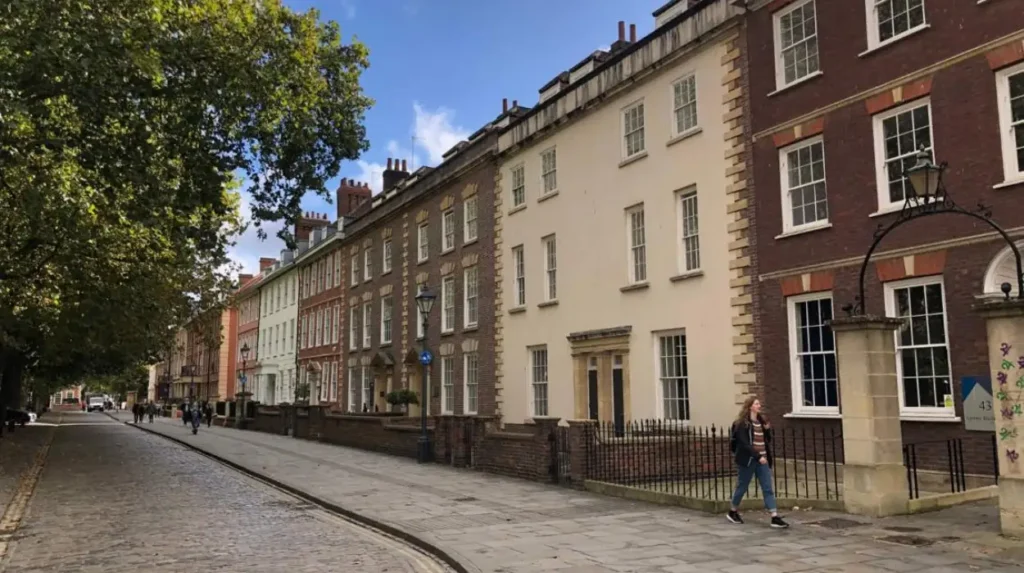
Old Market is a long-established urban neighbourhood north of Bristol Temple Meads, with independent businesses, community facilities, historic buildings and direct connections towards Bristol city centre. Its location provides an alternative to staying immediately beside the railway station.
Old Market is one of the established neighbourhoods close to Temple Meads. Its position between the station and central Bristol gives it a strong transport and pedestrian connection.
The Old Market Quarter has a designated neighbourhood planning area. Bristol City Council designated the area for neighbourhood planning in January 2013, and its neighbourhood development plan came into force in March 2016.
The area has a different character from the newer parts of Temple Quarter. It has established streets, older buildings, independent businesses and community activity.
Old Market is also useful for visitors who want to reach central Bristol without remaining directly beside the railway station. Its position creates a practical link between Temple Meads and the wider city centre.
The neighbourhood is therefore relevant to several visitor purposes, including accommodation, food, local shopping and urban exploration.
Its proximity to Temple Meads also makes it suitable for travellers carrying luggage or using Bristol as a base for regional rail journeys.
What can visitors expect from St Philip’s Marsh near Temple Meads?
St Philip’s Marsh is an historically industrial area east of Bristol Temple Meads. It developed from open grazing land into an industrial and residential district before large-scale twentieth-century change. Today, it forms a major part of Bristol’s long-term Temple Quarter regeneration programme.
St Philip’s Marsh has a distinctive historical development pattern.
For centuries, the area consisted largely of open rough grazing land. Bristol’s industrial expansion during the Industrial Revolution brought industries and roads into the marsh. By the mid-nineteenth century, a small community had developed, including homes, a church, pubs and a school.
The area experienced major change during the twentieth century. In the 1960s, around 6,000 residents living in tightly packed terraced housing were relocated as the area changed towards commercial uses. Some nineteenth-century buildings and structures remain.
St Philip’s Marsh now has major strategic importance because of its size and location.
The current Temple Quarter programme identifies the area as a long-term opportunity for thousands of new homes alongside businesses, green spaces and improved waterways.
In 2026, Bristol Temple Quarter was also progressing a St Philip’s Marsh masterplan process. The formal consultation ran from 16 June to 28 July 2026.
For visitors, St Philip’s Marsh is particularly relevant when understanding how Bristol is converting former industrial land into a new mixed-use urban district.
Is Temple Gate worth visiting when staying near Temple Meads?
Temple Gate is worth including when exploring the area around Bristol Temple Meads because it combines railway heritage, historic industrial development and major regeneration proposals. It forms an important connection between the station, Redcliffe, central Bristol and future Temple Quarter development.
Temple Gate occupies a strategic position beside the railway station.
Bristol City Council identifies two main sites within the Temple Gate framework. One is Bristol and Exeter Yard, positioned between the station approach and Cattle Market Road. The other sits across Temple Gate Highway at the eastern end of Redcliffe.
The River Avon New Cut forms the southern edge of part of this area.
Its history is closely linked to Bristol’s industrial expansion. The New Cut was created between 1804 and 1809, after which the area developed with terraced housing and industrial warehouses.
Bristol and Exeter House, constructed in 1852, is Grade II* listed. The station approach and Temple Meads buildings added further nineteenth-century architectural significance.
Temple Gate also has a major future role. The Temple Quarter programme identifies the area for new residential and commercial uses, improved public connections and a stronger gateway between the railway station and central Bristol.
Which nearby areas are best for history and heritage?
The strongest heritage concentration near Bristol Temple Meads is around Temple Meads, Temple Gate, Redcliffe and Old Market. These areas contain listed railway structures, historic streets, industrial buildings, religious heritage and archaeological remains connected with Bristol’s medieval and industrial development.
Bristol Temple Meads itself is the principal heritage landmark.
The original Brunel station dates from the 1840 period. The later joint station designed by Matthew Digby Wyatt forms another major historic component. Both contribute to the station’s Grade I listed status.
The name Temple Meads also has medieval associations. Network Rail records that the land took its name from the Knights Templar, who owned the land during the twelfth and thirteenth centuries.
The surrounding Temple Quarter contains several additional heritage assets. These include Brunel’s Old Station, the Engine Shed and Passenger Shed, and Bristol and Exeter House.
Bristol City Council also identifies potential archaeological significance around the Portwall, the former fourteenth-century Temple Pipe Conduit and a historic Cholera Burial Ground.
Redcliffe adds another layer of historic urban development, while Old Market provides an established route into Bristol’s central neighbourhoods.
Visitors interested in history can therefore build a heritage-focused walk around the station rather than treating Temple Meads solely as a transport facility.
Which areas near Bristol Temple Meads are important for future development?
Temple Quarter, St Philip’s Marsh, Temple Gate and Mead Street are central to Bristol’s long-term urban development around Temple Meads. Current plans focus on housing, employment, public spaces, sustainable transport, improved station connections and redevelopment of brownfield land.
The scale of planned change is substantial.
Bristol City Council’s framework describes a programme covering more than 130 hectares and extending over approximately 25 years. It identifies a target of 10,000 new homes, thousands of new jobs and an estimated £1.6 billion in annual income to the city economy.
The West of England Combined Authority has described the wider programme as providing up to 22,000 jobs across mixed-use communities around Temple Meads and east of the station.
Mead Street is another important development area. Its development brief identified potential for approximately 1,500 homes, employment space and new green infrastructure.
The Southern Gateway is planned as a new entrance to Temple Meads with a multimodal transport hub and cycle parking. The Eastern Entrance is intended to improve connections between the station, the new university campus and communities and businesses around St Philip’s Marsh.
These projects affect how visitors understand the area. The neighbourhood around Temple Meads is not static. Its transport, housing, employment and public-realm structure is undergoing long-term transformation.
Explore More Area Guide
Best Areas Near Bristol City Centre: Clifton, Redland & Southville
Best Suburbs of Bristol: Top Areas to Live in 2026
How can visitors choose the right area near Bristol Temple Meads?
Visitors can choose an area according to travel needs, heritage interests, central-city access and neighbourhood character. Temple Quarter suits rail access, Redcliffe suits central exploration, Old Market suits established urban activity, and St Philip’s Marsh suits visitors interested in Bristol’s industrial past and future regeneration.
For rail convenience, Temple Quarter provides the most direct relationship with Bristol Temple Meads.
For historic exploration, Temple Gate, Redcliffe and the station itself provide strong heritage connections.
For central-city access, Redcliffe and Old Market provide routes towards Bristol’s wider commercial and cultural core.
For urban regeneration, Temple Quarter and St Philip’s Marsh provide the clearest examples of Bristol’s current development programme.
For industrial history, St Philip’s Marsh and Temple Gate reveal how former industrial land shaped the modern city.
The choice also depends on the purpose of the trip. A traveller arriving by train for a short stay benefits from being close to the station. A visitor focused on central Bristol benefits from a location that connects Temple Meads with the historic core. A returning visitor interested in Bristol’s changing urban landscape gains more from exploring Temple Quarter and St Philip’s Marsh.
What is the future relevance of the areas around Bristol Temple Meads?
The areas around Bristol Temple Meads will remain strategically important because Temple Quarter combines a major railway station with housing, employment, education, public-space and transport investment. Long-term regeneration will reshape connections between the station and surrounding Bristol neighbourhoods.
Bristol Temple Meads already functions as a major regional railway gateway. Its historic significance and central location provide the foundation for wider redevelopment.
Temple Quarter’s regeneration programme places transport at the centre of future growth. Proposed projects include new station entrances, improved pedestrian connections, cycle facilities, public spaces and links with surrounding communities.
The programme also links the station with the wider West of England economy. Bristol City Council identifies the region as having a £39 billion economy, while Temple Quarter is positioned as a major focal point for employment and urban growth.
The future relevance extends beyond property development. The programme includes low-carbon infrastructure, green spaces, sustainable travel routes and mixed-use communities.
For visitors, this means the areas near Bristol Temple Meads will continue to combine established heritage with significant urban change.
The station remains the fixed reference point. Around it, Temple Quarter, Redcliffe, Old Market, Temple Gate, St Philip’s Marsh and Mead Street each contribute different parts of Bristol’s urban identity.
Understanding these areas makes it easier to plan a visit based on transport, heritage, food, accommodation, walking routes and the changing character of central Bristol.
What are the best areas near Bristol Temple Meads?
The main areas near Bristol Temple Meads include Temple Quarter, Redcliffe, Old Market, Temple Gate and St Philip’s Marsh. Each area has a different character, from railway heritage and central-city access to industrial history and major regeneration projects.