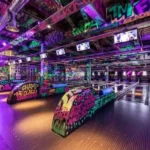
Escape rooms in Bristol provide timed, interactive experiences where participants solve puzzles, uncover clues and complete a defined objective. The activity combines entertainment, teamwork, observation and problem-solving within themed environments designed for small and medium-sized groups.
- What are escape rooms in Bristol?
- Why are escape rooms popular in Bristol?
- How did escape rooms develop into a global entertainment activity?
- What should people expect during an escape room experience?
- What types of escape room themes are available in Bristol?
- How difficult are escape rooms?
- How many people can take part in an escape room?
- Are escape rooms suitable for families and children?
- What should visitors consider when choosing an escape room in Bristol?
- How do escape rooms support teamwork and communication?
- What role does technology play in modern escape rooms?
- How should people prepare for an escape room booking?
- What is the future relevance of escape rooms in Bristol?
- How can people make the most of escape rooms in Bristol?
Bristol has a strong leisure and visitor economy, and escape rooms form part of the city’s wider indoor entertainment offer. They attract residents, families, friendship groups, students, tourists and workplace teams. Games differ in theme, difficulty, group size and format, making it important to understand how an escape room works before booking.
The modern escape room developed from puzzle-based games and live-action entertainment concepts. Commercial escape rooms became internationally established during the 2010s and expanded across major UK cities. Bristol’s venues now offer a range of scenarios, from mysteries and historical themes to science fiction, adventure and horror.
What are escape rooms in Bristol?
Escape rooms in Bristol are live, timed games in which groups enter a themed environment and solve connected puzzles to achieve a specific objective. Players use observation, communication and logical reasoning, usually completing the experience within a fixed period.
An escape room is a physical entertainment activity. Participants enter a purpose-built game environment containing clues, objects, codes and puzzles. The game’s objective varies according to its theme. A group might need to locate an item, solve a mystery, stop a fictional event or complete a mission.
The word “escape” describes the original format of the activity. Early games often required participants to unlock a route out of a room. Modern experiences use a broader structure. Many games involve several spaces or a mission that does not focus on physically leaving the venue.
A typical Bristol escape room experience has three main stages: a pre-game briefing, the timed game and a post-game conclusion. Staff explain safety procedures and game rules before participants enter. A countdown then begins, and the group works through the scenario.
How do escape room puzzles work?
Escape room puzzles are connected challenges that reveal new information. A solved puzzle can provide a key, numerical code, physical object or instruction that allows the group to progress.
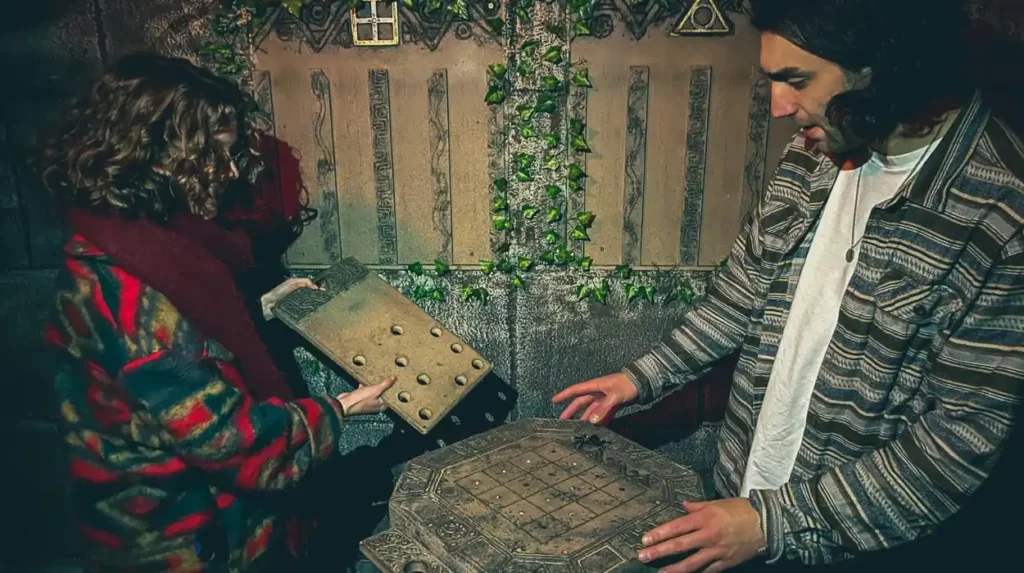
Common puzzle formats include observation tasks, such as finding hidden symbols; logic puzzles, such as arranging information in the correct order; and physical mechanisms, such as opening a compartment through the correct sequence. Examples of themed clues include books, maps, locks, artwork and electronic devices.
Modern rooms increasingly use automated technology. Sensors, magnetic locks, lighting, sound and programmed effects can respond when participants complete a challenge. This reduces reliance on traditional padlocks and creates a more immersive environment.
Why are escape rooms popular in Bristol?
Escape rooms are popular in Bristol because they provide structured group entertainment that combines social interaction with active problem-solving. Their indoor format also supports year-round leisure activities for residents, visitors, students, families and workplace teams.
Bristol is a major city in South West England with a large student population, established visitor attractions and a diverse hospitality and leisure sector. Escape rooms complement activities such as bowling, cinemas, museums, live entertainment and group dining.
The activity is designed around participation rather than observation. Every player can search for information, discuss theories or work on a separate challenge. This format creates a shared activity with a defined beginning and end.
The fixed game duration also makes escape rooms suitable for organised social plans. Most traditional games use a 60-minute playing period, although venues can offer shorter experiences and extended games.
Who uses escape rooms?
Escape room customers include several audience groups. Friends use them for social activities, for example birthday gatherings and weekend outings. Families use age-appropriate games during school holidays and celebrations. Visitors include escape rooms within wider Bristol itineraries.
Workplace groups also use escape rooms for organised team activities. The games require communication and shared decision-making. These requirements make them suitable for team-building sessions where participants work outside their normal workplace environment.
Students represent another important audience in university cities. Bristol’s higher education institutions contribute to a large population of young adults seeking group activities near transport, hospitality and city-centre facilities.
How did escape rooms develop into a global entertainment activity?
Modern escape rooms developed from puzzle games, adventure entertainment and digital escape-game concepts before expanding into physical venues during the late 2000s and 2010s. The format then became an established international leisure activity with diverse themes and technologies.
The escape room concept has roots in several forms of entertainment. Puzzle-based computer games asked players to investigate environments and solve problems to advance through a story. Live-action games transferred similar principles into physical spaces.
Commercial room-escape businesses first gained significant visibility in Asia before the format spread to Europe, North America and other regions. The industry expanded rapidly during the 2010s as independent operators developed themed games for local markets.
The modern industry is broader than the original locked-room concept. Designers now create experiences based on adventure, detective work, fictional worlds and historical settings.
How has escape room design changed?
Early commercial games often relied heavily on physical padlocks and numerical combinations. Contemporary game design increasingly uses electronic systems and automated effects.
Narrative design has also become more important. A narrative gives players a reason to complete puzzles. For example, a mystery game can require participants to identify evidence, while an adventure game can require the recovery of a fictional object.
Accessibility and customer experience have also become central design considerations. Operators increasingly provide information about physical access, lighting, sound, age guidance and the intensity of individual themes.
What should people expect during an escape room experience?
An escape room experience normally includes a staff briefing, a timed game and a final review. Participants receive rules and safety information, solve themed challenges during the game and learn the outcome after completing or ending the mission.
The experience begins before the game starts. Staff explain the rules and identify important safety procedures. Participants are told how to communicate with staff and how to leave if an emergency occurs.
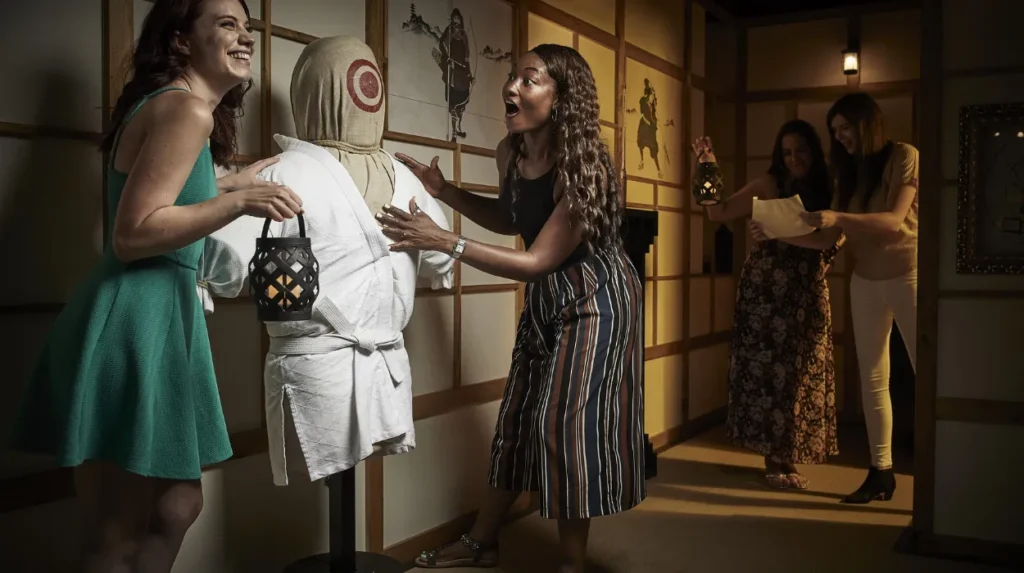
The group then enters the game environment. The timer begins, and participants examine the space for information. A successful team shares discoveries and connects clues with relevant puzzles.
Many venues provide hints during the game. A hint system gives players additional information when progress stops. Hints can be delivered by a game host, screen, speaker or other in-game mechanism.
What happens when the game ends?
The game ends when the group completes its objective or when the allocated time expires. Staff usually explain the conclusion and provide a summary of the experience.
Some venues offer group photographs or discuss the puzzles after the game. This stage provides closure and allows participants to understand challenges that remained unsolved.
The total visit takes longer than the advertised playing time. A 60-minute game can require additional time for arrival, registration, the briefing and the post-game conclusion.
What types of escape room themes are available in Bristol?
Escape room themes in Bristol and other major UK cities cover mystery, adventure, horror, science fiction and historical settings. Examples include detective investigations, treasure hunts, haunted locations, futuristic missions and period-based fictional scenarios.
Theme is an important part of the booking decision. It shapes the visual environment, story, sound and puzzle design.
Mystery games focus on investigation. Examples include fictional crimes, missing-person cases and unexplained events. Players gather evidence and connect information to solve the central problem.
Adventure games focus on exploration and a mission. Examples include treasure searches, expeditions and fictional rescue operations. These games often use physical scenery to create a sense of location.
Are horror escape rooms suitable for everyone?
Horror-themed escape rooms use darker stories and atmospheric effects. Examples include haunted buildings, fictional laboratories and supernatural investigations.
The intensity of horror varies significantly. Some games use only a dark atmosphere, while others include loud sounds, actors or startling effects. Players should read the venue’s content and age guidance before booking.
Families with younger participants should select games designed for their age group. A family-friendly theme provides a different experience from an adult horror scenario.
How difficult are escape rooms?
Escape room difficulty depends on puzzle complexity, game design, group communication and experience. Most venues provide difficulty guidance and hint systems, allowing beginners and experienced players to select games suited to their preferred level of challenge.
Difficulty is not determined by one factor. A game with complex logic puzzles requires different skills from a game based mainly on observation.
Group size also affects performance. A larger group can search more areas at once, but effective communication becomes more important. A smaller group has fewer people but can make decisions more quickly.
Game designers balance challenge with progression. A well-structured experience provides enough information for players to understand how clues connect while maintaining a meaningful level of problem-solving.
Do players need previous experience?
Previous escape room experience is not required for most games. New players receive instructions before the game and can use available hint systems.
Experienced players often develop useful habits. They search systematically, organise discovered objects and communicate information clearly. These practices also help first-time groups.
The most important skills are observation, communication and organisation. Escape rooms are designed as group activities rather than tests of specialist knowledge.
How many people can take part in an escape room?
Escape room capacity depends on the individual game and venue, with many experiences designed for small groups. Booking information specifies minimum and maximum player numbers, helping customers select a game with suitable space and puzzle distribution.
Group capacity is determined by room size and game design. A puzzle intended for four participants can feel different when played by two or by a larger group.
Smaller groups provide more individual involvement in each challenge. Larger groups provide more people to search, observe and share ideas.
Customers planning a large celebration or workplace event should check whether the venue has several games operating at the same time. Multiple groups can then participate separately before meeting again afterwards.
Why does group size matter?
Game design determines how effectively participants can work together. Too many people in a small space can limit movement and reduce individual participation.
A suitable group size gives participants enough opportunities to contribute. The venue’s recommended player number is therefore an important booking detail rather than a simple capacity limit.
Are escape rooms suitable for families and children?
Family suitability depends on the specific escape room’s age guidance, theme and puzzle design. Bristol families should check minimum ages, adult supervision rules and content descriptions before booking, especially when games include darkness, horror or intense sound effects.
Children can participate in escape rooms when the experience matches their age and abilities. Family-oriented games often use accessible stories and puzzles that reward observation and cooperation.
Venue rules differ. Some operators require children below a specified age to play with an adult, while others have separate arrangements for young players.
Parents should consider the full environment. A game with difficult puzzles but no frightening content presents a different challenge from a horror-themed game with loud sound effects.
What should families check before booking?
Families should confirm the recommended age range, supervision requirements and game duration. They should also check whether the venue provides clear information about lighting, noise and physical activity.
Booking the right theme improves the experience for the entire group. A family game should provide an appropriate balance of challenge and accessible content.
What should visitors consider when choosing an escape room in Bristol?
Visitors should compare theme, location, group size, age guidance, accessibility, duration and booking conditions when choosing an escape room in Bristol. Reading official venue information before payment helps match the game to the group’s practical requirements and interests.
Location affects the wider itinerary. Bristol visitors often combine indoor activities with restaurants, cultural attractions and transport connections. Choosing a venue near other planned activities can simplify the day.
The theme should match the group’s interests. A detective game suits groups seeking investigation, while an adventure game provides a different style of participation.
Customers should also review the venue’s booking policies. Arrival times, cancellation rules and late-arrival procedures can affect the experience.
Why is accessibility information important?
Accessibility includes physical access and sensory conditions. A venue can provide information about steps, wheelchair access, confined spaces, lighting and sound.
These details allow customers to make informed decisions before arrival. Direct contact with the operator is useful when a participant has a specific access requirement that is not addressed in standard booking information.
How do escape rooms support teamwork and communication?
Escape rooms require participants to exchange information, organise tasks and make shared decisions under a time limit. The format creates a practical group activity where successful progress depends on combining individual observations and solving connected challenges together.
Most games contain more information than one person can process efficiently. Participants therefore benefit from sharing discoveries as soon as they find them.
Task allocation can improve organisation. One group member can examine written information while another searches the physical environment. Examples include one player arranging symbols and another checking objects for hidden mechanisms.
Communication prevents duplication. A clue already examined by one participant should be known to the rest of the group.
Why are escape rooms used for workplace events?
Workplace teams use escape rooms as organised group activities outside routine professional settings. The games involve practical cooperation without requiring specialist business knowledge.
A team-building event should not treat game performance as a formal measure of workplace ability. Escape rooms provide entertainment first. Their collaborative structure is the reason they are frequently included in group social programmes.
What role does technology play in modern escape rooms?
Technology supports modern escape room design through automated sensors, electronic locks, lighting, sound and interactive effects. These systems connect player actions to changes in the environment and allow designers to create more responsive, immersive game experiences.
Electronic systems can detect when players place an object in the correct position or enter the right sequence. The environment then changes automatically.
Lighting and sound establish the setting and communicate progress. A completed puzzle can trigger music, open a hidden compartment or reveal a new area.
Technology also supports game reliability when it is properly maintained. Operators need clear procedures for staff oversight and emergency access.
Are physical puzzles still important?
Physical puzzles remain central to the escape room format. Technology supplements rather than replaces observation and problem-solving.
A strong game uses its theme to connect the puzzle to the environment. An object should have a clear role within the scenario rather than existing only as a disconnected challenge.
How should people prepare for an escape room booking?
Escape room preparation involves confirming the booking details, arriving on time and understanding the venue’s rules. Participants do not normally need specialist equipment or knowledge, but groups benefit from discussing the theme, age guidance and practical requirements before arrival.
The booking confirmation should state the arrival time. Participants should arrive early enough to complete registration and attend the pre-game briefing.
Groups should wear comfortable clothing suitable for the venue’s activity level. Most escape rooms do not require specialist equipment.
Customers should avoid bringing unnecessary personal items into the game if the venue provides storage or restricts certain objects.
What information should a group confirm?
The group should confirm the venue address, game start time and number of participants. It should also check the booking policy and any requirements for younger players.
Visitors should notify the operator in advance about relevant practical access needs. Clear communication before arrival supports a smoother experience.
Explore More Area Guide
Karaoke Venues in Bristol: Best Bars and Private Rooms
Bristol Open-Mic Nights: Local Venues and Live Performances
What is the future relevance of escape rooms in Bristol?
Escape rooms remain relevant because they combine physical environments, structured social interaction and active participation. Future development focuses on improved technology, immersive storytelling, accessible design and varied formats that serve changing leisure and visitor expectations.
The leisure sector increasingly includes experiences that require direct participation. Escape rooms fit this trend because each game gives a group a clear task and a limited time frame.
Technology is likely to continue shaping the format through more responsive environments and integrated storytelling. Physical set design will remain important because the experience depends on participants occupying and exploring a real space.
Accessibility and transparent customer information will also remain important. Clear descriptions allow more people to understand whether an experience meets their needs before booking.
Why do escape rooms remain distinct from digital games?
Escape rooms take place in a shared physical environment. Participants handle objects, move through spaces and communicate face to face.
Digital games can provide complex puzzles and stories, but the physical and social structure of an escape room creates a different form of group entertainment.
How can people make the most of escape rooms in Bristol?
The best escape room experience comes from selecting an appropriate game, arriving prepared and communicating clearly throughout the session. Participants should share discoveries, organise clues and use hints when needed to maintain progress during the allocated game time.
Groups should begin by observing the whole environment. Information should be shared rather than kept by individual players.
Keeping used and unused objects organised helps prevent confusion. Participants should also avoid forcing objects or ignoring the rules explained during the briefing.
Hints are part of many modern game designs. Using a hint when the group has stopped making progress can keep the experience moving.
Bristol’s escape room sector offers an indoor group activity built around puzzles, teamwork and themed entertainment. The strongest booking decisions come from matching the game’s theme, difficulty, age guidance, location and practical requirements to the people taking part. For residents and visitors alike, escape rooms provide a structured way to spend time together while solving a shared challenge.
What is an escape room?
An escape room is a live, interactive game where a group enters a themed environment and solves puzzles, finds clues and completes a specific objective within a set time limit.