Bristol has a diverse and historically significant gallery landscape. The city combines established public collections, contemporary art centres, academic partnerships, artist studios, and independent creative spaces. Its gallery network covers traditional painting, sculpture, photography, prints, installation, moving image, performance, and experimental contemporary practice.
- What are the main art galleries in Bristol?
- How did Bristol’s art gallery tradition develop?
- What can visitors see at Bristol Museum & Art Gallery?
- What makes the Royal West of England Academy important?
- What does Arnolfini offer to contemporary art visitors?
- Why is Spike Island important for contemporary art in Bristol?
- How are Bristol galleries connected to universities and creative industries?
- Which areas of Bristol are useful for an art gallery visit?
- What types of art can visitors find in Bristol galleries?
- Why are Bristol’s art galleries important for the city’s cultural future?
The strongest institutional anchors include Bristol Museum & Art Gallery, the Royal West of England Academy, Arnolfini, and Spike Island. Each venue operates within a different cultural framework. Bristol Museum & Art Gallery provides a broad historical collection. The Royal West of England Academy focuses strongly on fine art and regional artistic heritage. Arnolfini presents interdisciplinary contemporary art. Spike Island combines exhibition-making with artist production and professional development.
Bristol’s location as a major South West city also strengthens its role within the regional cultural economy. The University of the West of England connects higher education with galleries, studios, research, and creative industries through its City Campus. The result is a gallery ecosystem that supports both established collections and new artistic production.
What are the main art galleries in Bristol?
Bristol’s art galleries range from major public collections to contemporary art centres, independent exhibition spaces, and artist-led venues. Key institutions include Bristol Museum & Art Gallery, the Royal West of England Academy, Arnolfini, and Spike Island across the city centre.
Bristol Museum & Art Gallery is one of the city’s principal public cultural institutions. Its fine-art collection spans centuries and includes painting, sculpture, works on paper, installation art, and video. The collection provides historical context for British and European art while also documenting Bristol’s own cultural development.
The Royal West of England Academy, commonly called the RWA, is Bristol’s long-established fine-art academy. Its history began in 1844, making it one of the city’s most important historic art institutions. Its collection contains more than 1,700 works and includes paintings, drawings, prints, sculpture, archives, artefacts, and architectural models.
Arnolfini occupies a prominent Grade II listed building on Bristol Harbourside. It functions as an international centre for contemporary arts and presents visual art alongside performance, dance, film, music, and learning. Its history in Bristol dates to 1961.
Spike Island operates from an 80,000-square-foot former industrial building on Cumberland Road. It is an international centre for contemporary art that combines exhibitions with artist studios, commissions, professional development, printmaking, workspace, and public engagement.
These institutions represent different parts of Bristol’s cultural infrastructure. Visitors seeking historical collections have different options from visitors looking for contemporary installations or emerging artists. The variety also allows galleries to serve tourists, residents, students, researchers, collectors, and practising artists.
How did Bristol’s art gallery tradition develop?
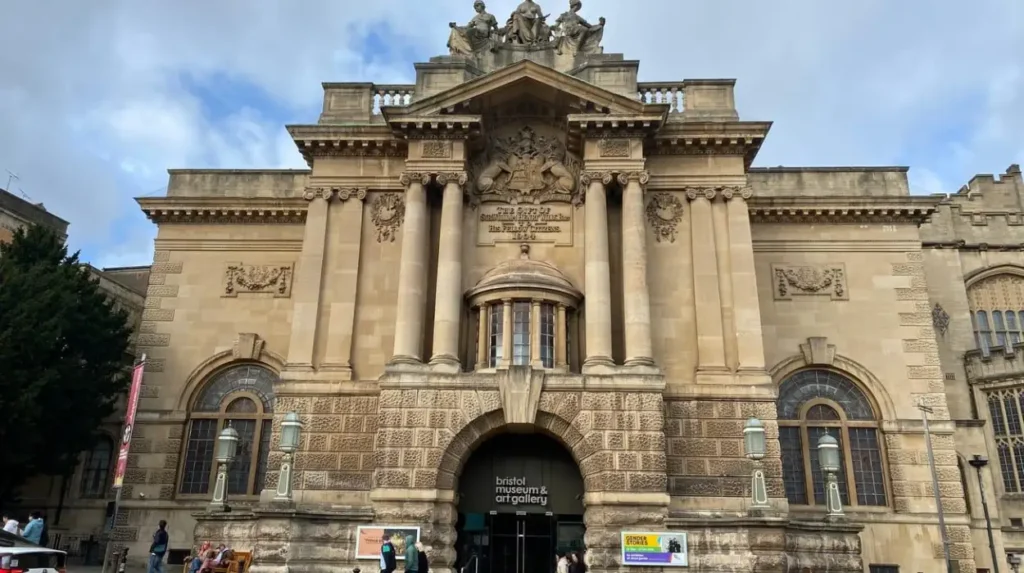
Art in Bristol developed through civic collecting, academies, industrial wealth, and modern creative practice. The Royal West of England Academy began in 1844, while Bristol Museum & Art Gallery opened in 1905, establishing major public collections and lasting cultural infrastructure.
The development of Bristol’s gallery infrastructure reflects the city’s long history as a commercial and cultural centre. During the nineteenth century, civic organisations and private benefactors supported collections, education, and artistic institutions.
The Royal West of England Academy represents an important part of this history. It began in 1844 as the Bristol Academy for the Promotion of Fine Arts. Ellen Sharples, an artist and major supporter of the institution, played an important role in its foundation. Her bequest later contributed to the development of the RWA’s permanent collection.
Bristol Museum & Art Gallery has a different institutional history. The Bristol City Art Gallery building was constructed between 1899 and 1905. The original building was designed to house fine art, while museum collections were located separately. The site was later reorganised following wartime damage and subsequent changes to the city’s cultural buildings.
The Bristol Blitz in 1940 caused severe damage to the museum building and affected its collections and interior. Post-war changes altered the institutional arrangement. The building associated with Bristol Museum & Art Gallery continues to provide a major public cultural space.
The historical development of Bristol galleries also reflects the city’s relationship with international trade and empire. Bristol Museums’ own historical interpretation recognises that significant wealth connected to the Bristol Institution was accumulated during the period of the British Empire and was directly or indirectly linked to transatlantic trade and enslavement. This history forms part of the wider context in which museum collections are interpreted today.
The twentieth century introduced further changes. Contemporary art centres increasingly focused on experimental practices, interdisciplinary programmes, public participation, and relationships between artists and communities. Arnolfini became a significant part of this transformation after its establishment in 1961.
The development of Spike Island added another model. Instead of separating exhibition activity from artist production, the organisation combines public exhibitions with studios, commissions, professional development, and creative businesses.
Bristol’s gallery history therefore extends from nineteenth-century academies and civic collecting to contemporary production environments. This historical continuity explains why the city supports both traditional art collections and experimental contemporary programmes.
What can visitors see at Bristol Museum & Art Gallery?
Yes, Bristol Museum & Art Gallery is a major destination for art. Its collection includes more than 1,300 paintings, over 200 sculptures, and about 20,000 works on paper, covering periods from the Renaissance to contemporary practice across diverse galleries today.
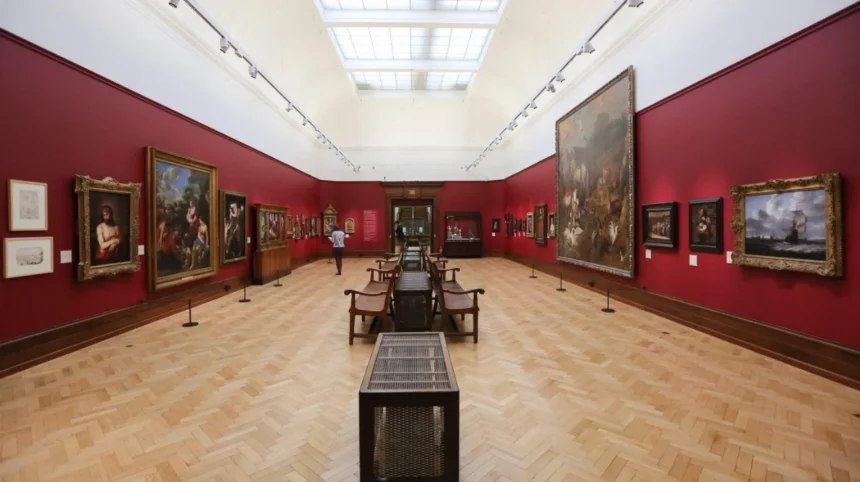
Bristol Museum & Art Gallery provides one of the broadest art collections available in the city. Its collection includes more than 1,300 paintings, over 200 sculptures, and approximately 20,000 works on paper. Installation art and video also form part of the collection.
The collection covers a long chronological range. Visitors can encounter Renaissance material, later European painting, British art, Victorian and Edwardian works, modern art, and contemporary pieces.
Victorian and Edwardian art forms a particular strength. Bristol Museums identifies works by artists including David Roberts, John Everett Millais, Edward Burne-Jones, and Alfred Munnings within this area of the fine-art collection.
The collection also provides insight into changing artistic movements. British painting during the nineteenth and early twentieth centuries moved beyond strict academic traditions. Artists explored historical subjects, literature, identity, landscape, contemporary life, symbolism, and European artistic influences.
Bristol’s own material culture also forms an important part of the museum experience. Applied art holdings include ceramics, glass, silver, furniture, and textiles. The collection has a particular emphasis on local objects and industries.
Bristol delftware is a notable example. The museum identifies Bristol as having one of the largest collections of English delftware, reflecting an industry that operated in and around the city from the 1640s until 1785. Bristol Blue glass is another significant part of the city’s decorative-art heritage.
The museum therefore provides more than a conventional sequence of paintings. Art is presented alongside decorative arts, local history, archaeology, natural history, and other collections. This multidisciplinary structure gives visitors a broader understanding of the city and its cultural environment.
For visitors interested in Bristol-specific history, the museum is particularly important because its collections connect local manufacturing, commerce, architecture, artistic production, and social history.
What makes the Royal West of England Academy important?
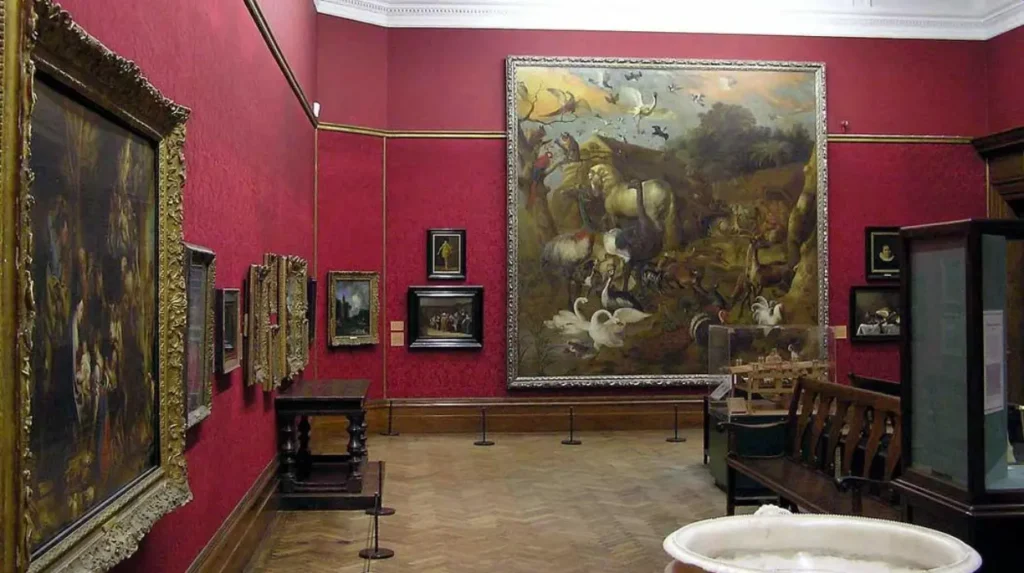
The Royal West of England Academy is Bristol’s historic fine-art institution, founded in 1844. Its permanent collection contains more than 1,700 works, including paintings, drawings, prints, sculpture, archives, artefacts, and architectural models, with strong South West connections and heritage today.
The Royal West of England Academy occupies a distinctive position in Bristol’s art landscape. Its identity combines the traditions of an art academy with the role of a public exhibition institution.
The RWA’s permanent collection contains more than 1,700 works. Most are paintings, but the holdings also include drawings, prints, sculpture, archives, artefacts, and architectural models. A substantial proportion of the collection relates to artists based in or associated with the South West.
This regional emphasis gives the RWA a particular relevance for understanding South West art. The collection includes portraiture, landscape, still life, abstract art, and figurative work.
The institution’s foundation is closely associated with Ellen Sharples. The RWA identifies Sharples as a key figure in the academy’s creation in 1844. Her bequest of paintings following her death in 1849 helped establish the foundations of the permanent collection.
The RWA building is also an important part of the visitor experience. The institution identifies the building as Grade II* listed, giving the venue architectural significance alongside its artistic function.
The academy’s role has developed beyond permanent collections. Temporary exhibitions allow the institution to present historic and modern artists, thematic exhibitions, regional talent, and contemporary work.
For visitors interested in British fine art, the RWA provides a different experience from the broader museum model. Its stronger emphasis on fine art, academy history, regional artists, and temporary exhibitions makes it a central destination for art-focused visits.
The RWA also contributes to Bristol’s educational and professional arts infrastructure. Its connections with artists, students, exhibitions, and cultural organisations help maintain a relationship between historical collections and contemporary artistic practice.
What does Arnolfini offer to contemporary art visitors?
Arnolfini is Bristol’s international centre for contemporary arts on the Harbourside. Founded in 1961, it presents visual art alongside performance, dance, film, music, and learning programmes, with exhibitions featuring internationally recognised artists and supporting Bristol-based creative talent and communities locally.
Arnolfini is one of Bristol’s most important contemporary art institutions. Its programme extends beyond conventional gallery exhibitions and includes performance, dance, film, music, learning, and public participation.
The organisation was established in 1961 and has developed an international profile. Its exhibition history includes artists such as Paula Rego, Jannis Kounellis, Grayson Perry, Rachel Whiteread, Peter Doig, Richard Long, Chantal Joffe, Sonia Boyce, and Frank Bowling.
This programme demonstrates the range of contemporary practices associated with the institution. Painting, sculpture, installation, moving image, performance, and interdisciplinary work can form part of the wider programme.
Arnolfini is housed in Bush House, a Grade II listed building on Bristol Harbourside. The building is also part of UWE Bristol’s City Campus. This creates a direct relationship between a major contemporary art organisation and higher education in art, design, curating, filmmaking, performance, and related disciplines.
The venue contains exhibition spaces, a theatre and cinema auditorium, a Reading Room, and studios. UWE Bristol describes five exhibition spaces within the building, alongside facilities supporting education and performance.
Arnolfini’s location is significant for visitors. It sits on Narrow Quay in the central Harbourside area, making it easy to combine an art visit with other cultural destinations.
The institution also supports Bristol-based artists. Its programme includes opportunities for local creative practitioners to engage with exhibitions, public activities, education, and professional networks.
For visitors interested in contemporary art, Arnolfini provides a strong connection between visual art and other creative disciplines. This interdisciplinary structure distinguishes it from institutions focused primarily on historical collections.
Why is Spike Island important for contemporary art in Bristol?
Spike Island is Bristol’s international centre for producing and exhibiting contemporary art. It operates from an 80,000-square-foot former industrial building and combines exhibitions with artist studios, commissions, professional development, printmaking, workspace, and public engagement activities for diverse audiences across Bristol.
Spike Island occupies a former industrial building near Bristol Harbourside. The 80,000-square-foot site supports a combination of public exhibition activity and artist production.
The organisation describes itself as an international centre for the production and exhibition of contemporary art. Its programme includes exhibitions, events, engagement activities, commissions, and opportunities for emerging and underrepresented artists.
The relationship between artists and exhibition-making is central to the organisation. Spike Island supports more than 70 subsidised studios and provides artist development opportunities. This structure gives visitors access to a working creative environment rather than an exhibition venue operating separately from artistic production.
The site is also closely connected with UWE Bristol. Fine Art students use the wider City Campus environment, while practising artists contribute to teaching and mentoring. UWE identifies Spike Island as an internationally renowned contemporary art centre and an important part of its creative education network.
Spike Island’s programme includes free exhibitions and public events. Its public offer therefore supports access to contemporary art without relying exclusively on conventional ticketed exhibition models.
Printmaking is another important component. Spike Print Studio operates within the wider organisation, creating connections between exhibition practice, production, specialist processes, and artist development.
The building itself reflects Bristol’s industrial history. Its conversion into an arts environment demonstrates how former industrial spaces have become part of the city’s contemporary cultural infrastructure.
For visitors, Spike Island provides an opportunity to understand how contemporary art is produced as well as displayed. Its combination of exhibitions, studios, education, creative businesses, and artist development gives it a distinct role within Bristol.
Explore more Area Guide
River Walks in Bristol: Best Riverside Routes, Harbour Paths, and Green Trails
Woodland Walks in Bristol: Best Trails, Estates and Routes
How are Bristol galleries connected to universities and creative industries?
Bristol’s gallery scene connects museums, contemporary art centres, universities, artist studios, and cultural venues. UWE Bristol’s City Campus links Arnolfini, Spike Island, Watershed, and Bower Ashton, creating an environment for exhibitions, education, research, and creative production across disciplines.
The relationship between Bristol’s galleries and higher education is a major feature of the city’s cultural infrastructure.
UWE Bristol’s City Campus incorporates Bower Ashton, Arnolfini, Spike Island, and Watershed. The university describes the campus as a creative and cultural industries environment located across several central Bristol sites.
Arnolfini provides exhibition and cultural facilities alongside UWE teaching, research, studios, and student activities. Students in art, graphic design, curating, fashion communication, filmmaking, drama, acting, and performance use facilities connected with the building.
Spike Island provides another important educational link. UWE’s Fine Art and Curating students engage with practising artists, exhibition programmes, studios, and professional development opportunities.
This model creates a pipeline between education and professional creative practice. Students can encounter working artists, curators, exhibition processes, technical production, and public engagement while studying.
The wider creative ecosystem also includes photography, printmaking, digital design, filmmaking, performance, and creative technology. UWE identifies specialist facilities across its City Campus, including photography resources, analogue darkrooms, digital production suites, print facilities, and design studios.
Watershed adds a film and digital-media dimension. It describes itself as a leading film culture and digital media centre in the South West, with a Pervasive Media Studio bringing together more than 100 artists, technologists, and academics.
Although Watershed is not a conventional art gallery, its role is relevant to Bristol’s wider visual culture. Contemporary art increasingly crosses boundaries between film, digital media, performance, technology, and installation.
Bristol’s gallery network therefore functions as part of a larger creative-industries system. Galleries provide exhibition platforms, universities provide education and research, studios support production, and cultural technology organisations support experimentation.
Which areas of Bristol are useful for an art gallery visit?
Visitors can plan Bristol gallery visits by matching venues to interests, checking current exhibition information, and grouping nearby locations. Harbourside venues support efficient cultural itineraries, while Clifton and other districts provide different collections, architecture, programmes, and creative contexts throughout Bristol.
Bristol Harbourside is one of the most useful areas for visitors interested in contemporary culture. Arnolfini is located on Narrow Quay, while Watershed sits nearby on the Harbourside. Spike Island is further south along Cumberland Road.
The concentration of cultural organisations makes the Harbourside suitable for visitors who want to combine several creative destinations within one itinerary.
Clifton provides a different gallery environment through the Royal West of England Academy. The RWA’s location and historic building create a distinct cultural setting compared with the industrial and waterfront architecture associated with Harbourside contemporary-art venues.
Bristol Museum & Art Gallery provides another major destination and is particularly relevant to visitors interested in historical art, applied arts, local heritage, archaeology, and natural history.
The best route depends on the purpose of the visit. A visitor interested in historic British painting has different priorities from someone researching contemporary installation art. Families also have different requirements from professional artists, students, collectors, or academic researchers.
Opening arrangements also vary between institutions. Exhibition schedules change, and temporary exhibitions have specific dates. Visitors should therefore check the official institution before travelling.
Current programmes are particularly important at Arnolfini and Spike Island because their contemporary exhibitions change regularly. Spike Island publishes current exhibitions, events, access information, and opening hours through its official website.
Bristol’s gallery network is also accessible without treating every venue as a standalone destination. Visitors can combine art with the city’s architecture, waterfront, cafés, universities, public spaces, and other cultural attractions.
This creates several possible gallery itineraries. A historical itinerary can focus on Bristol Museum & Art Gallery and the RWA. A contemporary itinerary can focus on Arnolfini and Spike Island. A creative-industries itinerary can include Arnolfini, Spike Island, and Watershed.
What types of art can visitors find in Bristol galleries?
Bristol’s gallery landscape covers a broad range of artistic forms. Traditional collections include portraiture, landscape, still life, figurative painting, sculpture, drawings, prints, ceramics, glass, furniture, and textiles.
Contemporary programmes expand this range to installation, performance, film, video, digital media, experimental practice, and interdisciplinary projects.
The RWA collection includes portraiture, landscapes, still life, abstract work, and figurative art. Its collection is predominantly associated with artists from the South West or artists connected with the region.
Bristol Museum & Art Gallery provides a wider chronological and geographical range. Its holdings extend from Renaissance material to modern and contemporary work. The museum’s art collection also connects fine art with decorative arts and local manufacturing.
Contemporary venues operate differently. Arnolfini presents visual art alongside performance, dance, film, music, and public learning.
Spike Island focuses heavily on contemporary production and exhibition. Its programme includes commissions, exhibitions, events, artist development, and studio practice.
This range is important for searchers looking for specific art forms. Bristol is not limited to painting galleries. The city supports traditional fine art, contemporary installation, photography, printmaking, film, digital culture, sculpture, performance, and interdisciplinary practice.
Why are Bristol’s art galleries important for the city’s cultural future?
Bristol’s galleries remain relevant because they preserve historical collections while supporting contemporary artists, education, research, and public participation. Their combined programmes connect local heritage with international art, creative industries, university activity, and changing cultural debates today across communities and institutions.
Bristol’s art galleries perform several cultural functions simultaneously. They preserve collections, present exhibitions, support artists, provide education, contribute to research, and create public spaces for cultural participation.
The historical collections provide long-term continuity. Bristol Museum & Art Gallery preserves thousands of artworks and objects, while the RWA maintains a permanent collection of more than 1,700 works.
Contemporary institutions provide a different form of cultural infrastructure. Arnolfini creates an international platform for contemporary art and interdisciplinary practice. Spike Island combines exhibition activity with artist production and professional development.
The university connection strengthens this system. UWE Bristol links students and researchers with galleries, studios, creative organisations, and practising artists.
This structure has implications for Bristol’s creative economy. Galleries require curators, technicians, educators, administrators, designers, conservators, artists, researchers, production specialists, and event professionals. Contemporary arts organisations also interact with universities, creative businesses, cultural funders, local communities, and international networks.
Digital technology is becoming increasingly relevant. Watershed’s work across film, digital media, and creative technology demonstrates how cultural institutions increasingly operate across physical and digital environments. Its Pervasive Media Studio brings artists, technologists, and academics together around new forms of media practice.
Bristol’s gallery sector also contributes to cultural education. Public programmes, workshops, talks, student collaborations, exhibitions, and artist development initiatives give audiences different ways to engage with art.
The city’s future gallery landscape therefore depends on the continued relationship between collections and contemporary practice. Historic institutions preserve evidence of the past. Contemporary centres provide platforms for new artistic work. Universities provide research and training. Studios support production.
Together, these functions create a connected cultural system rather than a collection of isolated venues.
For visitors, this means Bristol offers a gallery experience that extends beyond individual exhibitions. The city provides access to historic collections, regional art history, international contemporary practice, working artist communities, creative education, and interdisciplinary cultural activity.
Bristol’s art galleries are therefore significant both as visitor destinations and as long-term cultural infrastructure. Their combination of heritage, contemporary production, education, and public engagement gives the city a distinctive position within the South West arts landscape.
What are the best art galleries in Bristol?
The best-known art galleries in Bristol include Bristol Museum & Art Gallery, the Royal West of England Academy, Arnolfini, and Spike Island. Each venue offers a different experience, covering historic collections, fine art, contemporary exhibitions, artist studios, and interdisciplinary cultural programmes.