Bristol has one of England’s most established and diverse theatre scenes. The city combines historic theatre architecture, major touring productions, independent fringe performance, contemporary producing theatre, university theatre, community productions, and specialist archives.
- What makes the theatres in Bristol important?
- How did theatre develop in Bristol?
- Which major theatres should visitors know in Bristol?
- What types of performances can you see in Bristol theatres?
- How should you choose a theatre in Bristol?
- How do Bristol theatres support artists and theatre education?
- How is Bristol’s theatre heritage preserved?
- What is the future role of theatres in Bristol?
Theatre in Bristol is closely associated with the city’s cultural identity. Its history stretches from the opening of the Theatre Royal on King Street in 1766 to the modern programmes presented by Bristol Old Vic, Bristol Hippodrome, Tobacco Factory Theatres, The Wardrobe Theatre, Alma Tavern Theatre, Redgrave Theatre, and Wickham Theatre.
The city’s theatre offer serves different audiences and purposes. Large-scale productions attract visitors from across the South West. Smaller venues provide space for new writing, comedy, experimental work, emerging performers, and local companies. Historic venues also function as heritage attractions because their buildings preserve important elements of Bristol’s architectural and theatrical past.
What makes the theatres in Bristol important?
Bristol has a theatre network spanning historic repertory, large-scale touring, independent fringe, community, university, and experimental performance. Major examples include Bristol Old Vic, Bristol Hippodrome, Tobacco Factory Theatres, The Wardrobe Theatre, Alma Tavern Theatre, Redgrave Theatre, and Wickham Theatre today.
This range gives Bristol a theatre ecosystem rather than a single dominant venue. Each institution has a distinct operating model and audience purpose.
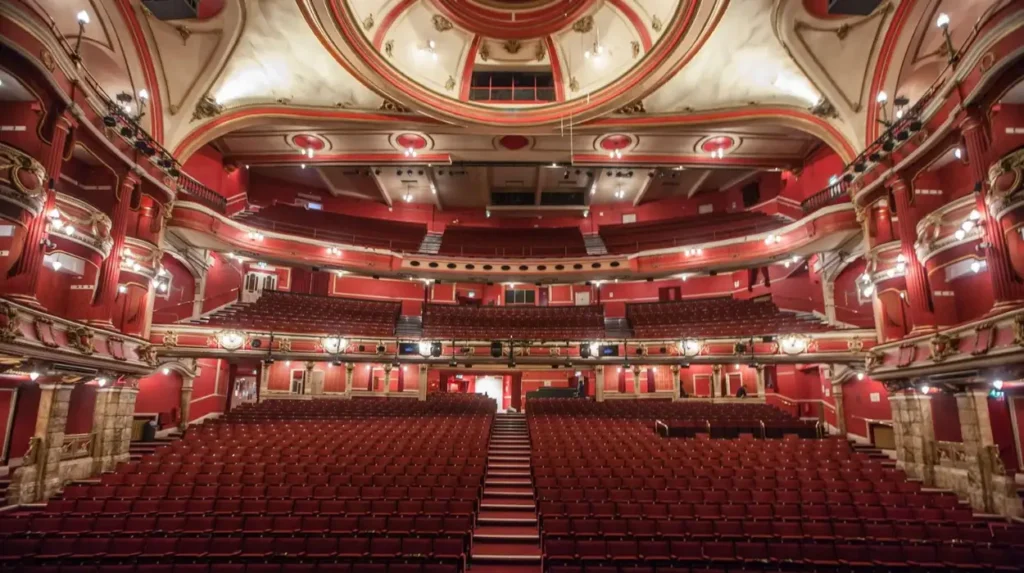
Bristol Old Vic occupies the historic Theatre Royal on King Street. The building first opened in 1766 and is recognised by the theatre as the oldest continuously working theatre in the English-speaking world. The Georgian auditorium remains central to the building’s identity.
Bristol Hippodrome serves a different function. The venue opened on 16 December 1912 and was designed by theatre architect Frank Matcham. Its large stage and auditorium make it an important destination for major touring musicals and large productions.
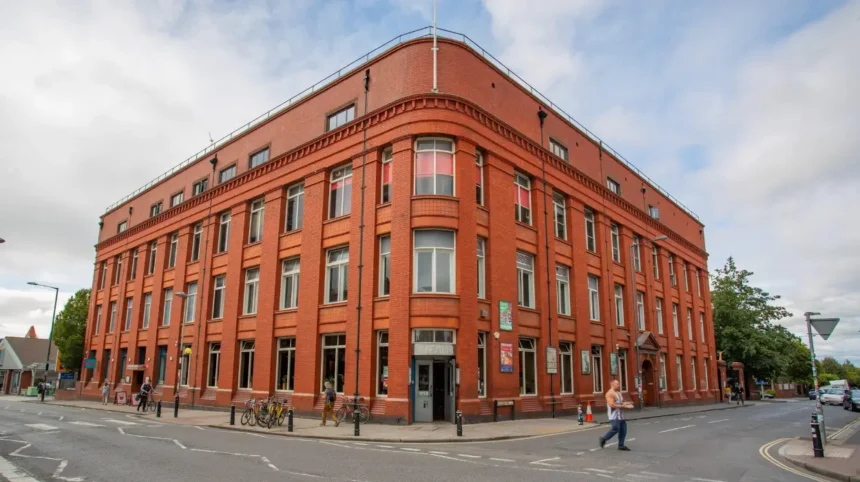
Tobacco Factory Theatres represents another part of Bristol’s theatre structure. It operates from the Tobacco Factory complex in Southville and combines performance with artist development, community participation, workshops, and creative activity.
The Wardrobe Theatre focuses on fringe theatre, comedy, family performance, and emerging creative work. It is located within The Old Market Assembly at 25 West Street in Old Market.
The result is a city where theatre exists at different scales. Visitors can select between major commercial productions, historic drama, independent theatre, intimate performances, educational work, and experimental shows.
How did theatre develop in Bristol?
Theatre in Bristol developed from the eighteenth-century Theatre Royal into a sector. Bristol Old Vic opened in 1766, Bristol Old Vic Company formed in 1946, and later venues expanded touring productions, new writing, comedy, family work, and experimental performance.
The modern Bristol theatre scene has roots in the eighteenth century. The New Theatre on King Street opened on 30 May 1766. It later became known as Theatre Royal Bristol before the building became closely identified with Bristol Old Vic.
The building survived major changes in British theatre. Its history includes changes in management, audience behaviour, performance styles, architecture, technology, and funding.
The twentieth century produced another major transformation. In 1942, the Theatre Royal building was placed on the market and purchased by the Theatre Royal Bristol Trust. In 1946, the trust invited the London Old Vic Company to establish a resident repertory company in Bristol. The resulting Bristol Old Vic Company included performers such as Peter O’Toole, John Neville, Timothy West, Barbara Leigh-Hunt, and Dorothy Tutin.
The Bristol Old Vic Theatre School was also established in 1946. It developed as a separate organisation from the Bristol Old Vic Company several decades later, while retaining shared historical roots.
The post-war period therefore established Bristol as an important centre for professional theatre training and repertory performance.
The city’s theatrical development continued beyond the historic centre. Tobacco Factory Theatres emerged from the regeneration of the former Imperial Tobacco site. Theatre activity began there in 1998 when Show of Strength experimented with using the building as a performance venue. Shakespeare at the Tobacco Factory followed in 2000 with productions including King Lear and A Midsummer Night’s Dream.
The Wardrobe Theatre demonstrates the development of the independent fringe sector. It began in May 2011 as a pop-up venue above The White Bear pub on St Michael’s Hill. The original space had approximately 50 seats and was established by Bristol artists seeking an alternative venue for emerging creative work. It later moved to Old Market, where it developed into a permanent fringe theatre.
Which major theatres should visitors know in Bristol?
Bristol Old Vic is the city’s flagship theatre on King Street, with a Georgian auditorium dating from 1766. Bristol Hippodrome is the major touring venue on St Augustine’s Parade, while Tobacco Factory, Wardrobe, Alma, Redgrave, and Wickham provide distinct smaller-scale formats.
Bristol Old Vic is essential for understanding Bristol’s theatrical heritage. Its Grade I listed building contains the historic Georgian auditorium and associated spaces. A major redevelopment completed in 2018 transformed its front-of-house facilities and created the Weston Studio. The project also restored elements of Coopers’ Hall and improved public access.
Bristol Hippodrome is the city’s principal large-scale touring theatre. Its 1912 building was designed by Frank Matcham, one of Britain’s most influential theatre architects. The venue has a large stage suited to touring musical productions and other major performances.
Tobacco Factory Theatres occupies part of the former Wills Tobacco complex in South Bristol. Its programme combines theatre with participation, artist development, education, and community activity. The theatre’s stated focus includes developing an inclusive creative community rooted in South Bristol.
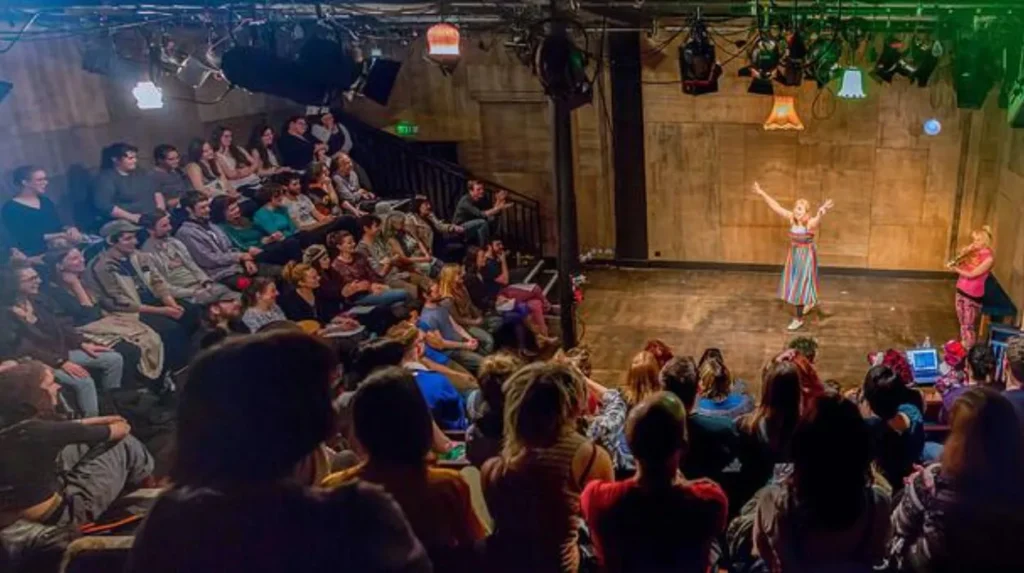
The Wardrobe Theatre operates in Old Market and describes itself as a leading Bristol fringe theatre. Its programming includes theatre, comedy, family shows, music, improv, and original performance.
Alma Tavern Theatre provides an intimate 50-seat performance space above the Alma Tavern on Alma Vale Road in Clifton. Its programme includes touring theatre, local theatre companies, new writing, university productions, and amateur performances.
The University of Bristol’s Wickham Theatre provides another important part of the city’s theatre infrastructure. The university describes its theatre facilities as including a 24-hour rehearsal space, sound and design studios, carpentry and costume workshops, and specialist academic resources.
These venues demonstrate how Bristol combines heritage theatres, commercial touring spaces, independent venues, neighbourhood theatres, and educational facilities.
What types of performances can you see in Bristol theatres?
Theatre programmes in Bristol cover drama, musicals, comedy, dance, family performance, Shakespeare, new writing, puppetry, and experimental work. Examples include touring musicals at Bristol Hippodrome, productions at Bristol Old Vic, Shakespeare at Tobacco Factory, fringe comedy at Wardrobe, and local writing at Alma.
The programme structure changes according to venue purpose.
Bristol Hippodrome specialises in large-scale touring productions. Its programming includes West End musicals, family shows, ballet, and other major touring performances. Visit Bristol’s theatre listings regularly feature productions at the Hippodrome, including major musical theatre titles.
Bristol Old Vic presents original theatre alongside established plays, revivals, musicals, family productions, and contemporary writing. Its current artistic strategy places strong emphasis on new voices, artist development, community engagement, and original stage work.
Tobacco Factory Theatres has a strong relationship with producing theatre and Shakespeare. Shakespeare at the Tobacco Factory has historically made classical texts central to the venue’s identity. The venue also provides opportunities for artists, young people, and community participants.
The Wardrobe Theatre occupies a different position. Its programme combines fringe theatre with comedy, improv, family entertainment, musical comedy, and experimental performance. Its 2026 programme demonstrates the continuing emphasis on independent and alternative performance.
Alma Tavern Theatre provides a compact environment for classic texts, new writing, touring productions, university societies, and amateur theatre. Its in-house Schoolhouse Productions has presented works including Abigail’s Party, A Doll’s House, and Shirley Valentine.
This programming diversity makes Bristol relevant to audiences interested in both mainstream theatre and independent performance.
How should you choose a theatre in Bristol?
Choosing a Bristol theatre depends on venue scale, programme, location, accessibility, and ticket format. Bristol Hippodrome suits touring shows; Bristol Old Vic suits historic and contemporary drama; Tobacco Factory suits producing theatre; Wardrobe suits fringe work; Alma suits intimate performances.
The first consideration is the type of production.
Visitors seeking large-scale musicals should check Bristol Hippodrome. The venue’s stage infrastructure supports productions designed for major touring circuits.
Visitors interested in theatre history should prioritise Bristol Old Vic. The building itself forms part of the experience because the auditorium dates from 1766 and retains its Georgian character. Bristol Old Vic also offers heritage tours and exhibitions.
Visitors seeking independent theatre should examine The Wardrobe Theatre. Its programme focuses on fringe theatre, comedy, family entertainment, and creative experimentation.
Tobacco Factory Theatres is particularly relevant for audiences interested in contemporary producing theatre, Shakespeare, artist development, and South Bristol’s cultural scene.
Alma Tavern Theatre provides a smaller-scale experience in Clifton. Its 50-seat auditorium creates an intimate setting for performances, while its programme connects professional, amateur, university, and local theatre activity.
Accessibility is another important factor. Venue-specific facilities differ. Bristol Old Vic states that its tours have a step-free route for people with access needs when requested at booking. Alma Tavern Theatre states that its upstairs theatre is not fully accessible for people with mobility issues because access involves narrow staircases.
Visitors should therefore check the individual venue’s latest access information before booking.
Location also affects planning. Bristol Old Vic is on King Street. Bristol Hippodrome is on St Augustine’s Parade. Tobacco Factory Theatres is on Raleigh Road in BS3. The Wardrobe Theatre is in Old Market. Alma Tavern Theatre is on Alma Vale Road in Clifton.
Explore more Area Guide
Gardens to Visit in Bristol: Complete Guide to Historic Estates, Parks and Hidden Green Spaces
Picnic Areas in Bristol: Best Parks, Cafes, Family Spots and Scenic Views
How do Bristol theatres support artists and theatre education?
Bristol theatres support artists through producing, commissioning, training, rehearsal, education, archives, and community participation. Bristol Old Vic operates artist development and learning programmes, Tobacco Factory supports artists and young people, and the University of Bristol provides theatre education, rehearsal facilities, and archives.
Bristol’s theatre infrastructure extends beyond performances.
Bristol Old Vic operates artist development and learning programmes. Its Artist Development programme focuses on supporting new writing in the region. The organisation also operates learning and engagement activity for young people across Bristol. In 2024/25, Bristol Old Vic reported more than 130,000 ticket holders, 6,000 school visitors, and more than 50,000 hours of engagement activity with young people.
The figures demonstrate the scale of theatre as an educational and participatory activity rather than simply a ticketed entertainment product.
Tobacco Factory Theatres also operates engagement and participation programmes. Its stated mission includes opportunities for young people, artists, and audiences to participate in creative activity.
The University of Bristol contributes through higher education. Bristol was the first UK university to offer a theatre degree, beginning in 1947. Its contemporary theatre facilities include rehearsal, design, sound, costume, and technical spaces.
The university also works with organisations including Bristol Old Vic, Tobacco Factory Theatres, Travelling Light, and other creative institutions.
This creates a connection between education and professional practice. Students gain access to specialist facilities and industry relationships, while the city’s theatre sector gains a pipeline of trained performers, designers, technicians, researchers, writers, and producers.
How is Bristol’s theatre heritage preserved?
Bristol’s theatre heritage is preserved through buildings, archives, collections, programmes, designs, photographs, and oral histories. The University of Bristol Theatre Collection holds more than 140 named collections, while Bristol Old Vic archives and Bristol Archives document the city’s theatrical development.
The preservation of theatre history is a major strength of Bristol’s cultural infrastructure.
The University of Bristol Theatre Collection is one of the world’s largest archives of British theatre and live art. It contains more than 140 named collections and archives covering actors, directors, designers, theatre companies, collectors, photographers, and other theatre professionals.
The collection includes costumes, designs, set models, photographs, audio-visual material, playbills, programmes, and other records. Its strongest areas include British theatre history, South West theatre, nineteenth-century theatre, post-Second World War theatre, live art, scenery, and costume design.
The Bristol Old Vic Company Archive provides another major historical resource. It contains administrative and production records dating from the company’s establishment in 1946. Materials include photographs, programmes, posters, press cuttings, prompt books, and administrative records.
The earlier history of the Theatre Royal is preserved through Bristol Archives. The combined resources document the transition from eighteenth-century theatre to modern professional performance.
The archive also preserves evidence of individual theatre practitioners. The John Elvery Archive, for example, contains original costume and set designs for more than 40 productions. Elvery served as Head of Design at Bristol Old Vic from 1972 to 1986.
The University of Bristol Theatre Collection is open to the public and provides free entry. Researchers can arrange access to archive materials through its reading rooms.
Bristol Old Vic also provides heritage experiences within its working theatre. Its tours include the Georgian auditorium, stage, gallery, pit passages, studio, Coopers’ Hall, and other historic spaces.
What is the future role of theatres in Bristol?
Theatre remains important to Bristol’s cultural infrastructure because it connects performance, education, heritage, tourism, creative employment, and community participation. Bristol City Council measures cultural impact through surveys, while venues continue developing programmes, artist support, and engagement across the city.
The future of Bristol theatre is closely connected to cultural policy, audience development, artist support, education, heritage preservation, and access.
Bristol City Council is developing a new Culture Strategy covering 2027 to 2037. The strategy process involves the public, cultural professionals, and council staff. The council also operates cultural impact research to measure jobs, investment, and social value generated by Bristol’s cultural sector.
Theatre contributes to each of these areas.
For tourism, large venues such as Bristol Hippodrome provide established destinations for visitors travelling to Bristol for major productions. Historic Bristol Old Vic adds a heritage dimension because the building itself dates from 1766.
For local participation, organisations such as Bristol Old Vic and Tobacco Factory Theatres provide education, community programmes, workshops, and artist development.
For emerging artists, independent venues provide spaces where new work can be tested before wider touring. The Wardrobe Theatre’s development from a small 2011 pop-up into a permanent Old Market venue demonstrates the role of independent theatre in Bristol’s creative economy.
For heritage, Bristol has an unusually strong combination of surviving historic architecture and specialist archival resources. Bristol Old Vic continues operating inside a theatre building that first opened in the eighteenth century, while the University of Bristol preserves extensive theatre documentation.
The city’s theatre sector therefore operates across multiple levels. Large touring productions, historic repertory, independent fringe theatre, community activity, theatre education, and archival research all form part of the same cultural ecosystem.
For visitors, this means Bristol offers more than a single theatre district. A theatre-focused visit can include a major musical at Bristol Hippodrome, a historic performance or tour at Bristol Old Vic, contemporary work at Tobacco Factory Theatres, fringe performance at The Wardrobe Theatre, or an intimate production at Alma Tavern Theatre.
The most reliable approach is to check each venue’s official programme, accessibility information, ticket availability, age guidance, and transport details before travelling. Programmes change throughout the year, while Bristol’s underlying theatre infrastructure remains a significant part of the city’s cultural identity.
What is the oldest theatre in Bristol?
Bristol Old Vic occupies the Theatre Royal building on King Street, which opened in 1766. The venue is recognised as the oldest continuously working theatre in the English-speaking world and remains an important part of Bristol’s theatrical heritage.