Key Points:
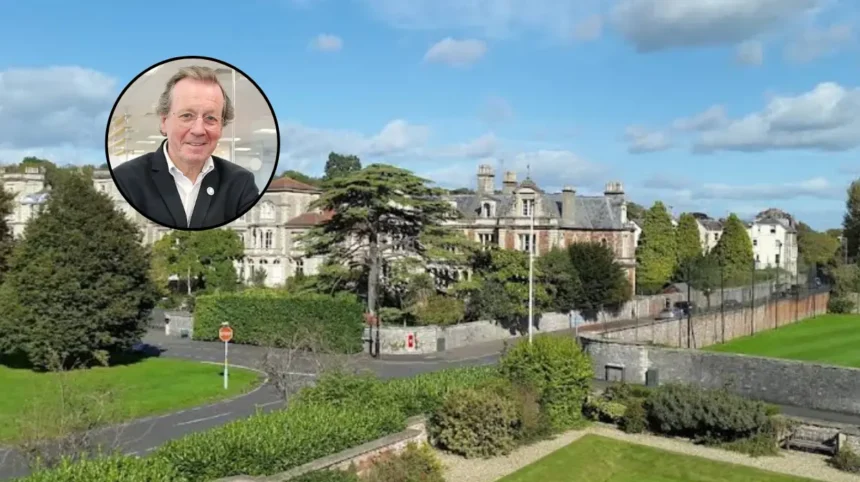
- George Ferguson, the Bristol Elected Mayor, has openly backed the possible sale of the Mansion House, which has historically served as the abode and venue for the lord mayors of the city.
- Richard Eddy, Councillor, has firmly protested the possible disposition of the property, referring to it as “an affront to both Bristol and its history.”
- Ferguson has justified his stance on the sale, stating that the Victorian-era building has grown into an increasingly expensive liability instead of being an asset for the entire community.
- Former Mayor Ferguson has stated that the ceremony duties, such as hosting visitors and presenting Lord Mayor’s medals, can easily fit into the Lord Mayor’s Parlour located inside City Hall.
- A restrictive covenant has been recommended for the possible purchaser of the property to ensure the preservation of the building and land.
Bristol (Bristol Express News) August 31, 2026 – Former Bristol Elected Mayor George Ferguson has come forward to back the potential sale of the city’s landmark Mansion House, entering a growing public debate over the maintenance of historic municipal assets versus the financial realities facing local government. Ferguson, who served as the city’s independent executive mayor, countered fierce criticism from opposition councillors by arguing that transferring the traditional residence of Bristol’s ceremonial lord mayors into private or alternative hands could secure a better future for the building while relieving pressure on public funds.
Why Is the Sale of Bristol’s Mansion House Proved to Be Controversial?
The Mansion House, situated in Clifton, has served as the official dwelling and primary entertaining venue for the lord mayors of Bristol for most of the past 150 years. The estate was originally bequeathed to the city by Alderman Proctor in the 19th century to ensure the civic head had an appropriate setting for entertaining foreign dignitaries, local figures, and visiting royalty.
However, the ongoing maintenance and operational costs associated with running a large Victorian manor have drawn scrutiny from civic leaders during times of tight municipal budgets. The building’s preservation has relied heavily on the support of the Guild of Guardians, a local organization dedicated to maintaining the property and supporting its traditional civic functions.
The political disagreement erupted following indications that Bristol City Council leadership might consider disposing of the property. Conservative Councillor Richard Eddy publicly condemned the concept of a sale, asserting that relinquishing municipal ownership would amount to “showing contempt for Bristol and its history.”
What Arguments Has George Ferguson Made in Favour of the Disposal?
Responding directly to opposition from civic figures, former Elected Mayor George Ferguson addressed the criticism by outlining the practical financial responsibilities of the local authority. Clarifying that his former role was an executive position managing city finances and property—unlike the purely ceremonial role of the lord mayor—Ferguson detailed how his perspective on the estate evolved over time.
Ferguson revealed that during his tenure in office, he had initially sought alternative solutions to prevent the property from becoming an unsustainable financial burden. He had tentatively proposed amalgamating the adjacent, government-owned judges’ lodgings with the Mansion House to facilitate a combined sale of the lodgings, though this plan was rejected by the Home Office due to security and operational concerns regarding judicial housing.
After further evaluation, Ferguson stated that he now supports an outright sale of the Mansion House, provided that strict protections are attached to the transaction. Rebutting Councillor Eddy’s remarks, Ferguson noted that selling the building does not equate to demolition, suggesting instead that a robust legal covenant requiring the buyer to maintain the building and surrounding grounds in their current form would protect the site’s historical integrity.
Ferguson emphasized that the local authority must prioritize citizen welfare, public health, and environmental safety over retaining grand historic estates that carry limited daily relevance for the broader population of Bristol. He added that ceremonial responsibilities—including formal receptions and the presentation of the Lord Mayor’s medal—could be seamlessly transferred to the Lord Mayor’s Parlour at City Hall.
Background of the Particular Development
The debate over the Mansion House reflects broader structural challenges faced by local authorities across the United Kingdom concerning public sector asset management. Under the Local Government Act 1972, councils carry a statutory duty to achieve “best value” when disposing of land and property assets. Over the last decade, municipal authorities have increasingly audited their real estate portfolios to reduce operational backlogs and fund essential public services.
In Bristol, civic governance underwent significant structural modification in recent years. The executive mayor model, established in 2012 and held first by George Ferguson and later by Marvin Rees, was officially abolished following a local referendum in 2022. The city transitioned back to a committee-based governance system in May 2024. Under this system, cross-party committees share responsibility for decisions regarding the council’s multi-million-pound property portfolio, bringing heightened political debate to the management of iconic heritage assets like the Mansion House.
Explore More Area Guide
Mental Health Support in Bristol: Services Guide 2026
Dentists in Bristol: NHS, Private & Emergency Dental Care
Prediction: How Will This Development Affect the Local Community and Taxpayers?
If Bristol City Council proceeds with the sale of the Mansion House under protective covenants, the decision will impact several distinct groups within the city:
- Local Taxpayers: Transferring the maintenance and utility burden of a historic Victorian estate to a private buyer or trust will reduce the council’s property operational costs. The capital receipt from any sale could be redirected toward municipal debt reduction or essential local infrastructure projects.
- Civic and Ceremonial Heritage Groups: Organisations such as the Guild of Guardians and supporters of traditional civic customs may experience a shift in how civic functions are staged. Moving ceremonial events permanently to City Hall will centralize civic life in the city centre, though it reduces the historic prestige associated with the Clifton venue.
- Local Residents and Heritage Advocates: If strict covenants are successfully implemented during a conveyance, the physical appearance and grounds of the Clifton property will remain preserved. However, the move may set a precedent for how the council handles other historic buildings in its estate, encouraging further reviews of underutilized municipal assets.