Key Points
- Bristol Airport suspended all flights on Friday evening (August 7, 2026) due to a runway defect, causing major disruption for passengers.
- Operations resumed at 8am on Saturday, August 8, 2026, but delays of up to five hours were reported, with some flights cancelled.
- Inbound flights were diverted to London, Birmingham, and Cardiff airports during the closure.
- Passengers described crowded terminals and poor communication from the airport.
- Affected flights included Jet2 services to Faro and EasyJet routes to Larnaca, Newcastle, Edinburgh, and Pula.
- The airport apologised for the inconvenience and advised passengers to check with their airlines for flight updates.
Bristol (Bristol Express News) August 8, 2026 – Passengers travelling to and from Bristol Airport have faced delays of up to five hours after its runway was closed on Friday evening due to a defect. The airport confirmed at 8am on Saturday that flights had resumed, but warned that disruption would continue throughout the day.
What caused the disruption at Bristol Airport?
Bristol Airport suspended all operations at approximately 6.08pm on Friday, August 7, 2026, after identifying a defect on the runway. A spokesperson for the airport stated:
“Due to a defect on the runway, we have temporarily suspended operations as a precaution, in order to inspect and repair the section affected. We apologise for any inconvenience. Safety is always our number one priority.”
The runway remained closed until 8am on Saturday, August 8, representing a 14-hour shutdown. Engineers worked through the night to carry out emergency repairs. No further official details about the nature of the defect have been released.
How have flights been affected?
Most flights scheduled to depart before 8am on Saturday have been severely delayed, with a small number cancelled entirely. According to the airport’s website, one of the first scheduled departures of the day, a Jet2 flight to Faro, Portugal, was delayed from 5.55am to 11.29am. A 7.15am EasyJet flight to Larnaca, Cyprus, is now expected to take off at 2pm.
Cancelled flights include EasyJet services heading for Newcastle and Edinburgh, as well as another to Pula, Croatia. Delays of up to two hours were reported for flights on Saturday, though the airport’s departures board showed delays of up to six hours for some early outbound flights.
Inbound flights have also been diverted to other airports, including London, Birmingham, and Cardiff. Passengers due to arrive in Bristol from European destinations, such as Krakow, Poland, were informed of delays just before boarding, leaving them stranded at departure airports.
What have passengers said about the disruption?
Passengers have described chaotic conditions at the airport during the closure. Richard Broadbent told the BBC:
“Suddenly all flights were cancelled and all passengers were moved to one place down at ground level, and it was absolutely packed.”
Paul Smith, who had planned to fly to Glasgow to celebrate his son’s 20th birthday, expressed frustration, stating: “The advice, support has been poor.” He noted that there were no announcements made over the public address system for more than an hour, leaving EasyJet representatives in the departure lounge as the sole source of updates.
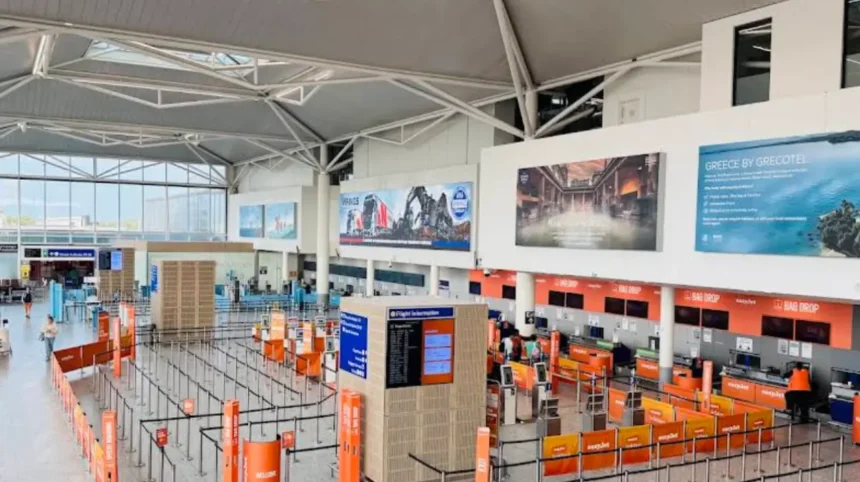
Other passengers said that communication from the airport had been “poor”, adding that they had heard there was a hole in the runway. Hundreds of people were left stuck in packed terminals overnight and into Saturday morning.
What has Bristol Airport said?
In an update on Saturday morning, Bristol Airport said:
“There will be some disruption to some flights today and customers are advised to refer to their airlines with any flight queries. We apologise for any inconvenience caused.”
The airport reiterated its commitment to safety, with a spokesperson saying:
“The safety of passengers and staff is of paramount importance, which is why we made the decision to temporarily suspend flights as a precaution and to allow for the runway repair to be carried out.”
Engineers were on site working to resolve the issue as quickly as possible, while terminal staff processed baggage in the terminal. The airport advised those due to travel on Saturday to still arrive at the airport in line with airline advice.
Background of the runway development
Bristol Airport has experienced runway-related disruptions in the past. In January 2023, faulty runway lights caused a temporary halt to take-offs and landings for just over an hour, with flights diverted to Birmingham and Cardiff. Engineers worked through the night to implement a short-term fix, with knock-on delays expected.
The airport’s runway is a critical piece of infrastructure, supporting thousands of flights annually. Emergency closures for safety inspections and repairs are rare but necessary when defects are identified. The 14-hour shutdown in August 2026 is one of the longest in recent memory, affecting thousands of holidaymakers during the peak summer travel season.
Explore More Local Bristol News
Why Are Bristol Commuters Demanding Lighting at Ashley Down Station, 2026
Bristol International Balloon Fiesta Begins at Ashton Court 2026
Prediction: How will this development affect passengers and the airport?
The disruption at Bristol Airport is likely to have short-term and medium-term effects on passengers and the airport’s operations. In the immediate term, passengers face continued delays, missed connections, and the stress of uncertain travel plans. Those with time-sensitive bookings, such as business travellers or holidaymakers with pre-booked accommodation, may incur additional costs or lose reservations.
In the medium term, the incident may prompt increased scrutiny of the airport’s runway maintenance protocols. Passengers may demand clearer communication during disruptions, as complaints about poor information flow were widespread. The airport may invest in more robust monitoring systems to detect runway defects earlier, reducing the need for emergency closures.
For the airport’s reputation, the incident could affect passenger confidence, particularly among those who experienced the disruption firsthand. However, the airport’s emphasis on safety and its prompt apology may mitigate some negative sentiment. If similar incidents occur in the future, the airport may face pressure from regulators and the public to improve its contingency planning and passenger support during disruptions.
Overall, while the immediate impact is one of inconvenience and frustration, the long-term effect will depend on how Bristol Airport responds to passenger feedback and whether it implements measures to prevent similar disruptions in the future.