Key Points
- Triple Opening Milestone: People from all around West of England came together to mark the opening of three milestone structures which include the Sloane Robinson Building of the University of Bristol, the new eastern entrance to Bristol Temple Meads railway station, and the new harbor walkway.
- Significant Funding: The milestone projects are funded by over half a billion pounds worth of total investments which include a £95 million government funding package into the station and £35 million contribution by West of England Mayoral Combined Authority (WECA).
- Economic and Societal Benefits: The overall Bristol Temple Quarter regeneration project seeks to enable the development of tens of thousands of new homes and generate 22,000 new jobs in the region.
- Deep Tech Cluster: The new Temple Quarter Enterprise Campus (TQEC) seeks to act as a platform for developing a deep tech growth cluster centered around Artificial Intelligence, Quantum Technologies, Connectivity, Cyber Security, Semiconductors, and Engineering Biology.
- Collaboration Model: The projects have been developed over ten years of collaboration among Bristol City Council, West of England Mayoral Combined Authority (WECA), Homes England, the University of Bristol, Network Rail, and Bristol Temple Quarter LLP.
Bristol (Bristol Express News)— September 8, 2026 — Bristol Temple Quarter achieved its most substantial progression to date as regional leaders, academic heads, and national officials assembled to inaugurate three major infrastructure and innovation projects, propelled by an investment exceeding half a billion pounds.
What Are the Key Components of the Bristol Temple Quarter Triple Opening?
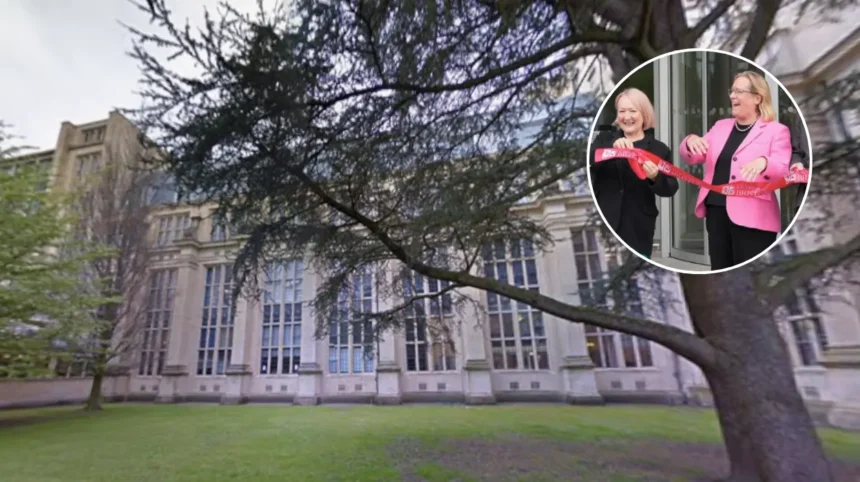
The joint launch brings together the University of Bristol’s newly minted Sloane Robinson Building at the Temple Quarter Enterprise Campus (TQEC), a £23 million eastern entrance for Brunel’s historic Bristol Temple Meads railway station, and a floating harbour walkway funded by more than £4 million from the West of England Mayoral Combined Authority (WECA).
As reported by the West of England Mayoral Combined Authority news service, Helen Godwin, Mayor of the West of England, stated that:
“Our investment in Bristol Temple Quarter, including the Temple Quarter Enterprise Campus and brand-new entrance for Brunel’s iconic railway station, will unlock a giant leap forward for the West of England. This major milestone here in the country’s fastest-growing regional economy will help pave the way for tens of thousands of new homes and new jobs.”
The newly opened Sloane Robinson Building replaces the derelict Royal Mail sorting office that had remained vacant on the site since 1997. Spanning 38,000 square metres across five floors, the facility is designed to host approximately 4,500 students and 650 staff members alongside industry collaborators and local community networks.
How Does the Project Impact Regional Transport and National Partnership?
The newly unveiled eastern entrance at Bristol Temple Meads is designed to serve millions of passengers annually, improving connectivity between the station, the new campus, and surrounding districts such as St Philip’s Marsh.
As detailed in the official government and regional releases, Rail Minister Lord Hendy stated that: “Bristol Temple Quarter shows what’s possible when national government, local leaders and partners work together to put transport at the heart of transforming a city for the people who live and work there. Backed by £95 million of government investment, this ambitious regeneration project is unlocking thousands of new homes and 22,000 new jobs across the region and today’s new entrance is an important step towards a dramatically improved station.”
Echoing the sentiment on local governance and cross-sector cooperation, Councillor Tony Dyer, Leader of Bristol City Council, noted that:
“The opening of the new Enterprise Campus, the eastern entrance to Bristol Temple Meads and the harbour walkway marks an important step in realising the vision for Bristol Temple Quarter. Together, these investments create stronger links between Temple Meads West and St Philip’s Marsh, helping to connect people with new opportunities for work, education, innovation and culture.”
Explore more Local Bristol News:
Bristol MP Demands Apology And Complete Rethink In Bristol 2026
Bristol Council Rolls Out New Bins And Bags In Bristol 2026
What Role Will the New Enterprise Campus Play in Innovation?
The establishment of the Temple Quarter Enterprise Campus represents a foundational shift for higher education integration and technological advancement in South West England. Professor Evelyn Welch, Vice-Chancellor and President of the University of Bristol, highlighted the dual significance of the launch coinciding with the institution’s 150th anniversary.
As documented by the University of Bristol and the regional authority, Professor Evelyn Welch stated that:
“This is not just an important day for the University of Bristol, this is an important day for the city of Bristol. We are delighted to open the doors to the Sloane Robinson Building as we mark our 150th anniversary and look towards the future. TQEC represents the next chapter in the transformation of Bristol and the West of England into a globally competitive innovation region, and a flagship example of how devolution can drive growth, inclusion and long-term prosperity.”
The campus incorporates cutting-edge facilities, including the 300-seat Bill Brown Lecture Theatre—built ‘in the round’ to foster dialogue—alongside 22 active learning studios and spaces dedicated to the Bristol Digital Futures Institute. It is explicitly tailored to anchor a deep tech growth cluster focusing on quantum technologies, artificial intelligence, advanced connectivity, cyber security, semiconductors, and engineering biology.
Background of the Development
The triple opening represents the culmination of more than a decade of strategic planning, land consolidation, and multi-agency cooperation. Historically, the wider 130-hectare Bristol Temple Quarter area suffered from underutilised industrial pockets, vacant plots like the old Royal Mail sorting office, and fragmented transit connections.
Recognising the zone’s potential to act as an economic engine for the South West, public sector bodies—including Bristol City Council, WECA, Homes England, and Network Rail—formed a unified framework that eventually formalised into the Bristol Temple Quarter Limited Liability Partnership (BTQLLP) in 2024. By pooling land resources and securing targeted regional devolution funds alongside central government backing, the partners sought to bypass plot-by-plot delays and deliver coherent, large-scale urban renewal centred around sustainability, active travel, and high-value employment.
This major regeneration milestone is poised to reshape the socio-economic landscape for local residents, students, commuters, and businesses across the West of England. For the local community and prospective workforce, the consolidation of a globally competitive deep tech hub alongside thousands of projected new homes and 22,000 jobs translates into enhanced prospects for local employment, education, and social mobility.
Commuters and everyday rail passengers will immediately benefit from streamlined transit flows via the new eastern station entrance and integrated harbour walkways, which shorten travel times between key commercial and residential sectors. However, the rapid commercial and residential densification of Temple Quarter will also place sustained pressure on local urban infrastructure, requiring meticulous long-term management of public services, housing affordability, and environmental mitigation to ensure that the region’s growth remains genuinely inclusive for all Bristolians.