Key Points
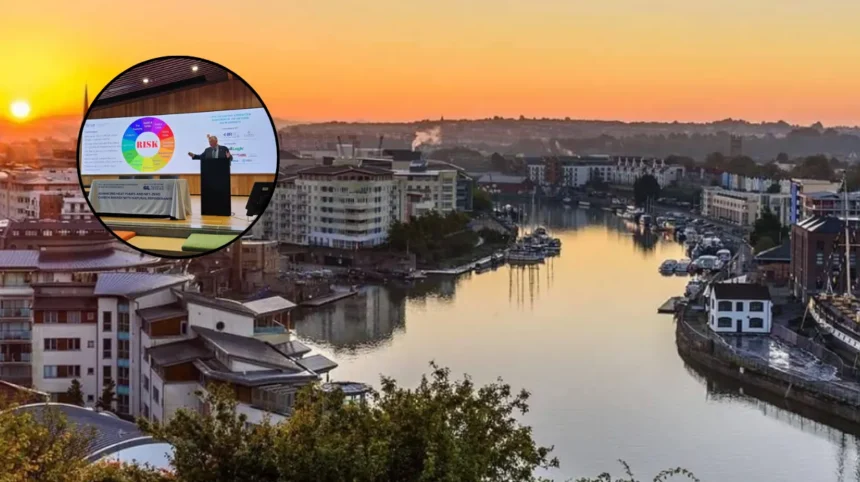
- Bristol has been officially selected to host the 18th International Institute of Refrigeration (IIR) Gustav Lorentzen Conference on Natural Refrigerants in 2028, marking the first time the global event will take place in England.
- The formal handover occurred at the closing ceremony of the 17th conference held at the University of Waikato in Hamilton, New Zealand.
- A prominent engineering executive represented the Institute of Refrigeration (IOR) during the official handover ceremony.
- Global utility and refrigerant markets have experienced severe volatility, with fluorine shortages driving prices up by up to 800 per cent since 2017.
- Technical research presented at the conference demonstrated that low-charge ammonia systems achieved higher energy efficiency compared to transcritical CO2 systems in warehouse applications, recording 22.63 kWh/m³ per year against 33.5 kWh/m³ per year.
- Analysis indicated that running costs can account for up to 85 per cent of an industrial cooling system’s total lifetime cost of ownership.
- Upgrading to a highly energy-efficient industrial refrigeration framework can achieve financial payback in approximately 4.5 years compared to less efficient options.
Bristol (Bristol Express News) August 27, 2026 – Bristol has been chosen to host the world’s primary international conference on natural refrigerants in 2028, securing the prestigious event for England for the first time in its history. The decision was formally announced during the closing ceremony of the 17th IIR-Gustav Lorentzen Conference on Natural Refrigerants, which took place from 23 to 26 August 2026 at the University of Waikato in Hamilton, New Zealand. A representative for the Institute of Refrigeration accepted the handover on behalf of the United Kingdom, confirming that Bristol will receive international delegates for the 18th edition of the biennial summit.
- Key Points
- What lead to Bristol securing the 2028 Gustav Lorentzen Conference?
- How can cooling businesses mitigate long-term operational risks?
- How do transcritical CO2 and low-charge ammonia systems compare in performance?
- What is the total financial impact of refrigerant energy consumption?
- Background of the natural refrigerants development
- Prediction: How will this development affect cold storage operators and industrial cooling engineers?
While the conference has previously visited the UK twice—having been hosted in Glasgow in 2004 and at Heriot-Watt University in Edinburgh in 2016—the 2028 gathering will be its debut south of the border. Held every two years, the Gustav Lorentzen Conference serves as the premier global forum for research, system design, energy efficiency, safety, and technological developments across heat pumps, air conditioning, and refrigeration.
What lead to Bristol securing the 2028 Gustav Lorentzen Conference?
The official transition of host duties occurred following a series of technical contributions and plenary presentations delivered during the 2026 proceedings in New Zealand. An engineering executive who served on the International Scientific Committee represented the Institute of Refrigeration during the ceremonial proceedings.
Speaking on the significance of the upcoming summit, the official stated that it was a privilege to represent the Institute of Refrigeration at the handover in New Zealand and expressed enthusiasm for welcoming colleagues from across the global refrigeration community to England. The official noted that the Gustav Lorentzen Conference is the venue where the sector’s strategic direction on natural refrigerants is established, making its arrival in England a landmark moment for the domestic industry.
Beyond representing the IOR at the closing ceremony, the delegate presented technical research and participated as a featured plenary speaker, contributing insights derived from extensive industrial expertise.
How can cooling businesses mitigate long-term operational risks?
During a plenary address titled Reducing Risk in Refrigeration, an expansive fifty-year retrospective was presented, examining the mounting pressures facing cooling infrastructure operators. The analysis traced commercial challenges from the 1970s energy crisis to current market volatility, where fluorine shortages have driven refrigerant prices upward by as much as 800 per cent since 2017.
The address expanded beyond traditional health and safety parameters to evaluate broader structural risks, including cyber-security threats, supply chain disruptions, changing legislative frameworks, potential litigation, economic volatility, and the emerging influence of artificial intelligence. It was argued that these disparate variables are rarely evaluated together within standard engineering research.
A primary finding of the address emphasized that workforce investment remains the single most effective defense against systemic disruption. The presenter asserted that investing in staff skills and formal qualifications at every operational level provides the strongest mechanism for commercial entities to build long-term resilience and minimize overall operational risk.
How do transcritical CO2 and low-charge ammonia systems compare in performance?
A second technical paper presented at the conference, titled Risk-Benefit Assessment of Industrial Refrigeration System Choices, evaluated refrigerant choices through whole-life performance metrics rather than initial capital investment or industry perception. The research examined whether the commercial advantages frequently claimed for transcritical CO2 configurations apply equally to heavy industrial applications when compared against low-charge ammonia options.
The investigation analyzed two real-world case studies of UK industrial warehouse installations: a transcritical CO2 system located at a refrigerated site in Scotland and a low-charge ammonia installation operating in England. In terms of reliability, both technical configurations recorded 100 per cent operational uptime throughout 2025 under identical schedules of proactive maintenance.
However, significant variance was recorded regarding energy efficiency:
- Low-Charge Ammonia System: Recorded a specific energy consumption of 22.63 kWh/m³ per year.
- Transcritical CO2 System: Recorded a specific energy consumption of 33.5 kWh/m³ per year.
While the author advised that a two-site comparison represents too concise a sample size to form a universal empirical rule, the data reinforces the necessity of evaluating industrial cooling plant decisions against verified, real-world performance rather than generalized assumptions regarding specific refrigerants.
What is the total financial impact of refrigerant energy consumption?
Financial modeling presented alongside the performance data revealed that higher energy efficiency yields rapid capital recovery under current market conditions. The data demonstrated that the lower-consumption system would achieve full financial payback in approximately 4.5 years, even if the alternative, less efficient system had been provided and installed free of capital charge.
This finding highlights a critical trend across the sector: as global energy prices continue to fluctuate, running costs increasingly dominate the total cost of ownership. Over the full operating lifespan of an industrial cooling installation, routine electricity consumption can account for as much as 85 per cent of total expenditure.
Despite the superior efficiency noted for ammonia in the warehouse study, it was highlighted that CO2 maintains distinct technical advantages in specific scenarios. In particular, CO2 systems offer superior performance at operating temperatures below -40°C. The author emphasized that no single refrigerant serves as a universal solution, stating that industrial refrigeration setups represent long-term investments where flawed initial decisions carry consequences far exceeding upfront expenses. What remains essential is assessing facility-specific requirements against empirical evidence to select a design that delivers sustained reliability and efficiency throughout its lifecycle.
Background of the natural refrigerants development
Natural refrigerants—primarily including ammonia (NH3), carbon dioxide (CO2), and hydrocarbons such as propane and isobutane—have gained momentum across the global heating, ventilation, air conditioning, and refrigeration (HVACR) sectors over recent decades. This structural shift is driven largely by international environmental agreements aimed at phasing out synthetic chemicals.
Synthetic refrigerants, such as chlorofluorocarbons (CFCs), hydrochlorofluorocarbons (HCFCs), and hydrofluorocarbons (HFCs), have historically dominated cooling systems. However, their high Ozone Depleting Potential (ODP) and significant Global Warming Potential (GWP) led to strict regulatory measures, including the Montreal Protocol and its subsequent Kigali Amendment. In response, regional frameworks like the European Union’s Fluorinated Greenhouse Gases (F-Gas) Regulations have progressively capped the production and import of synthetic refrigerants.
These environmental regulations, combined with raw material shortages that triggered price increases of up to 800 per cent for fluorinated gases since 2017, have accelerated the adoption of natural alternatives. The Gustav Lorentzen Conference, organized under the auspices of the International Institute of Refrigeration (IIR), was established to address the engineering, safety, and thermodynamic challenges of transitioning to zero-ODP and ultra-low-GWP natural fluids.
Explore More Local Bristol News
Mohamed Mohamoud Convicted of Daesh Terror Plot: Bristol 2026
South Bristol School Site Transformed Into 100% Affordable Housing Hengrove 2026
Prediction: How will this development affect cold storage operators and industrial cooling engineers?
The confirmation of Bristol as the host city for the 18th Gustav Lorentzen Conference in 2028, coupled with the latest research on system efficiency, is expected to influence UK cold storage operators, facility managers, and refrigeration engineers in several distinct ways:
- Acceleration of Capital Reallocation: Cold storage operators facing high electricity costs are likely to shift away from focusing solely on initial capital expenditure (CapEx). With energy costs representing up to 85 per cent of a system’s lifecycle expense, operators will increasingly prioritize long-term operational expenditure (OpEx). Facilities may accelerate capital replacement programs to transition toward systems that offer proved energy reductions, such as low-charge ammonia installations, aiming for payback windows under five years.
- Increased Demand for Specialized Workforce Training: As natural refrigerant systems often operate under high pressures (in the case of CO2) or carry toxicity considerations (in the case of ammonia), the research emphasis on workforce competence will push industrial operators to increase investment in technical training. Facilities that proactively accredit their technical teams will experience fewer operational disruptions, lower compliance risks, and better risk-mitigation profiles when securing commercial insurance.
- Strategic Technology Matching over Single-Refrigerant Trends: Rather than adopting a single standardized refrigerant across all sites, engineering directors are anticipated to implement highly targeted, application-specific designs. Facilities operating standard chilled or frozen warehouses are likely to evaluate low-charge ammonia more rigorously, whereas specialized deep-freeze operations running below -40°C will continue to deploy transcritical CO2 systems where its thermodynamic properties are optimized.
- Elevated Global Profile for UK HVACR Engineering: Hosting the 2028 summit in England will give domestic engineers, researchers, and equipment suppliers direct exposure to international technical developments. This proximity is likely to foster greater technical collaboration between UK industrial engineering firms and international research institutions, positioning the regional market as a key hub for sustainable cooling solutions leading up to 2028.