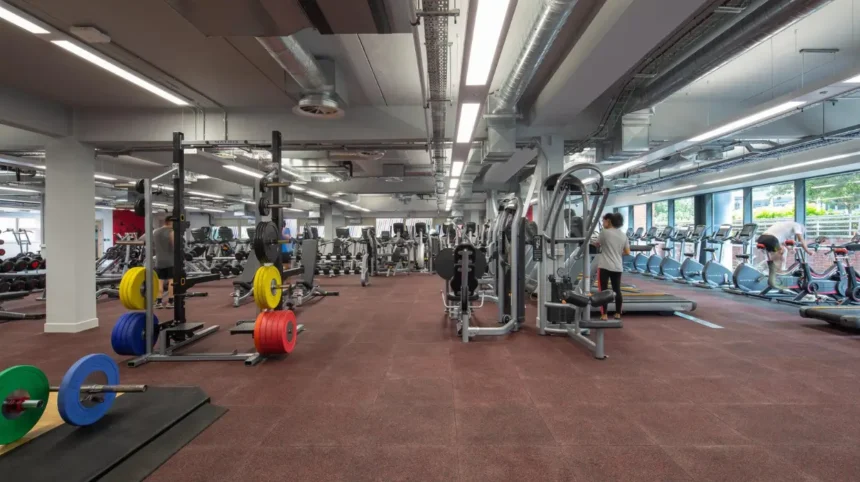
Bristol has a broad fitness landscape covering commercial gyms, council leisure centres, university facilities, specialist training spaces, community sports centres, and referral-based exercise programmes. This range gives residents, students, workers, visitors, and older adults access to structured exercise across different parts of the city.
- What are gyms in Bristol?
- Why is Bristol a significant city for fitness and physical activity?
- What types of gyms can you find in Bristol?
- What equipment do Bristol gyms typically provide?
- Which Bristol areas have access to gyms and leisure centres?
- How do Bristol leisure-centre gyms differ from commercial gyms?
- What should you check before joining a gym in Bristol?
- How much exercise should a gym routine provide in Bristol?
- Are Bristol gyms suitable for beginners?
- Which gym facilities in Bristol serve students?
- Do Bristol gyms support older adults and people with disabilities?
- What role do gyms play in Bristol’s wider public-health strategy?
- How is the Bristol gym sector likely to remain relevant?
- What is the best way to choose a gym in Bristol?
A gym is a facility designed for physical exercise using equipment, organised sessions, coaching, or a combination of these services. Modern gyms commonly provide cardiovascular equipment, resistance machines, free weights, functional training areas, changing facilities, and group exercise spaces. Some facilities also provide swimming pools, sports halls, personal training, rehabilitation support, or specialist strength facilities.
The Bristol fitness market is connected to the wider public-health objective of increasing physical activity. The UK Chief Medical Officers recommend that adults aged 19 to 64 accumulate at least 150 minutes of moderate-intensity activity each week, or 75 minutes of vigorous activity, alongside muscle-strengthening activity on at least two days.
What are gyms in Bristol?
Gyms in Bristol are fitness facilities providing equipment, exercise spaces, classes, coaching, and related services for improving strength, cardiovascular fitness, mobility, and general physical activity across the city.
The term covers more than conventional commercial fitness clubs. Bristol has council-operated leisure centres, university sports facilities, community sports centres, independent gyms, specialist training facilities, and fitness spaces connected with wider sporting organisations.
Bristol City Council identifies several leisure and sports facilities across the city. These include Bristol South Swimming Pool, Easton Leisure Centre, Henbury Leisure Centre, Hengrove Park Leisure Centre, Horfield Leisure Centre, Kingsdown Sports Centre, Jubilee Swimming Pool and Expressions Gym, and St Pauls Community Sports Academy.
Commercial and independent facilities form another part of the local market. These facilities commonly focus on general gym access, strength training, functional fitness, personal training, group exercise, or specialist disciplines.
University facilities provide another important category. The University of Bristol operates the Indoor Sports Centre in Clifton, alongside other sporting facilities. Its network includes gyms, fitness studios, swimming facilities, sports halls, outdoor pitches, and specialist sporting spaces.
The result is a geographically distributed fitness network rather than a single centralised gym district.
Why is Bristol a significant city for fitness and physical activity?
Bristol has a substantial network of leisure, university, community, and specialist sports facilities supporting gym training, swimming, group exercise, strength development, rehabilitation, and wider physical activity for different ages and fitness requirements.
The city’s fitness infrastructure supports both structured exercise and broader participation in physical activity. This distinction is important because a gym session represents only one method of meeting national activity recommendations.
The UK Chief Medical Officers state that adults should be physically active every day and minimise prolonged sedentary periods. Adults aged 19 to 64 should target at least 150 minutes of moderate activity or 75 minutes of vigorous activity weekly. Strengthening the major muscle groups should occur on at least two days each week.
Examples of moderate activities include brisk walking and cycling. Examples of vigorous activities include running, fast cycling, swimming, football, rugby, and circuit training.
This makes gyms useful because they allow people to combine different training methods within one facility. A typical session can include treadmill walking, resistance-machine exercises, free-weight training, rowing, cycling, or a structured class.
Bristol’s public sports infrastructure also supports people who need more structured pathways into exercise. The city’s Physical Activity Referral Scheme provides a 12-week programme for eligible inactive people with low or medium-risk health conditions. Participants visit a participating leisure centre or gym at least twice a week and receive an exercise programme from a trained referral instructor.
What types of gyms can you find in Bristol?
Bristol has several gym categories, including commercial fitness clubs, council leisure-centre gyms, university gyms, community sports facilities, specialist strength centres, and referral-based fitness venues serving different exercise goals.
Commercial gyms generally focus on flexible access and large equipment selections. Examples include facilities centred on cardiovascular machines, resistance machines, free weights, functional training zones, and group exercise.
Council leisure-centre gyms combine fitness facilities with wider community services. Examples in Bristol include Easton Leisure Centre, Hengrove Park Leisure Centre, Horfield Leisure Centre, Henbury Leisure Centre, and Bristol South Swimming Pool. The council provides information about opening times, classes, prices, facilities, accessibility, and parking for its leisure facilities.
University gyms serve students, staff, and, depending on the facility, members of the wider community. The University of Bristol’s Indoor Sports Centre includes a two-storey gym, fitness studios, a sports hall, and a sports medicine clinic.
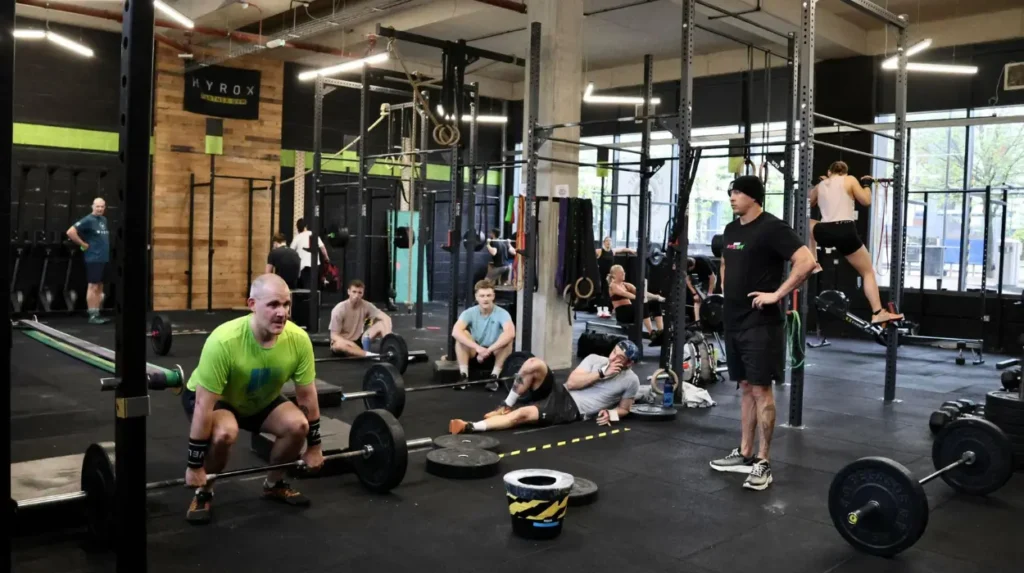
Specialist gyms focus on specific forms of training. Examples include Olympic weightlifting, strength and conditioning, functional fitness, rehabilitation, or sport-specific preparation.
Community sports centres provide another route into fitness. Bristol City Council lists facilities connected with schools, colleges, academies, and community organisations, including Ashton Park Sports Centre, Lockleaze Sports Centre, South Bristol Sports Centre, and Merchants’ Academy Sports Centre.
What equipment do Bristol gyms typically provide?
Bristol gyms typically provide cardiovascular machines, resistance equipment, free weights, functional-training equipment, stretching areas, and changing facilities, while larger venues add studios, sports halls, swimming pools, specialist training zones, or sports medicine services.
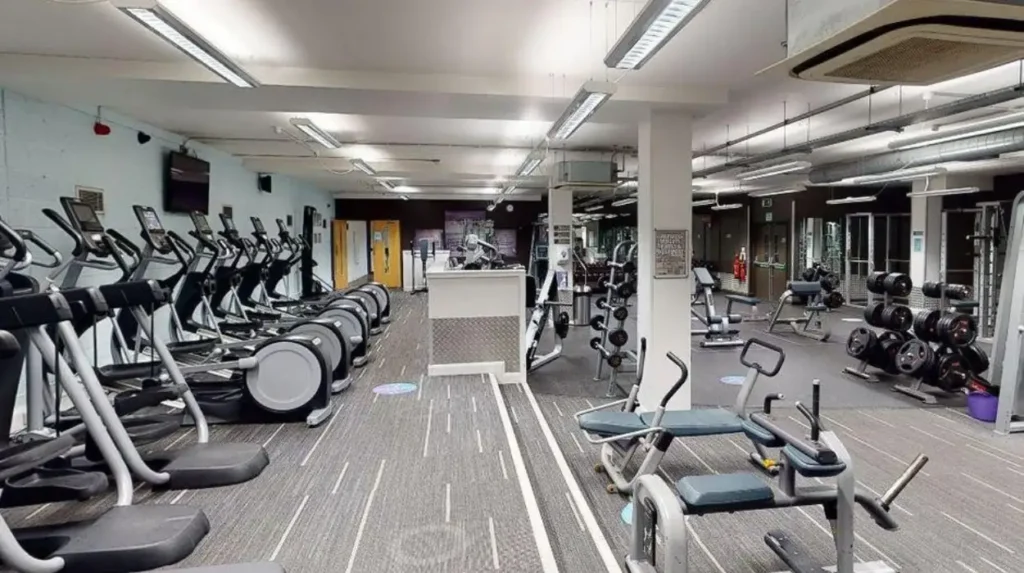
Cardiovascular equipment supports activities that raise heart rate for sustained periods. Examples include treadmills, exercise bikes, rowing machines, cross-trainers, and stair-climbing equipment.
Resistance equipment supports muscle-strengthening exercise. Examples include resistance machines, cable systems, benches, squat racks, and free weights such as dumbbells and barbells.
Functional-training areas provide equipment for movements involving multiple muscle groups. Examples include kettlebells, medicine balls, resistance bands, sleds, suspension systems, and open floor areas.
The University of Bristol Indoor Sports Centre illustrates the range available within a large institutional facility. Its main gym provides an open-plan fitness suite, while its upper gym includes free weights, cardio bikes, rowing machines, S-drive treadmills, a CrossFit-style rig, and a stretching area.
The university also provides a Studio Gym designed for people who find larger gym environments overwhelming. The space provides most general exercise options but excludes heavy lifting. It operates through pre-bookable 50-minute sessions with a capacity of eight people per session.
Equipment availability therefore differs significantly between facilities. A basic community gym and a large university sports centre serve different training requirements.
Which Bristol areas have access to gyms and leisure centres?
Gym and leisure facilities are distributed across Bristol rather than concentrated in one neighbourhood, with established facilities serving areas including Clifton, Easton, Horfield, Henbury, Hengrove, South Bristol, St Pauls, Kingsdown, and university districts.
Central Bristol has access to university and commercial fitness facilities. The University of Bristol Indoor Sports Centre is located at 3 Tyndall Avenue in Clifton and provides gym, studio, sports-hall, and sports-medicine facilities.
East Bristol has facilities including Easton Leisure Centre. North Bristol has Henbury Leisure Centre and Horfield Leisure Centre. South Bristol includes Bristol South Swimming Pool and Hengrove Park Leisure Centre.
The council’s published network also includes Kingsdown Sports Centre, which does not have a swimming pool, and St Pauls Community Sports Academy, which also operates without a pool.
This geographical distribution is important for residents choosing a gym based on travel time. A facility close to home or work reduces the practical distance involved in maintaining a regular exercise routine.
Transport accessibility, parking, opening hours, membership requirements, and class schedules also affect suitability. Two gyms with similar equipment can provide different levels of convenience because their locations and operating arrangements differ.
How do Bristol leisure-centre gyms differ from commercial gyms?
Leisure-centre gyms combine fitness with broader public sports services, while commercial gyms generally concentrate on gym access and fitness programmes; Bristol’s leisure network also includes swimming pools, sports halls, community activities, classes, and specialist facilities.
Council leisure centres operate as wider community facilities. Their services can include swimming, sports halls, fitness suites, group exercise, children’s activities, and other recreational programmes.
Bristol City Council’s leisure-centre network demonstrates this multi-purpose model. The council provides information covering pools, gyms, classes, prices, facilities, accessibility, parking, and timetables.
Commercial gyms often place greater emphasis on fitness membership and dedicated training environments. Their facilities can include extensive resistance equipment, cardio areas, functional-training zones, group classes, personal training, and longer opening hours.
Neither model is universally suitable. A swimmer who also wants gym access can benefit from a leisure centre with a pool. A person focused mainly on strength training can prioritise a facility with racks, barbells, platforms, and sufficient free-weight capacity.
Membership structures also differ. Some facilities operate through monthly memberships, while others provide pay-as-you-go access. The University of Bristol confirms that many of its sports facilities can be accessed on a pay-as-you-go basis, including swimming, sports halls, classes, and personal training.
What should you check before joining a gym in Bristol?
Before joining a Bristol gym, check location, opening hours, membership terms, equipment, classes, accessibility, changing facilities, peak-time conditions, cancellation rules, and whether the facility matches your specific training requirements.
Location should be assessed first. A convenient gym near home, work, university, or a regular transport route can reduce travel barriers.
Opening hours determine whether the facility fits the user’s schedule. Early-morning, lunchtime, evening, and weekend access have different practical benefits.
Equipment should match the intended training programme. A runner needs suitable treadmills and cardiovascular equipment. A strength trainee needs appropriate free weights, racks, benches, and resistance equipment. A group-exercise participant needs relevant classes and booking access.
Class availability also requires attention. The University of Bristol operates bookable fitness workshops and group sessions, and popular sessions can reach capacity.
Accessibility should also be assessed directly. Bristol City Council publishes accessibility information for its leisure facilities, while university facilities provide detailed access information for their venues.
Membership terms are equally important. Prospective members should review joining fees, recurring payments, notice periods, guest access, booking requirements, and cancellation conditions before committing.
How much exercise should a gym routine provide in Bristol?
Adults should target at least 150 minutes of moderate activity or 75 minutes of vigorous activity weekly, combined with muscle-strengthening exercise on at least two days, while reducing prolonged periods of sedentary behaviour.
The national guideline provides a useful framework for designing a gym routine. Adults aged 19 to 64 should accumulate at least 150 minutes of moderate-intensity activity or 75 minutes of vigorous-intensity activity each week.
Strength training should involve the major muscle groups. These include the legs, hips, back, abdomen, chest, shoulders, and arms. The NHS recommends muscle-strengthening activity on at least two days each week.
A practical weekly structure can combine different sessions. Examples include brisk treadmill walking, cycling, rowing, resistance-machine training, free-weight exercises, circuit training, and group fitness classes.
The guidelines do not require all exercise to happen inside a gym. Walking, cycling, swimming, sports, and active travel also contribute to overall physical activity.
Strength training has a separate role. The NHS recommends gradually increasing exercise and provides general guidance of 8 to 12 repetitions for an exercise, with at least two sets and three sets providing additional benefit.
People returning to exercise after inactivity should build their workload progressively. Anyone with health concerns or a medical condition should seek appropriate professional guidance before starting a new exercise programme.
Are Bristol gyms suitable for beginners?
Bristol gyms provide several entry points for beginners, including standard fitness suites, smaller training spaces, group sessions, personal training, community leisure facilities, and referral programmes designed for people returning to physical activity.
Beginners do not require advanced equipment to establish an effective routine. Basic cardiovascular machines, resistance machines, bodyweight exercises, and simple free-weight movements provide suitable starting points.
Leisure centres can be useful because they combine gym access with other activities. Examples include swimming, fitness classes, sports halls, and community programmes.
The University of Bristol’s Studio Gym provides a smaller environment for people who find large gym spaces overwhelming. It offers a range of equipment for general exercise and operates through pre-booked 50-minute sessions with a maximum capacity of eight people.
Structured support is also available through Bristol’s Physical Activity Referral Scheme. The programme lasts 12 weeks and provides personalised exercise programming through trained referral instructors for eligible inactive people with low or medium-risk health conditions.
Beginners should focus on consistency, movement technique, manageable workloads, and gradual progression. Increasing exercise intensity too quickly can make training difficult to sustain.
Which gym facilities in Bristol serve students?
Students in Bristol have access to university-operated gyms and wider sports facilities, with the University of Bristol providing a major network that includes gyms, fitness studios, swimming, sports halls, outdoor sports, and specialist strength facilities.
The University of Bristol’s Indoor Sports Centre sits at the heart of the university campus. It contains a two-storey gym, fitness studios, a double-court sports hall, and a sports medicine clinic.
The wider university sports network includes the Indoor Sports Centre, swimming pool, Coombe Dingle Sports Complex, Langford Gym, and gyms associated with university accommodation. The university also lists a Clifton Hill House gym as coming for the 2026/27 academic year.
Coombe Dingle Sports Complex provides a particularly broad sports environment. The university describes it as a 38-acre indoor and outdoor facility containing grass and artificial pitches, an indoor tennis centre, and an Olympic weightlifting gym.
University sports facilities therefore extend beyond conventional gym training. Students can combine resistance training with swimming, racket sports, team sports, running, conditioning, and other activities.
Public access also exists for selected university facilities. The University of Bristol states that members of the public can use its sports facilities and that many facilities provide pay-as-you-go options.
Do Bristol gyms support older adults and people with disabilities?
Bristol’s fitness infrastructure includes accessible leisure facilities, adapted physical-activity opportunities, strength and balance programmes, and referral services supporting older adults and disabled people with appropriate exercise participation.
Exercise requirements change across the life course. The UK Chief Medical Officers recommend that adults aged 65 and over remain physically active daily and undertake activities supporting strength, balance, and flexibility on at least two days each week. They also recommend building towards 150 minutes of moderate aerobic activity weekly.
For disabled adults, the national guidance highlights benefits including improved physical fitness, mobility, balance, independence, quality of life, and mental wellbeing. It also recommends strength and balance activities on at least two days each week.
Bristol’s leisure-centre network provides accessibility information alongside details about facilities, classes, opening times, and prices.
The University of Bristol also provides detailed access information for its Indoor Sports Centre through AccessAble.
People requiring adaptations should check equipment access, changing facilities, entrances, lifts, assistance arrangements, class formats, and staff support before attending.
What role do gyms play in Bristol’s wider public-health strategy?
Gyms support Bristol’s wider physical-activity objectives by providing structured places for cardiovascular exercise, resistance training, rehabilitation, group activity, and community participation alongside walking, cycling, outdoor recreation, and organised sport.
Gym participation contributes to the broader objective of reducing inactivity. Physical activity is associated with improved physical and mental health, while resistance training supports muscle strength and physical function. The national guidelines emphasise that some activity is better than none.
Bristol’s Physical Activity Referral Scheme directly connects exercise facilities with health improvement. The scheme is designed for inactive people who have low or medium-risk health conditions and provides personalised programmes through trained referral instructors.
The city’s public facilities also support participation beyond traditional gym workouts. Council facilities include swimming pools, sports centres, outdoor sports facilities, disability sport, and specialist activities.
This creates a broader fitness ecosystem. A person can combine gym-based strength training with walking, cycling, swimming, football, running, or other activities.
The health value therefore depends on total physical activity rather than gym attendance alone. A regular gym membership is most useful when it supports a sustainable weekly pattern of movement and exercise.
Explore More Area Guide
Bristol Property Market Trends and House Prices 2026
Student Accommodation in Bristol: Complete Guide 2026
How is the Bristol gym sector likely to remain relevant?
Bristol’s gym sector remains relevant because national activity guidelines continue to emphasise aerobic exercise, strength training, reduced sedentary time, accessible facilities, structured programmes, and physical activity that fits different ages and abilities.
Fitness provision is becoming increasingly varied. Large gyms continue to provide extensive equipment, while universities, councils, community organisations, and specialist providers address more specific requirements.
Technology also influences modern gym use through booking systems, fitness apps, digital classes, wearable activity tracking, and online exercise resources. The University of Bristol, for example, uses its Active app for booking certain fitness workshops and group sessions.
Smaller and more specialised spaces are also relevant. The university’s Studio Gym demonstrates a model that addresses environmental preferences by providing a smaller, pre-bookable workout space.
The future relevance of gyms also depends on inclusion. Facilities that provide accessible equipment, suitable classes, trained staff, and flexible participation routes can serve broader sections of the population.
Bristol’s established combination of commercial gyms, public leisure centres, university facilities, community sports centres, specialist training venues, and referral programmes provides a substantial foundation for continued physical activity participation.
What is the best way to choose a gym in Bristol?
The best Bristol gym is determined by location, equipment, opening hours, training goals, accessibility, membership terms, classes, support services, and total convenience rather than by gym size or brand alone.
Start with the purpose of training. Strength development requires appropriate resistance equipment. Cardiovascular fitness requires suitable machines or activity spaces. Group exercise requires relevant classes. Rehabilitation requires qualified professional support.
Next, assess location and opening hours. A gym that fits naturally into a daily route is easier to integrate into a consistent routine.
Equipment should then be compared against the intended programme. Examples include treadmills for running and walking, rowing machines for cardiovascular conditioning, resistance machines for guided strength training, and free weights for progressive resistance exercise.
Classes and coaching are important for people who prefer structured sessions. The University of Bristol provides examples including Body Pump, yoga, spin, and LES MILLS virtual classes.
Finally, check accessibility, changing facilities, booking rules, peak-time arrangements, membership conditions, and cancellation policies.
Bristol’s gym market provides enough variation to support different priorities. The most appropriate facility is the one that matches the user’s exercise objectives, practical schedule, budget, location, and required level of support.
What types of gyms are available in Bristol?
Bristol has commercial gyms, council leisure-centre gyms, university fitness centres, community sports facilities, specialist strength gyms, and referral-based exercise facilities. Examples include Easton Leisure Centre, Horfield Leisure Centre, Hengrove Park Leisure Centre, and University of Bristol sports facilities.