Bristol has one of the most established property markets in South West England. The city combines strong employment, major universities, transport investment, regeneration, limited urban land and sustained housing demand. These factors influence property prices, private rents, development activity and buyer behaviour.
- What is happening in the Bristol property market?
- Why has Bristol historically attracted strong property demand?
- How have Bristol house prices changed recently?
- Which property types are most expensive in Bristol?
- How are Bristol private rents changing?
- Why is housing supply important to Bristol property trends?
- Which Bristol areas are important for property market activity?
- How does new development affect Bristol property trends?
- What role does affordable housing play in Bristol?
- How do interest rates affect Bristol property demand?
- How does Bristol compare with the wider South West housing market?
- What does Bristol regeneration mean for future property trends?
- What should buyers monitor in the Bristol property market?
- What should landlords and investors understand about Bristol property trends?
- What are the main long-term drivers of Bristol property market trends?
- What do the latest Bristol property trends mean for the future?
The latest official data provides a clear picture of the market. In June 2026, the average Bristol house price was £357,000, representing annual growth of 3.5%. The average price for first-time buyers was £317,000, while the average mortgage-buyer price was £358,000.
Rental demand also remains significant. The average private rent reached £1,880 per month in July 2026, up from £1,765 in July 2025. This represented annual rental growth of 6.5%, above the South West average of 4.5%.
These figures show why Bristol property market trends matter to homeowners, buyers, landlords, tenants, developers and investors.
What is happening in the Bristol property market?
Bristol’s property market is experiencing moderate house price growth alongside stronger rental inflation, supported by employment, population demand, constrained housing supply and continuing regeneration across major development areas.
The latest Office for National Statistics data shows that the Bristol market has moved into a period of measured price growth rather than the rapid inflation seen during earlier housing cycles.
The average Bristol property price reached £357,000 in June 2026. This was 3.5% higher than the revised June 2025 figure. Bristol therefore recorded stronger annual house price growth than the South West overall, where prices increased by 1.9% over the same period.
The market is also diverse. Average prices in June 2026 were approximately:
- Detached properties: £696,000
- Semi-detached properties: £452,000
- Terraced properties: £388,000
- Flats and maisonettes: £246,000
These differences demonstrate why city-wide averages do not represent every Bristol neighbourhood or property type. A central flat, a Victorian terraced house and a suburban detached property operate within different price segments.
Bristol’s property market is therefore best understood through several connected indicators. These include sale prices, property type, buyer category, rental values, housing supply, development activity, affordability and transport accessibility.
Why has Bristol historically attracted strong property demand?
Bristol has attracted sustained property demand because it is a major employment, education, cultural and transport centre with a large urban population, established neighbourhoods and continuing investment in housing, infrastructure and regeneration.
Bristol is the largest city in the South West of England and serves as an important economic centre for the wider region. Its economy includes professional services, technology, engineering, creative industries, education, healthcare and advanced business services.
The presence of the University of Bristol and University of the West of England, Bristol creates a large student and graduate population. This supports demand for flats, shared housing and privately rented accommodation.
Bristol’s employment base also contributes to housing demand. People relocating for employment require both rental and owner-occupied homes. Established neighbourhoods close to employment centres have therefore remained important parts of the housing market.
The city also benefits from its position within the wider West of England economic area. Bristol connects with Bath, South Gloucestershire, North Somerset and surrounding communities through road and rail networks.
Historically, Bristol experienced substantial house price growth during the long expansion of the UK housing market. Price growth slowed during periods of higher mortgage costs and economic uncertainty, but the underlying demand drivers remained important.
The city’s geography is also significant. Bristol is bounded by established urban development, environmental constraints and neighbouring local authorities. New housing therefore depends heavily on brownfield redevelopment, urban intensification and carefully planned expansion.
How have Bristol house prices changed recently?
Bristol house prices increased 3.5% annually to June 2026, reaching an average of £357,000, while first-time buyers paid an average £317,000, showing renewed but measured growth across the local housing market.
The latest UK House Price Index provides the clearest official measure of Bristol’s recent property performance.
In June 2026, the average price in the City of Bristol was £356,824, compared with £344,734 one year earlier. This produced annual growth of approximately 3.5%.
The figure is important because it represents completed transactions rather than asking prices advertised by estate agents. Asking prices can change during marketing, while Land Registry-based statistics focus on completed sales.
First-time buyers occupied a lower price segment. The average first-time-buyer property cost £317,000 in June 2026, compared with £306,000 a year earlier. This represented annual growth of 3.8%.
Mortgage-funded purchases averaged approximately £358,000. This figure is close to the overall Bristol average because mortgage buyers represent an important share of the city’s owner-occupied market.
Price growth is not uniform. Property type, location, condition, tenure, floor area and proximity to transport all affect individual sale prices.
A city-wide average should therefore be used as a market indicator rather than as a valuation for a specific property.
Which property types are most expensive in Bristol?
Detached homes are the most expensive major property type in Bristol, followed by semi-detached houses, terraced properties and flats or maisonettes, with significant price differences between these categories.
Official June 2026 figures show a substantial price hierarchy across Bristol’s property types. Detached homes averaged £696,000, making them the highest-priced category.
Semi-detached properties averaged £452,000, while terraced properties averaged £388,000. Flats and maisonettes had the lowest average at £246,000.
This structure reflects differences in land, floor space, gardens, parking, building form and location.
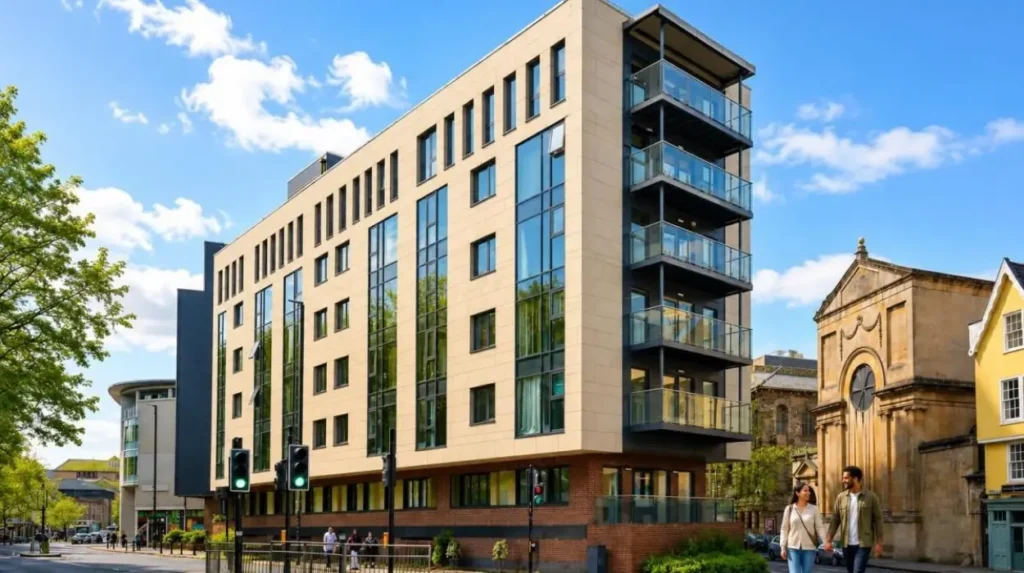
Flats are particularly important for buyers seeking lower entry prices within the city. They are also significant within the private rental sector because they provide accommodation close to employment, universities, transport and central amenities.
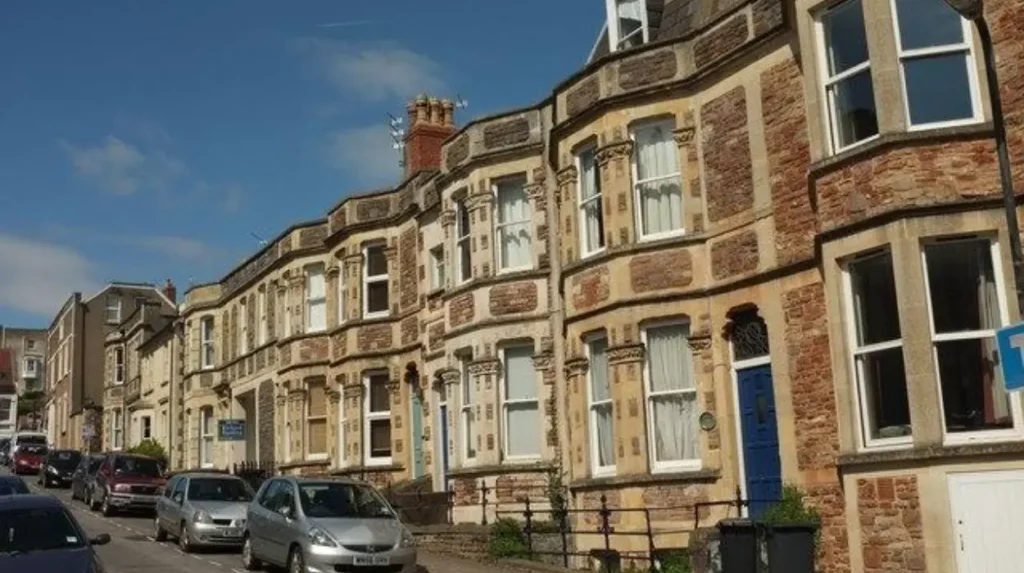
Terraced housing represents another major segment. Bristol contains extensive historic terraced housing, particularly in established inner-city neighbourhoods.
Semi-detached and detached properties are more common in suburban areas where larger plots and family-oriented housing dominate.
Property type also influences rental values. In July 2026, Bristol’s average private rents ranged from £1,506 for flats and maisonettes to £2,101 for detached properties.
These figures demonstrate how purchase and rental markets are linked to the physical structure of the housing stock.
How are Bristol private rents changing?
Bristol private rents reached £1,880 per month in July 2026, increasing 6.5% annually, with three-bedroom homes rising 7.0% and one-bedroom homes averaging £1,223 per month.
Rental growth is one of the most important current Bristol property market trends.
The Office for National Statistics recorded an average private rent of £1,880 per month in July 2026. This was £115 higher than the £1,765 average recorded in July 2025. Annual rental inflation therefore reached 6.5%.
Bristol’s rental inflation exceeded the South West average of 4.5% during the same period.
Rental values also vary significantly by bedroom count. In July 2026, average Bristol rents were:
- One bedroom: £1,223
- Two bedrooms: £1,541
- Three bedrooms: £1,755
- Four or more bedrooms: £2,542
The three-bedroom category recorded particularly strong annual growth of 7.0%.
Rental values also differ by property type. Average rents were £1,506 for flats and maisonettes, £2,005 for terraced properties, £2,086 for semi-detached properties and £2,101 for detached homes.
The figures indicate strong demand across several segments of Bristol’s private rented sector.
Why is housing supply important to Bristol property trends?
Housing supply is central to Bristol property trends because the city has identified substantial long-term housing requirements, while planning policy focuses on new homes, affordable housing, urban development and regeneration.
Bristol City Council’s housing evidence identifies a clear requirement for additional homes. The council’s housing need and supply work states that population growth, high house prices and affordable housing pressures create a significant need for new housing.
The Government’s 2023 standard method produced a Bristol housing need figure of 3,380 homes per year, including a 35% cities and urban centres uplift. Bristol City Council’s evidence separately identified a locally derived requirement of approximately 2,600 homes per year using more recent demographic evidence.
The city’s draft Local Plan uses a different planning framework and identifies an annual average requirement of 1,925 new homes, alongside a target of 12,000 affordable homes by 2040.
These figures come from different planning methodologies and should not be treated as interchangeable forecasts.
Housing supply affects the market through the balance between available properties and household demand. When construction fails to match household formation and population requirements, competition for existing housing increases.
Supply also affects the rental market. Limited additions to the rental stock can intensify competition among tenants.
Which Bristol areas are important for property market activity?
Property activity is distributed across central, inner-city and suburban Bristol, with demand influenced by transport access, employment centres, universities, regeneration schemes, housing type, local amenities and proximity to major infrastructure.
Bristol does not operate as a single uniform property market.
Central neighbourhoods generally contain a high proportion of flats, converted buildings and period terraces. These areas attract professionals, students, investors and households seeking proximity to employment and cultural facilities.
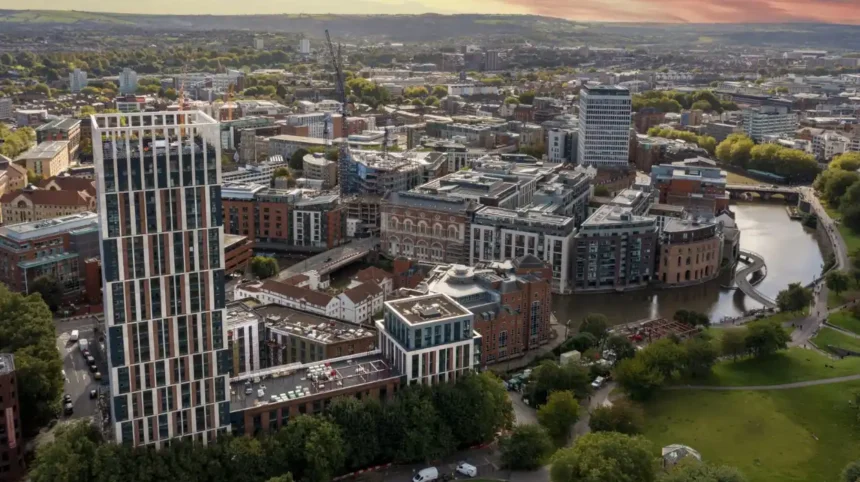
Areas around Temple Quarter are particularly important because regeneration is reshaping one of Bristol’s major central development zones. The wider Temple Quarter programme connects housing, employment, transport and education investment.
Neighbourhoods such as Bedminster, Southville, Bishopston, Horfield, Redland, Fishponds, Easton, St George and Brislington contain different combinations of Victorian terraces, modern apartments, family homes and redevelopment sites.
Outer areas provide larger family housing and access to different transport and school catchments. This creates different price and rental patterns from those found in central Bristol.
Transport is a major property-market factor. Properties near major rail stations, bus corridors and planned transport infrastructure can attract buyers and tenants seeking shorter journeys.
However, property performance depends on multiple variables. Transport access alone does not determine value. Property condition, tenure, local amenities, energy efficiency, parking and neighbourhood characteristics also affect demand.
How does new development affect Bristol property trends?
New development increases housing supply, creates new property types, supports regeneration and changes local neighbourhood structures, while development costs, planning policy, infrastructure requirements and affordability determine how much housing reaches the market.
New-build development forms an important part of Bristol’s long-term housing strategy.
The Bristol Local Plan places housing delivery within a wider framework covering urban living, affordable housing, climate change, biodiversity, infrastructure and sustainable communities.
Development is increasingly concentrated on previously developed land and major regeneration locations. Brownfield sites can provide opportunities to increase housing supply without expanding the city’s urban footprint into undeveloped areas.
New developments also introduce different housing formats. These include apartments, townhouses, family homes, affordable homes and mixed-use developments.
The effects extend beyond individual properties. Large schemes can introduce new public spaces, commercial units, transport improvements and community infrastructure.
Development also influences nearby existing properties. Increased local amenities can change neighbourhood attractiveness, while construction activity, traffic and changes in density can affect local conditions.
Bristol’s future housing supply therefore depends not only on planning permissions. Developers also require viable financing, construction capacity, infrastructure and market demand.
What role does affordable housing play in Bristol?
Affordable housing is a major Bristol property-market issue because market prices and rents remain high relative to many household budgets, while local planning policy prioritises additional affordable homes through new development and housing programmes.
Affordable housing refers to housing provided at below-market costs through defined schemes and eligibility criteria. It includes social rent, affordable rent and affordable homeownership products such as shared ownership.
Bristol’s housing evidence identifies significant affordable housing requirements. The council’s 2025–27 interim affordable housing delivery plan reports a total housing requirement of 49,687 homes for 2020–2040, including 11,080 homes associated with social rent need, based on the housing needs assessment model.
The same evidence identifies demand across different sizes and housing forms. For example, need exists for one-bedroom flats, larger flats, family houses and homes with four or more bedrooms.
Affordable housing therefore represents more than a single market segment. It addresses different household circumstances and property requirements.
For the wider market, affordable housing delivery can increase total supply and support households that cannot purchase conventional market housing.
The availability of affordable homes also affects rental demand. Households unable to access affordable ownership often remain in the private rented sector for longer periods.
How do interest rates affect Bristol property demand?
Interest rates influence Bristol property demand through mortgage affordability, borrowing costs, buyer budgets and purchasing power, making financing conditions an important factor behind changes in transaction activity and house price growth.
Mortgage affordability is a central mechanism within the housing market.
When borrowing costs rise, buyers typically face higher monthly repayments for the same loan size. This reduces the amount some households can borrow and can affect the price range they consider.
When financing conditions become more favourable, mortgage affordability can improve. Buyers can then re-enter the market or increase their purchasing budgets.
Bristol’s relatively high property values make financing particularly relevant. A first-time buyer paying the June 2026 average of £317,000 faces a different borrowing requirement from a buyer purchasing a £246,000 flat.
Mortgage rates also influence existing homeowners. Households refinancing from older fixed-rate products face changes in monthly costs when their mortgage term ends.
The effect of interest rates is therefore visible through buyer demand, transaction volumes, affordability and negotiations.
House prices do not respond mechanically to interest rates. Local employment, housing supply, household incomes, rents and buyer confidence also affect outcomes.
How does Bristol compare with the wider South West housing market?
Bristol remains a relatively high-value housing market within the South West, with June 2026 house price growth of 3.5% compared with 1.9% across the region and rental inflation of 6.5% compared with 4.5%.
Bristol’s latest performance demonstrates stronger annual growth than the wider South West.
The average Bristol house price was £357,000 in June 2026, compared with annual growth of 1.9% across the South West.
The rental difference was even more pronounced. Bristol’s average private rent increased by 6.5% in the year to July 2026, while the South West average increased by 4.5%.
Bristol’s position reflects its role as a major regional employment and education centre.
The comparison also demonstrates why regional statistics should not be used as a substitute for city-level data. Housing markets vary significantly between urban centres, coastal locations, rural communities and commuter areas.
Bristol’s property market has its own supply constraints, employment structure and household demand profile.
What does Bristol regeneration mean for future property trends?
Regeneration is expected to remain an important structural factor in Bristol’s housing market because major development areas combine new homes, employment, transport, education, public space and infrastructure within long-term urban investment programmes.
Regeneration changes the physical and economic structure of neighbourhoods.
The Temple Quarter area is one of Bristol’s most significant regeneration locations. Its development connects housing with employment, education and transport infrastructure.
The Bristol Local Plan also sets a long-term vision for urban development. The plan describes a future involving increased housing delivery, affordable homes, regeneration and sustainable communities.
Regeneration can increase housing supply and introduce modern properties into areas with older housing stock.
New infrastructure can also affect accessibility. Improved transport connections can expand the practical area within which residents can live while maintaining access to employment and education.
The effect on property values depends on the specific project, location and wider market conditions. Regeneration is therefore a structural influence rather than a guaranteed price-growth mechanism.
For property buyers, regeneration areas require detailed due diligence. Planning permissions, construction phases, service charges, lease terms, flood risk, transport changes and future development plans all require consideration.
What should buyers monitor in the Bristol property market?
Bristol buyers should monitor completed sale prices, mortgage affordability, local supply, property condition, rental values, planning applications, transport projects and neighbourhood-level transaction evidence rather than relying on city-wide averages alone.
The most reliable starting point is official completed-sale data.
The UK House Price Index provides transaction-based information, while the Office for National Statistics provides local house price and private rent statistics.
Buyers should then compare properties within the same neighbourhood and property type. A city-wide average of £357,000 does not establish the market value of a particular home.
Mortgage affordability should be assessed separately from the property’s asking price. Interest rates, deposit size, loan term and household income all affect the final cost of ownership.
Buyers should also investigate planning information. Nearby development proposals can affect traffic, views, amenities, housing supply and infrastructure.
Building condition is another important factor. Older Bristol properties can have different maintenance requirements from modern developments.
Leasehold buyers should examine service charges, ground rent provisions where applicable, lease length and major works obligations.
Energy efficiency is increasingly relevant because heating costs affect household expenditure and property attractiveness.
What should landlords and investors understand about Bristol property trends?
Bristol landlords and property investors operate in a market with strong rental demand but face financing costs, regulation, maintenance expenses, taxation, compliance requirements and changing tenant affordability that must be assessed alongside rental income.
The latest rental statistics demonstrate strong income-market pressure. Bristol’s average private rent reached £1,880 per month in July 2026, with three-bedroom rents averaging £1,755.
However, rental income alone does not determine investment performance.
Landlords must account for mortgage interest, insurance, repairs, service charges, management fees, compliance costs, taxation and periods without rental income.
Property condition also affects tenant demand. Homes with good energy efficiency, reliable heating, modern kitchens and effective maintenance can compete more effectively within the rental market.
Regulatory requirements are also important. Private landlords must comply with applicable housing, safety and tenancy rules.
Investors should therefore calculate net income rather than simply comparing monthly rent with the purchase price.
Local supply is another consideration. New-build schemes can increase the availability of rental homes in particular neighbourhoods.
The investment environment is consequently shaped by both rental demand and the cost of providing compliant housing.
Explore More Area Guide
Student Accommodation in Bristol: Complete Guide 2026
New Build Developments in Bristol: Homes, Areas and Projects 2026
What are the main long-term drivers of Bristol property market trends?
Bristol’s long-term property market is shaped by population growth, employment, education, housing supply, infrastructure, regeneration, affordability, mortgage conditions and rental demand, with each factor influencing different parts of the market.
Population and household formation create underlying housing requirements.
Employment supports the ability of households to pay rents and mortgages. Bristol’s role as a regional economic centre strengthens this demand.
Education creates a separate source of housing requirements. Universities generate demand for student accommodation and private rentals, particularly in neighbourhoods with strong transport connections.
Housing supply determines how effectively the market responds to demand. Bristol’s planning documents identify significant requirements for additional homes through 2040.
Transport investment affects accessibility and can influence development patterns.
Regeneration increases the potential for new housing and employment opportunities.
Affordability determines whether households can access ownership or remain in rented accommodation.
Mortgage conditions influence purchasing power and transaction activity.
Rental growth provides an additional indicator of housing pressure. Bristol’s 6.5% annual rental increase to July 2026 shows that rental demand remains an important component of the market.
These drivers interact continuously. No single statistic explains the entire Bristol property market.
What do the latest Bristol property trends mean for the future?
The latest data indicates a Bristol market characterised by moderate house price growth, stronger rental inflation, substantial housing requirements and continued development activity, making affordability, supply and regeneration central themes for the years ahead.
The June 2026 house price figure of £357,000 shows that Bristol remains a high-value regional housing market. Annual growth of 3.5% indicates positive movement without the extreme price inflation experienced during some earlier housing cycles.
The rental market is moving faster. A 6.5% annual increase to £1,880 per month highlights continued pressure within the private rented sector.
Housing supply remains a long-term policy priority. Bristol’s planning framework includes substantial targets for new and affordable homes, while major regeneration projects seek to combine housing with employment and infrastructure.
The future direction of Bristol’s property market will therefore depend on the relationship between housing delivery and household demand.
For homeowners, transaction prices and local supply remain important.
For buyers, affordability and mortgage conditions remain central.
For tenants, rental supply and household income remain key considerations.
For developers, planning, infrastructure and viability determine the pace of construction.
For landlords, rental demand must be considered alongside finance, regulation and operating costs.
The most useful way to understand Bristol property market trends is therefore to monitor official data at regular intervals and combine city-wide statistics with neighbourhood-level evidence. The latest figures establish a market with rising prices, faster rental growth and a continuing requirement for additional housing. These structural conditions make Bristol’s property market an important part of the wider South West housing landscape.
What is the average house price in Bristol?
The average house price in Bristol was approximately £357,000 in June 2026, according to the Office for National Statistics. First-time buyers paid an average of around £317,000.