Key Points:
- Former Bristol harbourmaster Mike Ferguson has completed a year-long review into the disappearance of Jack O’Sullivan, concluding it is not possible that he fell into the River Avon.
- The findings directly challenge the primary line of inquiry pursued by Avon and Somerset Police during their investigation into the young man’s whereabouts.
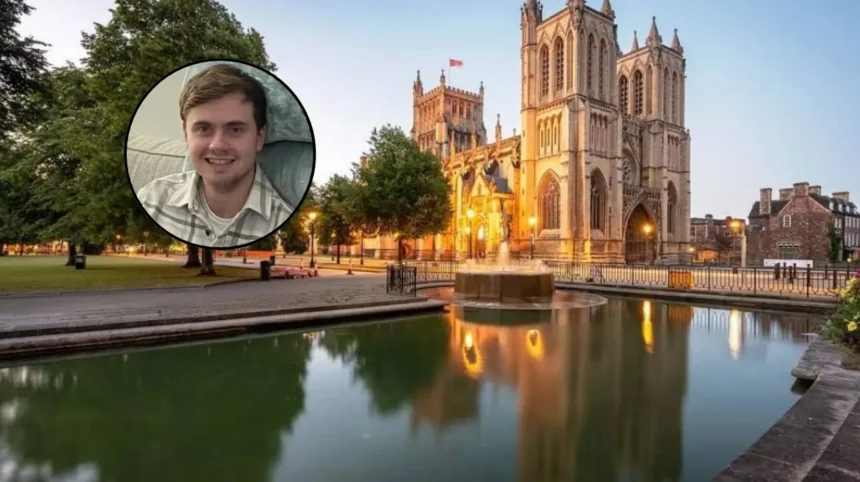
- Jack O’Sullivan, then aged 22, vanished on 2 March 2024 following a night out with friends in the Hotwells area of Bristol.
- Catherine O’Sullivan, Jack’s mother, stated that she wants to see immediate, official action taken based on the conclusions of the new report.
- The independent findings have reignited calls for law enforcement authorities to re-examine alternative lines of inquiry regarding the missing student.
Bristol (Bristol Express News) August 10, 2026 – A comprehensive independent study carried out by a former Bristol harbourmaster has cast severe doubt on the primary operational working theory held by police in the long-running missing person investigation for Jack O’Sullivan. Mr Mike Ferguson, a seasoned expert on the complex tidal waterways and harbour dynamics of Bristol, spent over twelve months thoroughly reviewing the water search parameters and environmental data surrounding the case. His expert report concludes that the physical and hydrographic evidence makes the official police hypothesis—that Mr O’Sullivan fell into the River Avon or the Floating Harbour area—an absolute impossibility under the conditions present at the time.
Mr O’Sullivan, who was 22 years old when he disappeared, was last seen in the early hours of Saturday, 2 March 2024, after leaving a house party in the Hotwells district of the city. For well over two years, search operations conducted by Avon and Somerset Police have heavily concentrated on the tidal stretches of the River Avon, the Cumberland Basin, and the surrounding water systems. However, Mr Ferguson’s technical assessment indicates that had an individual entered the water at the assumed locations and times, physical debris patterns, water movement metrics, and tidal force analyses dictate that trace evidence or recovery would have occurred within the established search perimeters.
How has Catherine O’Sullivan responded to the expert findings?
Speaking following the release of the expert findings, Catherine O’Sullivan, the mother of the missing young man, expressed her urgent desire for law enforcement agencies to pivot their resources towards non-water-based search vectors. Mrs O’Sullivan stated that the family has endured relentless distress while watching search efforts remain fixated on a single hypothesis that independent expertise has now called into question.
Mrs O’Sullivan emphasised that the family requires concrete action from investigators rather than continued reliance on assumptions. She noted that the family has constantly advocated for a wider inspection of alternative telecommunications data, private closed-circuit television feeds, and land-based sightings around the city perimeter. The rejection of the water entry hypothesis by a qualified maritime authority, according to Mrs O’Sullivan, must serve as an immediate catalyst for Avon and Somerset Police to re-evaluate every piece of evidence gathered since the initial hours of her son’s disappearance.
What were the circumstances surrounding Jack O’Sullivan’s disappearance on 2 March 2024?
Mr O’Sullivan attended a social gathering with university peers in the Hotwells area on the evening of Friday, 1 March 2024. He was recorded leaving the property at approximately 03:15 BST on Saturday, 2 March. Telecommunications data previously highlighted by investigators indicated that his mobile phone remained active for a short period after his last physical visual sighting, connecting to network masts in the vicinity of the Cumberland Basin and the nearby A370 corridor.
Despite extensive ground sweeps, specialized sonar deployments by underwater search units, and public appeals that garnered national attention across the United Kingdom, no personal belongings, clothing, or definitive physical trace of Mr O’Sullivan have ever been recovered. The persistent lack of physical evidence along the riverbanks has been a point of contention for independent observers, with Mr Ferguson’s recent study reinforcing arguments that the investigation’s primary geographical focal point may have been fundamentally misdirected.
Background of the development
The disappearance of Jack O’Sullivan sparked one of the most high-profile search operations in recent South West regional history. In the weeks and months following March 2024, Avon and Somerset Police deployed specialized dive units, mounted patrols, thermal-imaging drone technology, and tracking dogs throughout Hotwells, Clifton, and the along the Avon Gorge. The working hypothesis adopted by senior investigating officers focused on the proximity of Mr O’Sullivan’s last known mobile location data to the water’s edge along the River Avon, leading to the assumption that an accidental entry into the fast-flowing tidal river had occurred.
Over the subsequent two years, the O’Sullivan family raised continuous concerns regarding potential gaps in the initial investigative response, specifically regarding the processing of CCTV footage and delayed digital forensics on mobile phone location data. In response to growing frustration with the official narrative, independent maritime and forensic experts were approached to review the environmental data, tidal flow calculations, and search history. Mr Ferguson’s year-long evaluation represents the most significant independent review of the physical evidence to date, formally challenging the foundational premise upon which law enforcement allocated the majority of its operational resources.
Prediction: How this development could affect the family, the community, and future police investigations
The public release of Mr Ferguson’s findings is poised to bring significant operational, institutional, and personal ramifications:
- For the O’Sullivan Family: The definitive dismissal of the water-entry theory brings both a painful disruption to two years of assumed narrative and a crucial catalyst for renewed hope. It provides the family with the necessary technical grounds to formally request a senior command review or an independent force assessment of the entire investigation, shifting focus towards potential third-party involvement or land-based search avenues.
- For Avon and Somerset Police: The findings generate substantial legal and public pressure on the force to justify its allocation of search resources and its reliance on a singular hypothesis. It may force an immediate re-allocation of detective resources toward re-interviewing potential witnesses, re-analyzing digital footprint data, and conducting fresh physical land searches across previously unexamined sectors of Bristol.
- For the Local Community and Public Safety: The revelation re-opens acute safety concerns among residents in Bristol. If the possibility of a water accident is eliminated, community awareness will pivot toward unresolved risks on land, potential criminal involvement, or unidentified missing person vectors within the urban environment, likely prompting renewed grassroots searching and heightened public vigilancy.