Key Points
- Consistent Problems: The lifts at Bristol Parkway railway station remain susceptible to repeated failures, making it virtually impossible for disabled, old, and other passengers unable to walk to access an important transport point.
- Implications for Travel and Access to Medical Services: Public transport activist David Redgewell noted that problems between the station and the bus station have made travel very difficult for passengers traveling to Yate, Cam and Dursley, Gloucester, and beyond, hindering their connection to Southmead Hospital—healthcare provider for Gloucestershire, Wiltshire, Somerset, and part of Dorset.
- Criticism by the Council: During a cabinet meeting held by South Gloucestershire Council on Monday, October 5, the Liberal Democrat Councillor Chris Willmore has called this issue totally unacceptable as the station has a single point of failure that suddenly cuts off all access to the station for the disabled passengers.
- History of Previous Problems: The lifts have already been under criticism from Network Rail since January to March when the maintenance work took place and alternative transport like taxi was needed.
- Construction of Other Lifts: Additionally, construction work for the lift at the Lawrence Hill train station will take place until summer next year in order to make access to Platform 2 step-free.
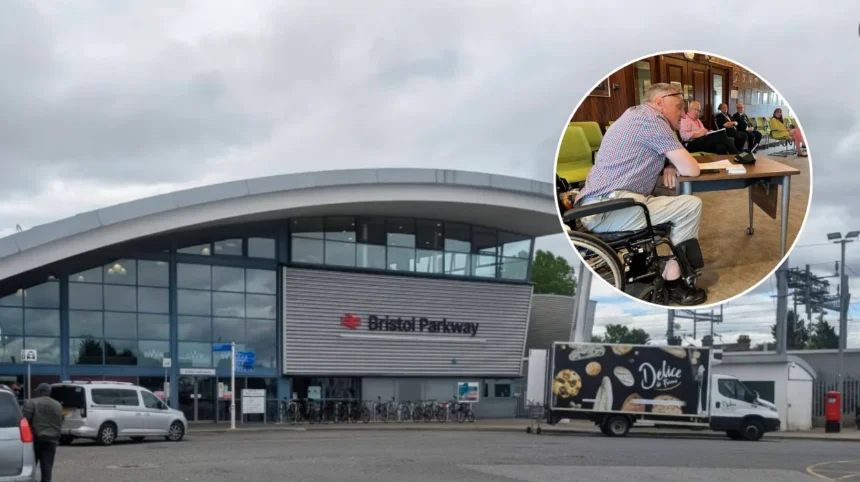
Bristol (Bristol Express News) October 8, 2026 – Disabled and elderly passengers are facing severe travel restrictions at Bristol Parkway train station due to persistent lift breakdowns that cut off access to major transport links, as reported by Alex Seabrook, Local Democracy Reporter for Bristol Live. The station, located on Bristol’s North Fringe in Stoke Gifford, serves as a vital transit point providing direct rail services running to London, Birmingham, Cardiff, and Manchester.
However, when the facility’s three lifts—which provide crucial step-free access onto the platforms, concourse, and entrance—malfunction, passengers are left with no choice but to climb long flights of stairs. This structural hurdle entirely restricts access for wheelchair users, people with pushchairs, elderly individuals, and those carrying heavy luggage or dealing with mobility problems.
What Did Public Transport Campaigner David Redgewell State Regarding the Outages?
Addressing the South Gloucestershire Council cabinet meeting on Monday, October 5, public transport campaigner David Redgewell, who uses a wheelchair, detailed the extensive disruption caused by the recurring failures. As reported by Alex Seabrook of Bristol Live, David Redgewell stated that: “Bristol Parkway again today has no lifts working between the main station and the bus interchange. It’s nigh impossible if you’re coming from Yate, Cam and Dursley, Gloucester or further afield.”
Highlighting the wider regional consequences on healthcare access, David Redgewell further stated that: “You cannot change buses for Southmead Hospital, even though Southmead Hospital is now the regional centre for the whole of Gloucestershire, Wiltshire, Somerset and part of Dorset. Network Rail keep on saying they’ve repaired these lifts or replaced them, and they still break down.”
Explore more Local Bristol News:
Bristol Pub Converted Into Student Accommodation Scheme in Bristol 2026
Bristol Council Slated Over Vulnerable Child Education Failure Bristol 2026
How Has South Gloucestershire Council Responded to Network Rail?
In response to the recurring transport failures, local government officials have voiced sharp criticism toward the rail infrastructure operator. Liberal Democrat Councillor Chris Willmore, cabinet member for planning, regeneration and infrastructure, addressed the ongoing challenges during the council cabinet meeting.
As reported by Alex Seabrook of Bristol Live, Councillor Chris Willmore stated that:
“This is a regular problem and one that frequently we have to chase Network Rail on. It really isn’t acceptable to have a major interchange like that, with a single point of failure meaning suddenly all disabled access is cut off.”
Network Rail has been contacted for comment regarding the ongoing maintenance challenges. The station’s lifts were previously taken out of service for essential maintenance work from January to March this year, during which passengers unable to use stairs were advised to travel via Temple Meads or Swindon stations, with taxis provided to and from Parkway. In related local developments, further down the line, Lawrence Hill train station is currently receiving a new lift with construction work scheduled to last until summer next year to provide step-free access to Platform 2.
Background of the Particular Development
Bristol Parkway has long served as a critical commuter and regional transport hub on the North Fringe of Bristol, connecting passengers across South Gloucestershire and beyond to major UK cities like London, Birmingham, and Cardiff. Over recent years, public transport advocates and local councillors have increasingly scrutinized accessibility infrastructure across regional railways, demanding that station upgrades keep pace with inclusive transport mandates.
Despite scheduled periods of maintenance—such as the comprehensive works undertaken by Network Rail between January and March earlier this year—underlying reliability issues with mechanical lifts continue to plague stations, exposing structural vulnerabilities that disproportionately affect wheelchair users, the elderly, and passengers with impaired mobility who rely entirely on uninterrupted step-free pathways.
The ongoing unreliability of step-free access at Bristol Parkway is likely to intensify pressure from local authorities and disability rights advocates on Network Rail, potentially resulting in accelerated mandatory infrastructure overhauls or contractual penalties for maintenance providers. For the local and regional disabled and elderly community, these recurring single points of failure will continue to discourage public transport utilization, forcing vulnerable passengers to rely on costly alternative travel arrangements, such as taxis or lengthy detours through Swindon and Temple Meads, thereby undermining regional integration with vital healthcare facilities like Southmead Hospital.