Key Points
- Three-quarters of 145 businesses said European Union membership would have the most positive effect on their companies.
- Only 10 per cent supported maintaining the current approach to United Kingdom-European Union relations.
- Businesses identified border paperwork and Brexit-related costs as their main concerns.
- Prime Minister Andy Burnham is preparing for a November 20 summit in Brussels involving food trade, emissions trading and youth mobility.
- European Union officials have reportedly called for greater clarity about the United Kingdom’s long-term aims.
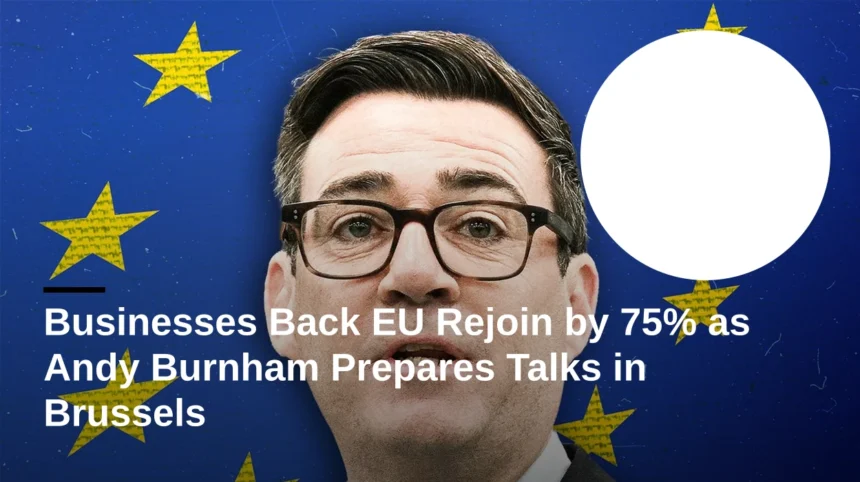
Brussels (The Independent) November 18, 2026 – British businesses have overwhelmingly backed the United Kingdom rejoining the European Union, according to a United Kingdom Trade and Business Commission consultation published as Prime Minister Andy Burnham prepares for talks with European leaders in Brussels. Three-quarters of the 145 respondents said renewed membership would have the most positive impact on their businesses, while 10 per cent supported maintaining the current approach. The consultation found that companies were chiefly concerned about Brexit-related costs and border paperwork, as the Government seeks agreements on food trade, emissions trading and youth mobility.
- Key Points
- What did businesses say about Britain’s future relationship with the European Union?
- What problems did companies identify after Brexit?
- What is Andy Burnham seeking at the Brussels summit?
- How has the European Union responded to the talks?
- What could the development mean for businesses?
- What is the background to the development?
- What could happen next for British businesses?
What did businesses say about Britain’s future relationship with the European Union?
The United Kingdom Trade and Business Commission said nearly 150 businesses took part in its consultation. Its published findings said four in five respondents viewed participation in the Single Market and full European Union membership positively, while three-quarters rated membership as the strongest of four possible relationship options.[1]
Businesses told the commission that closer ties could support growth, reduce administrative barriers and improve access to European funding and programmes. The commission said only one in 10 respondents believed the current relationship was having a positive effect.[1]
What problems did companies identify after Brexit?
Respondents highlighted the cost of Brexit and border paperwork as their most pressing concerns. The Independent reported that one in three businesses ranked removing border paperwork as their top priority, while freedom to set an independent trade policy and regulation ranked lowest, at 4 per cent and 1 per cent respectively.[2]
Steve Taylor, owner of Winterwood Farms Ltd in south-east England, said delays and additional paperwork had prevented the company from exporting soft fruit with a short shelf life. The Independent reported that he said some produce was now being discarded after paperwork took too long.[2]
Earlier analysis cited by The Independent found that exports of chemicals and pharmaceuticals had fallen by 21 per cent and agrifood exports by 29 per cent since the United Kingdom left the European Union, according to researchers at the Centre for European Reform.[2]
What is Andy Burnham seeking at the Brussels summit?
Andy Burnham is expected to pursue agreements covering food and drink trade, emissions trading and a youth mobility or youth experience scheme at the November 20 summit in Brussels.[3][4] The proposed scheme would allow eligible young people from the United Kingdom and the European Union to live and work more easily in one another’s territories.
Andy Burnham has said agreements with Europe must improve jobs and opportunities in the United Kingdom. He also told Parliament that the Brexit agreement negotiated by the previous Conservative government had not been good enough for Britain, according to The Independent.[3]
The British Broadcasting Corporation reported that the immediate discussions involve limited cooperation rather than renewed European Union membership. It said rejoining the bloc remained off the table in the current negotiations.[6]
How has the European Union responded to the talks?
The Independent reported that an unnamed European Union diplomat had called for clarity about the United Kingdom’s long-term objectives before broader negotiations could begin.[2] The diplomat was quoted as saying that Britain should determine its options before returning to negotiate its future relationship with the bloc.
The summit package is expected to represent a step towards closer cooperation, rather than a decision to reverse Brexit. The proposals are intended to reduce selected trade barriers and expand limited opportunities for young people while leaving the wider relationship unresolved.[4][6]
What could the development mean for businesses?
If the proposed agreements are concluded, businesses could gain from simpler food-trade procedures, closer alignment in emissions trading and improved access to young workers from Europe. These effects would be limited to the areas covered by the agreements and would not remove the wider customs and regulatory arrangements created after Brexit.
The consultation indicates that many firms would favour substantially closer European Union ties, but the summit is expected to address practical cooperation rather than membership. The immediate business impact will depend on the final terms, implementation timetable and whether further negotiations follow.
What is the background to the development?
The United Kingdom left the European Union after the 2016 referendum and completed its departure from the bloc’s single market and customs union in 2021. Since then, companies trading with Europe have faced additional customs declarations, regulatory checks and other administrative requirements. The United Kingdom Trade and Business Commission was established to examine Brexit’s effects and future options for the trading relationship.[1] Its latest consultation gathered responses from small and medium-sized businesses, sole traders and larger companies.[2]
What could happen next for British businesses?
The summit could produce targeted improvements for firms involved in food exports, carbon-intensive industries and cross-border recruitment. However, the consultation suggests that many companies regard those measures as less significant than broader changes that would reduce trade friction with the European Union. Any movement towards the Single Market or renewed membership would require further political decisions and negotiations. Until then, businesses are likely to continue seeking practical agreements while adjusting to the existing post-Brexit framework.