Key Points
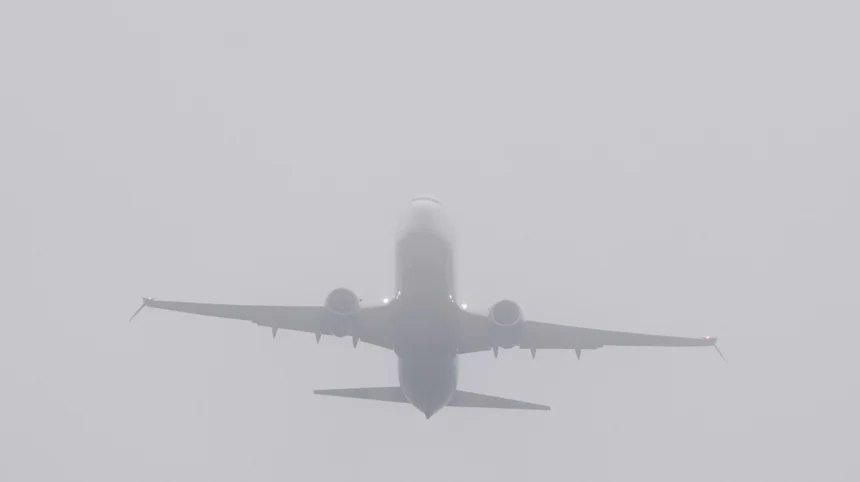
- Flight Delays: Thick fog around the West of England region has led to flight cancellations and delays in Bristol Airport.
- Flight Divergence and Turnbacks: According to a spokesperson from Bristol Airport, there were three flights which had been diverged and one flight turned back to Dublin because of thick fog.
- Statistics on Delay: As per live flight data, 14% of the flights had delays.
- Yellow Warning by Met Office: A yellow weather warning for fog was still in effect until 11:00 GMT.
- Advice for Travelers: Travelers who have flights to take are advised to contact their respective airlines for more information before leaving for the airport.
Bristol (Bristol Express News) November 9, 2026 — Dense fog descended across parts of the West of England, severely impacting regional transport schedules and leaving passengers facing widespread flight delays and cancellations. The adverse weather conditions prompted aviation authorities and airport operators to issue urgent travel warnings as visibility dropped significantly across the airfield, creating challenging operational conditions for commercial carriers.
As reported by Lucy Tegg of BBC News, a Bristol Airport spokesperson stated that three incoming flights were diverted to alternative airports and one scheduled flight was forced to return to Dublin because of thick fog. Live flight tracking data and information boards further demonstrated the scale of the disruption, suggesting that approximately 14% of all scheduled flights operating through the transport hub experienced notable delays.
What Did the Met Office Say About the Weather Conditions?
The severe reduction in visibility was tied directly to a broader regional weather pattern monitored closely by national forecasters. The Met Office issued an official yellow weather warning for fog, which remained active until 11:00 GMT.
As outlined in the official Met Office advisory, the warning urged travellers to be fully aware of the potential for difficult travel conditions and subsequent delays across multiple transport networks. The national forecaster explained that the dense patches of fog were expected to be “thinning slowly” later in the morning as daytime temperatures slowly rose and air currents shifted.
What Guidance Has Been Issued for Affected Passengers?
With flight schedules fluctuating and scheduling backlogs building up across the terminal, airport management implemented immediate communication protocols to assist stranded or waiting passengers.
Airport representatives emphasized that passengers due to travel should not set off for the terminal without verifying their flight status. Travellers are being strongly advised to check directly with their respective airlines for live information regarding individual flight departures and arrivals before leaving home.
Background of the Particular Development
The recent disruption at Bristol Airport highlights the chronic vulnerability of aviation infrastructure to sudden meteorological phenomena, particularly radiation and advection fog during the autumn and winter transition periods. Low-visibility procedures (LVPs) are routinely triggered at major airports when visibility drops below specific operational thresholds, requiring specialized instrument landing systems (ILS) and increased separation intervals between landing and departing aircraft to maintain safety standards. Historically, prolonged fog patches in the South West of England frequently impact regional transport arteries, ranging from localized road networks to major international gateways like Bristol, necessitating close coordination between airport operations teams and the Met Office to mitigate passenger safety risks
This weather-induced disruption serves as a stark reminder of how rapidly environmental factors can paralyze regional transit networks, directly affecting holidaymakers, business travellers, and cargo logistics providers. For the particular audience of frequent flyers and holidaymakers departing from or arriving at Bristol Airport, this development underscores the growing necessity of building contingency time into travel itineraries during the winter months. As climate variability continues to influence regional weather patterns across the United Kingdom, passengers can anticipate tighter schedule adjustments, increased reliance on automated airline notification systems, and a higher frequency of proactive flight rescheduling by carriers aiming to prevent terminal overcrowding and mid-air holding patterns.