Key Points
- Bristol City Council has initiated a public survey concerning plans to create the first ever red route within the area of Bedminster and Redcliffe.
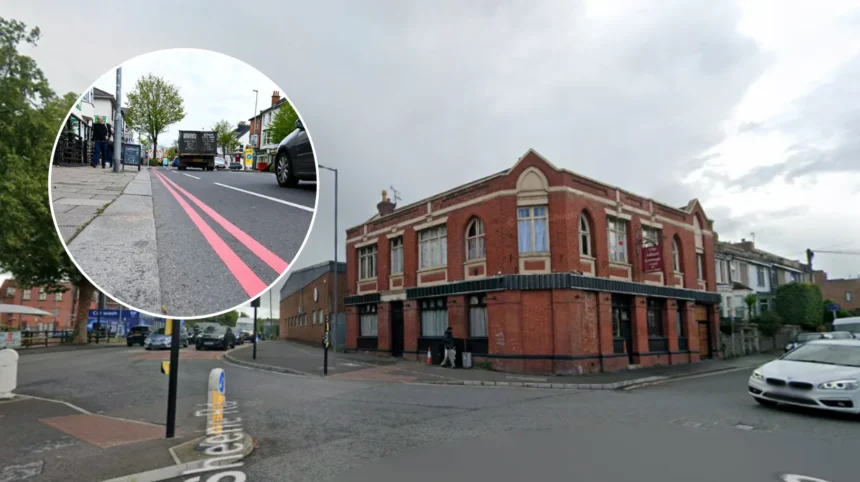
- The red route plan is intended to substitute double yellow lines for double red lines in order to ensure smooth traffic flow and reliable bus routes.
- The enforcement of the planned red route will take place using automatic cameras and not parking enforcement officers.
- The planned route will include a limited number of loading and unloading bays as well as link between major routes like Redcliff Street and Bedminster Bridge Roundabout.
- Public response can be provided through the survey up to midnight on 30 October 2026.
Bristol, Bedminster and Redcliffe (Bristol Express News) October 8, 2026 — As reported by Ellen Bone of Greatest Hits Radio, Bristol City Council has officially initiated a public survey regarding plans to implement the city’s inaugural red route across the Bedminster and Redcliffe districts. The newly proposed traffic management scheme aims to replace existing double yellow lines with double red lines, backed by automated camera enforcement to tackle congestion and improve public transport punctuality.
What are the key details of the proposed Bedminster and Redcliffe red route?
The proposed infrastructure initiative is structured to maintain fluid traffic movement while simultaneously protecting bus journey reliability across key corridors. As detailed by Ellen Bone of Greatest Hits Radio, the route connects multiple vital roads, including Redcliff Street and the Bedminster Bridge Roundabout.
To balance traffic flow with commercial requirements, the scheme features limited parking, loading, and unloading bays along the corridor to ensure businesses can continue daily operations without causing major bottlenecks. Enforcement of these restrictions will shift away from traditional parking officers, relying instead on camera technology to deter unauthorized stopping and parking.
Why is Bristol City Council introducing this red route scheme?
Local authorities have emphasized that the primary objective of the initiative is to address urban congestion and enhance public transport efficiency.
As reported by Ellen Bone of Greatest Hits Radio, Councillor Ed Plowden, who serves as the Chair of the Transport and Connectivity Committee, stated that “a red route will help keep Bristol on the move, tackling congestion and making bus journeys faster and more reliable.”
Complementing this local government perspective, public transport operators have also voiced strong support for the initiative. As reported by Ellen Bone of Greatest Hits Radio, Doug Claringbold, Regional Director of First Bus in the West of England, added that
“effective enforcement of parking restrictions is an important part of making sure existing bus priority measures work as intended.”
Explore more Bristol Live Traffic and Travel News:
Bristol Parkway Lifts Failures Leave Disabled Passengers Stranded in Bristol 2026
Bristol Pub Converted Into Student Accommodation Scheme in Bristol 2026
How does this project fit into Bristol’s wider transport strategy?
The red route proposal forms an integral component of the council’s broader City Centre project. This wider regeneration and infrastructure effort receives financial backing from the UK Government’s City Region Sustainable Transport Settlement.
Following initial public consultations held in 2024, refined designs now formally incorporate the red route proposal, which has already been agreed upon in principle by the Transport and Connectivity Committee. Local stakeholders, residents, and business owners have been invited to review the comprehensive documentation and submit their feedback through the survey hosted on the official Bristol City Council website before the deadline at midnight on 30 October 2026.
Background of the Particular Development
The introduction of red routes in urban environments originates as a traffic management tool designed to maximize road capacity and prioritize public transport, most notably pioneered on major arterial routes in London during the 1990s. In Bristol, urban mobility has faced mounting pressures from congestion, fluctuating commuting patterns, and the need to hit regional carbon reduction and air quality targets.
Over recent years, Bristol City Council has focused heavily on upgrading sustainable transport infrastructure, utilizing funding streams such as the UK Government’s City Region Sustainable Transport Settlement. The ongoing transformation of the city center, alongside prioritized bus corridors, laid the groundwork for targeted parking and traffic management reforms. Consultations initiated in 2024 demonstrated a policy shift toward stricter, automated enforcement measures to protect bus lanes and transit corridors from obstructive parking, culminating in the current Bedminster and Redcliffe pilot scheme.
The implementation of Bristol’s first red route in Bedminster and Redcliffe is anticipated to significantly alter daily commuting and commercial logistics for local residents, motorists, and business owners in the area. For public transport users, the shift toward automated camera enforcement of red lines should reduce bus journey times and increase schedule reliability by preventing vehicles from blocking transit lanes.
Conversely, local motorists and delivery drivers will face stricter stopping regulations, requiring businesses to adapt loading schedules to designated bays and limited windows. While the consultation running until October 2026 provides a platform for community feedback, successful rollout of the scheme is likely to serve as a blueprint for future red route expansions across other congested corridors in Bristol, potentially shifting broader urban transit habits toward public transport and active travel.