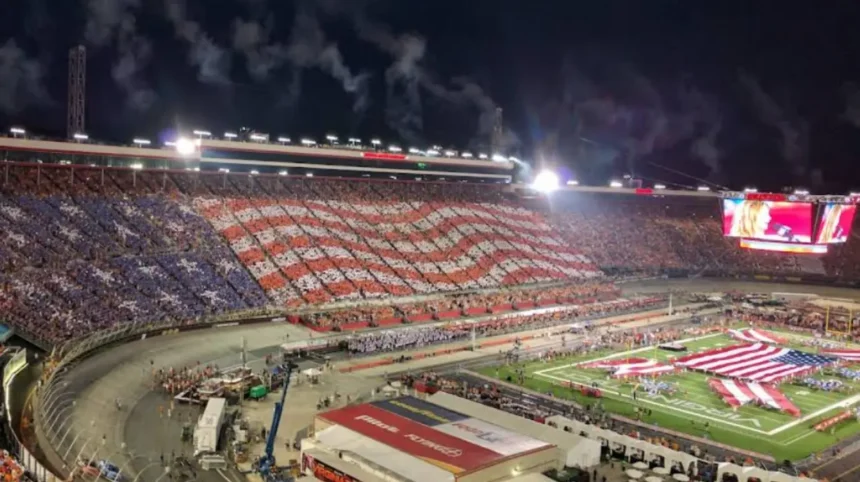
NASCAR Bristol refers to the Bristol Motor Speedway, a 0.533-mile concrete oval track located in Bristol, Tennessee. The venue opened in 1961 and hosts major professional auto racing events. It operates under the ownership of Speedway Motorsports.
- How Long Is The Bristol Motor Speedway Track?
- What Are The Seating Capacity And Structural Components Of Bristol?
- How Does The Track Banking Impact NASCAR Bristol Races?
- What Are The Most Famous Races Held At Bristol?
- How Have Safety And Technological Upgrades Evolved At Bristol?
- What Future Innovations Are Planned For Bristol Motor Speedway?
- FAQs About NASCAR Bristol
The facility began as a vision to bring professional racing to the Tri-Cities region. Two businessmen (Larry Carrier and Carl Moore) initiated the planning phase in 1960. They selected a former dairy farm as the construction site. The initial construction cost reached 600,000 dollars.
The original track design featured a paved half-mile surface. The venue opened on July 23, 1961. The first NASCAR-sanctioned practice session occurred two days later. The track quickly gained recognition for fast lap times and tight racing conditions.
Ownership of the facility changed hands multiple times (Larry Carrier, Gary Baker, Lanny Hester, Warner W. Hodgdon, and Speedway Motorsports). Speedway Motorsports purchased the track in 1996 for 26 million dollars. This acquisition led to massive infrastructure investments and modernization projects.
The historical development of the speedway established its position in American motorsports. The venue transitioned from a small 20,000-seat facility into a massive sports arena. This growth directly influenced the economic development of the surrounding Tennessee region.
How Long Is The Bristol Motor Speedway Track?
The Bristol Motor Speedway track measures exactly 0.533 miles in length. It classifies as a short track within the NASCAR circuit. The facility includes two straightaways (frontstretch and backstretch) measuring 650 feet each. The racing surface width spans 40 feet.
The track dimensions directly dictate the racing style seen at the venue. The short 0.533-mile distance forces 40 competing vehicles into close proximity. Drivers complete 500 laps during a standard Cup Series race. The total race distance equals 266.5 miles.
The track surface originally consisted of standard asphalt paving. Facility operators replaced the asphalt with concrete in 1992. Bristol became the first track on the Cup Series schedule to feature a completely concrete surface. Concrete withstands high friction and heavy vehicle loads better than asphalt.
Track organizers temporarily converted the surface to dirt for three consecutive years (2021, 2022, and 2023). Engineers layered 23,000 cubic yards of red clay over the concrete. The dirt races required different tire compounds and vehicle setups. The track returned to a pure concrete surface in 2024.
The specific track measurements create distinct physical demands on drivers and equipment. Vehicles complete a lap in approximately 15 seconds. This short duration requires constant driver focus and rapid mechanical adjustments. The track length ensures continuous traffic negotiation throughout the event.
What Are The Seating Capacity And Structural Components Of Bristol?
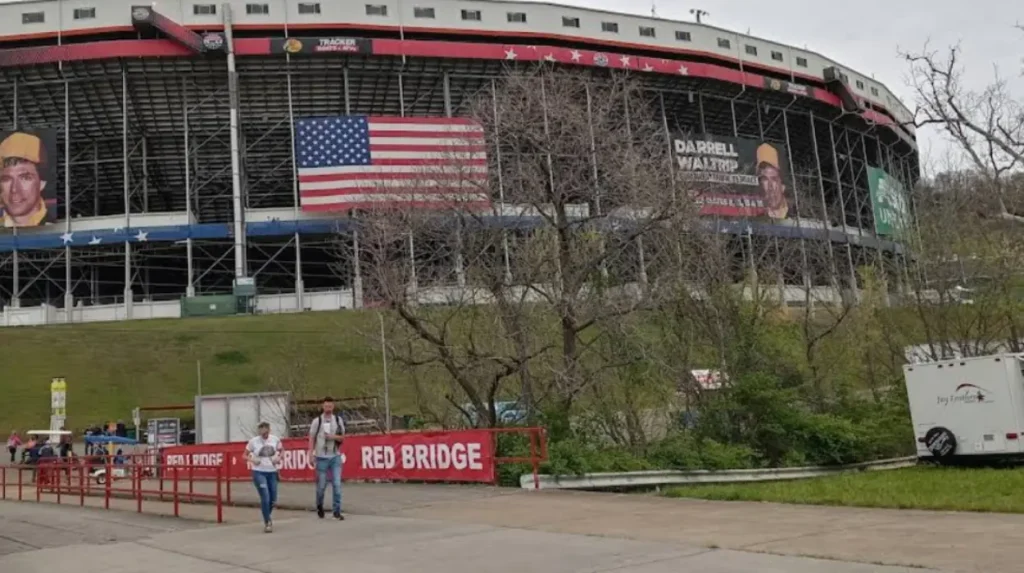
The current seating capacity of Bristol Motor Speedway is 146,000 spectators. The stadium features fully enclosed grandstands wrapping entirely around the 0.533-mile track. The facility includes multiple distinct seating structures (Wallace Tower, Kulwicki Terrace, and Earnhardt Terrace).
The structural evolution of the facility occurred over six decades. The original venue accommodated 20,000 fans in 1961. Facility operators initiated massive expansion projects during the 1990s. The capacity peaked at 162,000 seats in the early 2000s before slight reductions for enhanced seating comfort.
A primary structural component involves the central video display system. Engineers installed Colossus TV in 2016. This structure features four viewing screens (Screen A, Screen B, Screen C, and Screen D). Each screen measures 30 feet tall by 63 feet wide. The entire unit hangs suspended by cables above the infield.
Gidget Snyder
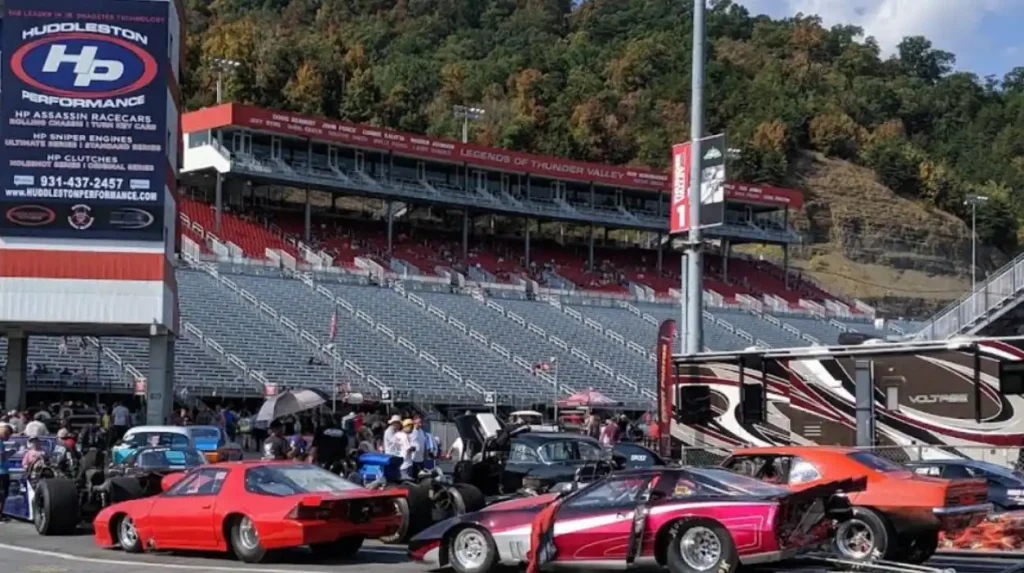
The facility complex contains three supporting venues (Bristol Dragway, a camping ground, and a helipad). The Bristol Dragway measures 0.250 miles and hosts professional drag racing. The camping grounds accommodate thousands of recreational vehicles. The helipad facilitates emergency medical transport and VIP arrivals.
The immense structural scale of the venue earned it the nickname The Last Great Colosseum. The enclosed stadium design traps sound waves inside the arena. The acoustic environment exposes spectators and drivers to sustained noise levels exceeding 100 decibels. This structural reality necessitates specialized hearing protection.
How Does The Track Banking Impact NASCAR Bristol Races?
The track banking at Bristol Motor Speedway features variable degrees in the corners ranging from 24 to 28 degrees. The straightaways possess banking between 4 and 8 degrees. This steep inclination allows 3,200-pound race cars to maintain high speeds through tight turns.
The physics of steep banking generate immense centrifugal forces. Vehicles compress into the track surface during cornering maneuvers. The suspension systems endure maximum load compression twice per lap. The 28-degree maximum banking requires specialized shock absorbers and hardened chassis components.
The progressive banking system provides multiple racing grooves (lower groove, middle groove, and upper groove). Facility operators implemented progressive banking in 2007. The angle increases gradually toward the outside wall. This design allows drivers to choose different paths based on vehicle handling characteristics.
The steep banking directly accelerates tire degradation. The right-front tire sustains the highest friction load. The concrete surface acts as an abrasive medium against the rubber. Crew chiefs mandate frequent pit stops to replace worn tires and prevent catastrophic blowouts during the race.
The combination of steep banking and a short track length limits passing opportunities. Drivers frequently employ physical contact to execute passes. The trailing vehicle contacts the rear bumper of the leading vehicle to displace it from the preferred racing line. This maneuver defines the aggressive racing style at the venue.
What Are The Most Famous Races Held At Bristol?
Bristol Motor Speedway hosts two major NASCAR Cup Series races annually (the Food City 500 and the Bass Pro Shops Night Race). The venue also hosts two secondary series events (the Food City 300 and the UNOH 200).
The Food City 500 occurs during the spring season. This 500-lap event features daytime racing conditions. Solar radiation heats the concrete surface, reducing tire grip. Drivers who secure victories in this event (Kyle Busch, Brad Keselowski, and Denny Hamlin) demonstrate exceptional tire management skills.
The Bass Pro Shops Night Race takes place in September. Facility operators installed permanent stadium lighting in 1978. The artificial lighting lowers track temperatures and increases tire adhesion. The night race serves as a crucial elimination event within the NASCAR Cup Series playoffs.
The facility hosted non-racing sporting events. Organizers staged a college football game in 2016. Two universities (University of Tennessee and Virginia Tech) competed in the infield. The event drew 156,990 spectators. This attendance set an all-time record for a college football game.
The specific races at this venue significantly influence championship outcomes. The playoff placement of the night race adds immense pressure. Drivers must balance aggressive passing maneuvers with vehicle preservation. A poor performance at Bristol frequently eliminates drivers from championship contention.
How Have Safety And Technological Upgrades Evolved At Bristol?
Bristol Motor Speedway implements modern safety barriers and technological systems. The track features the Steel and Foam Energy Reduction system along all exterior walls. This system absorbs kinetic energy during vehicle impacts and protects drivers from severe blunt force trauma.
Safety upgrades evolved in response to increased vehicle speeds. Early track designs utilized exposed concrete retaining walls. Vehicles impacting these rigid walls transferred maximum force to the driver. The installation of energy-absorbing barriers drastically reduced the frequency of structural injuries.
The facility utilizes an advanced electronic scoring system. Transponders attached to each vehicle communicate with timing loops embedded in the concrete surface. Two timing loops (primary start-finish loop and secondary pit road loop) record lap times down to one-thousandth of a second. This ensures absolute accuracy in race standings.
The venue features two separate pit road lanes. This configuration remains unique among current NASCAR tracks. One pit lane occupies the frontstretch, while the second pit lane occupies the backstretch. This dual-lane system prevents severe congestion when 40 vehicles attempt simultaneous pit stops.
These technological and safety implementations ensure regulatory compliance. The sanctioning body mandates strict safety standards for all hosting venues. The continuous investment in barrier systems and scoring accuracy maintains the operational status of the track. These upgrades protect the 26 million dollar investment made by Speedway Motorsports.
What Future Innovations Are Planned For Bristol Motor Speedway?
Future innovations at Bristol Motor Speedway focus on sustainable infrastructure and digital integration. Facility management plans to upgrade the lighting systems. New proposals include replacing existing high-intensity discharge lamps with high-efficiency light-emitting diode fixtures.
The proposed lighting upgrades target energy consumption reduction. Light-emitting diode systems consume 60 percent less electricity than legacy lighting. These modern fixtures provide immediate illumination without warm-up periods. The programmable nature of the new lights allows for synchronized visual displays during driver introductions.
Digital integration involves expanding wireless network capacity. The facility currently supports a localized cellular network. Engineers plan to install 5G transmission nodes throughout the grandstand structures. Two specific areas (the infield fan zone and the concourse walkways) will receive high-density wireless access points.
Venue operators evaluate surface preservation techniques. The concrete track requires continuous monitoring for structural fissures. Engineers utilize ground-penetrating radar to inspect the subsurface foundation. Future maintenance involves injecting specialized polymer resins into microscopic cracks to prevent water infiltration and freeze-thaw damage.
These planned innovations align with modern sports entertainment demands. Spectators require continuous digital connectivity to access real-time race telemetry. The facility upgrades ensure the venue remains economically viable. These investments secure the long-term future of professional auto racing in eastern Tennessee.
Read More: Local Services – How to Find the Best Family Law Solicitors Bristol Residents Trust
FAQs About NASCAR Bristol
Why do NASCAR fans call Bristol the Last Great Colosseum?
Fans call Bristol the Last Great Colosseum because of its fully enclosed stadium design. The grandstands wrap entirely around the short track, creating an imposing bowl-like structure. The steep seating arrangement visually resembles ancient Roman amphitheaters.
Is Bristol Motor Speedway a concrete or asphalt track?
Bristol Motor Speedway currently features a pure concrete racing surface. The facility originally opened with an asphalt surface in 1961. Track operators permanently replaced the asphalt with concrete in 1992 to increase durability against heavy race cars.
How do drivers handle the steep banking at Bristol?
Drivers handle the steep banking by maintaining high minimum cornering speeds. The 28-degree incline generates intense centrifugal force that pushes the vehicle into the track surface. Drivers must carefully modulate the throttle to maintain grip and prevent sliding into the exterior wall.
Has Bristol Motor Speedway ever hosted dirt races?
Yes, Bristol Motor Speedway hosted dirt races for three consecutive years. From 2021 through 2023, organizers covered the concrete track with 23,000 cubic yards of red clay. The facility returned to its standard concrete surface for the 2024 season.
What makes the Bristol Night Race so popular among fans?
The Bristol Night Race is popular because of the intense racing environment under artificial lighting. The cool night air increases engine horsepower and tire grip, leading to faster lap times. The event frequently features aggressive passing maneuvers as drivers compete for playoff positions.