Bristol has a diverse cinema network that combines large multiplexes, independent venues, historic picture houses, cultural cinemas, community screening spaces and specialist large-format venues. The city’s cinema landscape reflects its long film heritage and its status as a UNESCO City of Film.
- What makes cinemas in Bristol different from other UK cities?
- How did cinema develop in Bristol?
- Which major cinemas are available in Bristol?
- ODEON Luxe Bristol
- Showcase Bristol Avonmeads
- Vue Bristol Longwell Green
- Vue Bristol Cribbs Causeway
- Everyman Bristol
- Watershed
- Which Bristol cinemas are best suited to independent and arthouse films?
- What is the role of the Orpheus Cinema in Bristol?
- What is Bristol Megascreen?
- How does Bristol’s cinema technology compare across venues?
- How does film classification work in Bristol cinemas?
- How important are cinemas to Bristol’s film economy?
- How has cinema attendance changed in the UK?
- How do film festivals expand cinema in Bristol?
- How does Bristol support classic and repertory cinema?
- What should visitors consider when choosing a cinema in Bristol?
- What is the future of cinemas in Bristol?
What makes cinemas in Bristol different from other UK cities?
Bristol’s cinema scene combines mainstream releases, independent films, repertory screenings, community programmes and specialist large-format experiences across venues with distinct locations and purposes. Its network includes multiplexes, arts cinemas, historic buildings and community-led spaces serving different audiences.
The city offers several distinct forms of cinema exhibition. Large multiplexes focus on current commercial releases and premium presentation. Arts cinemas provide independent, international, documentary and repertory films. Community venues support alternative programming and local film culture.
Bristol’s film identity also extends beyond conventional cinema buildings. The city has outdoor screenings, festival venues and specialist locations where films are presented alongside heritage, food, music or cultural programmes.
The city was designated a UNESCO City of Film in 2017. Bristol City Council states that the designation recognises Bristol’s achievements in film and moving image and supports activity covering production, talent development, education, exhibition and heritage.
The distinction between cinema exhibition and film production is important. Bristol is also a major production centre, supported by the Bristol Film Office and The Bottle Yard Studios. This production ecosystem strengthens the city’s wider relationship with film culture.
How did cinema develop in Bristol?
Bristol’s cinema history began with early film exhibition in the early twentieth century and expanded into a large network of picture houses. Historic venues such as the Whiteladies Picture House demonstrate the architectural and cultural importance of cinema-going in Bristol.
Bristol’s early cinema development followed the national expansion of moving-picture entertainment. Historical records identify the Bio, or Bio-Pictureland, at Counterslip Hall as Bristol’s first cinema, established in 1908. The period that followed saw rapid growth in purpose-built picture houses.
The city eventually developed a substantial cinema network. Historical accounts record that Bristol once had more than 40 cinemas operating at the same time, while another historical survey identifies 61 sites that had functioned as cinemas across the city over time.
The scale of this historic network explains the number of former cinema buildings and converted sites found across Bristol. Some became bingo halls, shops, offices, pubs or other commercial premises. Others were demolished during redevelopment.
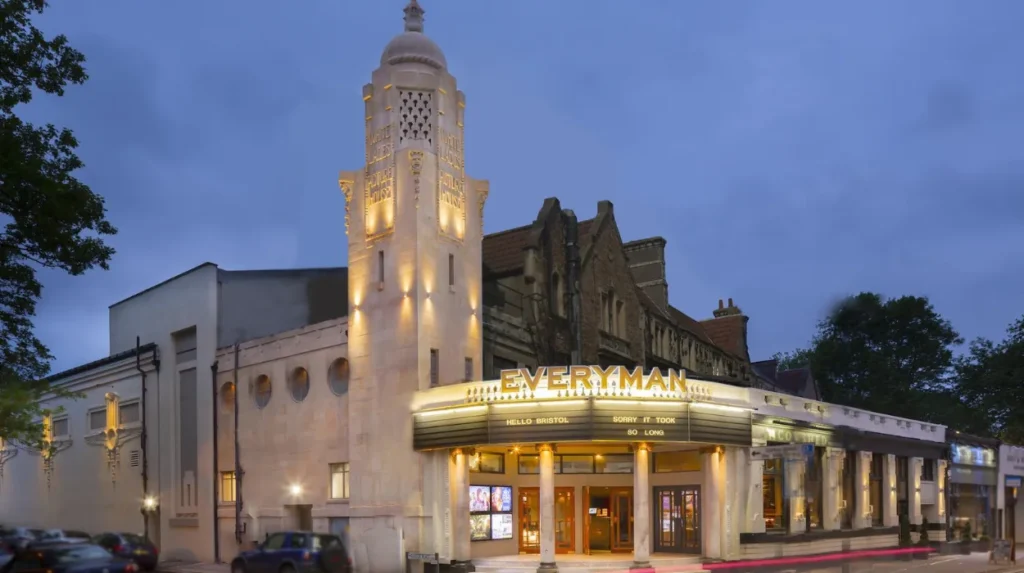
The Whiteladies Picture House is one of Bristol’s most important surviving examples. Historic England records that the building opened in 1921 on Whiteladies Road in Clifton. It was designed by James Henry LaTrobe and Thomas Henry Weston and incorporated an earlier nineteenth-century terraced house.
The building later operated under several cinema names, including ABC, Cannon and MGM. After a period outside cinema use, it reopened as Everyman Bristol in 2016.
This continuity demonstrates how historic cinema architecture remains part of Bristol’s modern cultural infrastructure.
Which major cinemas are available in Bristol?
Bristol’s principal cinema venues include ODEON Luxe Bristol, Showcase Bristol Avonmeads, Vue Bristol Longwell Green, Vue Bristol Cribbs Causeway, Everyman Bristol, Watershed, the Orpheus Cinema, Cube Microplex and Bristol Megascreen. Each venue has a different programming and technical profile.
ODEON Luxe Bristol
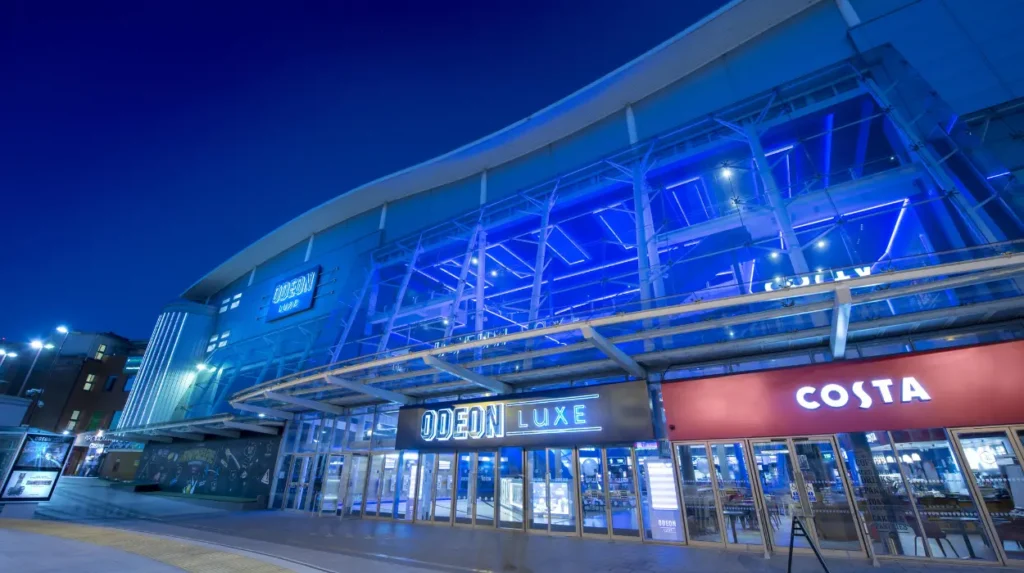
ODEON Luxe Bristol is located at Cabot Circus in central Bristol. It represents the modern premium multiplex model, with large-format presentation, reclining seating and multiple screening formats.
The venue replaced the former ODEON cinema on Union Street as part of the redevelopment of Bristol’s central cinema offer. The historic Union Street ODEON opened in 1938 and eventually operated as a three-screen cinema. Its closure marked the end of a significant chapter in Bristol’s city-centre cinema history.
The move to Cabot Circus reflects the broader shift toward modern multiplexes integrated into shopping and leisure districts.
Showcase Bristol Avonmeads
Showcase Bristol Avonmeads is situated at Avonmeads on St Philips Causeway. Showcase provides mainstream film releases alongside premium seating and accessibility services.
The cinema lists Delux screens with recliner seating, classic screens, stadium seating and free parking. Its accessibility provision includes wheelchair spaces, audio description, hearing assistance and sensory-friendly screenings.
Its location near Avonmeads Shopping Park makes it particularly connected to retail and leisure activity in eastern Bristol.
Vue Bristol Longwell Green
Vue Cinema Bristol – Longwell Green operates at Aspects Leisure Park on the Avon Ring Road.
Vue states that the Longwell Green venue has 13 screens and more than 2,680 seats. Its facilities include 4K picture quality, 3D presentation, Dolby Surround Sound and VIP seating upgrades.
The venue serves Bristol and communities in the eastern and southern parts of the urban area. Its free on-site parking also makes it suitable for visitors travelling by car.
Vue Bristol Cribbs Causeway
Vue Cinema Bristol Cribbs serves the north and north-west Bristol area from The Venue at Cribbs Causeway.
The cinema has 12 screens, including an EPIC screen, and more than 1,000 Ultra Lux and Lux seats. Vue lists laser projection, 4K picture quality, Dolby Surround Sound, 3D and free parking among its facilities.
The venue is particularly accessible from the M5, with Vue identifying Junction 17 as a principal road access point.
Everyman Bristol
Everyman Bristol occupies the historic Whiteladies Picture House at 44 Whiteladies Road.
The building originally opened in 1921 and retained its Art Deco character. Everyman’s current venue information describes multiple screens, sofa and armchair seating, a bar and food-and-drink service.
The venue combines historic architecture with contemporary cinema facilities. Its programme includes mainstream releases alongside special formats such as Silver Screen and National Theatre Live.
Watershed
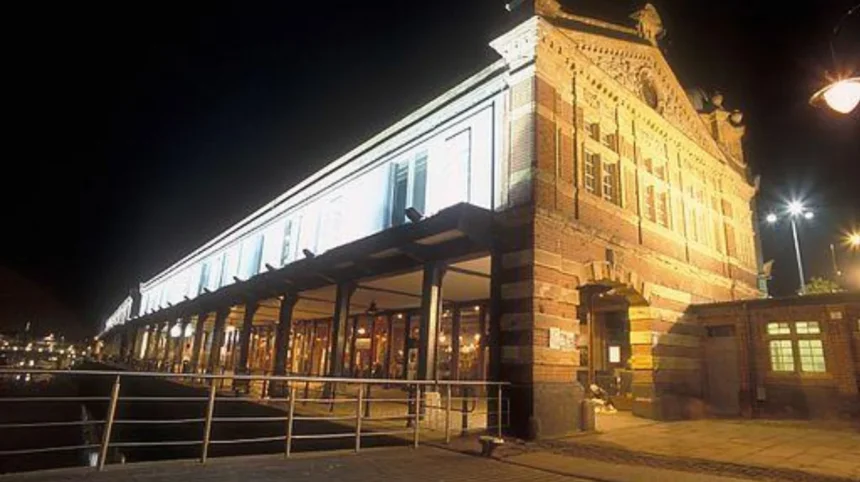
Watershed is Bristol’s best-known cultural cinema venue. It occupies a historic Grade II listed building at the Harbourside.
Watershed describes itself as a leading film culture and digital media centre in the South West. Its programme covers cinema exhibition, festivals, talent development, cultural events and digital media.
The venue contains three cinemas. Their listed capacities are 197 seats, 42 seats and 100 seats. The spaces also support private screenings, technical screenings, presentations and film-industry activities.
Which Bristol cinemas are best suited to independent and arthouse films?
Watershed and Cube Microplex are central to Bristol’s independent cinema culture, while Everyman and other venues also programme selected repertory and specialist films. Their programmes broaden cinema beyond mainstream releases through international, experimental, classic and cult titles.
Independent cinema refers to exhibition outside the dominant commercial multiplex model. It commonly includes international cinema, documentaries, restored classics, experimental films, independent British productions and specialist retrospectives.
Watershed is particularly important because its mission combines cinema exhibition with cultural development and digital media. Its programme operates as part of Bristol’s wider creative economy rather than functioning solely as a commercial film venue.
Cube Cinema provides another distinct model. The Cube describes itself as a Microplex, arts venue, independent museum and progressive social wellbeing enterprise. It was established in 1998 by four artists and developed from a strongly DIY cultural model.
The Cube building itself has an unusually varied history. Before becoming the Cube, the premises had served as a glass recycling depot, amateur theatre, arts centre, school, deaf institute, family cinema and other uses. The venue retains elements of its handmade auditorium and community-led character.
These venues provide important alternatives to the release schedules of major cinema chains.
What is the role of the Orpheus Cinema in Bristol?
The Orpheus Cinema is a neighbourhood cinema in Westbury Park and Henleaze, serving local audiences with a smaller-scale cinema experience. Its history is connected to Bristol’s long tradition of suburban picture houses and local cinema-going.
Scott Cinemas operates the Orpheus Cinema at 51 Northumbria Drive, Westbury Park, Bristol BS9 4HN. Current listings identify it as a three-screen neighbourhood cinema.
The Orpheus has historical importance within Henleaze. Bristol City Council’s character assessment records that the original Orpheus cinema was demolished in 1973, after which a new cinema was integrated into a supermarket development.
The venue illustrates the changing physical structure of cinema exhibition. Bristol’s cinema history was not limited to large city-centre picture palaces. Neighbourhood cinemas also served residential communities and formed part of everyday local leisure.
What is Bristol Megascreen?
Bristol Megascreen is a large-screen cinema and events venue at Bristol Harbourside, formerly the Bristol IMAX. It retains the original IMAX sound system, provides tiered seating for 300 people and hosts selected film and cultural screenings.
Bristol Megascreen is located at Bristol Aquarium on Anchor Road. Bristol Aquarium describes it as the city’s largest screen and states that the auditorium retains the original IMAX sound system.
The auditorium has capacity for 300 people and includes tiered seating. It is also available for film screenings, documentaries, presentations, lectures and conferences.
The venue has a distinctive recent history. The former Bristol IMAX opened around the turn of the millennium but closed in 2007. Film enthusiasts later helped revive the space for community-led screenings and festival events. It subsequently became known as Bristol Megascreen.
The revival demonstrates the continued value of large cinema infrastructure even when traditional commercial models change.
How does Bristol’s cinema technology compare across venues?
Bristol cinemas use several presentation technologies, including digital projection, laser projection, 4K presentation, 3D, Dolby sound systems, large-format screens and premium recliner seating. Technology differs between venues, so screen specifications matter when choosing a screening.
Modern cinema presentation depends on more than screen size. Projection technology, resolution, sound, aspect ratio, seating design and auditorium geometry all influence the technical specification of a screening.
Vue’s Bristol venues provide examples of contemporary multiplex technology. Longwell Green lists 4K picture quality, 3D and Dolby Surround Sound, while Cribbs Causeway lists laser projection, 4K picture quality and 3D.
Watershed uses DCI-compliant digital projection technology, including 4K capability, alongside calibrated Dolby Digital sound systems. DCI, or Digital Cinema Initiatives, is an industry framework for digital cinema presentation and interoperability.
Premium seating has also become an important part of multiplex design. Showcase Avonmeads offers Delux recliner screens, while Vue Cribbs Causeway provides Lux and Ultra Lux seating.
The result is a cinema market where audiences can choose between technical scale, comfort, cultural programming and historic surroundings.
How does film classification work in Bristol cinemas?
Cinema film classification in Bristol operates primarily through the British Board of Film Classification, or BBFC, with Bristol City Council retaining local licensing powers. Public screenings must comply with applicable premises licensing and film-classification requirements.
The BBFC is the organisation responsible for classifying cinema films on behalf of local authorities. Its current system includes U, PG, 12A, 15 and 18 ratings, alongside the legally restricted R18 category for specially licensed premises.
For cinema screenings, the distinction between 12A and 12 is important. A person under 12 can attend a 12A cinema screening when accompanied by an adult, while 12-rated home-entertainment content cannot be supplied to children under 12.
Bristol City Council can also classify films locally in circumstances where a film has not received a BBFC classification or where local classification powers apply. The council publishes a dedicated local film classification process.
Cinema operators also require appropriate premises licensing. Bristol City Council states that showing films is a licensable activity under the Licensing Act 2003.
These rules provide the legal framework that allows cinemas to operate public screenings while controlling age access.
How important are cinemas to Bristol’s film economy?
Cinemas contribute to Bristol’s wider film economy by supporting exhibition, employment, cultural participation, festivals, film education and local creative activity. Their role extends beyond ticket sales through connections with production, heritage, technology and tourism.
Bristol’s UNESCO City of Film status formally connects cinema exhibition with the wider film sector. Bristol City Council identifies education, exhibition, heritage, talent development and production as connected areas of activity.
The city also has a significant film-production infrastructure. The Bristol Film Office supports location filming, while The Bottle Yard Studios provides production facilities. All Set West supports emerging film and television talent across the West of England through a BFI National Lottery-funded programme.
Cinema exhibition therefore forms one part of a larger ecosystem.
Watershed is an important example because its activities connect cinema with digital technology, research, education and creative-sector development. Its Pervasive Media Studio brings together artists, technologists and academics working with emerging media technologies.
This infrastructure strengthens Bristol’s position as a film and creative-media centre.
Explore more Area Guide
Best Dog Walking Spots in Bristol: Complete Guide to Parks, Trails and Estates
Nature Reserves Near Bristol: Complete Guide to Local Wildlife Havens and Walking Trails
How has cinema attendance changed in the UK?
UK cinema attendance has recovered from the pandemic period but remains below 2019 levels. In 2024, UK cinema admissions reached 126.5 million, while box-office revenue reached £979 million, demonstrating continued demand for theatrical film exhibition.
The BFI reported 126.5 million UK cinema admissions in 2024, representing a 2% increase from 2023. However, admissions remained 28% below the 176 million recorded in 2019.
UK box-office takings reached £979 million in 2024, compared with £980 million in 2023 and approximately £1.3 billion in 2019. Average box-office revenue per admission was £7.74 in 2024.
The figures demonstrate the continuing relevance of cinema despite competition from streaming platforms and changing entertainment habits.
The pattern also highlights the importance of varied programming. The BFI reported that the final quarter of 2024 generated 37.2 million admissions, driven by family-oriented releases, franchise films, sequels and musical adaptations.
Bristol’s combination of multiplexes, cultural cinemas and specialist screening spaces gives local audiences access to several different parts of this theatrical market.
How do film festivals expand cinema in Bristol?
Film festivals expand Bristol’s cinema offer by screening classic, cult, restored, international and specialist films in cinemas and unusual cultural locations. Bristol Film Festival has operated since 2015 and regularly uses heritage venues beyond conventional cinema buildings.
Bristol Film Festival was founded by Owen Franklin in 2015. Its stated purpose is to return classic films to the big screen while using distinctive Bristol locations.
Its programming has included screenings at Bristol Museum, Brunel’s SS Great Britain, Aerospace Bristol and Redcliffe Caves. The festival also programmes outdoor cinema and specialist screenings.
The 2026 programme demonstrates how flexible cinema exhibition has become. Bristol Film Festival has used Clifton Observatory, the Mall Gardens in Clifton Village, wine cellars and other locations for film screenings.
This model connects film with Bristol’s built heritage and tourism economy.
The festival also demonstrates the importance of repertory cinema. Repertory cinema refers to the presentation of previously released films, often organised around directors, genres, anniversaries, movements or cultural themes.
How does Bristol support classic and repertory cinema?
Classic and repertory cinema remains an important part of Bristol’s cultural programme through venues such as Watershed, Bristol Film Festival, Cube and 20th Century Flicks. These organisations preserve access to older films alongside current theatrical releases.
20th Century Flicks has operated in Bristol since 1982 and describes itself as the world’s longest-running video shop. Its archive contains a very large collection of films available through rental services.
Its importance extends beyond physical rental. The organisation also supports cinema activity and participates in Bristol’s wider repertory film culture.
Watershed has hosted major film-retrospective activity, including Cinema Rediscovered, a festival centred on restorations, rediscoveries and repertory cinema.
Bristol Film Festival adds another layer through classic films shown in unusual venues.
Together, these organisations create a film culture in which older cinema remains part of contemporary theatrical life.
What should visitors consider when choosing a cinema in Bristol?
Cinema choice in Bristol depends on film type, location, presentation format, seating, accessibility, parking and programming. Mainstream releases suit multiplexes, specialist films suit cultural venues, while historic or community cinemas provide different exhibition environments.
Location is the first practical factor. Central Bristol venues include ODEON Luxe Bristol, Watershed and Cube. Clifton and Westbury Park provide Everyman and the Orpheus. Avonmeads, Longwell Green and Cribbs Causeway serve other parts of the metropolitan area.
Film type is equally important. Major commercial releases have broad multiplex distribution. Independent, international, documentary and repertory titles often receive stronger representation at cultural cinemas.
Screen technology matters for films designed around large-format presentation. Viewers should check whether a particular screening is standard digital, 3D, laser, 4K, EPIC or another premium format.
Accessibility should also be checked before booking. Showcase Avonmeads publishes information covering wheelchair access, hearing assistance, audio description, subtitled screenings and sensory-friendly screenings.
Transport is another practical consideration. City-centre cinemas benefit from public transport connections, while venues such as Vue Longwell Green and Vue Cribbs Causeway provide free parking.
What is the future of cinemas in Bristol?
The future of Bristol cinemas is shaped by premium presentation, independent programming, community participation, film festivals, heritage preservation and integration with the wider creative economy. Bristol’s diverse exhibition network provides resilience as audiences change their viewing habits.
Cinema attendance remains below pre-pandemic levels nationally, but the market continues to generate substantial revenue and large audiences. The BFI recorded 126.5 million UK admissions in 2024 and nearly £1 billion in box-office revenue.
At the same time, Bristol continues to invest cultural value in cinema. Its UNESCO City of Film designation connects exhibition with production, education, heritage and creative development.
The revival of Bristol Megascreen illustrates another important direction. A former commercial IMAX facility was repurposed for community-led screenings, festivals and cultural events.
The city’s future cinema landscape therefore does not depend on a single operating model. Multiplexes provide scale. Premium cinemas provide enhanced presentation. Arts cinemas provide cultural programming. Community venues provide experimentation. Festivals activate unusual spaces.
Bristol’s cinema identity is consequently broader than the conventional multiplex model. Its combination of historic buildings, modern technology, independent exhibition and film-sector infrastructure gives the city a substantial and distinctive cinema ecosystem.
What are the best cinemas in Bristol?
Bristol has several major cinemas, including ODEON Luxe Bristol, Vue Bristol Longwell Green, Vue Bristol Cribbs Causeway, Showcase Bristol Avonmeads, Everyman Bristol, Watershed, Cube Microplex, Orpheus Cinema and Bristol Megascreen.