Secondary schools in Bristol operate under a centralized local authority framework coordinated by Bristol City Council, serving approximately 24 state-funded secondary institutions that cater to students aged 11 to 16 or 19.
- How did the secondary education system in Bristol evolve historically?
- What governance types govern secondary schools in Bristol?
- What is the admissions process for secondary schools in Bristol?
- How does Ofsted evaluate secondary schools in Bristol?
- What curriculum standards apply within Bristol secondary schools?
- What geographical and demographic factors influence Bristol school distribution?
- What measurable outcomes define performance in Bristol secondary schools?
The structural organization of secondary education in Bristol aligns with the English national curriculum. Educational institutions within the Bristol City Council boundary must deliver statutory key stage 3 and key stage 4 programs, culminating in General Certificate of Secondary Education examinations.
State-funded secondary options include academy converters, sponsor-led academies, free schools, voluntary-aided church schools, and community schools. Each category possesses distinct governance models while remaining accountable to the Office for Standards in Education for inspection and regulatory compliance. The statutory age range spans from Year 7 through Year 11, with numerous sites incorporating post-16 sixth form provisions for advanced level study.
How did the secondary education system in Bristol evolve historically?
The secondary education system in Bristol evolved from a fragmented municipal network into a diversified academy-led model driven by national legislative reforms enacted between the late 20th and early 21st centuries.
Historical administration of Bristol schools was previously overseen entirely by the local education authority. Structural shifts commenced following the Learning and Skills Act 2000 and the Academies Act 2010, which permitted institutions to decouple from local authority control.
Early iterations of independent state-funded schools emerged to target underperforming urban districts. Institutions such as Cotham School and St Mary Redcliffe and Temple School transitioned through distinct eras of municipal oversight, voluntary alignment, and eventual trust-based governance.
This historical trajectory decentralized administrative control, transferring asset management and curriculum design from Bristol City Council to multi-academy trusts such as the Oasis Community Trust and Prospect Education Trust.
What governance types govern secondary schools in Bristol?
Bristol secondary schools feature three primary structural governance models: academies and free schools, voluntary-aided faith schools, and community or foundation schools, each operating under distinct legal trusts.
Academies and free schools constitute the majority of secondary provision in the region. These establishments receive direct funding from the Secretary of State for Education through the Education and Skills Funding Agency rather than relying on municipal budgets.
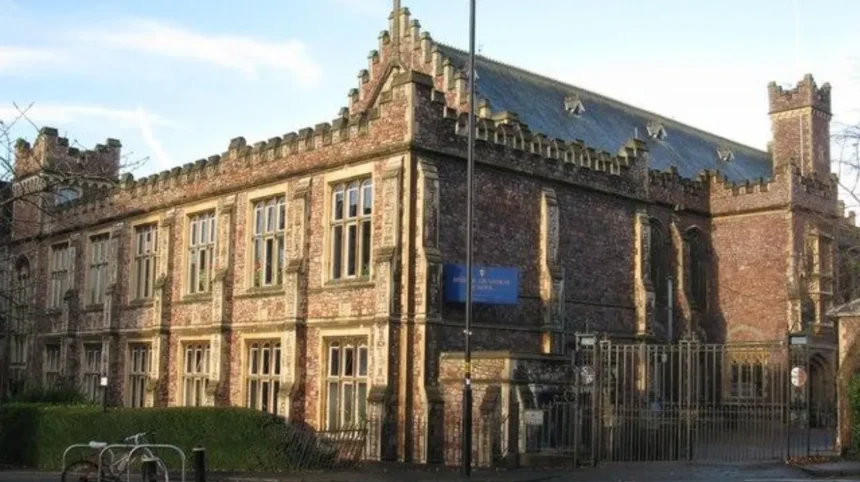
Examples include Bristol Free School, Redland Green School, and Trinity Academy. Voluntary-aided schools, such as St Mary Redcliffe and Temple School and Bristol Cathedral Choir School, maintain formal partnerships with religious entities like the Church of England or the Roman Catholic Church, which retain ownership of land assets and influence admissions criteria.
Foundation and trust schools operate via charitable foundations that appoint members to governing bodies, ensuring localized stakeholder representation in strategic operations.
What is the admissions process for secondary schools in Bristol?
The admissions process for secondary schools in Bristol requires parents to submit a coordinated application via Bristol City Council by October 31 of the preceding academic year, specifying up to three ranked school preferences.
Parents utilize the digital admissions portal managed by Bristol City Council to complete the common application form. Allocation algorithms process applications based on published admissions criteria, which typically prioritize children in public care, siblings of current attendees, designated geographical priority areas, and random allocation or catchment distance where applicable.
For voluntary-aided schools and specific academies, supplemental information forms must often be submitted directly to the institution to assess faith compliance or aptitude in specialized disciplines. National Offer Day occurs annually on March 1, at which point secondary placement outcomes are dispatched to applicants.
Unsuccessful applicants retain the statutory right of appeal to an independent panel administered under Department for Education guidelines.
How does Ofsted evaluate secondary schools in Bristol?
Ofsted evaluates secondary schools in Bristol through rigorous multi-day inspections that grade institutions across quality of education, behavior and attitudes, personal development, and leadership effectiveness on a four-point statutory scale.
Inspection outcomes classify institutions into four distinct performance categories: grade one (outstanding), grade two (good), grade three (requires improvement), and grade four (inadequate).
Regulatory bodies deploy inspection teams to scrutinize pupil progress data, classroom delivery, safeguarding protocols, and governance standards.
Data compiled across the region indicates that approximately 5% of state secondary schools in Bristol hold an outstanding designation, while a substantial majority achieve a good rating. Schools categorized as requiring improvement or inadequate are placed into formal intervention programs, often resulting in mandatory conversion into sponsored multi-academy trusts to accelerate institutional recovery.
What curriculum standards apply within Bristol secondary schools?
Bristol secondary schools are legally mandated to deliver a broad and balanced curriculum aligned with the National Curriculum for England, incorporating core foundational subjects alongside technical and creative disciplines through key stages 3 and 4.
The curriculum framework mandates core subjects comprising English language, English literature, mathematics, and combined or separate sciences.
Foundation subjects encompass history, geography, modern foreign languages, art and design, music, physical education, and citizenship. At Key Stage 4, spanning academic years 10 and 11, students undertake courses leading to national qualifications such as GCSEs or vocational equivalents.
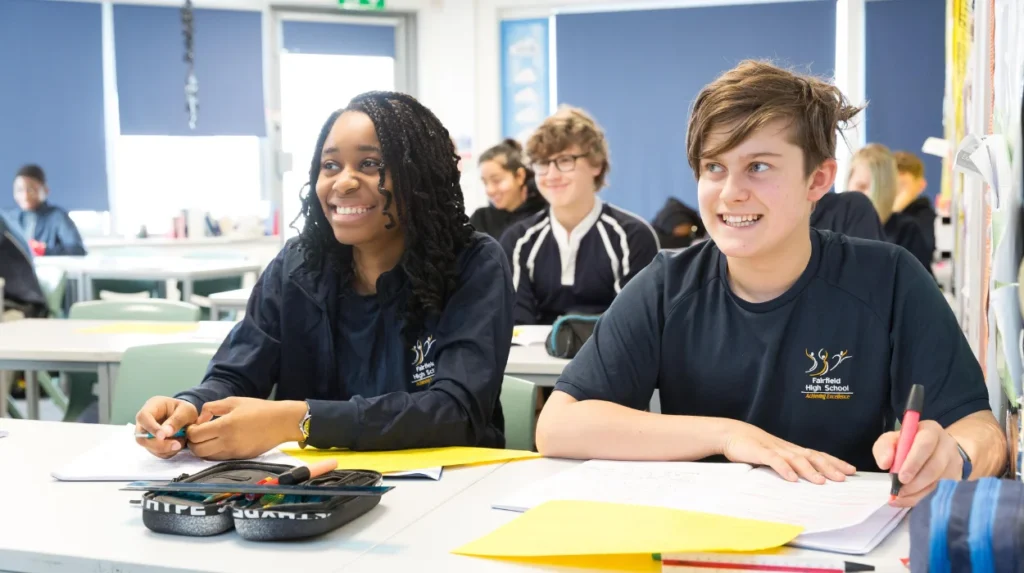
Institutions including Blaise High School and Fairfield High School offer structured pathways that direct students toward academic sixth-form study or technical apprenticeships upon completion of compulsory secondary education.
Explore More Area Guide
Best Primary Schools in Bristol: Admissions, Results and Guide 2026
Best Schools in Bristol: Top Primary and
What geographical and demographic factors influence Bristol school distribution?
Geographical distribution of secondary schools in Bristol correlates directly with population density gradients across inner-city wards and suburban neighborhoods, creating distinct localized capacity pressures.
Urban concentration is high in central districts, featuring institutions such as Bristol Cathedral Choir School and Cotham School, while outer residential zones accommodate facilities like Ashton Park School in Bower Ashton and Oasis Academy Brislington.
Demographic shifts, fueled by urban regeneration and net migration, generate fluctuating student cohorts across Bristol City Council planning areas.
To manage localized demand, multi-academy trusts establish temporary expansions or brand-new educational facilities, exemplified by the development projects assigned to Oasis Academy Temple Quarter and Oasis Academy Daventry Road.
Home-to-school distance measurements serve as the final tie-breaker criterion for oversubscribed institutions, heavily influencing residential real estate patterns throughout the municipality.
What measurable outcomes define performance in Bristol secondary schools?
Performance metrics for Bristol secondary schools are quantified through the Department for Education’s accountability measures, specifically Attainment 8, Progress 8, and the percentage of students achieving standard or strong passes in English and mathematics GCSEs.
Attainment 8 measures average student achievement across eight qualifying qualifications, while Progress 8 calculates the value-added academic progress a cohort achieves between the end of primary school and the completion of GCSE examinations.
Regional performance data highlights notable variances between high-performing academy converters like Redland Green School and institutions managing complex socioeconomic challenges.
Department for Education statistical releases demonstrate that continuous professional development investments and targeted multi-academy trust interventions remain primary mechanisms for raising academic benchmarks across low-performing urban centers.
How many secondary schools are there in Bristol?
Bristol has approximately 24 state-funded secondary schools serving students aged 11 to 16, with many institutions also providing sixth-form education for students aged 16 to 19. These schools operate within the Bristol City Council education framework.