Nature reserves near Bristol are legally protected areas of land managed for wildlife conservation and public access, ranging from urban hilltop meadows to ancient woodlands and river gorges. Bristol hosts 13 designated Local Nature Reserves within its boundaries, plus numerous larger reserves managed by organisations such as the Avon Wildlife Trust, Forestry England, and the National Trust in the surrounding region. These sites protect habitats including species-rich grasslands, limestone gorges, heathland, ancient woodland, and wetland ponds. Key reserves include Leigh Woods National Nature Reserve, Blaise Castle Estate, Folly Farm, Ashton Court, Troopers Hill, and Brandon Hill.
- What Are Nature Reserves Near Bristol?
- Which Nature Reserves Are Located Within Bristol City Boundaries?
- What Are the Major Nature Reserves Within Easy Reach of Bristol?
- What Wildlife Can Be Seen at Bristol’s Nature Reserves?
- When Is the Best Time to Visit Nature Reserves Near Bristol?
- How Are Bristol’s Nature Reserves Protected and Managed?
- What Facilities and Access Are Available at Bristol’s Nature Reserves?
What Are Nature Reserves Near Bristol?
Nature reserves near Bristol are formally designated sites protected for wildlife, geology, and public enjoyment, managed through partnerships between Bristol City Council, Avon Wildlife Trust, and national bodies. Local Nature Reserves (LNRs) are statutory designations under the National Parks and Access to the Countryside Act 1949, requiring management for nature conservation and public access. Bristol contains 13 LNRs, including Troopers Hill, Callington Road, and Narroways Hill. Larger reserves such as Leigh Woods hold National Nature Reserve (NNR) status, the highest level of statutory protection for wildlife and geology in England.
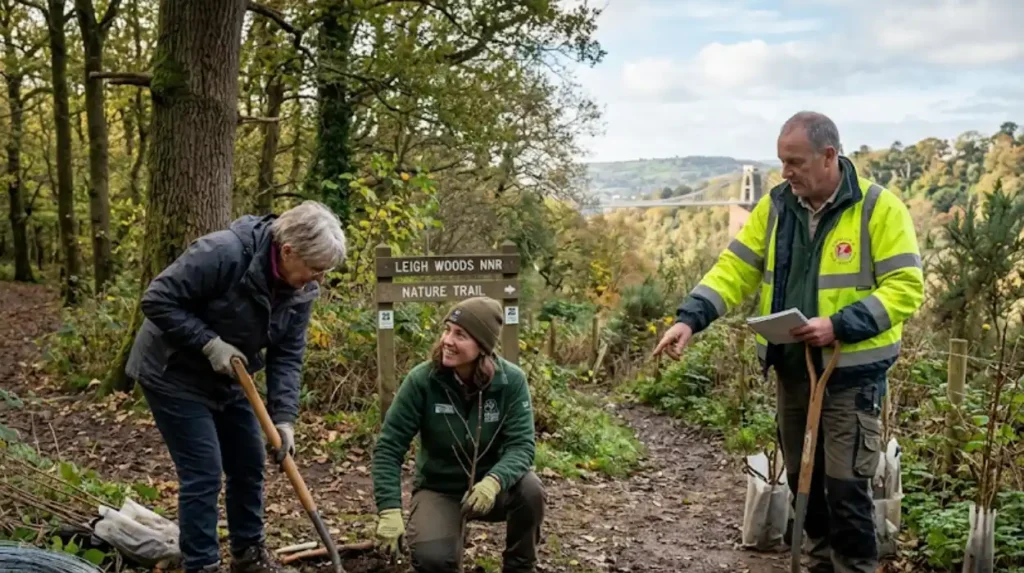
Natural England defines NNRs as areas of national importance for wildlife, geology, education, and public understanding. Leigh Woods NNR covers 190 hectares of ancient woodland on the western edge of Bristol, managed jointly by the National Trust and Forestry England. The Avon Wildlife Trust manages over 30 nature reserves across the region, including Folly Farm (250 acres), Brandon Hill (5 acres), and Bennett’s Patch and White’s Paddock (12 acres). Bristol City Council designates and manages Local Nature Reserves, Sites of Nature Conservation Interest (SNCIs), and public parks with nature reserve components.
Which Nature Reserves Are Located Within Bristol City Boundaries?
Bristol contains 13 officially designated Local Nature Reserves spread across the city’s neighbourhoods, from uk/local/clifton/">Clifton and Sneyd Park in the west to St George and Brislington in the east. These reserves include Brandon Hill, Troopers Hill, Callington Road, Narroways Hill, Eastwood Farm, Old Sneed Park, River Frome, and the Avon Gorge reserves at Bennett’s Patch and White’s Paddock. Each reserve protects distinct habitats ranging from urban parkland meadows to acidic heathland, riverside wetlands, and ancient woodland fragments.
Brandon Hill Nature Reserve occupies five acres of urban parkland in Clifton and became Britain’s first city-centre nature reserve in 1980 through a partnership between Avon Wildlife Trust and Bristol City Council. The reserve features hay meadows, ponds, butterfly gardens, and offers panoramic views over Bristol Harbour and the Avon Gorge. Troopers Hill Local Nature Reserve in St George covers acidic grassland and heathland on former industrial land, designated as an LNR in 1995 and as a Regionally Important Geological and Geomorphological Site (RIGS) in 2010. The site supports rare invertebrates including mining bees and bee flies, plus grassland fungi such as waxcaps.
Callington Road Nature Reserve in Brislington was established in 2009 on former allotment land adjacent to the new Southmead Hospital development. The reserve includes wildflower meadows, mixed scrub, regenerating woodland, and a dew pond replenished by rainwater. Old Sneed Park Nature Reserve in Sneyd Park provides family-friendly access to woodland and meadow habitats with educational signage. Narroways Hill in north Bristol contains woodland, streams, and meadow areas with a dew pond supporting amphibians and wildflowers. The River Frome reserves protect riverside habitats running through northeast Bristol.
Bennett’s Patch and White’s Paddock in the Avon Gorge was created in 2014–2015 to mark Bristol’s year as European Green Capital. Avon Wildlife Trust transformed a derelict 12-acre former sports facility into wildflower meadows, native woodland with over 4,000 planted trees, and three wildlife ponds. The reserve lies within the Avon Gorge wildlife corridor, a critical route for foraging bats, badgers, hedgehogs, slow worms, and unique plant species including the green-winged orchid. Surveys in recent years recorded 42 bird species, 22 butterfly species, 118 flowering plant species, and 29 tree and shrub species.
What Are the Major Nature Reserves Within Easy Reach of Bristol?
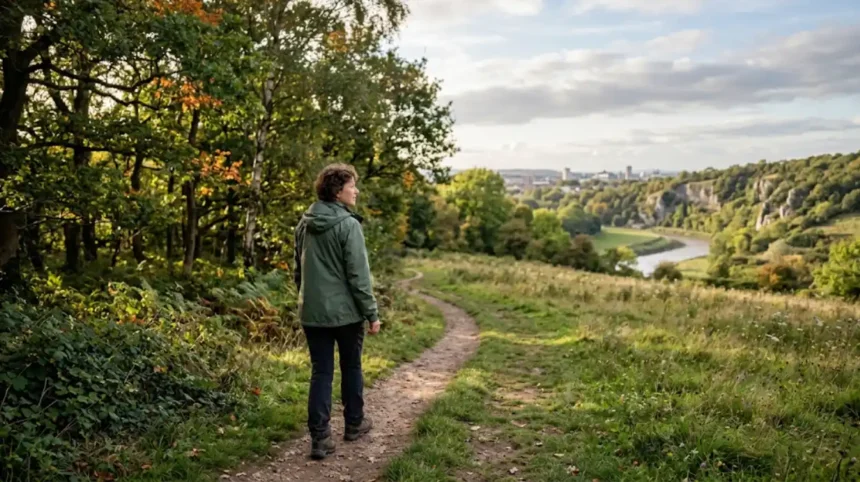
Major nature reserves within 30 minutes of Bristol include Leigh Woods National Nature Reserve, Blaise Castle Estate, Ashton Court Estate, and Folly Farm, each offering extensive woodland, meadow, and wildlife habitats. Leigh Woods NNR lies directly across the Clifton Suspension Bridge from Clifton and covers 190 hectares of ancient semi-natural woodland on limestone cliffs above the Avon Gorge. The woodland was partially donated to the National Trust in 1909 by George Alfred Wills to prevent urban development. Forestry England manages the remaining areas. The reserve supports diverse flora including rare ferns and orchids, plus fauna such as peregrine falcons, ravens, and several bat species.
Blaise Castle Estate in Henbury, northwest Bristol, spans 650 acres of Grade II listed parkland with over 5,000 years of human history. The estate holds Local Site of Nature Conservation Interest (SNCI) status across 100 hectares of woodlands, grasslands, streams, ponds, and limestone caves. Over 11 hectares of species-rich grassland are managed as traditional hay meadows with funding from Defra, supporting orchids including green-winged orchids. Wildlife includes great crested newts, eels, trout, and diverse bird populations. The estate features Blaise Castle House (Grade II* listed 18th-century mansion), Blaise Castle folly (built 1766), an orangery, dairy, and a museum.
Ashton Court Estate lies on Bristol’s western edge and covers 850 acres of woodland, open grassland, rolling hills, a golf course, and a historic deer park. Red deer have been kept on the estate since 1392, representing over 600 years of continuous presence. The deer park spans 100 acres and supports free-roaming herds of red and fallow deer. A 2.3-hectare meadow within the estate is managed as a nature reserve by Avon Wildlife Trust. The estate’s ancient trees, parkland landscape, and open grasslands support diverse wildlife including birds of prey, badgers, and invertebrates.
Folly Farm near Bishop Sutton, south of Bristol, is a 250-acre traditionally managed working farm and nature reserve owned by Avon Wildlife Trust since 1986. The reserve includes neutral grassland, wildflower meadows, and woodlands with views over Chew Valley Lake and the Mendip Hills. The wildflower meadows represent a habitat type now rare in Britain, with 97% of UK wildflower meadows lost since the 1930s. Meadows are unspoiled by pesticides and fertilisers, supporting flowers such as betony, ox-eye daisy, and heath spotted orchid. Late summer brings black knapweed and devil’s-bit scabious, attracting butterflies including ringlet, small tortoiseshell, gatekeeper, and marbled white.
Dowlings Wood within Folly Farm is a Site of Special Scientific Interest (SSSI) with a woodland floor rich in spring flowers including primrose, native English bluebells, and early purple orchid. An extensive badger sett is visible from the Access for All path. Bird species include nuthatch, buzzard, great spotted woodpecker, marsh tit, and tawny owl. A historic landscape survey in 1992 revealed the site was once a medieval deer park and later a ferme ornée (ornamental farm) from the 1780s associated with Sutton Court estate. Elements of the ornamental landscape including paths, watercourses with cascades and pools, and ornamental gullies remain visible and have been partially restored.
What Wildlife Can Be Seen at Bristol’s Nature Reserves?
Bristol’s nature reserves support diverse wildlife including mammals such as roe deer, badgers, and foxes; birds including peregrine falcons, ravens, and marsh tits; and invertebrates such as mining bees, bee flies, and multiple butterfly species. Troopers Hill hosts one of Bristol’s highest numbers of rare invertebrates, particularly mining bees and bee flies adapted to acidic soils. The site is also one of the best in Bristol for grassland fungi including waxcaps, which indicate ancient, unimproved grassland. Roe deer move along the River Avon wildlife corridor connecting Troopers Hill and adjacent woodlands, sometimes swimming across the river.
Leigh Woods NNR supports peregrine falcons and ravens nesting on limestone cliffs, plus diverse bat species foraging along the Avon Gorge corridor. The ancient woodland structure with mature trees, deadwood, and varied understorey provides habitat for birds including woodpeckers, nuthatches, and treecreepers. Ashton Court’s deer park supports herds of red deer (present since 1392) and fallow deer, along with badgers, foxes, hedgehogs, and birds of prey. The estate’s ancient trees and open parkland support invertebrates dependent on veteran trees and deadwood.
Bennett’s Patch and White’s Paddock recorded 42 bird species, 22 butterfly species, 118 flowering plant species, and 29 tree and shrub species in recent surveys. The Avon Gorge corridor supports multiple bat species foraging over the River Avon. Blaise Castle Estate supports great crested newts in ponds, plus eels and trout in streams. The estate’s species-rich hay meadows support orchids including green-winged orchids, enhanced through green hay transfers from Ashton Court. Folly Farm’s meadows and Dowlings Wood SSSI support marsh tit, buzzard, great spotted woodpecker, and butterflies including marsh fritillary, ringlet, gatekeeper, and marbled white.
Brandon Hill’s urban meadows and ponds support butterflies, bees, amphibians, and birds adapted to city environments. Callington Road’s dew pond and wildflower meadows support amphibians, wildflowers, and invertebrates. The reserve’s ancient boundary stone dates to 1987, and the site includes plum, damson, and apple trees from former allotment cultivation. Six bat species have been recorded including common pipistrelle, soprano pipistrelle, and long-eared bats.
When Is the Best Time to Visit Nature Reserves Near Bristol?
The best time to visit nature reserves near Bristol depends on target wildlife and habitats, with spring (March to May) optimal for wildflowers and breeding birds, summer (June to August) for butterflies and meadow flora, and autumn (September to November) for fungi and migratory birds. Brandon Hill, Bennett’s Patch and White’s Paddock, and Folly Farm recommend March to August or March to October as optimal visiting periods for wildflowers, breeding birds, and butterflies. Leigh Woods and Blaise Castle are accessible year-round, with spring and summer offering the richest botanical displays.
Spring brings primroses, bluebells, early purple orchids, and other woodland flowers to Dowlings Wood at Folly Farm and ancient woodlands across the region. Summer meadows at Folly Farm, Blaise Castle, and Bennett’s Patch display betony, ox-eye daisy, heath spotted orchid, black knapweed, and devil’s-bit scabious. These flowers attract butterflies including ringlet, small tortoiseshell, gatekeeper, marbled white, and marsh fritillary. Autumn offers fungi displays on Troopers Hill’s grasslands and fallen fruit in woodland reserves. Winter provides opportunities to observe deer herds at Ashton Court and Blaise Castle when vegetation is sparse.
All Bristol City Council nature reserves including Blaise Castle, Ashton Court, Callington Road, and Troopers Hill are open at all times with free admission. Access may be restricted on major event days at Blaise Castle Estate. Bennett’s Patch and White’s Paddock offers pedestrian access at all times, with car park, cafe, and facilities open during publicised event days only. Folly Farm Centre provides sustainable venue facilities for school trips, meetings, weddings, and group accommodation, with profits gift-aided to Avon Wildlife Trust.
Explore More Area Guide
Best Views in Bristol: Top Scenic Spots, Skyline Views
17 Instagrammable Places in Bristol for Stunning Photos
How Are Bristol’s Nature Reserves Protected and Managed?
Bristol’s nature reserves are protected through statutory designations including Local Nature Reserve, National Nature Reserve, Site of Special Scientific Interest, and Site of Nature Conservation Interest, each with specific legal frameworks and management requirements. Local Nature Reserves are designated under the National Parks and Access to the Countryside Act 1949, requiring management for nature conservation and public access. Bristol City Council designates and manages 13 LNRs, working with partners such as Avon Wildlife Trust and community groups like Friends of Troopers Hill.
National Nature Reserves such as Leigh Woods receive the highest level of statutory protection for wildlife and geology in England, managed by Natural England in partnership with the National Trust and Forestry England. Sites of Special Scientific Interest including Folly Farm’s meadows and Dowlings Wood receive protection under the Wildlife and Countryside Act 1981, requiring Natural England consent for potentially damaging operations. Local Sites of Nature Conservation Interest (SNCIs) such as Blaise Castle Estate receive non-statutory protection through local planning policy, providing a degree of protection from development.
Avon Wildlife Trust manages over 30 nature reserves across the region, including Brandon Hill (since 1980), Folly Farm (since 1986), and Bennett’s Patch and White’s Paddock (since 2015). Management practices include traditional hay meadow cutting, scrub control, woodland thinning, pond maintenance, and invasive species removal. Defra funding supports hay meadow management at Blaise Castle through agri-environment schemes. Green hay transfers from Ashton Court have enhanced grasslands at Blaise Castle’s ‘Royals’ fields, establishing green-winged orchids.
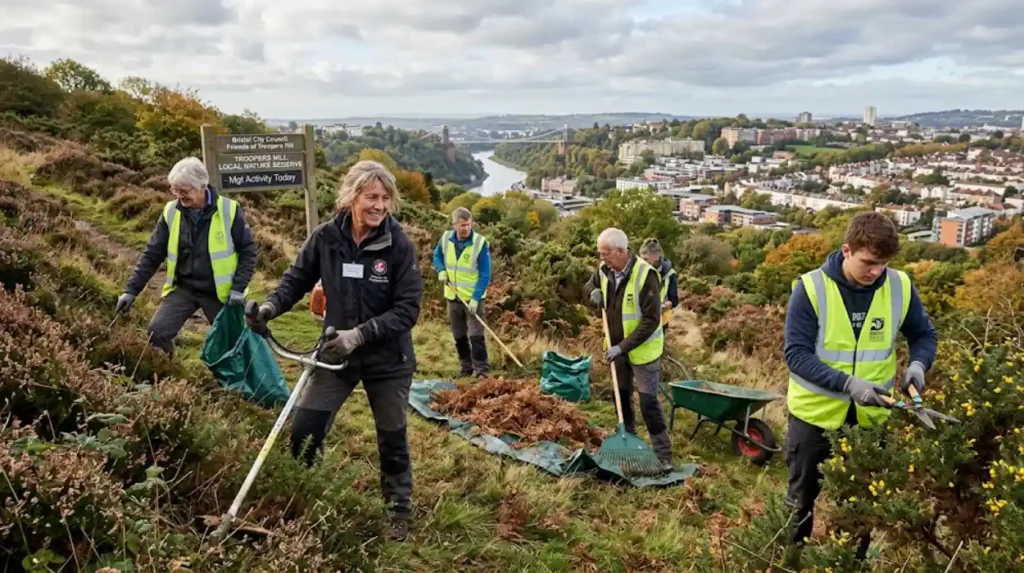
Community partnerships play a significant role in reserve management. Friends of Troopers Hill coordinate volunteer action days for woodland and heathland management. Bristol City Council’s Parks Department manages LNRs with input from local naturalists’ groups and schools. The transformation of Bennett’s Patch and White’s Paddock involved planting over 4,000 trees, creating three wildlife ponds, and establishing wildflower meadows on a derelict sports facility. The reserve’s giant willow whale sculpture has become a local landmark.
What Facilities and Access Are Available at Bristol’s Nature Reserves?
Most Bristol nature reserves offer free public access with footpaths, signage, and parking, while larger estates such as Blaise Castle and Ashton Court provide additional facilities including cafes, museums, playgrounds, and visitor centres. Blaise Castle Estate features a large car park open daily from 7:30am, children’s play areas, a museum, castle folly, and walking paths suitable for dogs. The estate is always open with free admission, though access may be restricted on major event days. Ashton Court offers 850 acres of accessible parkland with multiple car parks, walking and cycling routes, and seasonal events.
Folly Farm Centre provides a sustainable, Green Tourism accredited venue with facilities for school trips, meetings, weddings, and group accommodation. The centre sits within the 250-acre reserve with Access for All paths enabling wheelchair and mobility aid access to woodland and meadow areas. Bennett’s Patch and White’s Paddock offers pedestrian access at all times via the Portway, with a car park and cafe open during publicised event days. The reserve features the giant willow whale sculpture as a landmark and educational focal point.
Brandon Hill, Troopers Hill, Callington Road, and other urban LNRs offer open access with footpaths, steps, and signage. Troopers Hill includes industrial heritage features including two chimneys and former quarry workings. Callington Road provides parking on adjacent roads, with access from Callington Road and Imperial Walk via steep steps. Dogs must be kept on leads on upper slopes designated as quiet refuges for breeding roe deer and other wildlife. Narroways Hill, Old Sneed Park, and River Frome reserves offer family-friendly paths with educational interpretation.