Local artists in Bristol generate tens of millions of pounds annually for the regional economy while defining the city’s international visual identity. Creative industries contribute over £500 million to Bristol’s economy, employing more than 15,000 residents across fine art, illustration, street art, and studio design.
- How did Bristol develop into a global hub for visual art?
- Which core artistic mediums define Bristol’s current creative community?
- Where are the primary studio locations and gallery hubs in Bristol?
- How do festivals and events support independent artists in Bristol?
- What role do local universities and institutions play in nurturing artistic talent?
- What challenges do visual artists in Bristol face regarding studio space and living costs?
- How can art collectors and tourists support local artists in Bristol?
Bristol maintains one of the highest concentrations of visual creative professionals per capita in the United Kingdom. Local artists in Bristol transform former industrial sectors into designated creative corridors, driving urban regeneration and tourist revenue. The arts sector operates as a foundational driver for hospitality, education, and municipal development across South West England.
The visual art ecosystem supports multiple auxiliary industries, including commercial galleries, studio suppliers, custom framing shops, and art logistics firms. Independent creative enterprises generate localized revenue streams through public mural commissions, gallery exhibitions, print production, and private art sales. Municipal cultural funding through organizations like Bristol City Council and Arts Council England reinforces this framework by allocating capital to community-led creative initiatives.
Cultural tourists visit the city explicitly to view public art, museum collections, and independent gallery spaces. Visitors allocate expenditure toward local accommodation, food services, and transport links. The concentration of visual artists directly elevates property values near major creative hubs like Bedminster, Stokes Croft, and Wapping Wharf.
The international reputation of Bristol’s art scene enhances the city’s regional destination marketing. Global interest in localized visual movements attracts corporate sponsorships, academic partnerships with local universities, and private equity investments into workspace infrastructure.
How did Bristol develop into a global hub for visual art?
Bristol developed into a global visual art hub through a 40-year evolution starting in the 1980s, driven by post-industrial space availability, counterculture movements, and pioneering graffiti crews. The rise of stencil art, public gallery investments, and legal paint spaces institutionalized this organic subculture.
The modern visual history of Bristol began in the early 1980s when local youth adapted North American hip-hop culture and graffiti techniques to European urban environments. The Barton Hill Youth Club served as a central incubation center for early visual practitioners. Artists such as Robert Del Naja (tag name 3D) painted the city’s first recognized spray-paint murals in 1983, establishing a distinct regional style that prioritized figurative art alongside traditional lettering.
During the 1990s, local painters pioneered stencil techniques to streamline execution speed and evade municipal enforcement. Anonymous visual artist Banksy emerged from this specific ecosystem, utilizing satirical stencils, political commentary, and subverted imagery to challenge institutional norms. Works like The Mild Mild West in Stokes Croft (1999) and Well Hung Lover on Park Street (2006) gained global media attention, establishing Bristol as an international authority in urban visual art.
Concurrently, municipal authorities transitioned from punitive vandalism policies to structural engagement with visual creators. City planners allocated designated legal surfaces for artists to paint without legal prosecution. In 2011, the “See No Evil” initiative on Nelson Street transformed multi-story municipal blocks into permanent public artworks using international public funding.
Exhibition milestones further integrated local visual practitioners into traditional fine art spaces. The Banksy vs Bristol Museum exhibition in 2009 recorded over 300,000 visitors, proving the commercial viability and public demand for locally produced visual art. Historical development shifted from informal street painting to formal gallery representations, studio cooperatives, and international art fairs.
Which core artistic mediums define Bristol’s current creative community?
Bristol’s art community is defined by three primary artistic mediums: urban street art, printmaking and illustration, and fine art painting. These disciplines operate across public spaces, commercial print studios, and traditional gallery settings throughout the city.
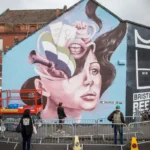
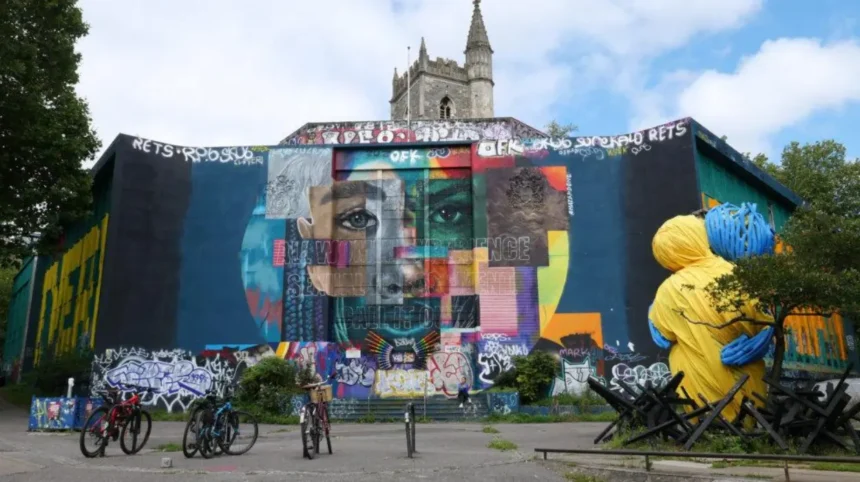
Urban street art remains the most visible medium across the urban landscape. Practitioners utilize aerosol spray paint, high-durability acrylics, emulsion base layers, and precision stencils to produce large-scale public murals. Artists like Inkie, Cheba, and Hazard One create works ranging from 20-foot photo-realistic portraits to abstract geometric compositions on residential and commercial facades.
Printmaking and illustration form the second major technical pillar of the local visual sector. The city hosts high-density screen-printing facilities, etching presses, and risograph workshops. Visual illustrators specialize in screen printing, linocut, digital illustration, and letterpress typography. Notable print houses produce limited-edition screen prints for commercial sale, literary publishing, and band artwork, maintaining an accessible market for collectors.
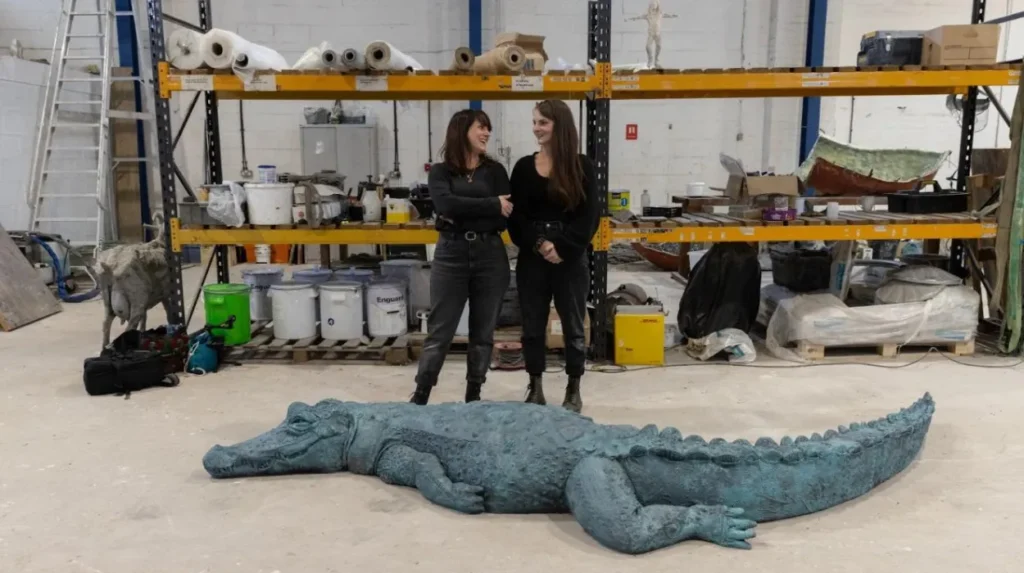
Fine art painting and sculpture constitute the third foundational medium. Contemporary painters working in Bristol utilize oil paint, cold wax, watercolor, and mixed media to produce studio works displayed in commercial galleries. Sculptors working within repurposed industrial premises process reclaimed steel, timber, resin, and ceramic to build structural installations for institutional collectors.
Where are the primary studio locations and gallery hubs in Bristol?
Bristol’s art hubs concentrate in three main geographic areas: Spike Island and the Harbourside, Bedminster and Southville, and Stokes Croft and St Pauls. These districts house hundreds of subsidized studio spaces, commercial galleries, and public art installations.
The historic docks and Harbourside region contain major institutional workspace infrastructure. Spike Island operates as an 80,000-square-foot international center for contemporary art, providing 160 studio spaces for painters, sculptors, and digital creators. Located nearby at Hanover Place, Arnolfini operates as a public contemporary gallery displaying internationally recognized visual exhibitions.
Bedminster and Southville, located south of the River Avon, function as a primary district for street art and public display. North Street serves as the central commercial corridor, featuring continuous exterior mural installations. Studio complexes like the Tobacco Factory offer dedicated exhibition areas, market spaces, and performance facilities supporting local independent makers.
Stokes Croft and St Pauls form the northern creative district, characterized by community-managed art spaces and independent galleries. Hamilton House on Stokes Croft provides shared studios, print workshops, and open access spaces for hundreds of working creatives. The surrounding streets host legal painting walls and independent display spaces like the Jamaica Street Studios, which houses over 30 visual artists across three floors.
How do festivals and events support independent artists in Bristol?
Festivals support independent artists by providing commission fees, international gallery exposure, direct print sales, and networking opportunities with art collectors. Events like Upfest, the West Bristol Arts Trail, and North Bristol Artists Open Studios connect creators directly with public buyers.
Upfest (The Urban Paint Festival) operates as Europe’s largest street art and graffiti festival, based in Bedminster. The festival brings together over 400 artists from 70 countries to paint live surfaces over three days. Upfest provides participating painters with materials, designated painting spaces, and direct exposure to an estimated 50,000 live visitors, driving direct commercial print sales and commercial commissions.
Open studio events provide structural direct-to-consumer sales channels for studio-based artists. The North Bristol Artists Open Studios event showcases over 100 artists across residential homes, community centers, and shared workshops. The West Bristol Arts Trail operates similarly across Clifton, Redland, and Hotwells, enabling visual artists to sell original oil paintings, sculptures, and ceramics without paying third-party gallery commission fees.
The Bristol Art Fair and pop-up market exhibitions in spaces like Paintworks provide formal commercial exhibition venues. These events aggregate gallery curators, corporate buyers, and private collectors, generating direct revenue for early-career and mid-career artists. The income generated during these concentrated event windows funds ongoing studio rent and material costs for independent practitioners.
Explore more Area Guide
Best Gift Shops and Local Gifts in Bristol 2026
Artisan Stores and Handmade Shops Guide Bristol 2026
What role do local universities and institutions play in nurturing artistic talent?
Local universities nurture artistic talent by supplying technical training, studio infrastructure, research funding, and career placement pipelines. The University of the West of England (UWE Bristol) and the Royal West of England Academy (RWA) act as primary educational and exhibition anchors.
The University of the West of England (UWE Bristol) operates a specialized City Campus dedicated to creative disciplines. The campus spans key visual arts locations, including Bower Ashton, Spike Island, Arnolfini, and Watershed. UWE offers undergraduate and postgraduate degrees in Fine Art, Illustration, Graphic Arts, and Printmaking, training over 1,000 creative students annually.
Academic programs provide students with direct access to professional printmaking workshops, digital fabrication labs, and bronze casting foundries. Graduate shows held annually at Bower Ashton attract art dealers, talent spotters, and gallery directors, facilitating immediate professional transition into the commercial art market.
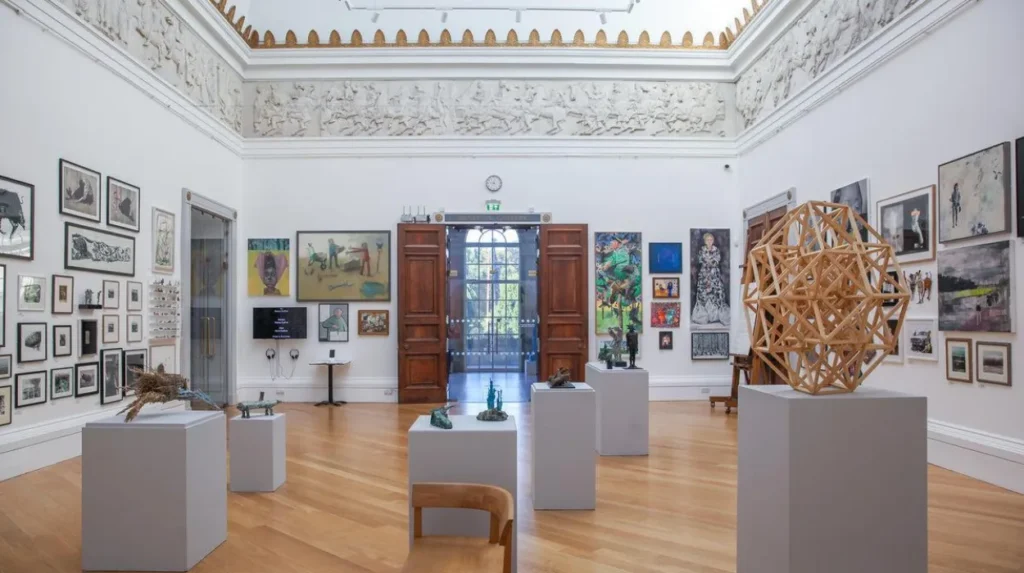
The Royal West of England Academy (RWA), established in 1844, operates as Bristol’s oldest purpose-built art gallery. The RWA runs the Annual Open Exhibition, which accepts submissions from both emerging local painters and established academicians. The institution offers educational bursaries, studio mentorship programs, and gallery representation opportunities that support professional artistic career progression.
Bristol City Museum and Art Gallery provides historic contextualization and contemporary acquisition programs. The museum purchases works from regional visual creators for permanent public display, securing local art within national historical archives.
What challenges do visual artists in Bristol face regarding studio space and living costs?
Visual artists face three critical challenges: rising studio rental fees, property redevelopment of historic art spaces, and elevated overall living costs. These financial pressures threaten to displace early-career creators from central Bristol.
Urban redevelopment initiatives have led to the conversion of historic industrial buildings into commercial real estate and residential apartments. Property developments across the Temple Quarter, Bedminster, and St Philip’s Marsh have reduced the absolute inventory of affordable, large-footprint studio space. Industrial rents for raw workspace increased substantially over the past decade, outpacing average visual artist income growth.
Energy price increases and raw material inflation directly raise operational costs for artists using high-power equipment like ceramic kilns, glass furnaces, and heavy print presses. Commercial space managers pass elevated utility fees directly onto studio tenants through service charges.
Living cost adjustments in Bristol create secondary retention risks for creative workers. High residential rents force early-career visual artists to relocate to peripheral regions like South Gloucestershire, North Somerset, or Newport. To mitigate these pressures, artist-led housing cooperatives and non-profit studio providers like East Street Arts and Bricks are acquiring freehold properties to guarantee affordable studio space in perpetuity.
How can art collectors and tourists support local artists in Bristol?
Collectors and tourists can support local artists through three direct mechanisms: purchasing original artwork from independent galleries, taking licensed street art walking tours, and purchasing limited-edition prints directly from local maker markets.
Purchasing works directly from local independent galleries ensures capital remains within the regional visual ecosystem. Commercial spaces such as the Upfest Gallery on North Street, the Christmas Steps Gallery, and the Centerspace Gallery represent local creators. Direct acquisition guarantees that up to 70 percent of retail sale values return directly to the producing artist.
Engaging licensed street art tour operators supports the public art framework directly. Organizations such as Where The Wall run guided walking tours across Stokes Croft, the City Centre, and Bedminster. A percentage of tour ticket revenue funds paint supplies, equipment rentals, and mural permits for new public art installations across Bristol.
Buying limited-edition prints, merchandise, and ceramics at local maker markets provides consistent cash flow for working artists. Venues like the St Nicholas Market, the Tobacco Factory Sunday Market, and seasonal print fairs allow visitors to purchase certified authentic works directly from creators, bypassing secondary market markups.
What is the economic impact of local artists in Bristol?
Local artists and the broader creative sector contribute over £500 million annually to Bristol’s regional economy. The industry employs more than 15,000 residents across fine art, street art, printmaking, and studio design, driving urban regeneration and regional tourism.