Bristol is one of England’s most historically layered cities. Its heritage combines medieval religious buildings, Tudor houses, Georgian streets, Victorian engineering, maritime infrastructure, museums and industrial sites. The city’s historic attractions explain how Bristol developed from a medieval trading settlement into a major port and industrial centre.
- What makes Bristol historically important?
- Which historic attractions should you visit in Bristol?
- Bristol Cathedral
- St Mary Redcliffe
- Clifton Suspension Bridge
- Brunel’s SS Great Britain
- Red Lodge Museum
- How does Bristol’s medieval history appear in its attractions?
- Which historic attractions explain Bristol’s maritime heritage?
- How does Bristol’s Tudor and Georgian architecture survive?
- What can you learn about Bristol’s industrial and Victorian history?
- How should visitors explore Bristol’s historic attractions?
- Why is Bristol’s historic heritage still relevant today?
- Which Bristol historic attractions are best for understanding different periods?
- What is the overall importance of Bristol’s historic attractions?
The name Bristol derives from the Old English Brycgstow, generally interpreted as “place at the bridge.” The city developed around the River Avon and its historic crossing points. Evidence of Bristol’s development appears across the Old City, Harbourside, Redcliffe, Clifton and surrounding districts.
Bristol’s historic attractions also represent different periods. Bristol Cathedral traces its religious history to 1140. The Red Lodge preserves Tudor architecture from approximately 1579–1580. St Mary Redcliffe contains medieval fabric dating from the late 12th century. The Clifton Suspension Bridge represents Victorian engineering, while Brunel’s SS Great Britain represents the transformation of maritime transport during the 19th century.
The city’s heritage is also connected to difficult chapters in British history. Bristol was deeply involved in Atlantic trade and the transatlantic slave trade. Museums and historic sites now present evidence of these connections alongside Bristol’s commercial, religious, industrial and social development.
Historic attractions therefore function as more than sightseeing locations. They preserve buildings, objects, engineering works, documents and landscapes that explain how Bristol changed over centuries.
What makes Bristol historically important?
Bristol is historically important because its heritage records medieval commerce, religious development, maritime trade, industrial engineering, migration, social change and political history across surviving buildings, museums, monuments and archaeological collections throughout the city.
Bristol’s location created the foundations for its historical importance. The River Avon provided access to the Severn Estuary and the wider Bristol Channel. The city developed as a trading centre, with commerce shaping its streets, churches, warehouses, docks and merchant buildings.
The medieval city expanded around markets, religious institutions and defensive structures. Historic streets in the Old City retain evidence of this urban development. Bristol Castle, although largely destroyed, formed part of the medieval defensive landscape. Historic England identifies Bristol Castle as a motte-and-bailey castle established in the 11th century and redeveloped during the first half of the 12th century.
The city’s maritime position later became increasingly important. Bristol became a major port and shipbuilding centre. The Floating Harbour, created to maintain water levels for ships, became a major component of Bristol’s industrial landscape. The harbour remains central to the city’s historic identity.
Bristol also became strongly associated with engineering. Isambard Kingdom Brunel designed the SS Great Britain and the Clifton Suspension Bridge. These projects demonstrate major changes in shipbuilding, transportation and civil engineering during the Victorian period.
The city’s historic importance is preserved through different heritage formats. These include churches, bridges, museums, historic houses, archaeological remains, dockyards and public monuments. Bristol Museums, Galleries and Archives holds collections covering archaeology, social history, industrial history, maritime history, art, geology and natural history.
This breadth makes Bristol particularly valuable for visitors seeking historical attractions. A single city centre route can connect medieval religious architecture, Tudor domestic architecture, maritime history and Victorian engineering.
Which historic attractions should you visit in Bristol?
The leading historic attractions in Bristol include Bristol Cathedral, St Mary Redcliffe, Clifton Suspension Bridge, SS Great Britain, Red Lodge Museum, M Shed, Bristol Old City, Cabot Tower, Bristol Museum and historic Harbourside sites.
Bristol Cathedral
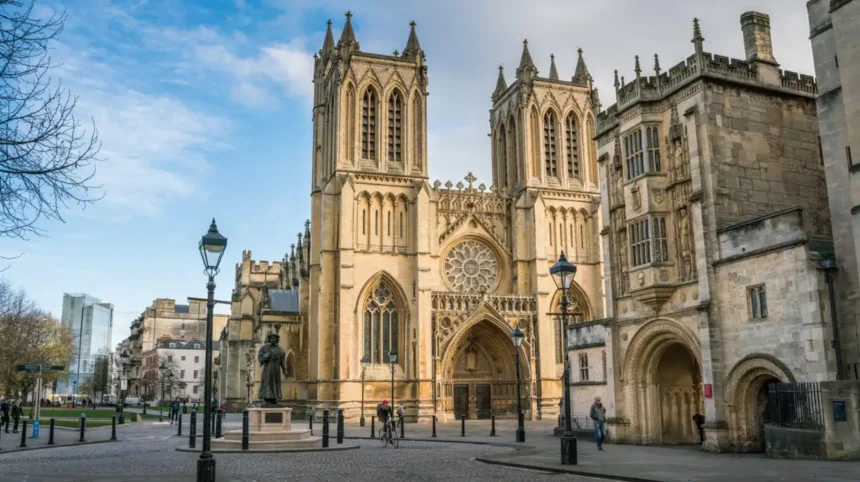
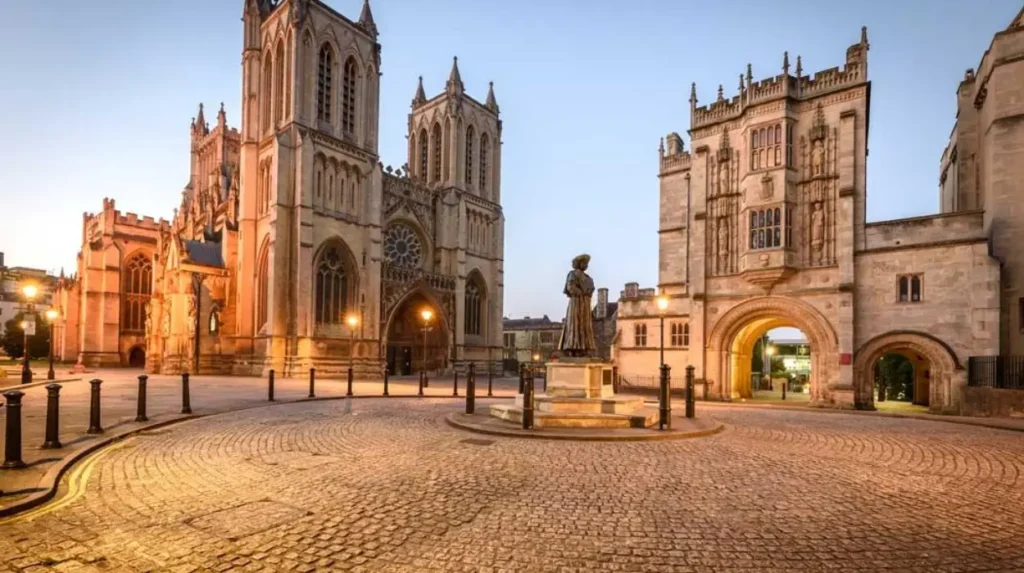
Bristol Cathedral is one of the city’s most important medieval religious buildings. Its history begins in 1140, when local merchant Robert Fitzharding established the Abbey of St Augustine on the site. The church developed through successive periods of construction and architectural change.
The building contains Romanesque and Gothic elements. Its distinctive hall-church east end began in 1298. The former abbey became a cathedral following the creation of the Diocese of Bristol during the English Reformation.
The cathedral therefore provides evidence of more than 900 years of religious and architectural history.
St Mary Redcliffe
St Mary Redcliffe is a major medieval parish church in Redcliffe. The earliest surviving parts of the current church date from the late 12th century. A charter issued under Henry II in 1158 records a church on the site.
The church grew alongside Bristol’s wealthy medieval merchant community. Its scale reflects the economic importance of Redcliffe and the commercial activity associated with the River Avon.
Queen Elizabeth I visited St Mary Redcliffe in 1574. The church is also connected with Bristol’s maritime, commercial, political and social history.
Clifton Suspension Bridge
Clifton Suspension Bridge is Bristol’s most recognisable engineering landmark. Historic England lists it at Grade I, reflecting its exceptional architectural and historic importance. The bridge spans the Avon Gorge and measures approximately 214 metres between its towers.
The bridge was designed by Isambard Kingdom Brunel. The project began in the 19th century but experienced major financial delays. The completed bridge opened in 1864, five years after Brunel’s death.
Brunel’s SS Great Britain
SS Great Britain is one of Bristol’s most significant maritime attractions. Brunel designed the iron-hulled steamship, which was launched in Bristol Harbour on 19 July 1843. The ship introduced major advances in maritime engineering, including an iron hull and screw propulsion.
The vessel is preserved at the Great Western Dockyard, the location associated with its construction and launch. Its conservation provides direct access to Victorian shipbuilding history.
Red Lodge Museum
The Red Lodge Museum preserves more than 400 years of history. The building was constructed around 1579–1580 for merchant Sir John Young. It contains Tudor architectural features, including the Great Oak Room.
The building later became a Victorian reform school for girls. Mary Carpenter established the institution in 1854. The building therefore connects Tudor domestic architecture with 19th-century social reform.
How does Bristol’s medieval history appear in its attractions?
Bristol’s medieval history survives through churches, archaeological remains, street layouts, castle evidence and historic foundations, with Bristol Cathedral, St Mary Redcliffe, the Old City and Castle Park providing particularly important physical connections to medieval Bristol.
Medieval Bristol developed around commerce, religion and defence. The city’s relationship with the River Avon influenced settlement patterns and commercial activity.
Bristol Cathedral represents one of the clearest surviving religious connections. The Abbey of St Augustine was founded in 1140. Its development demonstrates the role of religious institutions in medieval urban life.
St Mary Redcliffe provides another important medieval landmark. Its earliest surviving sections date from the late 12th century. The church expanded as Bristol’s merchant economy grew.
The Old City also retains historic street patterns. High Street, Corn Street, Broad Street and Wine Street form part of the historic commercial core. The city’s former defensive system included walls and gates around this central area.
Castle Park contains archaeological evidence associated with Bristol Castle. Historic England records the castle as a Norman motte-and-bailey foundation that was later developed with a stone keep and defensive walls.
Medieval heritage is therefore not confined to one building. It appears through the relationship between streets, churches, archaeological remains and former commercial spaces.
For visitors, the Old City provides an efficient starting point. A walking route can connect Castle Park with the historic commercial streets, St Nicholas Market area, Bristol Cathedral and St Mary Redcliffe.
This approach provides greater historical context than visiting individual buildings separately. The locations demonstrate how medieval Bristol functioned as an interconnected urban settlement.
Which historic attractions explain Bristol’s maritime heritage?
Bristol’s maritime heritage is best represented by SS Great Britain, Bristol Harbourside, M Shed, Underfall Yard, the Floating Harbour and The Matthew, which collectively document shipbuilding, trade, engineering, navigation, dock work and Bristol’s international connections.
Bristol’s relationship with the sea shaped its economy for centuries. Although the city stands inland from the open Bristol Channel, the River Avon provided navigable access to the port.
The Floating Harbour became an important part of the city’s maritime infrastructure. It helped maintain water levels within the harbour and supported shipping activity.
SS Great Britain provides the strongest surviving connection with Victorian engineering. Brunel designed the vessel as an iron-hulled steamship. It was launched in Bristol Harbour in 1843 and represented a significant development in shipbuilding technology.
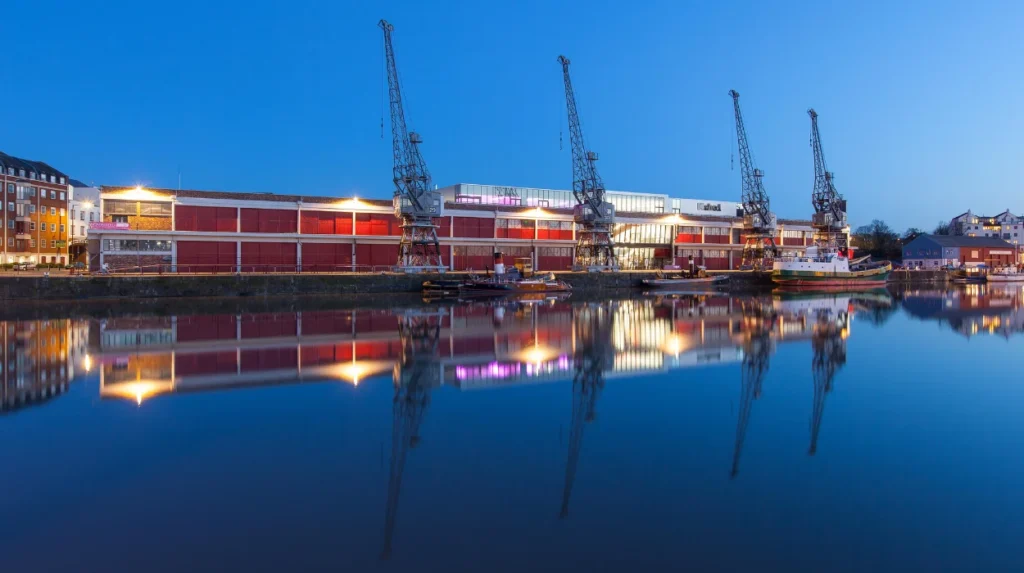
M Shed provides a wider social history of Bristol. The museum occupies a former transit shed on the Harbourside and documents Bristol’s people, industries, transport and communities. Bristol City Council describes its collections as covering the story of Bristol’s people and places from prehistoric times to the present.
Underfall Yard provides another important industrial connection. Its historic facilities relate to the maintenance and operation of Bristol’s Floating Harbour.
The Matthew is a reconstruction of the vessel associated with John Cabot’s 1497 voyage to North America. It provides a historical connection between Bristol’s maritime identity and the Age of Exploration. Visit Bristol identifies The Matthew as a faithful reconstruction of Cabot’s ship.
These attractions should be understood together. SS Great Britain explains advanced Victorian engineering. M Shed explains social and industrial history. The harbour explains infrastructure. The Matthew represents earlier maritime exploration.
How does Bristol’s Tudor and Georgian architecture survive?
Bristol’s Tudor and Georgian heritage survives in preserved houses, churches, streets and civic buildings, with the Red Lodge, Georgian House Museum, St Mary Redcliffe, Queen Square and historic Old City providing strong examples of domestic and urban architecture.
The Red Lodge is one of Bristol’s strongest Tudor attractions. Built around 1579–1580, it was originally associated with Sir John Young’s Great House. Its Great Oak Room preserves important Elizabethan interior features.
The building later acquired a different social function. It became a reform school for girls in the Victorian period. Its changing use demonstrates how historic buildings can preserve multiple phases of social history.
The Georgian House Museum represents another important period. Bristol City Council describes it as a property that presents the appearance of a Bristol sugar plantation and slave owner’s home around 1790.
This context is important because Bristol’s Georgian wealth was connected to international trade, including the transatlantic slave economy. Historic attractions increasingly present this history alongside architecture and domestic life.
Queen Square provides a wider urban example. The square represents planned Georgian development and remains an important historic open space in central Bristol.
The Old City also retains buildings and streets associated with Bristol’s commercial development. Historic architecture in this area demonstrates the relationship between merchant wealth, trade and urban expansion.
The survival of these buildings is partly the result of historic conservation work. Bristol Museums records campaigns to preserve important buildings and salvage architectural fragments when structures could not be saved.
This conservation history is itself part of Bristol’s heritage. It shows that historic attractions are not simply inherited. They require documentation, protection, repair and interpretation.
What can you learn about Bristol’s industrial and Victorian history?
Bristol’s industrial and Victorian history is visible through Clifton Suspension Bridge, SS Great Britain, Cabot Tower, historic docks, museums and surviving commercial architecture, revealing developments in engineering, transport, manufacturing, trade, communications and urban expansion.
The Victorian period transformed Bristol’s physical landscape. Industrialisation increased demand for improved transport, larger ships and more efficient commercial infrastructure.
Clifton Suspension Bridge represents one of the most important engineering achievements of the period. Brunel designed the bridge in 1829–1831. Construction began in 1831, restarted after financial difficulties, and was ultimately completed in 1864 by Sir John Hawkshaw and William Henry Barlow after Brunel’s death.
The bridge spans approximately 214 metres across the Avon Gorge and stands approximately 75 metres above high water. Historic England lists it as Grade I.
SS Great Britain demonstrates another aspect of Victorian engineering. Brunel used iron construction and screw propulsion in a ship that represented a major technological shift in ocean travel.
Cabot Tower provides a later Victorian landmark. It was completed in 1897 to commemorate the 400th anniversary of John Cabot’s voyage to North America. The tower stands on Brandon Hill and is approximately 105 feet high.
Bristol Museum & Art Gallery provides additional historical context. Its collections cover archaeology, applied arts, natural history and local material culture. The museum has maintained an emphasis on local collecting since opening in 1905.
Industrial heritage therefore extends beyond individual engineering monuments. It includes docks, factories, transport systems, museums, warehouses and commercial buildings.
Together, these attractions explain why Bristol became a major centre of engineering and maritime innovation during the 19th century.
Explore more Area Guide
Green Spaces in Bristol: Complete Guide to Parks, Nature Reserves and Walking Routes
Best Parks in Bristol: Top Green Spaces for Families and Walks
How should visitors explore Bristol’s historic attractions?
Visitors can explore Bristol’s historic attractions efficiently by grouping sites geographically, starting with the Old City and Cathedral, continuing to Redcliffe and Harbourside, then visiting Clifton for the suspension bridge and related Victorian landmarks.
A central historic route begins in the Old City. Castle Park provides archaeological context for medieval Bristol. From there, visitors can explore historic commercial streets and continue towards Bristol Cathedral.
The Cathedral provides a major medieval religious landmark. Its history begins in 1140 and extends through Norman, medieval, Reformation and modern periods.
The route can continue towards Redcliffe. St Mary Redcliffe provides another major medieval church and connects Bristol’s religious history with merchant wealth and maritime commerce.
The Harbourside then introduces Bristol’s maritime and industrial history. SS Great Britain, M Shed and historic dock infrastructure provide different perspectives on shipping, engineering, industry and social history.
Clifton provides a separate historic cluster. The Clifton Suspension Bridge is the central landmark. Clifton Observatory and the surrounding landscape provide additional historical context around the Avon Gorge. Visit Bristol identifies the bridge, observatory and Clifton Downs among the area’s key attractions.
The Red Lodge provides another central-city option. It stands on Park Row, close to Bristol Museum & Art Gallery, and contains Tudor interiors and later Victorian history.
Visitors interested in historic houses can also travel beyond the central area to Tyntesfield. The National Trust property near Bristol began as a smaller Georgian house and was transformed into a major Victorian Gothic Revival estate by the Gibbs family.
The best route depends on the period of history being studied. Medieval history is strongest around the Cathedral, Redcliffe and Old City. Maritime history is concentrated around the Harbourside. Victorian engineering is strongest around Clifton and SS Great Britain. Tudor history is particularly accessible at the Red Lodge.
Why is Bristol’s historic heritage still relevant today?
Bristol’s historic heritage remains relevant because preserved buildings, museums, engineering works and archives provide evidence for understanding urban development, industrialisation, maritime commerce, social inequality, migration, architecture, conservation and the city’s changing identity.
Historic attractions provide primary evidence of Bristol’s development. Buildings demonstrate architectural change. Museums preserve objects. Archives preserve documents, photographs and records. Archaeological collections provide material evidence from earlier periods.
Bristol’s heritage also supports more complete historical interpretation. The city’s maritime prosperity cannot be separated from international trade. International trade cannot be separated from Britain’s imperial history and the transatlantic slave trade.
M Shed and Bristol Museums hold collections that document these connections. Their collections include material relating to slavery, maritime trade and Bristol’s social history.
The Georgian House Museum provides another direct example. Its interpretation examines the domestic environment associated with Bristol’s sugar plantation economy and slave ownership around 1790.
Historic preservation also affects urban planning. Bristol’s listed buildings and historic areas impose conservation requirements that influence development decisions. Historic England’s listing system identifies buildings and structures with special architectural or historic interest, while the Planning (Listed Buildings and Conservation Areas) Act 1990 provides the statutory framework for listed-building protection.
The conservation of Clifton Suspension Bridge illustrates this principle. Its Grade I designation recognises both architectural and historic importance.
Historic attractions also remain important educational resources. Bristol Museums maintains archaeological collections covering Bristol and South Gloucestershire. The collection includes material gathered through professional archaeological fieldwork and represents a major repository for archaeological archives from the region.
This means Bristol’s historic attractions remain useful for schools, researchers, residents and visitors. They connect physical places with documentary evidence and wider historical themes.
Which Bristol historic attractions are best for understanding different periods?
Medieval Bristol is strongest at Bristol Cathedral and St Mary Redcliffe; Tudor history is concentrated at Red Lodge; maritime history centres on SS Great Britain and M Shed; Victorian engineering is represented by Clifton Suspension Bridge and Cabot Tower.
For medieval history, Bristol Cathedral is the strongest starting point because its foundation dates to 1140. St Mary Redcliffe adds a late-12th-century parish church and demonstrates the relationship between religion and merchant wealth.
For Tudor history, Red Lodge provides preserved domestic architecture from approximately 1579–1580. Its Great Oak Room and other historic interiors demonstrate elite domestic life during the Elizabethan period.
For Georgian history, the Georgian House Museum provides a detailed domestic setting connected with Bristol’s international trading economy. Queen Square and the Old City provide additional architectural context.
For maritime history, SS Great Britain is central. Its 1843 launch and innovative engineering demonstrate the technological transformation of ocean travel. M Shed expands the story by documenting Bristol’s people, industries and places.
For Victorian engineering, Clifton Suspension Bridge provides the clearest example. Its 1864 completion represents one of Brunel’s most significant Bristol projects.
For social history, M Shed and Bristol Museums provide broader collections. Their holdings cover everyday life, industry, transport, migration, commerce and Bristol communities.
For heritage conservation, the Red Lodge and Clifton Suspension Bridge demonstrate different approaches. Red Lodge preserves a historic domestic building through museum interpretation. Clifton Suspension Bridge remains an active transport structure while retaining its historic engineering character.
This period-based approach helps visitors select attractions according to their interests rather than treating Bristol’s heritage as one undifferentiated category.
What is the overall importance of Bristol’s historic attractions?
Bristol’s historic attractions form a connected record of more than eight centuries of urban, religious, commercial, maritime, industrial and social development, making the city’s heritage important for tourism, education, conservation, research and understanding Bristol’s modern identity.
Bristol’s historic landscape contains evidence from different periods in close geographical proximity. Medieval churches stand near modern streets. Tudor interiors survive beside later commercial development. Victorian engineering remains part of the city’s working infrastructure.
The city’s historic attractions also demonstrate changing technology. Clifton Suspension Bridge records advances in suspension engineering. SS Great Britain records developments in iron shipbuilding and screw propulsion. The Floating Harbour records changes in port infrastructure.
Religious buildings document changing institutions. Bristol Cathedral records more than 900 years of religious history. St Mary Redcliffe demonstrates the continuing importance of medieval parish churches and merchant communities.
Historic houses document changing social structures. Red Lodge preserves Tudor domestic architecture and later Victorian reform-school history. The Georgian House records the material conditions associated with Bristol’s 18th-century commercial wealth.
Museums provide the wider documentary framework. Bristol Museums holds collections covering archaeology, industrial history, maritime history, social history, art and natural history.
Bristol’s heritage therefore extends beyond famous landmarks. Its historic value exists in the relationships between buildings, streets, waterways, collections and archives.
For visitors, the most effective way to understand Bristol is to combine major landmarks with museums and historic neighbourhoods. The resulting experience explains not only what survives but also why these places were built, how they were used and how their meanings changed.
Bristol’s historic attractions remain central to understanding the city in 2026 and beyond. Their continued preservation ensures that evidence of Bristol’s medieval foundations, Tudor society, Georgian commerce, maritime economy, Victorian engineering and modern social history remains accessible to future generations.
What are the best historic attractions in Bristol?
Bristol Cathedral, Clifton Suspension Bridge, SS Great Britain, St Mary Redcliffe, Red Lodge Museum, M Shed and Bristol’s Old City are among the city’s most important historic attractions. Together, they represent medieval, Tudor, maritime, Georgian and Victorian history.