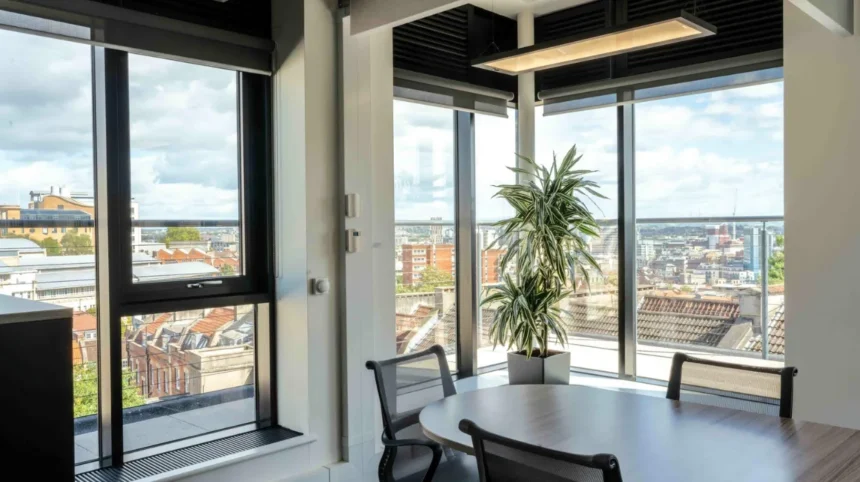
Bristol has become an important UK location for remote and hybrid working. The city combines a large professional workforce, strong digital and creative industries, universities, transport connections, public libraries, coworking facilities, and a growing technology economy.
- Why has remote working become important in Bristol?
- How did remote working develop in Bristol?
- Which jobs are best suited to remote working in Bristol?
- What types of remote working are available in Bristol?
- Where can people work remotely in Bristol?
- How reliable is Bristol for digital and remote work?
- What equipment is needed for remote working in Bristol?
- What are the legal rules for remote and flexible working in Bristol?
- What are the main benefits of remote working in Bristol?
- What challenges should remote workers in Bristol consider?
- How does remote working affect Bristol’s economy?
- What does the future of remote working look like in Bristol?
- How can workers build an effective remote-working routine in Bristol?
Remote working means carrying out employment duties away from an employer’s conventional workplace, usually from a home office or another suitable location. Hybrid working combines remote work with scheduled attendance at an employer’s workplace. These arrangements became significantly more common after the COVID-19 pandemic and are now established features of the UK labour market.
Bristol provides a strong environment for these working patterns because its economy includes information and communication, professional services, finance, advanced engineering, creative industries, research, education, and technology. Bristol City Council identifies digital technology, artificial intelligence, clean energy, creative industries, and research and development as important areas for future economic growth.
Why has remote working become important in Bristol?
Remote working is important in Bristol because the city has a highly qualified workforce, strong digital industries, flexible employment demand, extensive connectivity, and established home-working infrastructure supporting employees, freelancers, entrepreneurs, and businesses.
The growth of remote work reflects broader changes in employment rather than a single Bristol-specific trend. Office for National Statistics data shows that 28% of working adults in Great Britain worked in a hybrid arrangement between January and March 2025. Hybrid workers worked both from home and from a workplace during the reference period.
Bristol experienced a particularly significant increase in home working during the pandemic period. Bristol City Council’s Census 2021 analysis recorded 38.6% of employed residents working mainly at or from home, compared with 4.6% in 2011. The council also reported that 49.3% travelled to a workplace, while 12.1% worked mainly at an offshore installation, had no fixed place of work, or worked outside the UK.
The 2021 figure requires historical context. Census 2021 took place during the COVID-19 pandemic, when government restrictions encouraged people to work from home wherever possible. It therefore does not represent a normal post-pandemic working pattern.
The longer-term significance is the establishment of flexible working as a standard part of employment discussions. Bristol City Council’s 2025–2035 Economic Strategy identifies increasing demand for flexible working and describes changes in working patterns, portfolio careers, and entrepreneurship.
Remote working therefore forms part of Bristol’s wider economic transition. It connects employment, digital infrastructure, business services, skills, transport, commercial property, and local economic development.
How did remote working develop in Bristol?
Remote working in Bristol developed from limited home-based employment into a mainstream working arrangement following technological improvements, changing employment practices, and the COVID-19 pandemic, with hybrid work becoming an established model across professional and digitally enabled occupations.
Before widespread broadband and cloud computing, working from home was usually restricted to self-employed people, home-based businesses, freelancers, consultants, and occupations requiring limited physical workplace infrastructure.
The expansion of high-speed internet, cloud software, video conferencing, smartphones, online collaboration platforms, and secure business networks changed the structure of office work. Employees increasingly gained access to files, communication systems, project-management platforms, and customer databases without being physically present in a company office.
The COVID-19 pandemic accelerated this transition. During 2020 and subsequent periods of restrictions, many organisations moved office-based employees to home working. Bristol’s Census 2021 results captured this exceptional period, with home working rising sharply compared with 2011.
After restrictions ended, employers adopted different arrangements. Some restored office-based work. Others retained fully remote positions. Many introduced hybrid schedules combining home working with attendance at offices.
ONS research confirms this national transition. Between January and March 2025, 28% of working adults in Great Britain were hybrid workers. The ONS states that hybrid working has gradually increased since March 2022 while the proportion travelling to work without working from home has declined.
Bristol’s economic structure supports this transition. The city’s professional, scientific and technical activities sector is 1.5 times more concentrated locally than the national average, according to Bristol City Council’s economic strategy. Information and communication is also one of the city’s fastest-growing sectors, with economic output increasing by 191% between 2011 and 2021.
These sectors contain many roles that use computers, digital communication, online systems, and knowledge-based services. Such characteristics make flexible working more practical than in occupations requiring continuous physical presence.
Which jobs are best suited to remote working in Bristol?
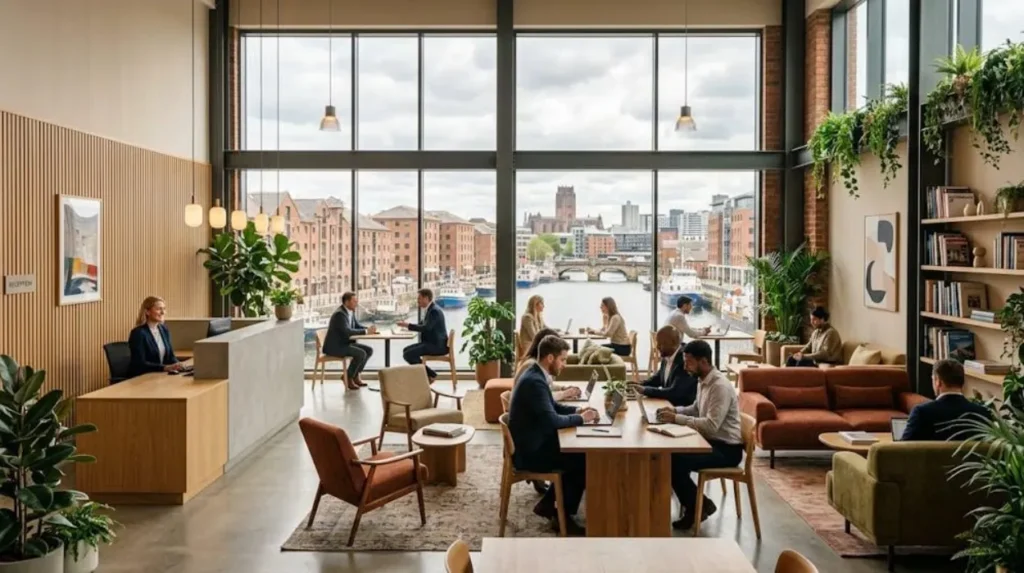
Remote working is most practical for jobs based on digital information, communication, analysis, design, administration, software, consultancy, research, and professional services, while jobs requiring physical equipment, direct customer contact, or continuous on-site operations remain location dependent.
Bristol has a diverse economy that includes sectors with different levels of remote-work compatibility. Information technology, software development, digital marketing, finance, accounting, professional services, design, research, administration, consultancy, and some creative roles frequently use digital systems that support work away from an office.
Bristol City Council identifies advanced engineering, aerospace, finance and insurance, information and communication, professional and scientific activities, health and life sciences, food and drink, clean technology, fintech, quantum technology, and creative industries as important components of the local economy.
Remote working does not apply equally across these sectors.
A software developer can complete many tasks through cloud-based development systems and digital communication. A financial analyst can access secure financial platforms remotely. A graphic designer can produce work through digital design software. A consultant can conduct meetings through video conferencing.
A laboratory technician, manufacturing worker, hospitality employee, healthcare worker, construction worker, retail assistant, or warehouse operative generally requires physical access to equipment, customers, patients, worksites, or stock.
ONS research demonstrates this occupational difference. Hybrid working is more common among managers, professional occupations, associate professional occupations, and administrative and secretarial occupations. Retail, construction, hospitality, and elementary occupations have lower access to hybrid working.
Remote employment therefore depends primarily on job design rather than simply the location of the worker.
What types of remote working are available in Bristol?
Bristol workers generally use three main remote-work models: fully remote employment, hybrid employment, and independent home-based work. Examples include remote software development, hybrid consultancy, and home-based freelance design or professional services.
Fully remote employment means the employee performs their duties away from a conventional employer office for the normal working arrangement. The employer still determines contractual responsibilities, performance expectations, communication requirements, and working hours.
Hybrid employment divides working time between locations. For example, an employee can work from home on three weekdays and attend an office for two days. The actual schedule depends on the employer.
Independent home-based work covers freelancers, consultants, sole traders, contractors, online businesses, and other self-employed professionals. Bristol City Council’s business support service specifically includes home-based businesses, self-employed residents, sole traders, social enterprises, and registered companies within its business-support scope.
A fourth practical arrangement involves working from shared spaces. Coworking facilities provide desks, meeting rooms, internet access, and professional environments without requiring workers to maintain a permanent commercial office.
A fifth arrangement involves temporary remote work from libraries and other public spaces. Bristol’s library network provides Wi-Fi, study areas, computers, printing, and other digital facilities.
These models allow workers to select a working environment according to employment requirements, privacy needs, meeting schedules, household conditions, and available technology.
Where can people work remotely in Bristol?
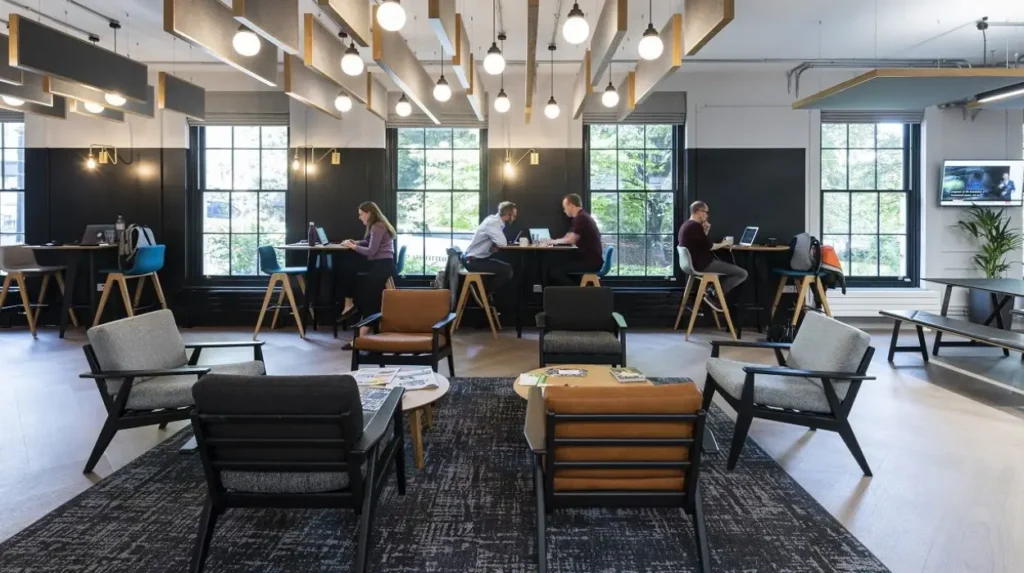
People can work remotely in Bristol from home offices, coworking spaces, libraries, university facilities where access is permitted, and other suitable environments with reliable connectivity, appropriate seating, and enough privacy for professional work.
Home remains the most common remote-working environment because it provides direct access to personal equipment and eliminates daily commuting.
A dedicated home office provides the strongest separation between work and personal activities. A separate room is useful for video meetings, confidential conversations, and concentrated tasks. Workers without a dedicated room can use a fixed desk or another stable workstation.
Bristol’s public libraries provide an alternative for residents and visitors who need digital access or quiet study space. Bristol Central Library on Deanery Road provides Wi-Fi, computers, study space, printing, meeting facilities, and a reading room.
Bristol Libraries also provide free computer access. Computers can be booked using a library card and PIN, with sessions generally available for up to two hours, although some locations have shorter booking limits because of demand.
The library service has also identified work and business support as growing uses of library spaces. Its 2026 outline strategy states that more people use libraries as places to work and obtain business support.
Coworking spaces provide another option for workers who need a professional environment without leasing a private office. They typically combine desks, meeting rooms, Wi-Fi, communal areas, and flexible membership arrangements.
Public cafés provide another informal option, but they are less suitable for confidential business calls or sensitive documents. Workers using cafés should consider noise, power availability, Wi-Fi reliability, seating limits, and data security.
The most suitable location depends on the nature of the work. Confidential professional services require more privacy than independent research or writing. Video-heavy roles require stronger internet reliability than tasks completed offline.
How reliable is Bristol for digital and remote work?
Bristol has a strong digital economy supported by information and communication industries, technology research, universities, professional services, and digital infrastructure, making the city an established location for technology-enabled employment and flexible knowledge-based work.
Digital connectivity is a core requirement for remote employment. Workers need stable internet access for video conferencing, cloud applications, file transfers, cybersecurity systems, and communication platforms.
Bristol’s economic strategy identifies digital and artificial intelligence as significant growth areas. Bristol Digital Futures and the Smart Internet Lab are identified as local cluster drivers, supporting research and innovation around digital technology.
The city’s wider economic structure also supports remote work. Bristol City Council describes the local economy as diverse, with strengths in advanced engineering, financial services, high technology, zero-carbon industries, professional services, and creative and digital sectors.
The Temple Quarter is particularly relevant to Bristol’s future digital economy. The University of Bristol’s Enterprise Campus is designed around digital, business, and social innovation. The project connects academic, industrial, and entrepreneurial expertise and forms part of the wider regeneration of the Temple Quarter area.
The development is important because remote working does not remove the need for physical economic infrastructure. Businesses still require meeting spaces, research facilities, training centres, networking environments, offices, transport connections, and innovation hubs.
Remote work therefore operates alongside conventional workplaces rather than replacing them entirely.
What equipment is needed for remote working in Bristol?
Effective remote working requires a dependable computer, broadband connection, secure accounts, suitable workspace, communication software, and basic ergonomic equipment. Additional tools include external monitors, headsets, webcams, keyboards, and secure backup systems.
A laptop or desktop computer forms the primary work device. Business requirements determine processing power, memory, storage, operating-system compatibility, and specialist software.
A reliable broadband connection is essential for video calls, cloud applications, remote desktops, and large file transfers. Workers should maintain an alternative connection for critical work, such as mobile tethering, where employment requirements justify it.
A professional headset reduces background noise and improves audio quality during meetings. A separate webcam provides consistent video quality when the built-in camera is insufficient.
An external monitor improves productivity for tasks involving multiple documents, spreadsheets, dashboards, coding environments, or design applications.
Ergonomics also matters. A stable desk, supportive chair, suitable screen height, external keyboard, and appropriate lighting reduce physical strain during prolonged computer use.
Cybersecurity is equally important. Remote workers should use strong passwords, multi-factor authentication, encrypted devices, approved business software, secure Wi-Fi, and employer-provided virtual private network systems where required.
Workers should avoid storing confidential company files on shared personal devices unless the employer authorises the arrangement.
What are the legal rules for remote and flexible working in Bristol?
Employees in Bristol have a statutory right to request flexible working from the first day of employment, but this right is a right to request rather than an automatic entitlement to work remotely from home.
Flexible working is a legal employment arrangement covering changes to hours, times, or place of work. Remote working can therefore form part of a flexible-working request when the proposed change concerns where the employee works.
The Acas Code of Practice states that every employee has a statutory right to request flexible working from the first day of employment. Employees can make two statutory requests within a 12-month period, and employers normally have a two-month period for deciding a request.
A statutory request must be made in writing. It must identify the requested change, provide the proposed effective date, state that it is a statutory request, and provide information about previous statutory requests where applicable.
A flexible-working request does not automatically guarantee approval. Employers can refuse requests for legitimate business reasons under the statutory framework.
The Employment Rights Act 2025 also changes the legal framework around flexible working by increasing the justification requirements for employers when rejecting requests.
Workers should therefore distinguish between three concepts: remote working as an agreed employment arrangement, hybrid working as a combination of workplace and home working, and the statutory right to request flexible working.
Employers should maintain clear policies covering working locations, hours, availability, performance, equipment, cybersecurity, expenses, data protection, and communication.
What are the main benefits of remote working in Bristol?
Remote working can reduce commuting requirements, increase access to flexible employment, support concentration, widen recruitment opportunities, and reduce dependence on central office locations while allowing Bristol businesses to retain professional and digital talent.
The first major benefit is reduced commuting. Bristol’s 2021 Census data recorded 26,730 people walking to work and 12,466 travelling by bicycle, alongside 78,915 people travelling by car or van among those using a method other than working at or from home.
Remote working reduces the need for some journeys, although hybrid workers still travel to offices during designated working days.
The second benefit is employment flexibility. Workers can access jobs based outside their immediate neighbourhood when employers permit remote work.
The third benefit is business recruitment. Employers can recruit based on skills rather than requiring every employee to live close to a central office.
The fourth benefit is commercial flexibility. Businesses can use smaller offices when employees spend part of their week elsewhere. Bristol’s economic strategy specifically recognises the importance of workspace and digital connectivity to the city’s future economy.
Remote working also supports entrepreneurship. Freelancers and home-based businesses can operate without immediately leasing dedicated commercial premises.
These benefits do not remove the importance of offices. Team development, mentoring, training, collaboration, customer meetings, laboratory work, equipment access, and organisational culture still require physical spaces for many organisations.
What challenges should remote workers in Bristol consider?
Remote working creates challenges involving isolation, home workspace quality, cybersecurity, communication, boundaries, equipment, management, and unequal access to flexible jobs, requiring workers and employers to establish clear systems and practical working standards.
Isolation is one challenge. Employees working away from colleagues lose some spontaneous workplace interaction. Regular team meetings, scheduled office days, professional networks, and in-person collaboration can address this issue.
Workspace quality is another challenge. Not every home provides a separate office, suitable desk, quiet environment, or reliable broadband connection.
Cybersecurity creates additional responsibilities. Remote workers handle business information outside controlled office environments, increasing the importance of secure devices, authentication, software updates, access controls, and data-handling procedures.
Work-life boundaries also require attention. A home-based worker can face pressure to remain available beyond normal working hours. Clear working hours and communication expectations reduce this risk.
Access is unequal across occupations. ONS data shows that hybrid working is more common among employees, full-time workers, higher-income workers, and people in professional occupations. In January to March 2025, 34% of full-time workers were hybrid compared with 18% of part-time workers.
Qualification also influences access. ONS reported that 41% of workers with a degree or equivalent qualification were hybrid workers, compared with 4% of workers with no qualifications.
Remote working is therefore not equally available to every worker. Physical job requirements, income, qualifications, employer policies, home conditions, and digital access all influence participation.
How does remote working affect Bristol’s economy?
Remote working affects Bristol’s economy through changes in commuting, office demand, local spending, business recruitment, digital investment, commercial property, entrepreneurship, and the relationship between residential neighbourhoods and traditional employment centres.
Reduced commuting changes where workers spend parts of their working day. A person who works from home spends less time travelling to a central office and can purchase services closer to home.
Hybrid work creates a different economic pattern. Workers still visit offices but spend selected days in residential neighbourhoods. This distributes some economic activity beyond traditional city-centre locations.
Office demand also changes. Businesses increasingly evaluate the amount and type of workspace required rather than automatically allocating a permanent desk to every employee.
Bristol’s economic strategy recognises workspace, digital connectivity, transport, and housing as important infrastructure for economic growth.
The city’s digital economy provides another connection. Information and communication output increased substantially between 2011 and 2021, while Bristol continues to develop digital, technology, research, and innovation clusters.
Remote working also supports entrepreneurship. Bristol City Council’s business support service covers home-based businesses, sole traders, self-employed people, social enterprises, and other business structures.
The overall economic effect therefore extends beyond employees. It affects employers, property owners, transport providers, hospitality businesses, local retailers, coworking operators, technology providers, and public services.
Explore More Area Guide
Bristol Job Market: Jobs, Salaries and Employment Trends
Best Coworking Spaces in Bristol 2026
What does the future of remote working look like in Bristol?
Remote working in Bristol is likely to remain integrated with hybrid employment, digital business growth, flexible careers, coworking, home-based entrepreneurship, and innovation infrastructure as employers adapt workplaces to changing workforce and economic requirements.
The long-term direction is not simply a choice between home and office. Hybrid arrangements create a third model in which employees use both environments according to business needs.
Bristol’s 2025–2035 Economic Strategy explicitly recognises changing work patterns and increased demand for flexible working. It also identifies digital technology, artificial intelligence, clean energy, creative industries, and research and development as important growth areas.
Temple Quarter is another indicator of the city’s future economic direction. The University of Bristol’s Enterprise Campus focuses on digital, business, and social innovation and is designed to connect academic, industrial, and entrepreneurial expertise.
Public infrastructure is adapting as well. Bristol Libraries’ 2026 strategy identifies free computers, Wi-Fi, study space, information access, and work and business support as important functions of modern libraries.
The future remote-working environment will therefore depend on five connected factors: digital infrastructure, employer policies, worker skills, suitable workspaces, and economic investment.
Bristol’s highly qualified workforce provides an important foundation. The city’s economic strategy also identifies skills development and digital capability as priorities for future employment.
Remote working is consequently best understood as part of Bristol’s wider transformation into a digitally connected, flexible, knowledge-intensive economy.
How can workers build an effective remote-working routine in Bristol?
An effective Bristol remote-working routine combines a consistent workspace, reliable connectivity, defined working hours, secure technology, planned breaks, regular communication, and purposeful use of home, office, library, or coworking environments according to daily work requirements.
Workers should establish a consistent starting time and finish time. This creates a clear boundary between employment and personal activities.
The workspace should support the tasks performed most frequently. Employees who attend video meetings require privacy and good audio. Writers and analysts require uninterrupted concentration. Designers and developers require suitable monitors and computing equipment.
Workers should schedule meetings together where possible and reserve uninterrupted periods for focused work.
Hybrid employees should use office days for activities that benefit from physical interaction, including team meetings, training, mentoring, collaborative planning, and relationship building.
Home-working days should support tasks that require concentration and independent execution.
Libraries provide another practical option when home conditions are unsuitable. Bristol Central Library offers Wi-Fi, computers, study space, printing, and meeting facilities, while Bristol Libraries provide computer access across the wider service.
Workers using public networks should follow employer cybersecurity requirements and avoid handling confidential information in unsuitable environments.
A sustainable remote-working routine is therefore based on matching the workspace to the work rather than treating every location as interchangeable.
Bristol has the economic, digital, institutional, and public infrastructure required to support this approach. Its professional services, technology industries, universities, innovation projects, libraries, business-support services, and evolving employment policies all contribute to a flexible working environment.
Remote working is now an established part of Bristol’s employment landscape. Its future relevance depends on how employers, workers, policymakers, and local institutions combine digital connectivity with skills, appropriate workspaces, secure technology, and inclusive access to employment.
What is remote working in Bristol?
Remote working in Bristol means performing employment duties away from a traditional workplace, usually from home, a coworking space, library, or another suitable location with reliable internet access and appropriate working facilities.