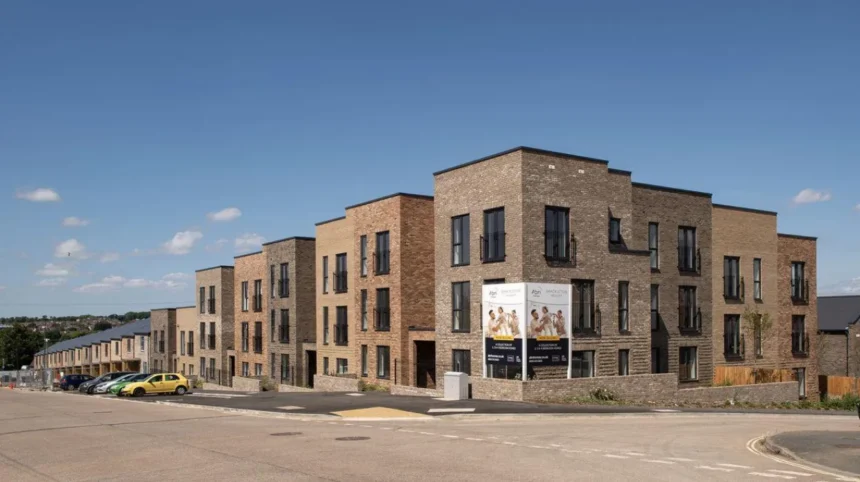
Affordable homes in Bristol include lower-cost properties for first-time buyers, social housing for eligible households, affordable rent schemes, shared ownership homes and properties in areas outside the city centre. Understanding local house prices, eligibility rules, transport links and housing costs helps residents identify suitable options.
- Why Are Affordable Homes in Bristol Important for Local Residents?
- What Types of Affordable Homes Are Available in Bristol?
- Social rented housing
- Affordable rented housing
- Intermediate rent and affordable private rent
- Shared ownership
- Discounted homeownership
- Which Areas of Bristol Should Buyers Consider for Affordable Housing?
- Hartcliffe and South Bristol
- Stockwood and Bedminster Down
- Lockleaze
- How should buyers compare neighbourhoods?
- How Can Residents Apply for Affordable Homes in Bristol?
- How Much Do Homes Cost in Bristol?
- What Affordable Housing Developments Are Planned in Bristol?
- What is the Homes for Bristol plan?
- How do partnerships increase supply?
- Why does the future supply matter?
- What Should Buyers and Renters Check Before Choosing an Affordable Home?
- Review the total cost of occupation
- Check transport and local services
- Verify the provider and the property
- Match the housing option to the household
- How Can Residents Find Affordable Homes in Bristol More Effectively?
Why Are Affordable Homes in Bristol Important for Local Residents?
Affordable homes in Bristol help households secure suitable accommodation when private rents and property prices exceed their budgets. These homes include social housing, affordable rent, shared ownership and discounted ownership schemes designed for eligible residents with different housing needs.
Bristol is a major city in South West England, known for its universities, employment opportunities, port heritage and established residential neighbourhoods. Its housing market serves students, young professionals, families, older residents and people relocating for work. Demand from these groups places pressure on the supply of homes at prices local households can manage.
The difference between property costs and earnings is central to Bristol’s housing affordability challenge. According to Bristol City Council’s housing analysis, the average house price in the year ending September 2025 was approximately £351,000. This was £56,000 above the England and Wales average of £295,000. Bristol’s average house prices also increased by 69% over the preceding decade, compared with 45% across England and Wales.
These figures explain why affordable housing remains important to the city’s long-term development. A household with a regular income still faces challenges when saving for a deposit, passing mortgage affordability checks or paying private rent alongside energy bills, council tax and transport expenses.
Affordable housing supports residents who cannot meet their housing needs through the open market. It also helps employers retain workers, enables families to remain near schools and relatives, and gives eligible first-time buyers an alternative route towards homeownership.
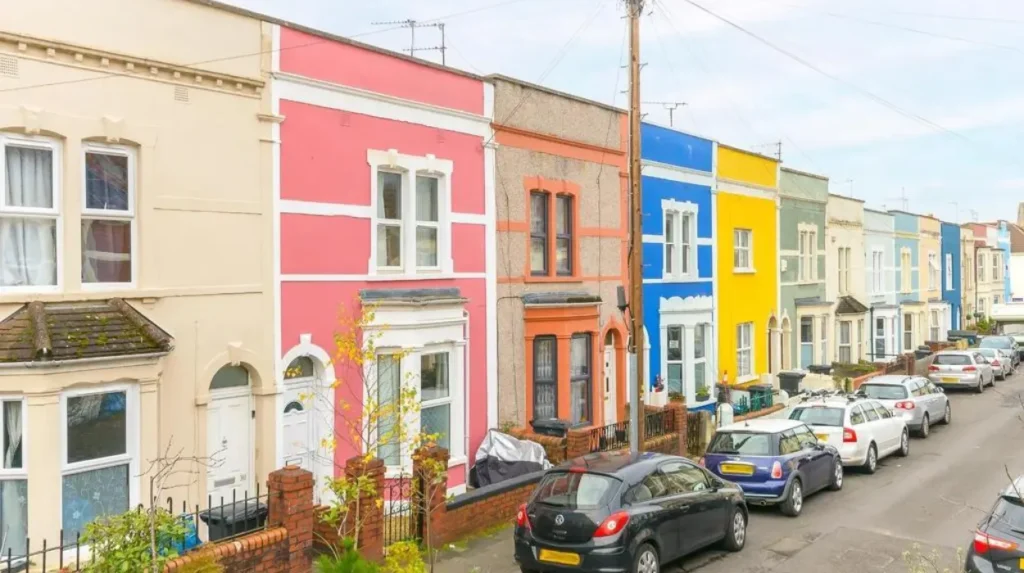
What Types of Affordable Homes Are Available in Bristol?
Bristol offers several affordable housing options, including social rent, affordable rent, intermediate rent, affordable private rent and shared ownership. Each option follows different pricing rules, eligibility conditions and application procedures, so residents need to match their circumstances with the appropriate housing scheme.
Bristol City Council distinguishes affordable housing from ordinary market housing through affordability requirements and eligibility criteria. The appropriate option depends on household income, savings, current housing circumstances and whether the applicant intends to rent or purchase a home.
Social rented housing
Social housing provides rented accommodation at rents generally lower than private market rates. Bristol City Council and registered providers, including housing associations, supply social rented properties.
Rents follow a government formula rather than the prices charged by private landlords. Service charges can apply separately, depending on the property and tenancy.
Social housing supports eligible households experiencing housing need. Availability depends on the number of properties, household circumstances and the council’s allocation rules.
Affordable rented housing
Affordable Rent is a regulated rental arrangement in which rent is generally capped at 80% of the local market rent, including eligible service charges. Actual costs depend on the property and the applicable scheme.
This option provides an alternative to standard private renting. Applicants must check the advertised rent, service charges and any eligibility requirements before accepting a tenancy.
Intermediate rent and affordable private rent
Intermediate Rent offers housing at controlled rents, generally no higher than 80% of local market rent. Affordable Private Rent homes in qualifying Build to Rent developments are typically offered at 20% below market rent.
These arrangements serve households that need lower-cost accommodation but do not necessarily qualify for social housing. Availability varies by development and housing provider. The rent, tenancy conditions and service charges should be checked individually.
Shared ownership
Shared ownership allows eligible buyers to purchase a percentage of a property’s value while paying rent on the remaining share to the housing provider.
For example, a buyer purchasing a 40% share of a £250,000 property would pay £100,000 for that share. A mortgage and deposit are generally required, and rent remains payable on the unsold 60%. Service charges can add to the monthly cost.
Eligible homeowners can generally purchase additional shares over time through a process known as staircasing, subject to the scheme’s terms. Shared ownership reduces the initial purchase price but does not eliminate the cost of housing.
Discounted homeownership
First Homes is a government scheme designed to help eligible first-time buyers purchase qualifying properties at a discount. Under the scheme, the discount is generally at least 30% against market value and remains attached to the property when it is resold.
However, Bristol City Council’s published information states that it is not aware of any developments currently advertising First Homes. Buyers should check the council’s latest updates rather than assume that discounted properties are immediately available.
Which Areas of Bristol Should Buyers Consider for Affordable Housing?
Affordable housing opportunities vary across Bristol according to property type, transport access, local amenities and development activity. Buyers should compare actual asking prices and eligible housing schemes in neighbourhoods such as Hartcliffe, Stockwood, Lockleaze and South Bristol before choosing a location.
Bristol contains established residential communities, newer developments and neighbourhoods with different property types. The most suitable location depends on the household’s budget, commuting requirements, school preferences and access to essential services.
Hartcliffe and South Bristol
Hartcliffe is a residential area in South Bristol with established housing and community facilities. Bristol City Council has identified several small sites in Hartcliffe for new council housing.
Its published development programme includes three homes at Whitchurch Lane, five at Hollisters Drive and four at Dutton Close in the wider programme of social-rent housing sites. These projects form part of a development programme delivered with EDAROTH, a housing partner.
These planned or developing homes demonstrate how small sites contribute to affordable housing supply. Prospective residents should check project completion dates, application requirements and availability rather than assume that every property is ready to occupy.
Stockwood and Bedminster Down
Stockwood and Bedminster Down offer further locations to investigate for residential housing in South Bristol.
The council’s programme includes six social-rent homes at Dutton Close, Stockwood, and seven at Rye Close, Bedminster Down. These properties form part of the wider programme of 25 homes across several South Bristol sites.
For households considering these areas, the relevant comparison includes more than the purchase price or rent. Bus services, access to workplaces, local shops, healthcare, schools and the cost of commuting all influence the overall housing budget.
Lockleaze
Bristol City Council reports that 47 homes are being built at Branwhite Close, comprising a mixture of houses and flats. Its wider programme also includes homes at One Lockleaze, also known as Romney House, with 110 homes being acquired through a partnership with Vistry and Goram Homes. Of these, 68 are intended for social rent and 42 for shared ownership. Completions are expected to continue through 2026 and into spring 2027.
These projects illustrate the different tenures delivered within one development programme. Applicants should verify current availability with the relevant provider because construction progress and allocation dates change.
How should buyers compare neighbourhoods?
Buyers should compare properties using the same criteria. A lower asking price does not automatically produce a lower monthly cost if the home requires extensive repairs or creates a longer commute.
Check the property’s condition, energy performance certificate, council tax band, transport costs and access to daily services. For shared ownership, include mortgage repayments, rent on the remaining share and service charges in the comparison.
The council’s affordable housing development information provides a starting point for checking projects and locations.
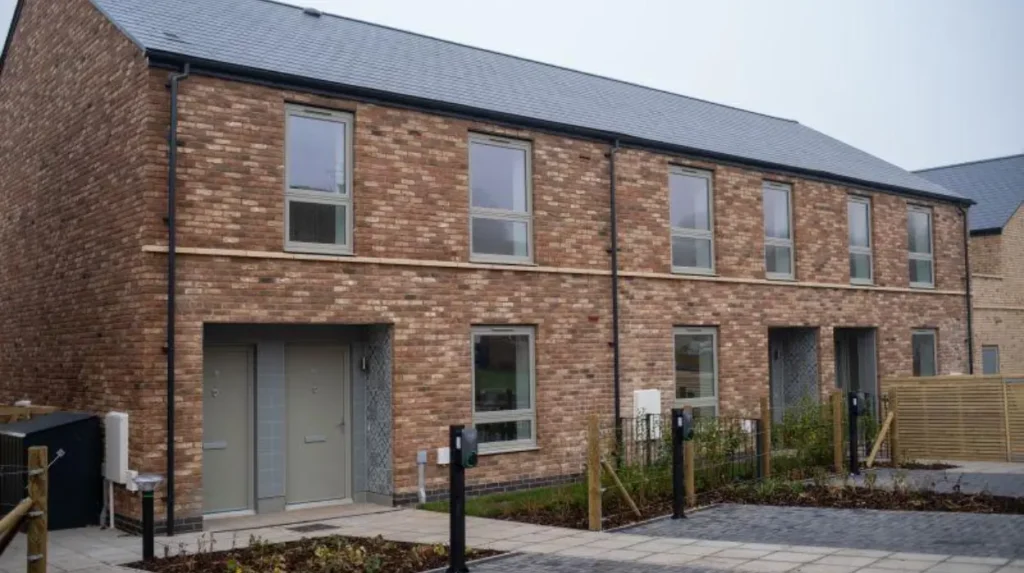
How Can Residents Apply for Affordable Homes in Bristol?
Residents seeking affordable rented housing in Bristol should register through Home Choice Bristol and follow the council’s allocation process. People interested in shared ownership should contact participating housing providers and check each property’s eligibility criteria, financial requirements and application deadlines.
The application route depends on the type of home. Social housing applications follow a different process from shared ownership purchases, and neither route guarantees an immediate property offer.
Applying for social housing
Home Choice Bristol is the city’s route for applying for affordable rented accommodation through the housing allocation system. Applicants should review the eligibility rules, registration requirements and priority bands before submitting an application.
The process generally involves providing household information, explaining current housing circumstances and supplying supporting documents where requested. The council then assesses the application under its published allocation policy.
Priority is not based solely on how long a person wants to move. Housing need and the relevant allocation criteria influence the assessment. Applicants should keep their details up to date and respond promptly to requests for evidence.
Start with the official Bristol affordable housing guidance, which explains the available tenures and directs residents towards Home Choice Bristol.
Applying for shared ownership
Shared ownership applicants should identify homes advertised by participating housing associations or registered providers. Bristol City Council lists organisations through its HomesWest partnership information, including Abri Homes, Bromford, Curo and Stonewater Homes.
Availability differs between providers, and not every organisation advertises properties in Bristol at all times.
Applicants should check the minimum deposit, mortgage eligibility, household income requirements and total monthly charges. They should also ask how rent reviews work and what costs apply when purchasing additional shares.
The council’s affordable homeownership guidance explains shared ownership and other homeownership routes.
Preparing the required documents
Applicants should prepare accurate information about their household and finances. The exact documents depend on the scheme and provider.
Commonly requested evidence includes identification, proof of address, income information, savings details and evidence of current housing circumstances. Shared ownership applications also involve affordability assessments and mortgage-related documentation.
Providing complete information reduces avoidable delays. Applicants should use official application channels and avoid paying an unverified intermediary who promises priority access to council housing.
How Much Do Homes Cost in Bristol?
The cost of housing in Bristol depends on property type, location, condition and tenure. Official statistics recorded an average house price of £352,000 in July 2026 and an average private rent of £1,883 per month in August 2026.
The Office for National Statistics publishes local housing price and rental data using information from official property transactions and rental market measures. These figures provide a useful citywide benchmark, although they do not represent the price of every available home.
The latest figures available for the periods stated show substantial differences between property types.
In July 2026, the average Bristol house price was approximately £352,000. Average prices by property type were:
- Flats and maisonettes: £241,000.
- Terraced houses: £384,000.
- Semi-detached houses: £447,000.
- Detached houses: £689,000.
These figures demonstrate why flats and maisonettes often provide a lower purchase-price entry point than larger houses. However, service charges, lease conditions and maintenance costs affect the total cost of flat ownership.
What are the typical private rents?
The average monthly private rent in Bristol reached £1,883 in August 2026, compared with £1,778 in August 2025. This represented an annual increase of 5.9%.
Average rents varied by bedroom count:
- One-bedroom properties: £1,225 per month.
- Two-bedroom properties: £1,544 per month.
- Three-bedroom properties: £1,759 per month.
- Properties with four or more bedrooms: £2,546 per month.
These are citywide averages, not guaranteed asking prices. A particular property can cost more or less depending on its location, size, condition and tenancy terms.
How should households calculate affordability?
A household should assess the full monthly housing cost rather than focus only on rent or a mortgage payment.
For private tenants, the budget includes rent, council tax, energy, water, internet and transport. For homeowners, it also includes mortgage repayments, insurance, repairs and any applicable service charges.
Shared ownership requires particular care because buyers pay a mortgage on their share and rent on the remaining share. A property that appears affordable based on its deposit requirement can still produce high monthly outgoings.
Residents can use the ONS Bristol housing price tool to review updated local prices and rents. The figures should be checked again before making a financial commitment.
What Affordable Housing Developments Are Planned in Bristol?
Bristol City Council’s Homes for Bristol plan for 2025–2027 sets out the city’s approach to increasing affordable housing supply. Current development programmes include council homes, social-rent properties and shared ownership homes delivered through partnerships with housing providers and developers.
Affordable housing delivery depends on planning, land availability, funding, construction capacity and cooperation between public authorities and housing providers. New housing programmes seek to increase the supply of homes that households on different incomes can access.
What is the Homes for Bristol plan?
Homes for Bristol: Interim Affordable Housing Delivery Plan 2025–2027 was approved by the council’s Homes and Housing Delivery Committee in February 2025. It builds on the earlier Project 1000 programme, which covered 2022–2025.
The council reported that 607 new affordable homes were delivered across Bristol in 2023/24. The figure represents delivery during that financial year rather than a current count of available homes.
The plan provides a framework for coordinating affordable housing delivery. Its objectives address housing need and the need to expand options for residents who cannot afford ordinary market prices.
How do partnerships increase supply?
Local authorities work with housing associations, registered providers, developers and specialist organisations to deliver homes. These partnerships combine land, funding, construction expertise and housing management.
For example, the Branwhite Close project involves Bristol City Council and Homes England, while the One Lockleaze programme involves Goram Homes and Vistry. Other small-site developments involve EDAROTH.
Different partnerships deliver different housing tenures. Some homes are allocated for social rent, while others are sold through shared ownership. This approach serves households with different incomes and financial circumstances.
Why does the future supply matter?
Bristol’s housing needs extend beyond the number of homes available for private sale. The city needs suitable accommodation across different household sizes, income levels and life stages.
Additional affordable homes help eligible residents remain near employment, education, family support and public services. However, new developments do not remove the need to assess individual affordability, and completed homes are not necessarily immediately available to applicants.
Residents should follow official project updates and housing-provider announcements to identify realistic opportunities.
Explore More Area Guide
Luxury Homes in Bristol: Areas, Prices and Buying Guide
New Build Homes in Bristol: Areas, Prices and Buying Guide
What Should Buyers and Renters Check Before Choosing an Affordable Home?
Anyone searching for affordable homes in Bristol should compare total housing costs, eligibility conditions, property condition and location. Checking these factors before applying, signing a tenancy or exchanging contracts helps households avoid unexpected expenses and choose accommodation that fits their long-term needs.
Affordability is a relationship between housing expenses and the money available to meet them. A low initial payment does not guarantee that a property remains affordable over several years.
Review the total cost of occupation
Renters should confirm the monthly rent, deposit, tenancy terms and responsibility for bills. They should check council tax, energy performance and whether any service charges apply.
Buyers should obtain a mortgage illustration, estimate legal and survey fees, and budget for repairs and insurance. Leasehold flat buyers should review service charges, ground rent provisions where applicable, building maintenance arrangements and remaining lease length.
Shared ownership buyers should calculate mortgage repayments and rent together. They should also examine the terms for staircasing, selling the property and paying future service charges.
Check transport and local services
Transport costs can change the real affordability of a home. A property farther from the workplace can require additional bus fares, rail tickets or fuel expenses.
Residents should assess access to public transport, shops, healthcare, schools and other regular destinations. Households with children should also consider school arrangements and childcare costs when comparing neighbourhoods.
The right location is the one that meets practical needs within the household’s complete budget.
Verify the provider and the property
Applicants should confirm that the landlord, housing association or developer is legitimate. They should use official council information and the relevant provider’s own website to verify property availability and eligibility.
Before renting, read the tenancy agreement and confirm the terms in writing. Before buying, arrange appropriate legal checks and a survey, and ensure the financing is sufficient for the purchase and ongoing costs.
For new-build affordable homes, check the expected completion date and the process for receiving an offer. Construction announcements are not equivalent to confirmed availability.
Match the housing option to the household
Social rent is relevant to eligible households with assessed housing need. Affordable Rent and Intermediate Rent provide regulated rental options, while shared ownership serves eligible buyers who cannot afford to purchase a suitable property outright.
Private renting remains another option for households that need flexibility or do not qualify for an affordable scheme. The best route depends on financial circumstances, housing needs and the availability of suitable homes.
How Can Residents Find Affordable Homes in Bristol More Effectively?
Residents can improve their affordable housing search by monitoring Bristol City Council announcements, registering through Home Choice Bristol where eligible, checking housing association listings and reviewing property costs regularly. Using official sources helps applicants distinguish genuine opportunities from outdated advertisements and unsuitable schemes.
A structured search saves time and makes comparisons more reliable. Residents should first establish a realistic monthly budget, then identify the tenure and locations that match their needs.
Applicants should revisit these resources because housing availability, application criteria, rents and development schedules change over time.
Affordable homes remain an important part of Bristol’s housing strategy. Social rent, regulated rental options, shared ownership and new council developments each address different aspects of housing need. Residents who understand the eligibility rules, calculate the complete cost of occupation and monitor official listings are better placed to identify a suitable home.
The central consideration is not simply whether a property has a low advertised price. It is whether the household qualifies for the housing option, can meet its ongoing costs and can live in the property without placing unsustainable pressure on its finances.
What are affordable homes in Bristol?
Affordable homes in Bristol are properties offered at below-market rents or through discounted homeownership schemes. Options include social housing, Affordable Rent, Intermediate Rent and shared ownership for eligible residents.