Luxury homes in Bristol represent the upper end of the city’s residential property market, combining premium locations, distinctive architecture, generous living space and high-quality interiors. Bristol, a major city in South West England, offers luxury housing across historic neighbourhoods, leafy suburbs, waterfront developments and contemporary residential schemes. Buyers include established homeowners, professionals, families, investors and people relocating to the city.
- What Defines a Luxury Home in Bristol?
- Why Do Buyers Choose Bristol for Luxury Property?
- Which Bristol Neighbourhoods Are Known for Luxury Homes?
- How Much Do Luxury Homes in Bristol Cost?
- Which Architectural Styles Are Found in Bristol’s Luxury Housing Market?
- What Features Should Buyers Expect in a Luxury Bristol Property?
- How Does Bristol’s Historic Architecture Affect Luxury Home Ownership?
- What Should Buyers Know About Buying a Luxury Home in Bristol?
- What Additional Costs Come With Luxury Homes in Bristol?
- How Energy Efficiency Affects Luxury Homes in Bristol
- Which Transport Links and Amenities Matter When Choosing a Luxury Home?
- Are Luxury Homes in Bristol Suitable for Property Investment?
- What Is the Future Outlook for Luxury Homes in Bristol?
- How Can Buyers Find the Right Luxury Home in Bristol?
The luxury property market in Bristol reflects the city’s architectural heritage, employment opportunities, cultural attractions and access to the surrounding countryside. Georgian townhouses, Victorian villas, detached family homes, converted historic buildings and modern apartments all contribute to the premium housing market. Each property type offers different advantages in terms of space, maintenance, privacy, transport and long-term ownership costs.
Understanding Bristol’s luxury housing market requires more than comparing asking prices. Buyers need to consider neighbourhood characteristics, building condition, conservation restrictions, energy efficiency, transport links and the total cost of ownership. These factors help explain how luxury homes differ across the city and what buyers need to assess before making a purchase.
What Defines a Luxury Home in Bristol?
A luxury home in Bristol is a residential property distinguished by its location, architectural quality, interior specification, space, privacy or specialist amenities. Luxury housing includes Georgian townhouses, Victorian villas, contemporary apartments and substantial detached homes. There is no single official price threshold that classifies every Bristol property as luxury.
The term describes a combination of property characteristics rather than a legally defined housing category. A premium apartment in the city centre and a detached family house in a leafy suburb offer different forms of luxury. One prioritises convenience, views and managed facilities, while the other focuses on private outdoor space, additional rooms and residential privacy.
Property features commonly associated with Bristol’s luxury market include high ceilings, large windows, period fireplaces, landscaped gardens, bespoke kitchens, high-specification bathrooms and dedicated parking. Contemporary homes also feature open-plan living spaces, energy-efficient systems, smart-home controls and integrated security.
Location influences value because buyers assess the surrounding environment alongside the building itself. Proximity to employment centres, independent shops, green spaces, restaurants, schools and public transport contributes to a property’s appeal. However, the importance of each feature depends on the buyer’s requirements.
A luxury property also involves higher expectations for construction quality, maintenance and presentation. Buyers need to distinguish between decorative improvements and substantial upgrades to roofing, insulation, heating, plumbing and electrical systems. A visually impressive interior does not automatically indicate that a building is structurally sound or inexpensive to maintain.
Why Do Buyers Choose Bristol for Luxury Property?
Buyers choose Bristol for luxury property because the city combines established residential neighbourhoods, historic architecture, major employment centres, cultural attractions and access to countryside. Its housing market includes city-centre apartments, period homes and suburban estates, providing options for different household sizes, lifestyles and commuting requirements.
Bristol is one of the principal urban centres in South West England. Its economy includes professional services, financial activities, technology, creative industries, education, aerospace and engineering. The University of Bristol and the University of the West of England contribute to its educational and research environment.
The city also has an established cultural identity. Harbourside attractions, independent businesses, museums, theatres and music venues support its residential appeal. Green spaces, including Brandon Hill and Ashton Court Estate, provide access to outdoor recreation within or close to the urban area.
Transport is another consideration. Bristol Temple Meads connects the city with destinations including London, Cardiff, Birmingham and other regional centres. Bristol Airport serves domestic and international routes, while road connections include the M4 and M5 motorway network.
These advantages do not make every Bristol neighbourhood equally suitable for every buyer. Central locations offer proximity to workplaces and cultural venues, while suburban addresses provide different combinations of gardens, residential streets and access to schools. Buyers should assess the actual journey to their regular destinations rather than relying on broad descriptions of an area’s connectivity.
The city’s historic housing stock also contributes to its luxury market. Georgian terraces, Victorian villas and architect-designed properties provide character that differs from the layout of many modern developments. New-build apartments and contemporary houses offer an alternative for buyers who prioritise modern building standards and lower immediate maintenance requirements.
Which Bristol Neighbourhoods Are Known for Luxury Homes?
Bristol’s premium residential market includes neighbourhoods such as Clifton, Redland, Sneyd Park, Stoke Bishop, Leigh Woods and parts of the city centre. Each area has a distinct combination of architecture, green space, transport access and housing types, so buyers need to compare individual streets and properties.
Clifton
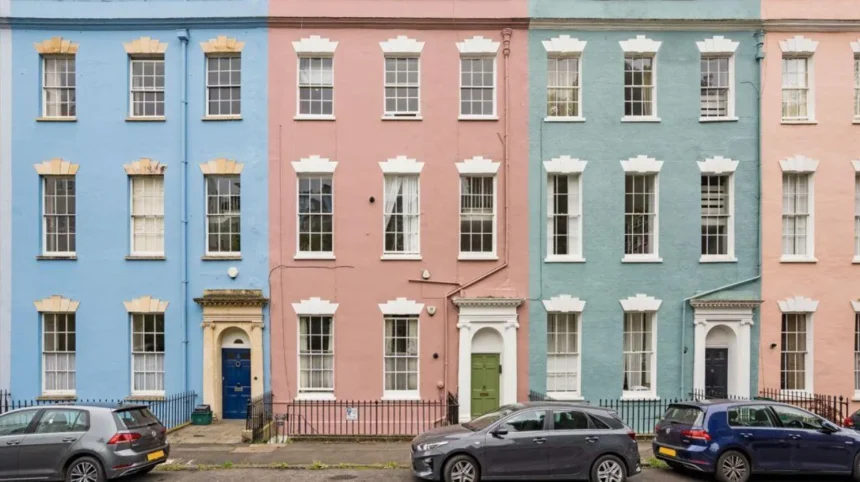
Clifton is associated with Georgian and Victorian architecture, elegant terraces, period townhouses and established residential streets. Its built environment includes the wider Clifton area around Clifton Village and the landmark Clifton Suspension Bridge.
The neighbourhood offers access to independent shops, restaurants, cafés and green spaces. Properties close to the village centre appeal to buyers seeking a walkable local environment, while larger houses on residential streets offer additional living space.
Some homes occupy historic buildings with architectural features such as sash windows, decorative cornices and original fireplaces. Buyers should check whether listed-building status or conservation-area controls affect proposed alterations.
Redland
Redland contains Victorian and Edwardian houses, substantial family homes and residential streets with mature trees. Its location provides access to local shopping areas and transport connections towards central Bristol.
The area’s housing stock includes converted flats as well as larger houses retained as single-family residences. Buyers comparing properties should examine the ownership structure, service charges and maintenance responsibilities when considering a converted building.
Sneyd Park
Sneyd Park is a residential area characterised by detached houses, substantial gardens and a quieter suburban setting. Its housing includes properties with generous plots and mature landscaping.
The area appeals to households seeking space and privacy while remaining within reach of Bristol’s wider amenities. Property inspections should include the condition of gardens, boundary structures, drainage and mature trees, particularly where landscaping forms a significant part of the property’s appeal.
Stoke Bishop
Stoke Bishop contains detached and semi-detached houses, family-sized properties and residential roads with access to green space. Its housing options differ from the denser terraces and apartment developments found closer to the city centre.
Buyers often compare room sizes, garden dimensions, parking arrangements and journey times when assessing homes in this area. Individual streets vary in their access to bus services, local facilities and main roads.
Leigh Woods
Leigh Woods, on the edge of Bristol near the Avon Gorge, provides a residential setting associated with woodland and access to outdoor recreation. The area includes substantial houses and properties in landscaped surroundings.
Its position near the Avon Gorge and Ashton Court Estate gives residents access to walking routes and open spaces. Buyers should consider road access, public transport availability and the practical distance to daily services.
Bristol City Centre and Harbourside
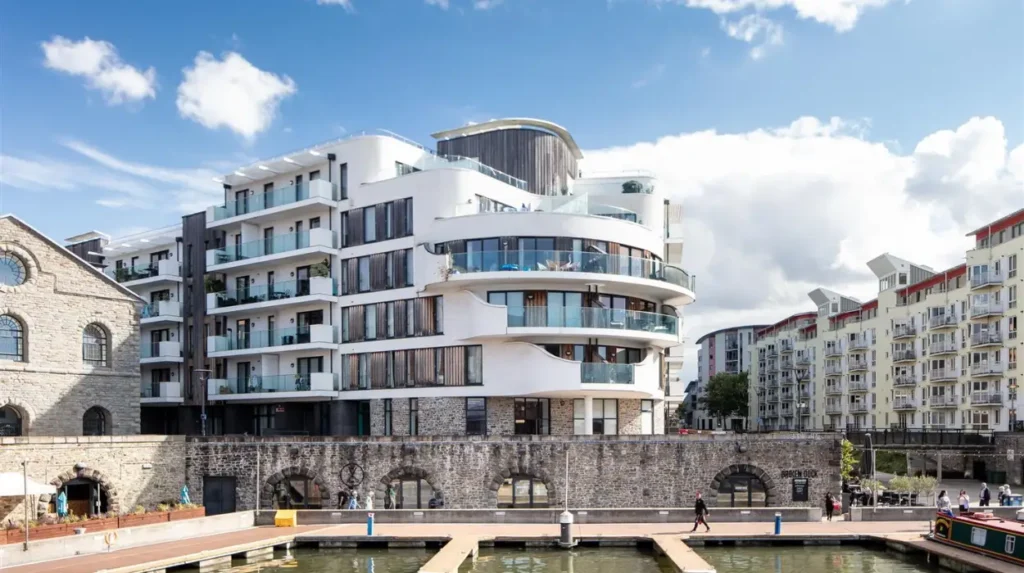
Central Bristol contains contemporary apartments, converted historic buildings and residential developments near the Floating Harbour. These properties suit buyers who prioritise proximity to offices, restaurants, cultural venues and transport connections.
Apartments offer a different ownership profile from detached houses. Service charges, building management, communal maintenance, lease terms and reserve funds require careful review. A waterfront view or premium interior does not remove the need to examine the financial and legal arrangements attached to the building.
How Much Do Luxury Homes in Bristol Cost?
Luxury home prices in Bristol depend on neighbourhood, property size, architectural condition, outdoor space and specification. Official market averages provide useful context, but premium properties often sit above citywide averages. Buyers should compare recent completed sales of similar homes rather than treating one average as a luxury-property valuation.
The Office for National Statistics (ONS), using UK House Price Index data, reported an average Bristol house price of £357,000 in June 2026, a provisional annual increase of 3.5%. Average prices differed significantly by property type. Detached homes averaged £696,000, semi-detached homes £452,000, terraced properties £388,000 and flats or maisonettes £246,000.
These figures cover the wider market, not exclusively luxury homes. A large detached house in a sought-after location, a renovated Georgian townhouse and a premium waterfront apartment have different valuation characteristics.
The purchase price also reflects the property’s condition and future expenditure. A refurbished house with a modern heating system, upgraded insulation and recently completed roof works presents a different financial commitment from a period home requiring extensive renovation.
Buyers should evaluate comparable properties using several criteria:
- Location: the street, neighbourhood and proximity to amenities.
- Floor area: usable internal space and the arrangement of rooms.
- Condition: the age and quality of structural and internal components.
- Outdoor space: garden size, terraces, balconies and privacy.
- Parking: private garages, allocated spaces or controlled access.
- Legal status: ownership, planning restrictions and any lease obligations.
Recent sold prices offer stronger evidence of completed market transactions than asking prices alone. Buyers can review the Land Registry’s price-paid records alongside local estate-agent information to understand how comparable properties have performed.
Which Architectural Styles Are Found in Bristol’s Luxury Housing Market?
Bristol’s luxury housing market includes Georgian townhouses, Victorian villas, Edwardian houses, Arts and Crafts properties and contemporary architecture. These styles reflect different periods of urban development and offer distinct layouts, materials and maintenance requirements for buyers considering a premium residential property.
Georgian townhouses
Georgian houses are associated with balanced façades, sash windows, classical proportions and relatively high ceilings. In Bristol, period streets in and around Clifton provide examples of historic residential architecture.
Internally, Georgian properties often feature separate reception rooms, fireplaces, decorative plasterwork and traditional staircases. Later alterations have changed the layouts of some houses, so buyers should confirm which original features remain.
Victorian and Edwardian villas
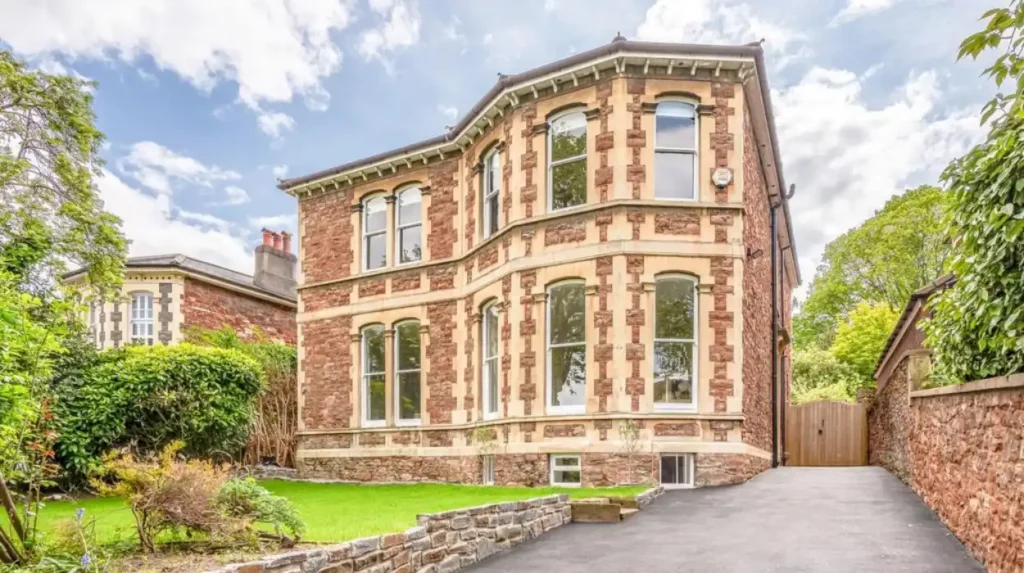
Victorian and Edwardian houses often feature bay windows, decorative brickwork, larger reception spaces and separate kitchens or service areas. Some substantial examples have gardens, cellars, lofts and additional rooms suitable for home offices.
These properties require careful inspection because their age introduces maintenance considerations involving roofing, damp management, drainage, timber and older building services. A survey should assess the actual condition rather than assume that every period property has the same defects.
Arts and Crafts houses
Arts and Crafts architecture emphasises traditional materials, craftsmanship and the relationship between a building and its surroundings. Properties in this tradition often incorporate brick, stone, timber details and varied rooflines.
The style appeals to buyers interested in distinctive design and architectural character. However, specialist materials and handcrafted features sometimes require experienced contractors and appropriate repair methods.
Contemporary luxury homes
Modern luxury properties prioritise current layouts, efficient use of space and contemporary building systems. Features include open-plan kitchens, large glazing panels, underfloor heating, integrated lighting and improved insulation.
Newer developments also include apartments with communal facilities and managed entrances. Buyers should assess the quality of construction, energy performance, service arrangements and warranty documentation rather than rely solely on the appearance of a show home.
What Features Should Buyers Expect in a Luxury Bristol Property?
Luxury homes in Bristol commonly combine high-quality materials, functional layouts, generous accommodation and carefully designed interiors. Features vary between historic houses, detached family homes and modern apartments, so buyers should prioritise the specifications that improve everyday use rather than count premium fittings alone.
Interior quality is one component of a luxury home’s specification. Kitchens often feature durable worktops, integrated appliances, substantial storage and carefully planned preparation areas. Bathrooms can include walk-in showers, freestanding baths, quality tiling and efficient ventilation.
Living space also matters. A property with separate reception rooms provides flexibility for entertaining, working from home and family activities. Open-plan layouts support connected living and dining areas, while a dedicated study offers separation for remote work.
Outdoor areas add another dimension. A private garden, landscaped courtyard, roof terrace or balcony provides additional usable space. The value of an outdoor area depends on its size, orientation, privacy, accessibility and maintenance requirements.
Practical features deserve equal attention. Double glazing, reliable heating, adequate insulation, modern electrics and secure entrances contribute to comfort and operational performance. In historic buildings, upgrades must be compatible with the structure and any applicable conservation requirements.
Parking and storage also influence day-to-day convenience. A detached house with a garage offers different benefits from a central apartment with one allocated parking space. Buyers should verify whether parking is included in the legal title or governed by a separate lease or management arrangement.
How Does Bristol’s Historic Architecture Affect Luxury Home Ownership?
Historic architecture adds character to Bristol’s premium housing market, but it also creates specific responsibilities for owners. Listed-building status, conservation-area controls, traditional construction materials and previous alterations influence repair methods, planning decisions and the cost of maintaining a period property.
Bristol City Council identifies 33 conservation areas, which protect places with distinctive historic character and appearance. These areas include elements such as historic street patterns, building materials, boundaries, trees and views. Development proposals in conservation areas are subject to additional planning considerations.
A conservation area does not mean that every building within it is individually listed. A listed building has a separate legal status because of its special architectural or historic interest. The level of protection depends on the listing and the proposed work.
Owners considering a listed property should check whether previous alterations received the required consent. Unauthorised work can create legal and financial problems, including the possibility of having to reverse alterations. Bristol City Council provides guidance on checking listed status and obtaining consent.
Historic properties also require appropriate maintenance. Traditional solid-wall construction behaves differently from many modern insulated cavity walls. Applying unsuitable materials or installing poorly designed insulation can trap moisture and damage historic fabric.
A specialist surveyor with experience in older buildings can identify defects and recommend appropriate repairs. Buyers should request information about roof condition, rainwater goods, timber decay, damp, drainage, heating and any previous structural work.
The long-term budget should include specialist materials and skilled labour where necessary. Preserving historic features requires a different maintenance approach from managing a newly built house, and this difference should be reflected in the purchase decision.
What Should Buyers Know About Buying a Luxury Home in Bristol?
Buying a luxury home in Bristol involves property searches, financial checks, surveys, legal investigations and contract completion. Buyers should establish a realistic budget, compare suitable properties, instruct a conveyancing solicitor and obtain an independent survey before committing to a purchase with substantial financial or maintenance obligations.
The process begins with a clear property brief. Buyers should identify their preferred neighbourhood, minimum floor area, bedroom requirements, outdoor-space needs and acceptable commuting distance. These criteria help distinguish suitable properties from homes that simply have an attractive presentation.
Financial preparation comes next. Buyers using a mortgage should obtain an agreement in principle and confirm how much they can borrow. Cash buyers should also budget for transaction costs, repairs, refurbishment and future maintenance.
Once a property is identified, the asking price needs to be assessed against comparable sales. A premium location does not automatically justify every asking price. Differences in floor area, plot size, condition, parking and legal restrictions affect value.
What legal checks are required?
A conveyancing solicitor investigates the legal position of the property. The checks include title ownership, boundaries, access rights, restrictions, planning matters and relevant searches.
For a leasehold apartment, the solicitor should examine the remaining lease term, ground-rent provisions, service charges, management arrangements and planned major works. A freehold house has a different ownership structure, although it still requires checks on title restrictions, rights of way and other obligations.
Listed buildings require additional attention to heritage restrictions and consents. Buyers should verify the permissions covering previous extensions, replacement windows, internal alterations and other relevant work.
Which survey is appropriate?
A qualified surveyor assesses the building’s condition and identifies defects that require further investigation. The appropriate survey depends on the age, construction and complexity of the property.
Older houses often need particular attention to roofs, chimneys, external walls, timber, drainage and previous alterations. Modern apartments require assessment of the individual unit as well as relevant information about the wider building and its management.
Survey findings can inform repair budgets and price negotiations. Where a serious defect is identified, specialist reports provide additional detail before the buyer proceeds.
What happens before completion?
After the legal investigations and financing arrangements are satisfactory, the buyer and seller agree on the contractual steps through their solicitors. In England, the transaction generally becomes legally binding at exchange of contracts. Completion follows on the agreed date, when the purchase funds are transferred and ownership is completed.
Buyers should avoid scheduling immediate renovation work until they understand the property’s legal restrictions, condition and access arrangements. This is particularly important for listed buildings and homes within conservation areas.
What Additional Costs Come With Luxury Homes in Bristol?
The total cost of a luxury home extends beyond its purchase price to include property taxes, legal fees, surveys, insurance, utilities and ongoing maintenance. Apartments also involve service charges and potential major-work contributions, while larger houses often require higher budgets for gardens, roofing, heating and repairs.
Stamp Duty Land Tax (SDLT) generally applies to residential property purchases in England, subject to the applicable rules, rates and reliefs. The amount depends on the purchase price and the buyer’s circumstances, including whether the transaction qualifies for additional-property rates or another surcharge.
Buyers should calculate SDLT using the current official guidance before making an offer. Tax treatment differs for some purchases, and the correct amount depends on the facts of the transaction.
Professional costs also need to be included. Conveyancing fees cover legal work, while searches and surveys help identify risks. Mortgage arrangement fees and valuation costs apply where relevant.
Insurance costs depend on the building, its location, construction, claims history and the coverage required. Historic properties and homes with unusual construction features can require specialist insurance arrangements.
Ongoing expenditure includes heating, electricity, water, council tax and routine maintenance. Large houses generally have more roof area, external surfaces, landscaping and mechanical systems to maintain than compact apartments.
Leasehold apartments introduce additional financial considerations. Service charges fund shared maintenance and management, while reserve funds help cover future expenditure. Buyers should request recent service-charge accounts, the current budget, details of planned works and information about any major outstanding repairs.
A sensible ownership budget separates predictable annual costs from irregular capital expenditure. Annual servicing, gutter clearance and garden maintenance are recurring items. Roof replacement, structural repairs and major heating upgrades are less frequent but potentially expensive.
How Energy Efficiency Affects Luxury Homes in Bristol
Energy efficiency influences the comfort, running costs and long-term suitability of luxury homes in Bristol. Buyers should examine insulation, glazing, heating controls, ventilation and the property’s Energy Performance Certificate, while ensuring that improvements suit the building’s construction and any heritage restrictions.
An Energy Performance Certificate (EPC) records an assessment of a property’s energy efficiency and provides recommendations for improvement. Its rating helps buyers compare properties, but it does not replace an inspection of the heating system, insulation or building condition.
Modern houses often incorporate improved insulation, efficient heating equipment and more airtight construction. Historic homes require a more tailored approach because traditional walls, floors and windows have different moisture and ventilation characteristics.
Potential upgrades include improved heating controls, draught reduction, suitable loft insulation and efficient lighting. Double glazing or secondary glazing can improve comfort, although the appropriate solution depends on the windows and the property’s architectural status.
Heat pumps offer an alternative to conventional fossil-fuel heating systems. Their suitability depends on heat demand, insulation, emitter sizing, available space and installation design. Buyers should review the existing system’s condition and likely replacement requirements before assuming a property is energy efficient.
Solar panels and battery storage are further options where roof orientation, shading, structural capacity and planning restrictions permit installation. Listed-building status and conservation-area requirements can affect the available choices.
Energy improvements should be assessed through expected performance, installation cost, maintenance and compatibility with the building. A lower EPC rating does not reveal every defect, and a high rating does not guarantee that a property has been maintained properly.
Which Transport Links and Amenities Matter When Choosing a Luxury Home?
Transport connections and local amenities affect the practicality of luxury homes in Bristol. Buyers should compare actual journey times to work, schools, healthcare, shopping areas and transport hubs, because convenience varies considerably between central apartments, inner suburbs and larger houses on the city’s outskirts.
Bristol Temple Meads is the city’s principal mainline railway station. It provides rail connections to London and destinations across the South West, Wales and other parts of England. Buyers who travel regularly should check the available services and door-to-door journey times from their shortlisted property.
Bristol’s bus network connects residential districts with the centre and other destinations. Service frequency, route coverage and journey reliability differ between locations, so a nearby bus stop does not necessarily guarantee a convenient commute.
Road users should examine access to the M4 and M5 where regional travel is important. Peak-hour congestion and parking arrangements can affect journeys even when a property appears close to a major route on a map.
Bristol Airport is relevant for buyers who travel internationally. The airport’s distance from a home, available transport options and typical journey time should form part of the location assessment.
Local amenities also influence everyday life. Clifton Village, Gloucester Road and central shopping areas offer different combinations of independent retailers, cafés, restaurants and services. Parks and open spaces provide opportunities for walking, exercise and outdoor recreation.
Families should assess school locations and admissions information directly through the relevant education authorities. Property location alone does not guarantee admission to a particular school. Buyers should verify catchment arrangements, eligibility criteria and application procedures before making a purchase based on school access.
The most suitable location is the one that meets the household’s actual needs. A city-centre apartment and a detached house in Stoke Bishop can both offer premium residential benefits, but their transport, maintenance and lifestyle implications differ.
Are Luxury Homes in Bristol Suitable for Property Investment?
Luxury homes in Bristol can serve as long-term residential investments, but their financial performance depends on purchase price, rental demand, maintenance expenditure and future market conditions. Investors should assess achievable rents, ownership costs, resale demand and property-specific risks rather than assume that premium housing automatically generates higher returns.
Bristol’s housing market serves professionals, families, students and other households with different accommodation requirements. Luxury rental properties target a narrower segment of tenants, including senior professionals and households seeking larger homes or higher-specification apartments.
Detached houses, substantial period properties and centrally located apartments have different rental profiles. A large family house requires a different tenant market from a furnished apartment near offices and transport links.
Investors should calculate gross rental yield by dividing annual rental income by the purchase price and multiplying the result by 100. Net yield provides a more useful view of operating performance because it accounts for relevant expenses, such as maintenance, insurance, management charges and periods without a tenant.
For example, a property purchased for £800,000 and rented for £3,000 per month generates £36,000 in annual rent. Its gross rental yield is 4.5%, before expenses, financing costs and tax. This is an illustrative calculation, not a claim about current luxury rental rates in Bristol.
Potential investors should also consider liquidity. A high-value property has a smaller pool of potential buyers than many lower-priced homes. Unique layouts, extensive maintenance requirements or restrictive planning conditions can further influence resale demand.
Mortgage interest, taxation and landlord obligations affect the final financial outcome. Investors should review current rules and obtain professional advice on the ownership structure before committing funds.
Explore More Area Guide
New Build Homes in Bristol: Areas, Prices and Buying Guide
Student Property Investment in Bristol: Yields, Areas and Costs
What Is the Future Outlook for Luxury Homes in Bristol?
The future of Bristol’s luxury housing market depends on housing supply, employment, mortgage affordability, infrastructure, planning policy and buyer demand. Historic homes and modern developments will continue to serve different preferences, while energy performance, maintenance costs and the quality of individual locations remain important considerations for property owners.
Official housing statistics provide a starting point for monitoring market conditions. ONS and HM Land Registry data allow buyers to examine completed sales, annual price changes and differences between property types. The figures need regular review because provisional estimates are revised as additional transaction information becomes available.
Changes in borrowing costs influence the amount buyers can afford. Higher mortgage payments reduce purchasing capacity, while improved affordability can expand the pool of eligible buyers. The effect varies according to income, deposit size and the property’s price.
Planning and development also shape the market. New homes increase the range of available housing, while conservation policies influence how historic neighbourhoods evolve. Bristol City Council’s planning and heritage guidance helps owners understand restrictions affecting alterations and development.
Environmental performance is another long-term consideration. Buyers increasingly need to understand heating efficiency, insulation, flood exposure where relevant and the cost of adapting older buildings. These factors affect ongoing expenditure as well as the practical suitability of a property.
No single trend guarantees future price growth. Buyers and investors should review current transaction data, comparable sales and property-specific risks before making financial decisions.
How Can Buyers Find the Right Luxury Home in Bristol?
Finding the right luxury home in Bristol requires a comparison of location, architecture, condition, ownership costs and long-term suitability. Buyers should define their priorities, inspect comparable properties, verify legal restrictions and obtain independent professional advice before exchanging contracts on a premium home.
Start by choosing the type of property that suits your requirements. Clifton and Redland offer established period housing, while Sneyd Park and Stoke Bishop provide options for buyers seeking substantial residential homes. Central Bristol and Harbourside offer apartments and converted buildings closer to urban amenities.
Next, establish a complete budget. Include the purchase price, SDLT where applicable, legal fees, survey costs, insurance, anticipated repairs and ongoing expenditure. For leasehold apartments, examine service charges and the management company’s financial position.
Arrange viewings at different times where practical. Assess natural light, traffic noise, privacy, access, storage and the condition of neighbouring buildings. Review the surrounding street rather than evaluating the interior alone.
Finally, use independent evidence to support the decision. Land Registry records help establish comparable sale prices, while Bristol City Council provides information on conservation areas and listed buildings. A qualified surveyor and conveyancing solicitor can investigate issues specific to the property.
Luxury housing in Bristol includes a broad range of architectural styles, neighbourhoods and ownership arrangements. A carefully researched purchase aligns the property’s features with the buyer’s budget, daily requirements and long-term plans.
What areas in Bristol are known for luxury homes?
Clifton, Redland, Sneyd Park, Stoke Bishop and Leigh Woods are recognised for premium residential properties. Bristol Harbourside also offers contemporary apartments and converted historic buildings close to restaurants, shops and cultural attractions.