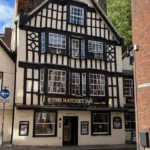
Bristol has a strong pub heritage shaped by its historic port, brewing industry, neighbourhood communities and long-established drinking culture. Traditional pubs remain important parts of the city centre and surrounding districts, combining historic buildings, cask ale, cider, timber interiors, real fires, local music and community use. VisitBristol specifically promotes a heritage pub trail featuring some of Bristol’s oldest pubs, including the Hatchet Inn and Llandoger Trow.
- What makes a traditional pub in Bristol?
- Which historic pub is the oldest in Bristol?
- Why is the Llandoger Trow important to Bristol pub history?
- Which Bristol pub has an important historic interior?
- Where can visitors find traditional pubs around King Street?
- Which traditional pubs serve real ale in Bristol?
- Which traditional Bristol pubs are near Bristol Temple Meads?
- Which Bristol pubs combine traditional interiors with local beer?
- How does Bristol’s port history influence its traditional pubs?
- Which traditional Bristol pubs are suitable for live music?
- How should visitors explore Bristol’s traditional pubs?
- Why are traditional pubs important to Bristol’s heritage?
- What should visitors know before visiting traditional pubs in Bristol?
- How does Bristol’s traditional pub scene remain relevant today?
The term traditional pub describes a public house where the building, interior, service style, drinks range or social function retains recognisable links with historic British pub culture. CAMRA’s heritage programme focuses particularly on pubs with intact historic interiors and identifies nationally important examples through its Historic Pub Interiors inventory.
For Bristol visitors, traditional pubs provide more than places to drink. They connect historic streets, listed buildings, local brewing, live music and neighbourhood life. Several Bristol pubs also appear in CAMRA’s current local pub information and ale trail, providing a useful starting point for exploring established venues.
What makes a traditional pub in Bristol?
A traditional Bristol pub combines historic architecture, established pub interiors, cask beer or cider, local community use and a recognisable drinking-room layout. Examples include timber-framed buildings, Victorian bar backs, wood panelling, snug rooms, fireplaces and independent beer selections.
Traditional character does not depend on a pub being centuries old. A historic building is one element, while interior survival, community function, beer service and continuity also contribute to the traditional identity.
CAMRA’s Historic Pub Interiors programme distinguishes pubs according to the importance and survival of their historic interiors. Its national inventory uses three categories: three-star, two-star and one-star historic interiors.
Bristol has examples covering several periods. The Hatchet Inn dates from 1606, the Llandoger Trow dates from the 17th century, the King’s Head has origins around 1660, and the Commercial Rooms occupies a Grade II-listed building dating from 1810.
Traditional drinking spaces also retain distinctive layouts. Small snug rooms, long bars, separate lounges, rear rooms and outdoor yards reflect the development of British pub culture before the widespread adoption of modern open-plan interiors.
Which historic pub is the oldest in Bristol?
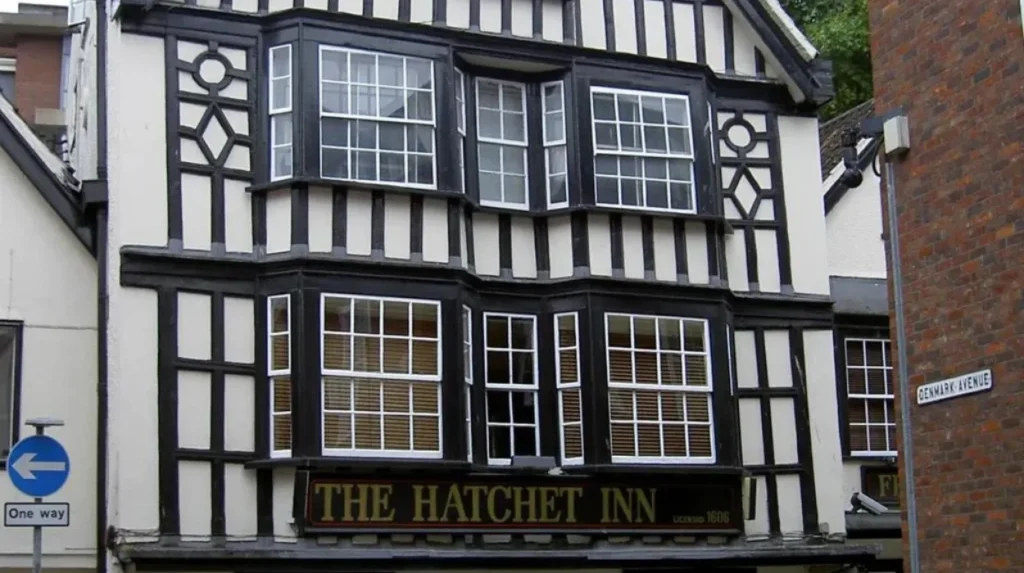
The Hatchet Inn is one of Bristol’s oldest continuously operating pubs, with a building dated to 1606. Historic England lists it as Grade II, while CAMRA describes it as probably Bristol’s oldest continuously operating pub. Its current building includes later alterations.
The Hatchet Inn stands on Frogmore Street in central Bristol, close to the city’s entertainment district. Historic England records the building as dating from 1606 and identifies it as a Grade II-listed public house. The listing also records substantial rebuilding in 1967.
The building uses timber box-frame construction, rendered surfaces, rubble stacks and a pantile roof. Its architectural form reflects the long development of Bristol’s historic city centre.
CAMRA’s current Bristol guide describes the Hatchet as an imposing half-timbered building dating from 1606 and identifies it as probably Bristol’s oldest continuously operating pub. The venue underwent refurbishment in 2021 and retains multiple drinking areas, an upstairs pool room and an enclosed garden or terrace.
The Hatchet is also significant because its location connects traditional pub culture with modern Bristol nightlife. The O2 Academy, Bristol Hippodrome and Bristol Beacon are all close to the pub, making it part of the wider Frogmore Street entertainment area.
Why is the Llandoger Trow important to Bristol pub history?
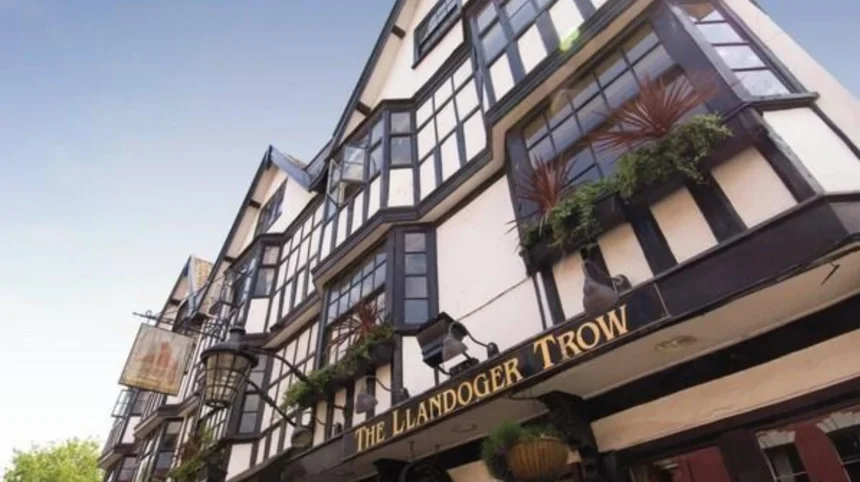
The Llandoger Trow is a Grade II listed King Street pub dating from about 1664–1665. Its timber-framed structure forms part of Bristol’s historic waterfront setting, while its literary and maritime associations connect the building with the city’s port history.*
The Llandoger Trow occupies a prominent position on historic King Street. Historic England lists it at Grade II*, reflecting its special architectural and historic interest. The official listing dates the building to around 1665 and identifies it as a former group of houses converted into one public house and restaurant.
Historic England also records the building as part of a former range of five houses. Two houses were destroyed during the Second World War, while the surviving structure retained important historic features.
The pub’s name refers to the trow, a flat-bottomed vessel associated with the River Wye and South Wales. Its location on King Street places it within one of Bristol’s strongest historic concentrations of pubs, theatres, Georgian architecture and waterfront heritage.
CAMRA describes the Llandoger Trow as architecturally important and notes its historic drinking areas, multiple rooms, cask beers, real cider and regular events. The venue also shares outdoor seating with neighbouring King Street pubs.
The pub has long-standing literary associations involving Daniel Defoe, Alexander Selkirk and Robert Louis Stevenson’s Treasure Island. These stories form part of the pub’s cultural heritage, although individual historical claims are presented as traditions rather than established facts.
Which Bristol pub has an important historic interior?
The King’s Head on Victoria Street has a nationally important historic interior and dates from around 1660. CAMRA classifies its interior as three-star, describing it as outstanding national historic importance because of its surviving Victorian bar back and other historic features.
The King’s Head stands at 60 Victoria Street near Bristol Temple Meads and Castle Park. Its location makes it particularly practical for visitors arriving by rail.
CAMRA identifies the pub as a historic interior of outstanding national importance. Its present building dates to the mid-17th century, while the interior includes a significant mid-Victorian bar back.
The bar back contains arches, high-level lettering advertising drinks and a marble shelf. The pub also contains a panelled counter and a rear area known as the Tramcar Bar.
The pub’s architecture and interior demonstrate how traditional pubs evolved through successive periods. The building retains elements from the 17th century while its Victorian interior reflects the later commercial development of British pub design.
CAMRA’s current information records the King’s Head as a Grade II-listed building and notes its three-star heritage status. CAMRA also recorded that the pub received runner-up recognition in the national Pub Saving Heritage Award category in 2025.
Where can visitors find traditional pubs around King Street?
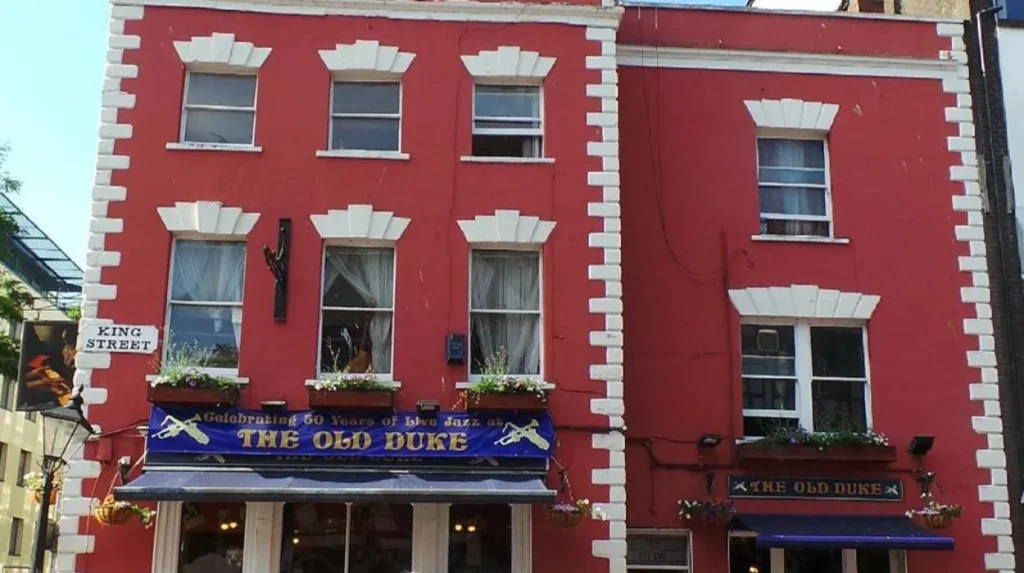
King Street contains several established pubs within a compact historic area, including the Llandoger Trow, Old Duke and nearby Famous Royal Navy Volunteer. The street connects traditional drinking culture with historic architecture, live music, cask beer and Bristol’s former dockside commercial landscape.
King Street forms one of Bristol’s most concentrated areas for traditional pub exploration. Its cobbled setting, historic buildings and proximity to Welsh Back make it suitable for visitors exploring the old city and waterfront.
The Llandoger Trow provides the strongest historic architectural connection. The Old Duke adds a long-established live-music tradition, particularly jazz.
CAMRA describes the Old Duke as a world-renowned jazz pub with live music seven nights a week and additional weekend afternoon performances. Its interior has a central bar, wooden seating and a stage, while its beer range includes regular and changing cask options.
The King Street area therefore offers different elements of traditional pub culture within walking distance. Visitors can experience historic buildings, cask beer, live music and outdoor drinking spaces without travelling between distant neighbourhoods.
The combination also makes King Street relevant to Bristol’s wider heritage tourism. VisitBristol promotes historic pub trails as part of the city’s heritage offer.
Which traditional pubs serve real ale in Bristol?
Traditional Bristol pubs commonly serve cask-conditioned beer, also called real ale, alongside keg beer and cider. Current CAMRA listings include Cornubia, King’s Head, Llandoger Trow, Old Duke and Barley Mow among established Bristol venues with cask beer.
Real ale is beer that completes conditioning in the container from which it is served, usually a cask. CAMRA has promoted cask beer and traditional pub culture nationally for decades.
Bristol has a particularly strong connection with independent and local brewing. CAMRA’s current Bristol ale trail lists Cornubia, King’s Head, Seven Stars, Bridge Inn, Llandoger Trow, Commercial Rooms, Old Fish Market, Bank Tavern, Christmas Steps, Shakespeare Tavern and Barley Mow among its recommended trail venues.
Cornubia on Temple Street provides a strong example. CAMRA describes it as a traditional pub dating from 1775, with an L-shaped interior and six changing ales, including dark beer options and a house beer from Twisted Oak Brewery.
Barley Mow on Barton Road provides another example. CAMRA lists Bristol Beer Factory beers among its regular options and records multiple hand pumps offering brewery beers and changing guests. The pub also serves real cider and has a traditional interior featuring bare wood floors and half-panelled walls.
Beer availability changes regularly. Visitors should check the pub’s current beer list before travelling when a specific brewery, style or cask beer is important.
Which traditional Bristol pubs are near Bristol Temple Meads?
The King’s Head and Barley Mow provide established traditional-pub options close to Bristol Temple Meads. The King’s Head is on Victoria Street, while Barley Mow is on Barton Road, approximately 400 yards from the station according to CAMRA’s local guide.
Bristol Temple Meads is the city’s principal railway station and an important arrival point for visitors. Traditional pubs within the surrounding streets provide convenient stops for travellers before sightseeing or after returning to the station.
The King’s Head is particularly close to the station. CAMRA describes it as handy for Temple Meads and Castle Park. Its mid-Victorian bar back provides an important historic feature for visitors interested in architectural heritage.
Barley Mow is another practical option. CAMRA gives directions from the rear exit of Temple Meads across the footbridge and along Barton Road, describing the journey as approximately 400 yards.
The Barley Mow also provides a more neighbourhood-oriented experience. Its traditional interior, local beer selection, garden and food service make it relevant to visitors who want a pub stop away from the busiest central streets.
Which Bristol pubs combine traditional interiors with local beer?
Cornubia, Highbury Vaults, Barley Mow and King’s Head combine traditional pub environments with established beer traditions. Their interiors include wood panelling, historic bar features, bare timber surfaces or surviving Victorian fittings, while their beer ranges include local and regional products.
Highbury Vaults on St Michael’s Hill is included in CAMRA’s heritage guide to historic pub interiors. Its traditional environment includes wood panelling, a small front snug, rear garden areas and distinctive internal features.
Cornubia provides a different historic setting. Its building dates from 1775 and its long, narrow bar arrangement reflects an older pub layout. CAMRA identifies six changing ales and a house beer from Twisted Oak Brewery.
Barley Mow places local brewing at the centre of its drinks offer. Bristol Beer Factory is represented through regular beers, while guest beers are also sourced from local breweries.
The King’s Head focuses more strongly on historic interior heritage. Its Victorian bar back and Tramcar Bar provide the principal historic features, while its current pub operation maintains the function of a working local.
These pubs demonstrate that traditional character in Bristol exists in several forms rather than one standard architectural style.
How does Bristol’s port history influence its traditional pubs?
Bristol’s traditional pub culture developed alongside its port, commercial districts and working communities. Historic pubs around King Street, Welsh Back, Temple and the old city reflect the relationship between drinking spaces, maritime trade, transport, commerce and densely populated urban neighbourhoods.
Bristol developed as an important port city, with waterways connecting the city to the River Avon and the wider Bristol Channel. Historic commercial areas created demand for public houses serving merchants, sailors, workers and local residents.
King Street and Welsh Back remain particularly important for understanding this relationship. The Llandoger Trow’s maritime identity is reflected in its name, while nearby pubs form part of the historic waterfront environment.
The pub was historically a flexible social institution. It provided drink, food, conversation, accommodation, meeting space and access to information. Different rooms often served different customer groups.
The surviving architecture provides evidence of this development. Timber-framed structures, narrow plots, separate rooms and later Victorian bar installations reveal successive stages of urban pub design.
Traditional Bristol pubs therefore form part of the city’s wider built heritage rather than functioning solely as hospitality venues.
Which traditional Bristol pubs are suitable for live music?
The Old Duke is particularly associated with live music and jazz, while the Llandoger Trow hosts events including sea shanty singing, comedy and bluegrass. Other established pubs across Bristol also combine traditional drinking spaces with scheduled music and community events.
The Old Duke on King Street has a long-standing reputation as a jazz venue. CAMRA records live music seven nights a week, alongside weekend afternoon performances. The pub’s central bar and compact stage support its music-focused layout.
The Llandoger Trow also hosts events within its historic setting. CAMRA records sea shanty singing, comedy evenings and bluegrass music among its programme, alongside other events.
Music changes the function of a traditional pub without removing its historic identity. Wooden furniture, separate rooms and central bars continue to provide the physical setting for contemporary performances.
Visitors seeking a quiet drink should therefore check event schedules before visiting music-led pubs, particularly during evenings and weekends.
How should visitors explore Bristol’s traditional pubs?
Visitors can explore Bristol’s traditional pubs by grouping venues geographically, beginning around Temple Meads, continuing through the Old City and King Street, then extending towards St Michael’s Hill or other neighbourhoods. This approach reduces unnecessary travel and connects pubs with historic attractions.
A central heritage-focused route can begin near Bristol Temple Meads. The King’s Head provides a historic interior experience close to the station, while Barley Mow offers another established option further along Barton Road.
The route can then continue towards the Old City and Corn Street. The Commercial Rooms occupies a Grade II-listed building dating from 1810 and retains architectural features from its earlier role as a businessmen’s club.
King Street provides another concentrated section. The Llandoger Trow and Old Duke stand close together, allowing visitors to experience historic architecture and live music within the same heritage district.
A further route can extend towards St Michael’s Hill for Highbury Vaults. The pub’s historic interior and traditional wood-panelled character add another architectural dimension to a Bristol pub itinerary.
Visitors should treat each pub as an operating business. Opening times, food service, beer selections, events and accessibility conditions change, so checking current information before travelling remains important.
Why are traditional pubs important to Bristol’s heritage?
Traditional pubs preserve architectural features, historic interiors, local drinking traditions and community functions. Bristol’s listed pubs and CAMRA heritage venues provide tangible evidence of changing urban life, brewing culture and social history across several centuries.
Historic pubs preserve details that are difficult to recreate once removed. Bar backs, timber frames, panelling, counters, fireplaces and room layouts provide physical evidence of earlier periods.
The King’s Head demonstrates this particularly clearly through its nationally important Victorian bar back. CAMRA’s three-star classification identifies its interior as being of outstanding national historic importance.
The Llandoger Trow demonstrates the architectural dimension through its Grade II* listing and 17th-century timber-framed structure.
The Hatchet provides another important example through its 1606 origins and Grade II listing.
CAMRA’s Historic Pub Interiors programme exists specifically to identify and document pubs where significant historic interiors survive. Its research covers more than three decades and provides a national framework for identifying important pub interiors.
For Bristol, these buildings connect everyday hospitality with the city’s architectural and social history. They also support heritage tourism by providing visitors with functioning historic spaces rather than static museum exhibits.
Explore More Area Guide
Best Pubs in Bristol: Historic, Real Ale & Waterfront Venues
Best Cafés Near Bristol City Centre | Bristol Guide
What should visitors know before visiting traditional pubs in Bristol?
Traditional pubs differ in opening hours, food service, accessibility, beer selection, entertainment and payment arrangements. Visitors should check current venue information before travelling, especially for historic buildings with stairs, live events, changing cask beers or limited food-service periods.
Historic buildings often have architectural constraints. Narrow entrances, stairs, uneven floors and older toilet arrangements occur in some traditional pubs.
Highbury Vaults, for example, has toilets accessed by steep and narrow stairs according to CAMRA. This detail is important for visitors with mobility requirements.
Beer lists also change. Cask beer depends on cellar conditions, demand and deliveries. A pub listed as serving a particular beer does not guarantee that the beer remains available on every visit.
Opening times also differ. CAMRA’s current listings provide detailed schedules for venues such as Barley Mow, Old Duke, Llandoger Trow and Three Tuns, but operating hours remain subject to change.
Traditional pub etiquette remains straightforward. Visitors order at the bar unless table service is clearly provided, follow house rules, respect residential surroundings and avoid blocking entrances or service areas.
How does Bristol’s traditional pub scene remain relevant today?
Bristol’s traditional pub scene remains relevant through heritage tourism, local beer, live music, community use and preservation of historic interiors. Current CAMRA listings continue to document established venues, while VisitBristol promotes historic pubs as part of the city’s visitor experience.
Traditional pubs continue to combine historic environments with contemporary hospitality. A 17th-century building can operate alongside modern beer, food, music and payment systems.
This continuity gives Bristol’s pub heritage practical relevance. Visitors can experience historic architecture while participating in an active social environment.
CAMRA’s current Bristol information demonstrates that the city’s traditional pub network remains diverse. Its ale trail includes heritage pubs, independent pubs, historic interiors, real-ale venues and music-focused establishments.
VisitBristol also incorporates historic pubs into its heritage tourism offer, including a Bristol Heritage Pub Crawl featuring the Hatchet Inn and Llandoger Trow.
The city’s traditional pubs therefore sit at the intersection of architecture, brewing, tourism, music and community life. For visitors searching for traditional pubs in Bristol, the most useful approach is to focus on documented historic features, current pub operations, geographic location and the type of experience each venue provides.
What is the oldest traditional pub in Bristol?
The Hatchet Inn is one of Bristol’s oldest continuously operating pubs. Its building dates from 1606 and is Grade II listed by Historic England.