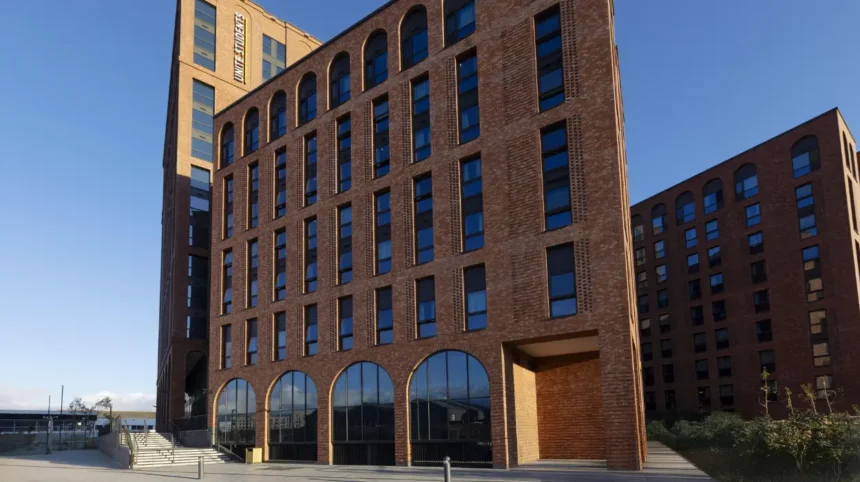
Student property investment in Bristol involves purchasing residential property or purpose-built student accommodation to generate rental income from university students. Bristol’s two main universities, the University of Bristol and UWE Bristol, support a substantial student housing market. Successful investment depends on location, purchase price, achievable rent, operating costs and landlord compliance.
- What makes Bristol a significant student property investment market?
- How do Bristol’s universities influence student rental demand?
- Which Bristol areas should investors assess for student property?
- How much does student property cost in Bristol?
- What rental yields can Bristol student properties generate?
- What types of student property can investors buy in Bristol?
- Shared student houses
- Student flats and apartments
- Purpose-built student accommodation
- Student property investment trusts and funds
- How can investors calculate the costs and cash flow of a Bristol student property?
- What legal requirements apply to student landlords in Bristol?
- What is a house in multiple occupation?
- When is planning permission required for student housing?
- Which safety and tenancy obligations must landlords meet?
- How should investors manage and let student properties in Bristol?
- Tenant selection and tenancy arrangements
- Maintenance and property condition
- Direct management or a letting agent
- Academic-year occupancy
- How do taxes and mortgage costs affect Bristol student property investment?
- What risks should investors consider before buying student property in Bristol?
- Vacancy and changing tenant demand
- Property condition and unexpected repairs
- Licensing and planning restrictions
- Interest rates and cash flow
- Resale and capital growth
- How can investors assess a student property before purchasing it?
- How will Bristol’s student housing market affect future investment decisions?
- Is student property investment in Bristol worth evaluating?
What makes Bristol a significant student property investment market?
Bristol has a substantial higher education population, established rental demand and a diverse housing market. The city’s two main universities attract domestic and international students, creating demand for shared houses, private flats and managed student accommodation near campuses and transport links. Bristol combines higher education, employment and transport connections that also attract professionals and other private renters.
According to Bristol City Council, approximately 68,800 students were registered at the city’s two main universities in the 2024/25 academic year. This figure establishes the scale of the higher education sector, although not every student lives in Bristol or rents privately.
Student property investment is a form of residential buy-to-let investment. The investor purchases a property and earns rental income by letting individual rooms or the entire dwelling. Some investors purchase purpose-built student accommodation, while others convert or operate conventional houses as shared student homes.
The investment model depends on more than the number of students. Investors need to assess the supply of university accommodation, private rental competition, tenant budgets, property condition and the cost of complying with housing regulations.

How do Bristol’s universities influence student rental demand?
The University of Bristol and UWE Bristol generate demand from undergraduate students, postgraduate researchers and international students. Their locations influence where tenants search for accommodation, while course duration, campus access, affordability and transport connections affect the type of property students choose.
The University of Bristol reported 31,132 students in the 2024/25 academic year. UWE Bristol reported 37,742 students for the same academic year. These university figures provide useful context for evaluating the city’s student housing market.
The two institutions have different campus locations and travel patterns. The University of Bristol’s main campus is associated with Clifton and the central university area. UWE Bristol’s principal Frenchay campus is northeast of central Bristol, with additional teaching and facilities at other locations.
This creates several distinct rental markets rather than one uniform student area. Students attending lectures frequently on campus often prioritise convenient travel. Students with placements, laboratory work or part-time jobs also consider bus routes, cycling access and journey reliability.
International students and postgraduate students have varied accommodation requirements. Some seek furnished rooms and shorter travel times, while others prefer private studios or longer-term flats. Investors should confirm local demand through current letting listings, university accommodation information and discussions with experienced local letting agents.
Which Bristol areas should investors assess for student property?
Student property locations should be evaluated against campus access, transport, local amenities, purchase prices and competing rental supply. Clifton, Redland, Cotham, Stokes Croft, Fishponds and areas near Frenchay each serve different tenant requirements, so local evidence matters more than a citywide average.
Clifton
Clifton is relevant to students attending the University of Bristol and tenants seeking established residential streets close to university facilities. Investors should assess higher acquisition costs, property maintenance, conservation restrictions where applicable and the rent achievable for each property.
Redland and Cotham
These neighbourhoods offer residential housing within reach of the University of Bristol and central Bristol. Shared houses can suit students seeking room-by-room accommodation, but the purchase price, permitted occupancy and condition of older buildings require careful assessment.
Stokes Croft and central Bristol
Central locations provide access to shops, services, public transport and city-centre destinations. Investors should compare noise levels, building quality, service charges and competition from flats and professionally managed accommodation.
Fishponds
Fishponds is worth investigating for conventional houses and shared rental properties with connections to UWE Bristol and other parts of the city. Bus services, cycling routes, travel times and the availability of suitable room sizes should inform property selection.
Frenchay and nearby neighbourhoods
Properties near UWE Bristol’s Frenchay campus can appeal to students who prioritise access to university facilities. Investors should check nearby purpose-built student accommodation, the supply of private rentals and the practical walking, cycling or bus journey to campus.
An investor should compare specific streets and properties rather than assume every home in a neighbourhood performs equally. A property with a lower asking price but substantial refurbishment needs can produce a weaker return than a more expensive home in sound condition.

How much does student property cost in Bristol?
The purchase price depends on property type, location, condition, lease terms and the number of bedrooms. The Office for National Statistics provides citywide housing benchmarks, but investors need comparable local sales and property-specific cost estimates before setting a student accommodation budget.
The Office for National Statistics reported an average Bristol house price of £357,000 in June 2026, with flats and maisonettes averaging £246,000. These figures describe the wider residential market, not student investment properties specifically.
A student landlord’s budget must include more than the agreed purchase price. Additional costs can include:
- Stamp Duty Land Tax, where applicable, including the relevant rules for additional properties.
- Solicitor and conveyancing fees.
- Survey and valuation charges.
- Mortgage arrangement fees and interest.
- Repairs, furniture and appliance replacement.
- Licensing, fire-safety improvements and compliance work.
- Insurance, service charges and ongoing maintenance.
Older shared houses often need additional spending on kitchens, bathrooms, heating, electrical systems and fire precautions. Flats can require service charges, ground rent where applicable, lease extensions or major-works contributions. These costs must be checked against the property’s actual legal and physical condition.
Before making an offer, obtain a survey, confirm the tenure, review any lease restrictions and request estimates for outstanding repairs. For a shared house, verify the permitted occupancy and whether the layout meets applicable space and safety standards.
What rental yields can Bristol student properties generate?
Rental yield measures annual rental income against the property’s purchase price. Bristol student property yields vary with room rents, occupancy, acquisition costs and operating expenses. Gross yield is a preliminary comparison; net yield and cash flow provide a more useful view of investment performance.
Gross rental yield is calculated by dividing annual rent by the property’s purchase price and multiplying the result by 100.
For example, a property purchased for £300,000 and let for a combined £2,000 per month generates £24,000 in annual rent if fully occupied throughout the year. Its gross yield is 8%.
\[ \text{Gross yield}=\frac{\text{Annual rent}}{\text{Purchase price}}\times100 \]
This example is a calculation, not a claim that a typical Bristol student property earns £2,000 per month.
Net yield accounts for operating expenses. Relevant expenses include repairs, insurance, letting fees, licensing, safety checks, management, utilities paid by the landlord and periods without rent. Mortgage interest and tax also affect the investor’s overall financial position, although yield calculations vary in how they treat financing.
A shared house with five occupied rooms can generate more total rent than a two-bedroom flat, but it also involves more tenant management, wear and tear, shared-facility maintenance and potential licensing obligations.
Investors should obtain room-by-room rental comparables and calculate expected income using realistic occupancy assumptions. They should also model interest-rate increases, unexpected repairs and a period without tenants. A high gross yield does not guarantee positive cash flow.
What types of student property can investors buy in Bristol?
Bristol student property investment includes shared houses, student flats, studios and purpose-built accommodation. Each model has different acquisition costs, management responsibilities, tenant preferences and income structures, so investors should choose a property type that matches their budget and operating capacity.
Shared student houses
A shared student house is a conventional residential property occupied by students who share facilities such as a kitchen or bathroom. The landlord can rent individual rooms or let the property to a group under an appropriate tenancy arrangement.
This model attracts investors seeking room-based rental income. However, a higher number of occupants increases the importance of room sizes, fire safety, maintenance and licensing.
Student flats and apartments
Student flats include one-bedroom apartments, two-bedroom properties and larger shared flats. Smaller flats appeal to students seeking privacy, while larger units accommodate housemates who share rental costs.
Leasehold flats require additional checks. Investors should review service charges, building maintenance responsibilities, lease restrictions and any requirements affecting letting to multiple occupants.
Purpose-built student accommodation
Purpose-built student accommodation, commonly called PBSA, consists of buildings designed specifically for students. Examples include private studios, en-suite bedrooms with shared kitchens and managed blocks with communal facilities.
Investors can enter this market by purchasing an eligible unit within a development. The investment structure requires particular attention to management agreements, service charges, operator fees, resale restrictions and the actual rent distributed to the owner.
A guaranteed-rent or fixed-return arrangement requires careful contract review. Investors should verify who pays the income, how long the guarantee lasts, which costs are deducted and what happens if the operator becomes insolvent.
Student property investment trusts and funds
Investors who do not want to manage a physical property can investigate regulated property funds or listed real estate investment trusts with relevant residential or student accommodation exposure. These investments have different fees, liquidity characteristics and market risks from direct ownership.
Investors should check the investment structure, regulatory status and published financial statements before committing capital.
How can investors calculate the costs and cash flow of a Bristol student property?
A student property’s cash flow is the rental income remaining after operating expenses and financing payments. Investors should calculate annual income, recurring costs, mortgage repayments and vacancy allowances before purchasing, then test whether the investment remains affordable under less favourable conditions.
The figures are illustrative assumptions, not verified local rent quotations or average expenses. Actual costs depend on the property, management agreement, occupancy and repairs.
An investor should also calculate the deposit, purchase taxes, legal fees and refurbishment costs. These expenses increase the amount of capital required and affect the return on the investor’s cash.
Mortgage financing requires a separate calculation. For example, a property generating £16,800 in annual operating income does not produce £16,800 in spendable profit if mortgage interest, capital repayments and tax remain outstanding.
A useful assessment includes a base case, a lower-rent case and a higher-cost case. If the property becomes unaffordable after a modest vacancy period or mortgage-rate increase, the investor should reconsider the purchase price or financing structure.
What legal requirements apply to student landlords in Bristol?
Student landlords in Bristol must comply with applicable housing, safety, tenancy and property licensing requirements. The rules depend on occupancy, property use and location. Investors must verify licensing, planning permission, energy efficiency and tenancy obligations before letting a property.
What is a house in multiple occupation?
A house in multiple occupation, or HMO, generally accommodates at least three tenants from more than one household who share facilities such as a kitchen or bathroom. A household generally means one person or members of the same family living together.
In Bristol, licensing requirements extend beyond the national mandatory licensing rules. The council’s additional licensing scheme covers qualifying smaller HMOs, including properties occupied by three or four unrelated people who share facilities. Mandatory licensing generally applies to qualifying HMOs occupied by five or more people from at least two households.
Bristol also operates selective licensing in designated areas for certain privately rented properties that are not HMOs. The exact requirement depends on the property’s location, occupancy and applicable exemptions.
Investors should check the council’s current licensing guidance and property-specific requirements before completing a purchase. A licence application, licence fee and required property improvements should be included in the investment budget.
When is planning permission required for student housing?
Planning permission is separate from an HMO licence. A property can meet one set of requirements and still fail to satisfy the other.
An Article 4 Direction removes specified permitted development rights in a defined area. Bristol has existing Article 4 restrictions and has confirmed additional restrictions taking effect on 1 January 2027 in parts of Brislington, Frome Vale, Purdown, Southmead and Horfield, St George, and Westbury Park. These new directions require planning permission for the specified change of use from a dwelling house to a small HMO within their designated boundaries.
Investors purchasing a property for conversion should check the current planning position, the property’s existing lawful use and any relevant planning history. They should not assume that permission for a previous use automatically authorises a new student HMO.
Which safety and tenancy obligations must landlords meet?
Landlords must keep rented properties safe, maintain gas and electrical installations, provide an Energy Performance Certificate and meet applicable fire-safety requirements. They must also protect tenancy deposits where the law requires it and complete right-to-rent checks for adult tenants in England.
The legal framework for private renting in England changed on 1 May 2026. Investors should use current government guidance when preparing tenancy agreements and handling rent, deposits, possession procedures and tenant rights. Older landlord guides that refer to the previous tenancy system need to be checked against the current rules.
For licensed HMOs, Bristol’s room-size, amenity and fire-safety standards are particularly important. Investors should obtain professional advice where a proposed layout, occupancy arrangement or conversion raises questions about compliance.
How should investors manage and let student properties in Bristol?
Effective student property management combines tenant screening, clear tenancy documentation, planned maintenance, rent collection and timely repairs. Investors can manage a property directly or appoint a letting agent, but the landlord remains responsible for meeting applicable legal duties.
Tenant selection and tenancy arrangements
Student tenants should be assessed using lawful and consistent referencing procedures. Relevant checks include identity, affordability, references where available and the arrangements for paying rent.
Investors should establish whether the property will be let individually by room or collectively to a group. The tenancy structure affects responsibility for rent, shared areas, bills and damage. An appropriately drafted agreement should explain the parties’ obligations in accordance with current law.
Guarantors are sometimes used for student tenancies, particularly where a student has limited rental history. Any guarantee should be properly documented, with its scope and duration clearly defined.
Maintenance and property condition
A maintenance plan should cover heating, plumbing, electrical systems, roof condition, windows, damp prevention, appliances and shared facilities. Routine inspections and prompt repairs help identify problems before they become more expensive.
Shared student houses often experience concentrated wear during busy academic periods. Investors should budget for repainting, furniture replacement, cleaning and repairs between tenancies.
Direct management or a letting agent
Self-management gives the landlord direct control over tenant communication and maintenance decisions. It also requires time for viewings, administration, inspections and emergency repairs.
A letting agent can handle marketing, tenant referencing, rent collection and property management under an agreed service package. Investors should compare the fee structure, maintenance mark-ups, emergency cover and contract termination provisions before appointing an agent.
Academic-year occupancy
Many students arrange accommodation around the academic calendar. This creates predictable periods of high letting activity but does not guarantee that every room will be occupied for a full year.
Investors should market properties early, schedule cleaning and maintenance between tenancies, and establish realistic dates for new occupants. Summer vacancies can materially reduce annual income where the property is not let during university holidays.
How do taxes and mortgage costs affect Bristol student property investment?
Taxes and financing costs determine how much rental income an investor retains. Stamp Duty Land Tax, mortgage interest, income tax, insurance and allowable property expenses all affect returns, while ownership structure and personal circumstances influence the final tax position.
Stamp Duty Land Tax
Stamp Duty Land Tax (SDLT) is a tax charged on qualifying property purchases in England. Investors purchasing additional residential properties generally pay higher rates, subject to the applicable rules and exceptions. HM Revenue & Customs provides current rates and an online calculator for estimating the bill.
For a property purchased for £300,000, the higher-rate SDLT calculation for an additional residential property under the rates applicable from 1 April 2025 is £20,000. This illustrates the potential impact of purchase tax on an investment budget.
Investors should confirm the applicable rates before exchanging contracts because the amount depends on the transaction date, buyer status and circumstances.
Rental income tax
Rental income from residential property is subject to applicable tax rules. Individual landlords must calculate taxable property income and account for eligible expenses. Mortgage finance costs for individual residential landlords are subject to specific tax-relief restrictions, so mortgage interest should not simply be deducted as though every pound were an ordinary allowable expense.
Limited companies have a different tax structure from individual ownership. The decision to buy personally or through a company depends on financing terms, tax position, administrative costs and future plans. An accountant experienced in UK property taxation can assess the alternatives.
Mortgage affordability
Buy-to-let mortgage lenders assess factors such as rental coverage, deposit size, interest rates, credit history and property suitability. HMO and student accommodation mortgages can have different eligibility conditions from standard buy-to-let loans.
Investors should obtain a mortgage illustration before committing to a purchase. They should also test whether rental income covers the mortgage and operating costs if interest rates rise or some rooms remain vacant.
What risks should investors consider before buying student property in Bristol?
Student property investment involves vacancy, maintenance, regulation, financing and resale risks. A large student population does not guarantee occupancy or profit. Investors should evaluate competing accommodation, local rent affordability, property condition and legal restrictions before committing capital.
Vacancy and changing tenant demand
A property can remain empty if its rent is above comparable alternatives, its condition is poor or its location does not suit the target student population.
University enrolment figures do not directly measure demand for every private rental property. Some students live with family, use university accommodation or rent outside Bristol. Investors should compare the number and quality of competing properties in the immediate area.
Property condition and unexpected repairs
Roof repairs, damp treatment, heating failures and electrical upgrades can reduce returns significantly. Older Bristol houses require particular attention to the condition of the building and the cost of bringing shared accommodation up to the required standards.
A survey and specialist inspections help identify likely costs before purchase. An appropriate contingency reserve protects the investment from unexpected expenditure.
Licensing and planning restrictions
An investor who buys a house intending to accommodate several students must verify whether the intended use requires planning permission or a property licence.
Bristol’s licensing schemes and Article 4 Directions make property-specific checks essential. A projected room-rental income is not reliable if the intended occupancy or conversion cannot lawfully proceed.
Interest rates and cash flow
Higher mortgage costs can reduce or eliminate monthly cash flow, especially when a property has a large loan relative to its purchase price. Investors should calculate affordability using current lender quotations rather than relying on historic mortgage rates.
Resale and capital growth
Student houses can appeal to other landlords, but their resale market depends on property condition, location, licensing status, planning use and mortgage availability. A layout designed for shared occupancy does not automatically produce a higher resale price.
Investors should assess both rental income and potential resale demand. Property price growth is uncertain and should not be treated as a guaranteed part of the investment return.
How can investors assess a student property before purchasing it?
Investors should verify the property’s legal status, rental evidence, purchase costs, condition, licensing requirements and financing before making an offer. A documented due-diligence process reduces the risk of overpaying for a property that cannot deliver the intended rental income.
The assessment should follow a clear sequence.
1. Define the investment model. Decide whether the property will be a shared HMO, a conventional student flat or a purpose-built student accommodation unit.
2. Research local demand. Review current room listings, comparable rents, nearby university facilities, transport connections and competing accommodation.
3. Check the property legally. Verify the title, lease terms, lawful use, planning history, HMO requirements and any applicable licensing scheme.
4. Inspect the building. Commission a suitable survey and obtain estimates for necessary repairs, refurbishment, fire precautions and energy-efficiency improvements.
5. Calculate total acquisition costs. Include the deposit, SDLT where applicable, legal fees, lender fees, initial furniture and compliance work.
6. Build a financial forecast. Calculate gross yield, net operating income, mortgage payments, tax implications and the cash reserve needed for vacancies and repairs.
7. Confirm the letting strategy. Establish the expected tenant profile, room rents, management arrangements and marketing timetable before committing to the purchase.
8. Review the exit plan. Consider how the property will appeal to future owner-occupiers or landlords and identify any restrictions affecting a future sale.
This process helps investors distinguish an attractive listing from a viable rental business. Independent legal, mortgage, surveying and tax advice should be obtained where the transaction requires specialist assessment.
Explore More Area Guide
Best Buy-to-Let Areas in Bristol for Property Investors
Best Areas to Rent in Bristol: Neighbourhoods and Costs
How will Bristol’s student housing market affect future investment decisions?
Future student property investment in Bristol will depend on university enrolment, new accommodation supply, housing affordability, transport access and regulatory changes. Investors who monitor these factors can update their rental assumptions and avoid relying solely on historic market performance.
Bristol’s two main universities recorded approximately 68,800 students in the 2024/25 academic year, according to the city council. That substantial education population supports the importance of student accommodation in the city’s housing market, but future demand will depend on enrolment patterns and students’ housing choices.
The wider residential market also affects student property economics. The Office for National Statistics reported an average Bristol house price of £357,000 in June 2026 and an average private rent of £1,880 per month in July 2026. These citywide figures are useful reference points, not estimates of student room rents or future investment returns.
Investors should monitor several developments:
- University accommodation supply: new halls and private developments can change demand for nearby shared houses.
- Housing regulation: licensing, planning and safety requirements affect the cost and feasibility of shared accommodation.
- Energy efficiency: landlords need to monitor current minimum standards and announced future requirements. Government policy sets a compliance date of 1 October 2030 for the new private rented sector energy standard, subject to the detailed rules and exemptions.
- Transport and neighbourhood changes: improved connections and local amenities influence the relative attractiveness of different areas.
- Affordability: student budgets influence achievable room rents, property choice and tenant retention.
Long-term investment decisions should use current local evidence and regularly updated financial assumptions. Neither historic price growth nor a large university population establishes that a specific property will produce a positive return.
Is student property investment in Bristol worth evaluating?
Student property investment in Bristol offers access to a substantial higher education market, but returns depend on the individual property’s price, rental demand, operating expenses and legal compliance. Investors should assess verified local evidence and realistic cash flow before purchasing.
The city’s universities support a sizeable student population, while neighbourhoods such as Clifton, Redland, Cotham, Fishponds and Frenchay serve different accommodation needs. Shared houses, flats and purpose-built student accommodation each have distinct costs and management requirements.
The most important step is to calculate the investment using the actual property rather than relying on general claims about Bristol’s rental market. Confirm the permitted use, licensing position, purchase taxes, mortgage terms and realistic rents before proceeding.
A disciplined approach to due diligence and ongoing management gives investors a clearer basis for deciding whether a Bristol student property fits their financial objectives.
Is Bristol a good location for student property investment?
Bristol has a substantial student population supported by the University of Bristol and UWE Bristol. Investment performance depends on property prices, rental demand, operating expenses, location and compliance with landlord regulations.