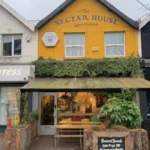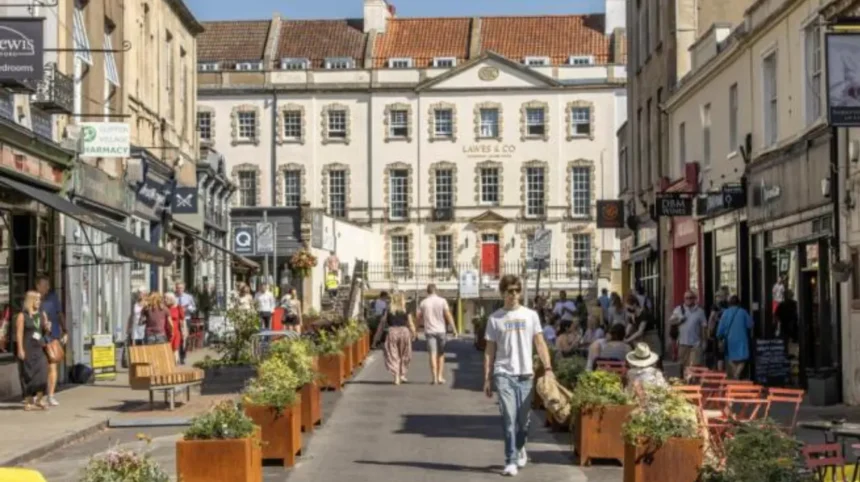
Clifton is one of Bristol’s best-known neighbourhoods for independent businesses, combining boutique retail, specialist food shops, cafés, restaurants, galleries, jewellery stores, interior businesses and traditional local services. Its commercial streets sit within a historic urban landscape shaped by Georgian and Victorian development, creating a distinctive setting for locally operated businesses.
- What makes independent businesses in Clifton distinctive?
- How did Clifton develop into a centre for local businesses?
- Which parts of Clifton have the strongest independent business presence?
- What types of independent shops can you find in Clifton?
- Why is Clifton Arcade important to independent businesses?
- How do independent cafés and restaurants contribute to Clifton?
- How do independent businesses support Clifton’s visitor economy?
- What role does Clifton’s historic architecture play in its independent business identity?
- What does Bristol City Council’s research say about independent shops in Clifton?
- How should visitors explore independent businesses in Clifton?
- Why are independent businesses important to Clifton’s future?
- What should shoppers know before visiting independent businesses in Clifton?
- What is the overall importance of independent businesses in Clifton?
The main independent shopping areas include Clifton Village, Princess Victoria Street, The Mall, Boyces Avenue, Regent Street and Clifton Arcade. These streets connect residential neighbourhoods with visitor attractions such as the Clifton Suspension Bridge, Clifton Observatory and the Avon Gorge. VisitBristol identifies Clifton Village as a major destination for independent boutiques, jewellery, homeware, artisanal food and specialist shopping.
Independent businesses are important to Clifton because they provide specialist products and services alongside hospitality and everyday shopping. They also support the character of the local centre. Bristol City Council’s Local Centres Study recorded demand for more or new independent shops in Clifton, showing that independent retail remains a recognised component of local shopping expectations.
What makes independent businesses in Clifton distinctive?
Independent businesses in Clifton are locally operated shops, cafés, restaurants, galleries and specialist services that offer products and experiences distinct from national retail chains. Their concentration reflects Clifton’s historic streets, affluent residential base, visitor economy and established shopping culture.
An independent business is generally controlled by an individual, family, partnership or privately owned company rather than being part of a large national retail chain. In Clifton, this business model appears across fashion, jewellery, food, interiors, art, gifts, hospitality and specialist services.
Clifton’s independent economy benefits from its compact commercial geography. Visitors can walk between businesses without travelling between separate shopping centres. The main commercial areas around Clifton Village include The Mall, Princess Victoria Street and Boyces Avenue. Clifton Arcade adds a specialist indoor destination with independent traders.
The setting also differentiates Clifton from purpose-built shopping centres. Many businesses operate from historic buildings, terraces and arcades. This creates a relationship between commercial activity and the architectural character of the neighbourhood.
Clifton also forms part of Bristol’s wider independent retail network. VisitBristol identifies independent shopping as a major part of the city’s visitor economy, with independent businesses operating across neighbourhoods including Clifton, Gloucester Road, Park Street, Wapping Wharf and Bedminster.
How did Clifton develop into a centre for local businesses?
Clifton developed from a fashionable Georgian and Victorian suburb into a mixed residential, commercial and visitor destination. Its historic terraces, squares, streets and arcades created premises suitable for shops, hospitality businesses and specialist services serving residents and visitors.
Clifton’s commercial identity is closely connected to its urban development. Historic England records the development of major Georgian terraces during the late eighteenth and early nineteenth centuries. Royal York Crescent, for example, was developed from 1791 and eventually completed in 1820 after construction interruptions.
Bristol City Council’s heritage assessment records extensive speculative development in Clifton during the nineteenth century. Victoria Square was planned in 1837, while additional terraces were constructed during the 1840s and 1850s. Development expanded towards Clifton Down during the later nineteenth century.
The area became an affluent and fashionable suburb. Bristol Museums describes Clifton’s eighteenth-century development as part of the city’s building boom, with terraces and squares advancing up the hillside from Bristol.
Transport and tourism strengthened Clifton’s commercial importance. The Clifton Suspension Bridge was completed in 1864, improving movement across the Avon Gorge and becoming a major landmark. Clifton Down also developed as a destination for walking, views and leisure.
This historical development created the physical structure that supports modern independent businesses. Shops occupy ground floors within historic terraces, while hospitality and professional businesses use premises integrated into the wider neighbourhood.
Which parts of Clifton have the strongest independent business presence?
Clifton Village has the strongest concentration of independent businesses, particularly around The Mall, Princess Victoria Street, Boyces Avenue and Clifton Arcade. Regent Street and nearby streets also contribute cafés, restaurants, specialist services and smaller retailers to Clifton’s local commercial economy.
Clifton Village functions as the main independent shopping destination. VisitBristol describes its streets as a hub of boutiques, food businesses and places to eat. The area around Princess Victoria Street and Clifton Arcade has a particularly strong concentration of specialist retailers.
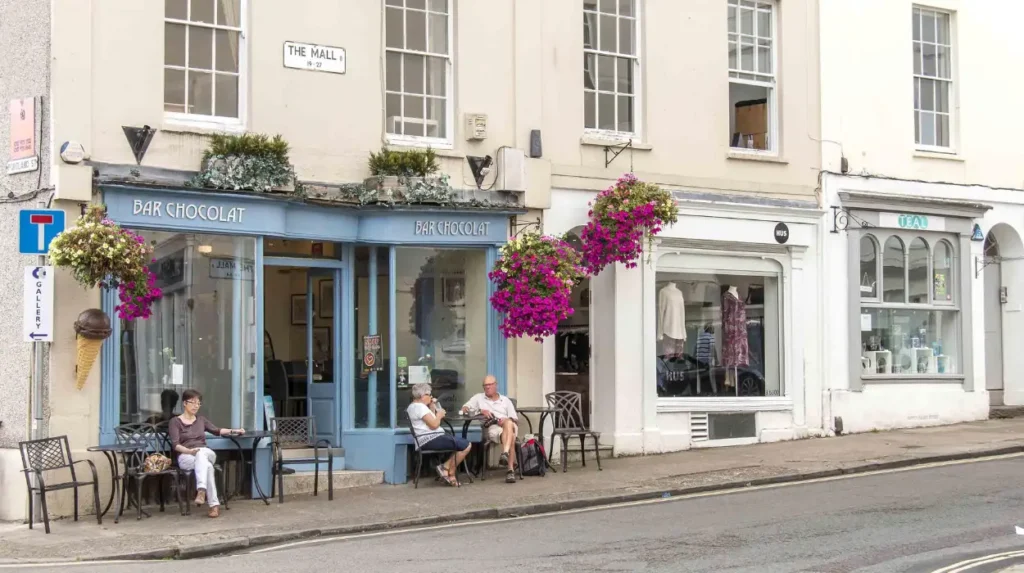
The Mall provides an important connection between Clifton Village and the wider neighbourhood. Its historic buildings and pedestrian-friendly character support browsing and local shopping.
Princess Victoria Street contains independent businesses across retail and hospitality. Its location close to Victoria Square also makes it accessible to visitors exploring Clifton’s historic streets.
Boyces Avenue provides another important commercial connection. Clifton Arcade is located in this part of Clifton and provides a distinctive setting for independent traders.
Regent Street and nearby streets extend the commercial area beyond the core village. Their businesses contribute food, drink, professional services and everyday local trade.
Clifton’s independent business geography therefore works as a network rather than a single shopping street. Visitors can combine shopping with architectural sightseeing, dining, walking and visits to major attractions.
What types of independent shops can you find in Clifton?
Clifton’s independent retail offer includes jewellery, fashion, vintage goods, homeware, antiques, gifts, art, specialist food and other niche products. The combination gives shoppers access to specialist merchandise that differs from standard national-chain retail.
Jewellery is an important part of Clifton’s independent retail identity. VisitBristol highlights Wylde Jewellers as an independent Clifton business offering jewellery and handmade pieces.
Homeware and interiors are also strongly represented. Clifton Arcade contains independent traders selling furniture, antiques, vintage objects and locally produced gifts.
Fashion businesses contribute another layer to the area’s retail mix. Clifton Village attracts shoppers looking for boutique clothing and accessories rather than the standardised ranges associated with large shopping centres.
Art and creative retail also form part of the local economy. Independent galleries and shops provide artwork, decorative objects and locally produced items.
Specialist food businesses add another important category. Delis, food shops, chocolatiers and other specialist retailers connect Clifton’s shopping economy with Bristol’s wider food culture.
This diversity is important because it gives independent businesses different commercial roles. A jewellery shop serves a specialist purchase. A deli serves regular local consumption. A gallery serves cultural and gift demand. A café creates a social destination. Together, these businesses create a more varied local centre.
Why is Clifton Arcade important to independent businesses?
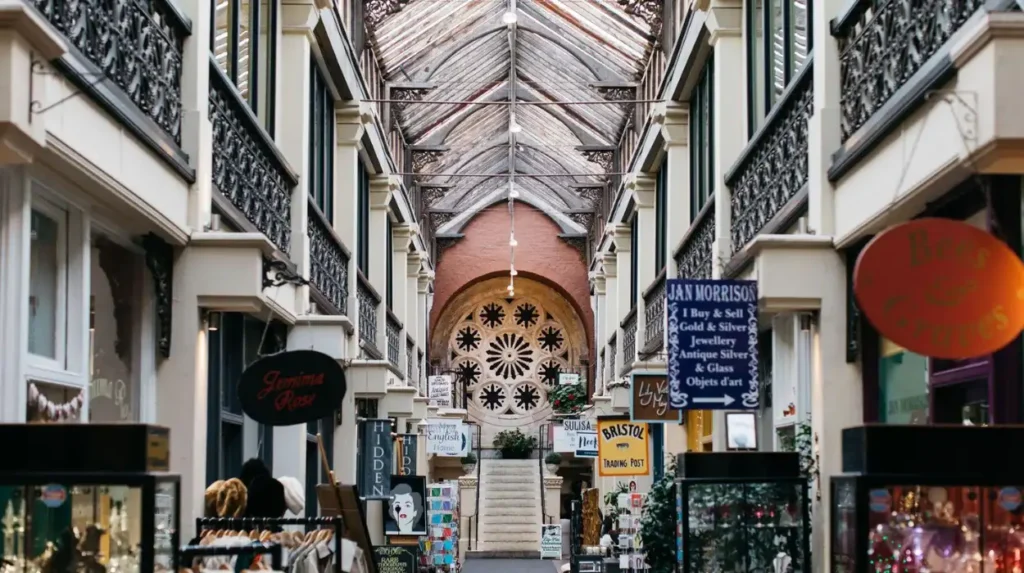
Clifton Arcade is a Victorian shopping arcade that provides a concentrated setting for independent traders. Built in the late nineteenth century, it now supports specialist businesses selling jewellery, antiques, vintage goods, furniture, gifts, interiors and other distinctive products.
Clifton Arcade was developed by Joseph King between 1876 and 1878. The original scheme included an arcade and associated buildings designed around Boyces Avenue and King’s Road. It opened as King’s Clifton Bazaar and Winter Garden in April 1879.
The original commercial venture struggled financially and became known as “King’s Folly”. Despite that difficult beginning, the building survived as an important part of Clifton’s commercial heritage.
Today, the arcade provides a different retail environment from conventional high streets. Small units allow specialist traders to operate close together. This creates a compact destination for independent shopping.
VisitBristol describes the arcade as a restored Victorian arcade containing independent traders, including businesses dealing in furniture, antiques, vintage objects, sweets and locally crafted gifts.
Its historical architecture also contributes to the visitor experience. The building itself is part of the reason shoppers explore the area, while the businesses provide the commercial purpose.
How do independent cafés and restaurants contribute to Clifton?
Independent cafés and restaurants extend Clifton’s local economy beyond shopping. They provide food, drink, social spaces and visitor services while increasing the time people spend in the neighbourhood and connecting retail activity with Clifton’s wider leisure economy.
Food and drink businesses form a major part of Clifton’s visitor offer. VisitBristol lists a broad restaurant and hospitality scene across Clifton Village, including businesses serving Indian, sushi, tapas, Thai and traditional British food.
Independent cafés also serve residents, workers, students and tourists. Their location near shopping streets allows visitors to combine retail activity with food and drink.
Hospitality has an important economic relationship with independent retail. A visitor who arrives for lunch can also browse shops. A shopper can stop for coffee. A resident can use local cafés as regular neighbourhood services.
This creates a connected commercial ecosystem. Retailers benefit from pedestrian activity, while hospitality businesses benefit from the same local and visitor footfall.
Clifton’s restaurants also reflect Bristol’s broader reputation for independent food businesses. VisitBristol promotes independent restaurants as an important part of Bristol’s food scene.
How do independent businesses support Clifton’s visitor economy?
Independent businesses strengthen Clifton’s visitor economy by giving tourists access to specialist shopping, local food, hospitality and creative products alongside major attractions. Their presence encourages visitors to spend time in the neighbourhood rather than visiting only the Clifton Suspension Bridge.
Clifton already attracts visitors because of its architecture, viewpoints and landmarks. The Clifton Suspension Bridge is the area’s best-known attraction, while Clifton Observatory and the Avon Gorge provide additional visitor destinations.
Independent businesses add commercial activity to these attractions. Visitors can move from sightseeing to shopping without leaving the neighbourhood.
This relationship is particularly strong in Clifton Village. The commercial streets are close to the historic architecture and visitor routes. VisitBristol describes the village as a destination for boutiques, cafés, restaurants and specialist shopping.
Independent retailers also provide souvenirs and locally distinctive products. This gives visitors opportunities to purchase items associated with Bristol rather than standard products available across the UK.
The visitor economy therefore supports a broader commercial structure. Attractions generate footfall. Shops convert some of that footfall into retail spending. Cafés and restaurants extend visitor stays. Local services support residents who live alongside the visitor economy.
What role does Clifton’s historic architecture play in its independent business identity?
Clifton’s historic architecture provides the physical setting for its independent business economy. Georgian terraces, Victorian buildings, historic shopfronts and Clifton Arcade create commercial premises with strong architectural character and reinforce Clifton’s distinctive local identity.
Clifton contains a substantial concentration of historic buildings. Historic England records Royal York Crescent as a late Georgian terrace of 46 houses developed from 1791.
Other historic terraces include Rodney Place, Harley Place and Caledonia Place. These buildings demonstrate the architectural development of Clifton during the Georgian period.
The architecture matters commercially because many businesses occupy historic ground-floor premises. Their shopfronts become part of the visual identity of the shopping area.
Clifton also sits within a designated conservation environment. Bristol City Council states that conservation areas have stricter planning controls than other locations, with planning permission required for certain development and alterations.
This planning framework helps protect the character of historic commercial streets. It also creates responsibilities for property owners and businesses undertaking changes to buildings and shopfronts.
What does Bristol City Council’s research say about independent shops in Clifton?
Bristol City Council’s Local Centres Study identifies demand for more or new independent shops in Clifton. The finding demonstrates that independent retail is not simply a visitor attraction but an important element of local centre performance and community expectations.
The Bristol Local Centres Study was published in November 2023. It examined local centres and collected views about shops, markets and improvements.
For Clifton, the study records “more or new independent shops” as the leading response concerning desired improvements to shops or markets.
This finding provides useful evidence about the perceived role of independent businesses. It shows that local demand extends beyond maintaining existing retail provision.
The research also places independent businesses within a wider planning context. Local centres need a balanced mix of retail, food, services and other activities to remain useful to communities.
For Clifton, independent businesses are therefore part of local economic resilience. Their role extends beyond tourism because they provide products and services to people living in and around the neighbourhood.
How should visitors explore independent businesses in Clifton?
Visitors can explore Clifton’s independent businesses by starting around Clifton Village and walking between The Mall, Princess Victoria Street, Boyces Avenue and Clifton Arcade. Combining shopping with cafés, historic architecture and nearby attractions creates an efficient local itinerary.
Clifton is accessible on foot from Bristol city centre. VisitBristol states that Clifton is approximately a 15–20-minute walk from the centre via Park Street, with regular bus services also serving Clifton Village.
A practical shopping route begins around Clifton Village. Visitors can then continue along the main commercial streets before entering Clifton Arcade.
The route can also include Victoria Square and the surrounding Georgian streets. Royal York Crescent provides an opportunity to see one of Clifton’s most important historic terraces.
The Clifton Suspension Bridge is within walking distance of the commercial centre. Visitors can therefore combine independent shopping with one of Bristol’s most recognised landmarks.
Clifton Observatory provides another nearby destination. The Avon Gorge and Clifton Down add open-space and landscape interest to the wider visit.
The commercial and visitor geography is compact enough for walking to remain the most effective way to experience the area at a relaxed pace.
Why are independent businesses important to Clifton’s future?
Independent businesses are important to Clifton’s future because they diversify the local economy, maintain specialist retail provision and support the neighbourhood’s visitor appeal. Their continued presence depends on strong local demand, suitable premises, responsible planning and changing consumer behaviour.
Clifton’s independent business economy benefits from its established reputation. Its historic setting gives retailers a strong physical environment, while its proximity to Bristol city centre provides access to residents and visitors.
The future of independent retail also depends on adaptation. Businesses increasingly combine physical shops with digital communication, online discovery, social media marketing and direct customer relationships.
Local shopping centres also face wider pressures from changing retail habits, property costs and competition from online retailers. Independent businesses respond through specialist products, personal service, local identity and carefully selected merchandise.
Planning remains significant because Clifton contains important historic buildings. Bristol City Council’s conservation-area rules regulate certain changes to buildings, while listed buildings are protected through national heritage legislation.
The commercial future of Clifton therefore involves balancing economic activity with heritage protection. Independent businesses provide the active retail and hospitality uses that keep historic streets economically relevant.
Explore More Area Guide
Family Life in South Bristol: Complete Bristol Guide 2026
Best Views from Clifton Suspension Bridge Bristol 2026
What should shoppers know before visiting independent businesses in Clifton?
Shoppers should treat Clifton as a neighbourhood shopping destination rather than a conventional shopping centre. Opening hours, stock and services differ between independent businesses, so checking individual business information before travelling provides the most reliable current details.
Independent businesses operate separately, so there is no single opening-hours policy for Clifton. Individual retailers control their trading schedules, product ranges and services.
Visitors should also distinguish Clifton Village from the wider Clifton neighbourhood. Clifton Village is the principal shopping destination, while surrounding streets contain additional cafés, restaurants, professional services and specialist businesses.
Walking is useful because many businesses are close together. Clifton’s streets also contain slopes and historic pavements, making route planning relevant for visitors with mobility requirements.
Visitors can also combine shopping with Clifton’s major attractions. This makes the neighbourhood suitable for a longer half-day itinerary rather than a single-purpose shopping trip.
The strongest independent retail concentration remains around Clifton Village, particularly The Mall, Princess Victoria Street, Boyces Avenue and Clifton Arcade.
What is the overall importance of independent businesses in Clifton?
Independent businesses form a central part of Clifton’s commercial identity, combining specialist retail, food, hospitality, creative products and local services within a historic Bristol neighbourhood. Their presence connects everyday local trade with tourism, heritage and the wider Bristol economy.
Clifton’s independent business landscape is the result of geography, architecture, history and modern consumer demand. Its Georgian and Victorian streets provide distinctive commercial premises. Its location beside major attractions generates visitor activity. Its residential population provides recurring local demand.
Clifton Village remains the clearest expression of this independent commercial identity. Its boutiques, specialist retailers, cafés and restaurants operate within a compact historic environment. Clifton Arcade strengthens this offer through its concentration of independent traders.
The area also fits Bristol’s wider independent retail culture. VisitBristol identifies independent businesses as an important feature of the city’s shopping offer, with Clifton among the neighbourhoods highlighted for specialist shopping.
For visitors, independent businesses provide a reason to explore beyond headline attractions. For residents, they provide local products, services and hospitality. For the city, they contribute to the economic activity and distinctive character of one of Bristol’s most recognisable neighbourhoods.
The evidence from Bristol City Council’s 2023 Local Centres Study also demonstrates continuing demand for independent retail in Clifton.
Independent businesses therefore remain an essential part of understanding Clifton. They are not separate from the neighbourhood’s history or visitor economy. They are embedded within its streets, buildings, community and commercial identity.
What are the best areas for independent businesses in Clifton?
Clifton Village is the main area for independent shopping in Clifton. The Mall, Princess Victoria Street, Boyces Avenue and Clifton Arcade contain boutiques, specialist retailers, cafés, restaurants, galleries, jewellery shops and local services.