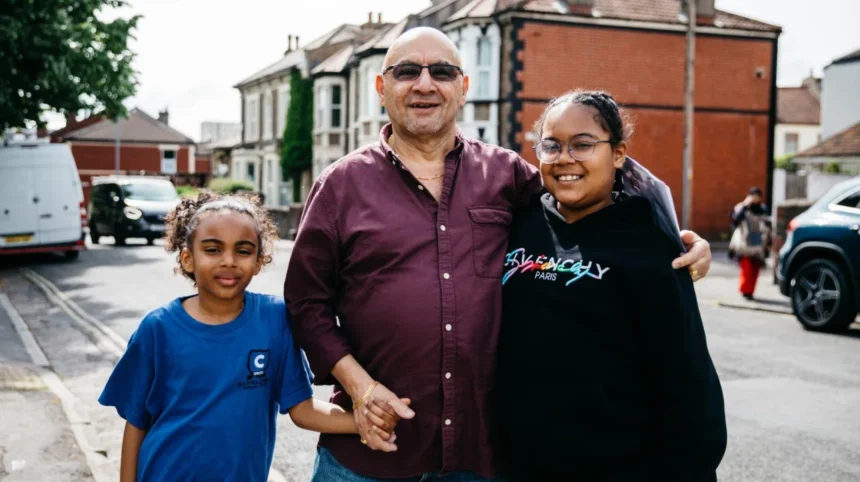
South Bristol is a large and varied part of the city of Bristol, covering established neighbourhoods, residential estates, suburban communities, green spaces, schools, healthcare facilities, leisure venues and family support services. It includes places such as Bedminster, Knowle, Brislington, Filwood, Hartcliffe, Withywood, Bishopsworth, Stockwood and Hengrove.
- What is family life like in South Bristol?
- How did South Bristol develop into a major residential area?
- Which services support families in South Bristol?
- What are the main green spaces and activities for families?
- How does education work for families in South Bristol?
- How easy is transport for families in South Bristol?
- What does family affordability look like in South Bristol?
- How is housing changing family life in South Bristol?
- How do community networks shape family life in South Bristol?
- What are the main challenges facing families in South Bristol?
- Why is South Bristol important to the future of family living in Bristol?
Family life differs between these neighbourhoods because housing, transport, income, green space, school provision and access to services are not evenly distributed. Bristol City Council maintains neighbourhood-level information covering schools, facilities, transport, housing and other local indicators.
The wider city is also growing. Bristol’s mid-2025 population estimate was 495,300, while the council projects the population to reach 526,600 by 2032. Bristol also has a highly diverse population, with more than 287 ethnic groups, more than 185 countries of birth and more than 90 languages represented.
These wider demographic changes influence demand for housing, education, healthcare, childcare, recreation and community services. South Bristol therefore provides an important example of how family life develops within a growing UK city.
What is family life like in South Bristol?
Family life in South Bristol combines established neighbourhoods, family services, schools, parks, community facilities and improving transport links. Areas including Bedminster, Knowle, Brislington, Filwood, Hartcliffe, Withywood, Bishopsworth, Stockwood and Hengrove offer varied housing and everyday environments locally for families today.
South Bristol contains a broad mixture of urban and suburban environments. Bedminster has a strong connection with central Bristol and a long industrial history. Knowle contains established residential streets and twentieth-century housing. Brislington combines residential districts with older historic buildings and commercial areas.
Further south, Hartcliffe, Withywood, Bishopsworth, Hengrove and Stockwood contain extensive residential areas, community facilities and open spaces. Filwood is another established neighbourhood with a strong local community infrastructure.
Family life in these areas is shaped by practical factors. Housing type affects household space. School location influences daily journeys. Bus routes influence access to employment and city-centre services. Parks and playgrounds provide accessible recreation.
Bristol City Council’s Quality of Life programme measures neighbourhood conditions across subjects including health, lifestyle, community, local services and perceptions of living in Bristol. The data is analysed at ward level and helps public-sector organisations plan services.
This makes South Bristol best understood as a collection of different family environments rather than one uniform residential area.
How did South Bristol develop into a major residential area?
South Bristol developed through industrial growth, suburban expansion, municipal housing and transport investment. Bedminster grew alongside Bristol’s industry, while Knowle, Hartcliffe, Withywood and Hengrove expanded through twentieth-century housing programmes. Historic buildings, estates and community institutions still shape local neighbourhood identity.
Bedminster has a particularly strong industrial heritage. Historic England records the development of housing and industry in the area, including listed nineteenth-century buildings on York Road. Three Grade II listed houses at 138–142 York Road were built in 1823 and formed part of an earlier terrace.
The area’s industrial history also includes the Wills tobacco works. Historic England identifies the Wills Number 1 Factory on East Street as an important former employer in Bristol. The factory developed during the Victorian period and continued operating until the late twentieth century.
Twentieth-century housing programmes transformed South Bristol further. Historic England’s research into Bristol’s public housing records the Knowle and Bedminster estate as the largest of several major housing estates, containing 6,034 houses. The research also records the development of estates at Bedminster Down and the Knowle extension during the 1920s and 1930s.
Knowle’s development also has an early twentieth-century religious and community history. Historic England records the establishment of a Catholic mission in Knowle in 1908 and the construction of St Gerard Majella Church in 1909.
The development of council housing, schools, roads and community facilities created the physical structure of many South Bristol neighbourhoods that families recognise today.
Which services support families in South Bristol?
South Bristol has schools, early-years provision, children’s centres, family hubs, healthcare, leisure facilities, libraries and community organisations. Provision differs by neighbourhood, so families use local catchments and service areas. Bristol City Council provides neighbourhood information covering schools, facilities, transport and services.
Family support is organised through several public and community systems. Bristol’s Best Start Family Hubs provide information, activities and support for families with children and young people.
The South Bristol area has Best Start Family Hubs serving communities including Bedminster, Bishopsworth, Hartcliffe, Inns Court and Stockwood. The programme is designed to bring different services together closer to where families live.
South Bristol Children’s Centres also provide support covering parenting, training, return-to-work assistance, food and cooking, speech and language support, early education and children’s activities. Their service area includes Bedminster, Withywood, Hartcliffe, Whitchurch, Stockwood, Knowle and parts of Redcliffe and Totterdown.
This network is important because family needs change with age. A household with a baby has different requirements from a household with primary-age children. Teenagers require different education, leisure and youth services.
Bristol also uses its Think Family Database to combine information from council services, education, health, police and partner organisations. The database covers approximately 55,000 families across Bristol and supports understanding of family needs and service demand.
What are the main green spaces and activities for families?
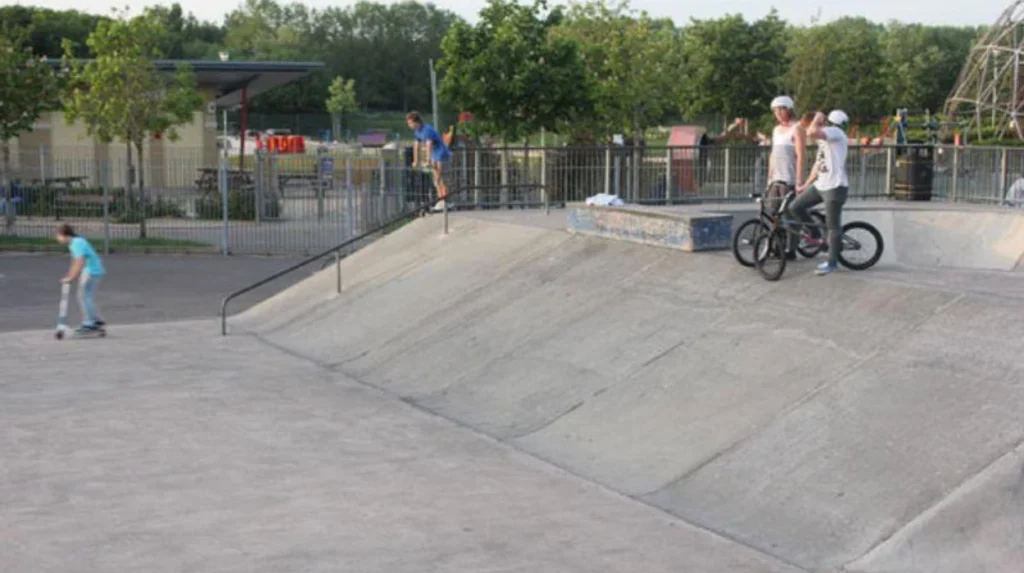
South Bristol provides parks, playing fields, nature areas, playgrounds, community gardens and leisure venues for children. Hengrove Park, Manor Woods Valley, Victoria Park and local green spaces support recreation. Walking, cycling, football, playground visits and organised activities shape daily family routines.
Green space is a major component of family life because it provides outdoor recreation without requiring long-distance travel.
Hengrove Park is one of South Bristol’s most significant modern leisure and development areas. It is associated with Hengrove Park Leisure Centre, South Bristol Community Hospital and the South Bristol Skills Academy. The leisure centre opened in 2012.
Manor Woods Valley provides another important natural environment. Its combination of woodland, grassland and paths supports walking and informal outdoor recreation.
Victoria Park in Bedminster provides a more urban green-space setting. Its location makes it useful for families living close to the Bedminster and Windmill Hill areas.
Local parks and playgrounds also support short everyday activities. A family does not need to travel across Bristol for every leisure activity. Small parks, recreation grounds and open areas provide opportunities for play, walking and exercise close to residential streets.
Outdoor activity also supports wider public-health objectives. Bristol’s Healthy Schools programme collects information about children and young people’s health and wellbeing. In 2024, more than 4,000 pupils from over 35 primary, special and secondary schools responded to the Bristol Pupil Voice survey.
The availability and quality of outdoor facilities therefore have relevance beyond recreation. They form part of the wider environment in which children grow, exercise and socialise.

How does education work for families in South Bristol?
Families in South Bristol access primary and secondary schools through Bristol’s admissions system, with priority areas and admission arrangements. Schools include Ashton Park School and Bedminster Down School. Early-years services include children’s centres, education support and family activities through local hubs.
Education is one of the most important practical considerations for families choosing where to live.
South Bristol contains primary schools across its residential neighbourhoods and several secondary education options. School admissions are administered through published policies, priority areas and admission criteria.
Ashton Park School is a secondary school serving the south-western part of Bristol. Bristol City Council’s published information lists a planned 2027 admission number of 216, an age range of 11 to 18, and 1,272 pupils on roll in January 2026.
Bedminster Down School is another important secondary school. The council lists a planned 2027 admission number of 216, an age range of 11 to 16, and 1,022 pupils on roll in January 2026.
School choice requires attention to individual admission arrangements. Living near a school does not automatically guarantee a place. Families need to check the relevant priority area, admission criteria and application timetable for the required school year.
Early-years education is another part of the family system. South Bristol Children’s Centres provide information and support around two-year education, healthy-start assistance, speech and language development and children’s activities.
For parents with younger children, these services connect education with health, parenting and community support.
How easy is transport for families in South Bristol?
South Bristol offers major transport corridors, bus services, rail stations and cycling routes, with connectivity varying by neighbourhood. Key rail stations include Bedminster and Parson Street, while buses connect residential areas with Bristol. Planning focuses on walking, cycling and accessibility.
Transport affects school journeys, commuting, shopping, healthcare appointments and leisure activities.
Bedminster and Parson Street railway stations provide rail connections for parts of South Bristol. Bus services provide broader neighbourhood coverage and connect residential communities with central Bristol and other parts of the city.
Transport accessibility differs considerably between neighbourhoods. A household close to a major bus corridor has a different mobility profile from one located farther from frequent services.
Car ownership is also relevant. Bristol’s local data shows differences between neighbourhoods. A 2025 equality assessment for South Bristol’s liveable-neighbourhood work recorded that 25.9% of Bedminster households had no car or van, while 49.1% had access to one car or van.
Walking and cycling are increasingly important within local transport planning. Shorter school journeys and local shopping trips can be completed without a car where safe routes and suitable infrastructure exist.
Bristol City Council’s neighbourhood information system also provides information about resident parking schemes, transport, schools and local facilities.
For families, transport planning is therefore not limited to commuting. It includes school access, children’s activities, medical appointments, shopping and access to community facilities.
What does family affordability look like in South Bristol?
Family costs in South Bristol depend on housing tenure, property size, childcare, transport, food, energy and leisure spending. Neighbourhood conditions differ. Bristol’s data identifies deprivation hotspots, while local services provide support with food, parenting, early education, employment and pressures.
Affordability is one of the most important factors affecting family life.
Housing costs vary according to property type, location and tenure. A larger family house has different financial requirements from a flat or smaller terraced property. Renters and homeowners also face different housing costs and responsibilities.
Childcare is another major household expense. Costs depend on the child’s age, number of hours required and available funded provision.
Transport creates additional costs through public-transport fares, fuel, insurance, parking and vehicle maintenance. Families without cars can reduce some costs but depend more heavily on reliable public transport and walkable services.
Bristol has significant differences in deprivation between neighbourhoods. The city’s Family Hubs needs analysis recorded 15,300 children under 16 living in relative low-income families in 2020/21, representing 17.8% of children. It also identified areas of South Bristol where more than one quarter of children lived in relative low-income families.
The same analysis identified Hartcliffe and Withywood at 25.7% and Filwood at 25.3% for relative child poverty under the measure used in the report.
These figures demonstrate why family life cannot be assessed only through average city-wide statistics. Household circumstances differ substantially between neighbourhoods.
Family Hubs and Children’s Centres provide practical support that addresses some of these pressures. Services include information about food, healthy-start support, parenting, education, training and employment.
How is housing changing family life in South Bristol?
South Bristol is undergoing housing, infrastructure and neighbourhood investment. Hengrove Park and Hartcliffe Campus includes plans for up to 1,435 new homes, with at least 30% affordable housing, alongside improvements. Family life remains linked to housing, transport, schools and services.
Housing development is an important part of South Bristol’s future.
Hengrove Park and Hartcliffe Campus is a major brownfield redevelopment programme. Bristol City Council states that the project includes housing development at Hengrove Park and Hartcliffe Campus. Its second phase has outline planning consent based on a masterplan and design codes approved in February 2020.
The development is planned to deliver up to 1,435 new homes, with a minimum of 30% affordable homes. It also includes a new public park.
The first phase included 261 homes, alongside Hengrove Park Leisure Centre, South Bristol Community Hospital and South Bristol Skills Academy.
New housing affects family life in several connected ways. More homes increase the potential number of households using local schools, roads, healthcare, parks and public transport. Effective development therefore requires infrastructure alongside residential construction.
The council’s neighbourhood planning and open-data systems provide access to information about housing, community facilities, transport and other local conditions.
Future development also creates opportunities for improved public spaces and services. New parks, walking routes and community infrastructure can support family activity close to new residential areas.
How do community networks shape family life in South Bristol?
Community networks connect families with local activities, support services, schools, voluntary organisations, faith groups and neighbourhood facilities. Their role is particularly important where households need practical assistance, social connections, early-years support, youth activities or access to information close to home.
Community infrastructure is a defining feature of South Bristol.
Family Hubs bring multiple services into accessible local locations. Their purpose is to make information and support easier to find and closer to where families live.
Children’s Centres provide another layer of local support. Their services include parenting support, training, return-to-work assistance, children’s activities, speech and language support and early education information.
Schools also operate as important community institutions. Parents interact through school events, education services, extracurricular activities and local networks.
Sports clubs, community groups and youth organisations provide additional opportunities for children and teenagers. These activities create structured environments outside school hours.
Bristol’s population diversity also contributes to the range of community organisations and services operating across the city. The council records more than 287 ethnic groups, more than 185 countries of birth and more than 90 languages spoken across Bristol.
For families, community infrastructure has practical value. It provides information, activities and access points for services without requiring every household to travel into central Bristol.
Explore More Area Guide
Best Views from Clifton Suspension Bridge Bristol 2026
Bristol Street Art Guide: Banksy, Murals & Locations 2026
What are the main challenges facing families in South Bristol?
Families in South Bristol face different challenges involving housing affordability, child poverty, transport access, service demand, school places and differences between neighbourhoods. These pressures are influenced by household income, housing conditions, location and access to education, healthcare, green space and support.
The most significant challenge is uneven socioeconomic conditions.
Bristol’s Family Hubs needs analysis identifies areas where child poverty is considerably higher than the city average. Hartcliffe and Withywood and Filwood are among the South Bristol communities identified in the council’s analysis.
Housing is another challenge because demand for suitable family accommodation affects household budgets and neighbourhood stability.
Transport accessibility is also important. Families without cars depend on reliable buses, rail connections and safe walking routes. Families with cars face fuel, insurance, parking and maintenance costs.
Education creates another consideration. Demand for school places varies by area, and admissions depend on published criteria and priority areas. Families therefore need accurate, up-to-date information when making school applications.
Green-space quality is also relevant. Bristol’s Quality of Life research monitors residents’ satisfaction with parks, children’s play areas and local services.
These challenges do not apply equally to every South Bristol household. The council’s ward-level data exists specifically because conditions vary between neighbourhoods.
Why is South Bristol important to the future of family living in Bristol?
South Bristol is important to Bristol’s future because it combines established communities with large-scale housing development, family services, schools, healthcare, leisure facilities and transport investment. Population growth and new homes will increase the importance of coordinated neighbourhood planning for families.
Bristol’s projected population growth creates continuing demand for family housing and local infrastructure. The council projects the city’s population to reach 526,600 by 2032, compared with a mid-2025 estimate of 495,300.
South Bristol is already a major focus for housing and regeneration. The Hengrove Park and Hartcliffe Campus programme demonstrates how new homes can be linked with public spaces, education, healthcare and leisure facilities.
The area also benefits from an established network of family services. Best Start Family Hubs, Children’s Centres, schools and community organisations provide local support for different stages of family life.
Historical development remains visible through older housing, listed buildings, industrial heritage and twentieth-century estates. These layers give South Bristol a distinct built environment while new development continues to reshape some neighbourhoods.
For families, the long-term quality of life in South Bristol depends on the relationship between housing, schools, transport, healthcare, green space, employment and community support.
South Bristol therefore represents an important part of Bristol’s family infrastructure. Its established neighbourhoods provide existing communities, while new development adds housing and facilities. Council data, local services and neighbourhood-level planning remain essential for understanding how family life changes across the area.
Is South Bristol a good place for families?
South Bristol offers established residential neighbourhoods, schools, parks, leisure facilities, community services and family support. Areas such as Bedminster, Knowle, Hengrove, Whitchurch, Stockwood, Bishopsworth, Hartcliffe and Withywood provide different family-living environments.