Key Points
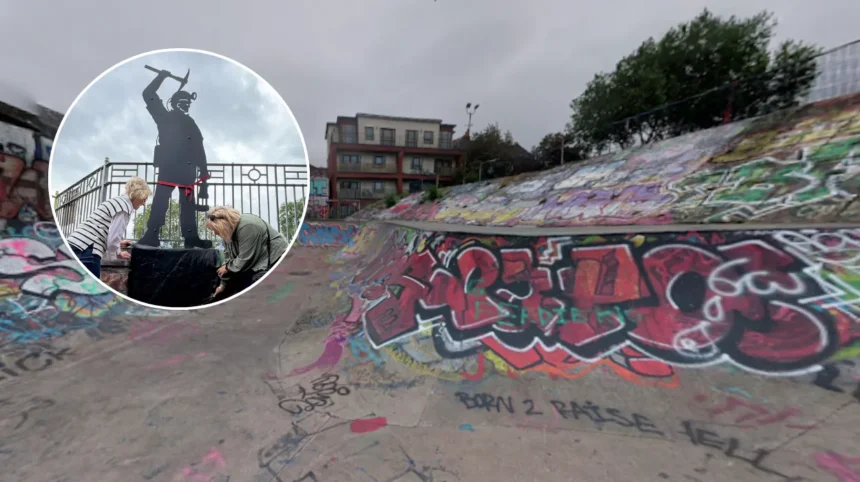
- Unveiling of Memorial: A 7ft tall silhouette statue of a miner was unveiled at Dame Emily Park in South Bristol in commemoration of the 140th anniversary of the Dean Lane Pit Disaster.
- Past Catastrophe: The tragedy happened on September 10, 1886, where a firedamp (methane) explosion led to the death of ten men and boys in one of the biggest Bedminster pits.
- Crowd Attendance: There were about 50 individuals in attendance, mainly consisting of the relatives of miners in the area, including the Garland family.
- Cultural Project: The unveiling project was initiated by the Bedminster Coal Mining Heritage Group, founded by Garry Atterton, in order to shed light on the industrial heritage of South Bristol.
- Government Backing: Tony Dyer, who is the leader of the Bristol City Council and also a Southville councillor, has always been campaigning for the acknowledgment of the mining history of Bedminster, where over 150 individuals lost their lives in the mines.
South Bristol (Bristol Express News) September 14, 2026 – Emotional scenes unfolded in South Bristol last week as the community marked a poignant and permanent milestone in local history, exactly 140 years after the city’s worst-ever mining tragedy. As reported by Tristan Cork, Chief Reporter of Bristol Live, a crowd of around 50 people—predominantly descendants of miners who either died or survived the disaster—gathered to unveil a striking 7ft high silhouette monument of a miner right on the historic site of the tragedy.
Thursday, September 10, marked the 140th anniversary of the Dean Lane Pit Disaster of 1886, an explosion that tore through one of Bedminster’s largest pits and killed ten men and boys. This catastrophe was later equalled in death toll only by the 1891 disaster at the Malago Vale pit, which also claimed ten lives. Today, the new monument stands proudly on the rise leading up to the iconic Dean Lane skatepark—locally known as the “Deaner”—within Dame Emily Park, ensuring that the legacy of those who lost their lives, and the more than 150 miners who perished underground across centuries of Bedminster coal mining, is never forgotten.
How Did Descendants and Local Organisers React to the Unveiling?
Among the crowd gathered for the ceremony was Tina Huckle-Mills, a great-great-great-grand niece of William ‘Bill’ Garland, one of the men killed in the 1886 explosion and a member of a prolific mining family that sent generations down the pits.
As reported by Tristan Cork of Bristol Live, Tina Huckle-Mills stated that
“It’s such a personal thing – it’s just really emotive.”
She added:
“It’s been a long time coming. We’ve worked tirelessly to crowdfund and work with Bristol City Council to enable us to do this, and for me personally today, it’s just really emotive. To see so many people here today, it’s been amazing.”
Tina, a prominent figure in the Bedminster Coal Mining Heritage Group formed to research and commemorate the area’s industrial past, explained that the influx of new residents into the BS3 postcode area inspired a drive to educate the public. As reported by Tristan Cork of Bristol Live, Tina Huckle-Mills explained:
“Hopefully, it will change for the better. I was born not that far from here, and when this skateboard park opened in 1979, I used to come down here, and I did not know the history below me at that time, even though there was such a strong personal connection.”
She further noted:
“I knew that a lot of our family in the past had been miners, but not obviously realising that one of my direct relatives, William Garland, had actually perished in the disaster here. So that’s quite odd, to think about the fact that I played down here when I was 11 or 12, without realising what happened beneath my feet.”
The heritage group was founded by Garry Atterton, himself a descendant of Bedminster miners. Earlier this year, the group installed a similar 7ft silhouette monument near the site of the Malago Vale pit on West Street. As reported by Tristan Cork of Bristol Live, Garry Atterton said of the turnout:
“The whole idea was to trace, to find out, to educate people, about the incredible mining heritage we’ve got in Bedminster.”
He added:
“This is amazing, we are really, really pleased that this has happened, and we’ve got nearly 50 people here today. It’s only the second one in the city, and it’s just great to see lots of members of the families here.”
Highlighting the Garland family lineage, Garry Atterton noted:
“The Garland family were a huge family, and over 50 of them were coalminers in Bedminster, stretching over 200 years, and sadly seven of them died in Bedminster’s pits, and one of them included Bill Garland.”
Emphasising the core mission, Garry Atterton stated:
“It’s about education, it’s about awareness. Not everybody will understand why we’ve put this effort in, but I’m hoping that future generations will come along – like the young children here today, who will go home tonight and say ‘mum, we did an amazing thing today, we saw a celebration taking place about Bedminster’s history’ – and that will then pass on to future generations, hopefully.”
What Were the Circumstances of the 1886 Dean Lane Pit Disaster?
The history of the pits remains deeply personal for local leaders, notably Bristol City Council leader and Southville councillor Tony Dyer, whose own ancestors worked underground. Cllr Dyer has previously delivered historical talks on the disaster and advocated for proper memorials before taking leadership of the council in 2024.
According to research conducted by Cllr Dyer and highlighted by Bristol Live, as many as 150 men lost their lives in South Bristol mining accidents, though accurate record-keeping was sparse prior to the late 19th century. The tragedy on Friday, September 10, 1886, followed mounting tensions among workers. As reported by Tristan Cork of Bristol Live, Cllr Tony Dyer recounted:
“The men went to work that day, a Friday, not in a great mood because the day before there had been an explosion and a young lad had been killed. They were worried because they thought the supervisors were not checking for gas thoroughly enough.”
Those fears materialized when a naked flame ignited a pocket of methane gas, known as firedamp. Eight miners died instantly in the blast or from asphyxiation as the fire consumed available oxygen, while two others were pulled from the shaft only to die the following day. Roughly ten additional miners sustained severe injuries, including a 16-year-old banksman killed when the explosion hurled the lift shaft upward before it crashed back down.
Reflecting on safety standards of the era, as reported by Tristan Cork of Bristol Live, Cllr Tony Dyer explained: “Even though the Davy safety lamp had been invented 70 years earlier, they weren’t required to use them, the mine owners weren’t strict on safety, and the miners themselves didn’t like to use them. They weren’t as bright as a naked flame candle or lamp and the miners viewed their greatest risk being falling rocks or a collapse, so they wanted to be able to see the state of the rocks around them better.”
Describing the harsh working conditions, as reported by Tristan Cork of Bristol Live, Cllr Tony Dyer stated: “It was hard, dangerous work. The Bedminster coal seams were as little as a foot wide, and the mine owners didn’t want to go to the expense of creating big enough tunnels to work in, so the men were lying down in these narrow cramped cracks, pretty much naked because it was up to 90degF in there.” He also noted the industrial scale of the local operations:
“The scale of the mines was something else. If you stand on the Clifton Suspension Bridge and look down to the river, it’s about a 250ft drop. The deepest mineshaft was the Argus mine, between West Street and the railway line in Bedminster, and that was ten times the drop, which is quite incredible.”
The coal extracted from these pits largely powered Bedminster’s local foundries and smelting works, fueling regional growth that transformed the suburb into an industrial hub. However, little physical evidence survived past the closure of the final pit in 1925. A concrete cap was initially laid over the Dean Lane pithead to support a bandstand that served as an informal memorial, but that structure eventually burned down and was never replaced—until the recent installation of the metal silhouette.
Explore more Bedminster News:
New Bedminster Gym Plans Filed in Bristol Planning Roundup Bedminster 2026
Housing Block Residents Plagued By Severe Rat Infestation In Bedminster 2026
Background of the Particular Development
Coal mining was the economic lifeblood of Bedminster and South Bristol from the mid-18th century until the closure of the South Liberty Lane coalfield in 1925. At its peak in the mid-19th century, approximately 25 distinct pitheads operated across Bedminster, Southville, and Ashton Gate. Despite employing generations of working-class families and supplying fuel for local industries, the region’s mining heritage gradually faded from public consciousness following urban redevelopment projects, such as the conversion of the Dean Lane pithead into Dame Emily Park in 1979.
In recent years, grassroots initiatives led by community historians, descendants, and local councillors have sought to reclaim this forgotten history through historical research, public talks, crowdfunding campaigns, and the installation of permanent structural memorials like the silhouette monuments at West Street and Dame Emily Park.
Impact on the Local Audience
The installation of the Dean Lane memorial is expected to have a profound cultural and educational impact on the local Bedminster and wider South Bristol community. For modern residents—particularly newcomers living in the rapidly developing BS3 area—the striking 7ft silhouette serves as an accessible, daily reminder of the area’s working-class roots and the profound human sacrifices that built the local infrastructure.
By bridging the gap between past generations and modern youth, such as the children present at the unveiling ceremony, the development fosters a stronger sense of civic pride, local identity, and historical continuity. Furthermore, it validates the multi-generational experiences of descendant families, ensuring that the hardships endured by ancestors like William Garland are formally integrated into Bristol’s public historical narrative rather than remaining confined to archives.