Key Points
- Duncan Neagle, owner of an accountancy and antiques shop at Bedminster Parade, has started a window display protest against the ‘Red Route’ and £13 million transport improvement plan of Bristol City Council.
- The council is planning to introduce its first two-mile Red Route (marked by double red lines for parking bans) between East Street via Bedminster Parade and Redcliffe to Bristol Bridge.
- The £13 million plan includes redesigning the Bedminster Bridge roundabout with conversion of the western bridge into a dual bus and cycle way and the eastern bridge into a single two-way route.
- Mr Neagle and other traders show great worry that the removal of the Nelson Parade car park along with the enforcement of no-stopping regulations would severely affect local business and make their businesses go under.
- Other traders like Maddie Chappell of Primrose Leaf florists have shown that due to the lack of loading and parking spaces, they may either move away from here or close their businesses forever.
- Ground vibration and subsidence from heavy bus traffic re-routed next to the historic buildings of Nelson Parade have been an issue that was pointed out by Mr Neagle.
- Doug Claringbold from First West of England was of the opinion that the restrictions imposed by the council were good in the sense that it would increase punctuality of the buses as well as save time and reduce congestion.
- It was confirmed by the Bristol City Council that the funding for the scheme came from the UK government’s City Region Sustainable Transport Settlement.
Bedminster (Bristol Express News) October 12, 2026 — A veteran Bristol businessman has vowed to mount an escalating window display campaign against Bristol City Council following the announcement of plans to establish the city’s first London-style ‘Red Route’, raising widespread concerns amongst local shopkeepers over the future viability of their high street.
- Key Points
- What Are The Specific Infrastructure Changes Planned For Bedminster Bridge?
- How Have Local Business Owners Reacted To The Council’s Proposals?
- What Additional Objections And Structural Concerns Have Been Raised?
- How Have Transport Operators And Bristol City Council Responded?
- Background To The Development
- How This Development May Affect Local Stakeholders
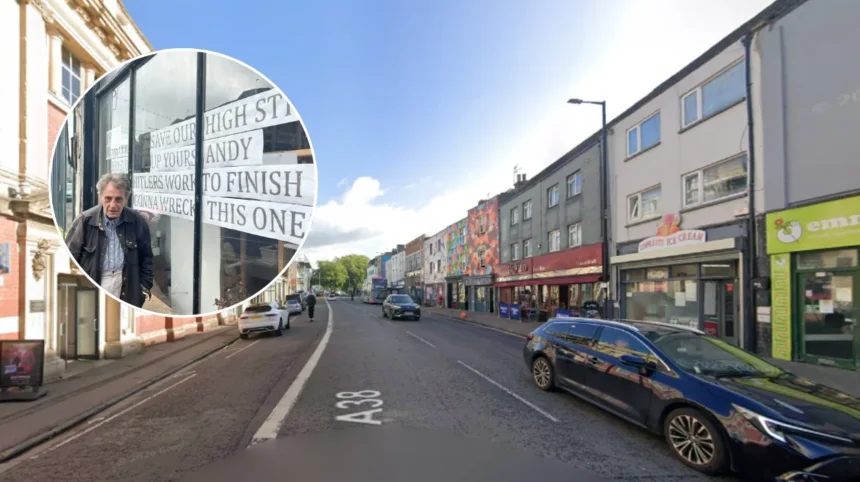
As reported by Chief Reporter Tristan Cork of Bristol Live, Duncan Neagle, who has operated an accountancy and antiques firm along Bedminster Parade for three decades, has decorated his shopfront with cryptic promotional slogans criticising the council’s proposed transport overhauls. Mr Neagle’s current window message reads:
“Prime Minister Bristol – Save Our High Street – Up Yours Andy – Hitlers Work To Finish – Gonna Wreck This One!!!”
According to Mr Cork’s report, the protest comes in direct response to a £13 million infrastructure scheme planned by Bristol City Council. The project will overhaul the Bedminster Bridge roundabout and establish a two-mile ‘Red Route’ enforced by double red lines, extending from the end of East Street, across Bedminster Parade and Redcliffe, and terminating at Bristol Bridge. Under the restrictions, drivers will be strictly prohibited from stopping their vehicles at any point along the designated route.
What Are The Specific Infrastructure Changes Planned For Bedminster Bridge?
As reported by Tristan Cork of Bristol Live, the council’s scheme entails converting the existing dual-bridge roundabout system into a series of traffic light-controlled T-junctions. Under the planned layout, the west bridge will be dedicated entirely to a two-way bus and cycle corridor, while the east bridge will be reconfigured into a single-lane, two-way carriageway for general road users.
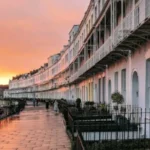
Furthermore, Mr Cork noted that the newly designated bus corridor will pass directly through the existing Nelson Parade car park. This alteration, alongside the continuous double red lines stretching from the former Tobacco Factory past local shopfronts, effectively removes short-stay vehicular stopping areas serving the northern end of Bedminster Parade.
How Have Local Business Owners Reacted To The Council’s Proposals?
In an interview conducted by Tristan Cork of Bristol Live, Duncan Neagle expressed deep dissatisfaction with both the cost and necessity of the municipal infrastructure project, stating:
“I don’t think it’s needed at all. They are spending £13 million on this and it will save the bus drivers going through a total of one traffic light. The road system works fine now – it’s not perfect, obviously – but it works well and it means people can stop here, park up, visit the businesses and we all get along.”
Addressing the historical context of his window slogan, Mr Neagle explained to Mr Cork that he was comparing post-war urban planning decisions to the destruction caused by WWII bombing raids:
“When I first opened up here 30 years ago, that place opposite was a bomb site. The damage the planners did over the years was worse than what Hitler did. This came out of the blue for many of us. We had a note in May or June saying it had been decided already, and it was all over.”
Highlighting the specific impact on short-stay shoppers, Mr Neagle told Bristol Live:
“I’ve got lots of issues with what is proposed. The biggest will be ending the car park. It’s a perfect little car park, as people can stop there, pop to the shops or businesses and get on their way. It’s being removed to make way for two bus lanes, and the Red Route will effectively kill off a lot of businesses. It’s not so much for me. I’m just getting starting with the antiques, and I have people who come over from Bath, and they would struggle to park nearby, but I’m mainly doing this for the other local businesses.”
As reported by Tristan Cork of Bristol Live, other traders along Bedminster Parade shared similar concerns regarding customer access and delivery logistics. Maddie Chappell, owner of Primrose Leaf florists, stated to Bristol Live:
“To be honest, I have been thinking seriously about this and if they bring this in I would seriously think about closing down or moving. For a start, I wouldn’t be able to park anywhere near my shop, and I go to the flower market every morning and how am I supposed to unload everything and then park up all day? But a lot of people who come here park up in that little car park, or around the corner on double yellows and run in to collect their flowers. I do a lot of weddings – and people ask me if they can come and park to collect it, and I’m not sure what I’m going to be able to tell them.”
An unnamed local shopkeeper also remarked to Mr Cork:
“It feels like a waste of time. We told them we didn’t want this in the first place, why should we think they are going to listen to us about the details now. I understand that they want to improve public transport and the buses do have to wait with the traffic, but we’re the collateral damage of this plan. We’re based on the main crossing point between South Bristol and the city centre, but it’s going to make it like a motorway outside.”
What Additional Objections And Structural Concerns Have Been Raised?
As reported by Tristan Cork of Bristol Live, Mr Neagle further claimed that red routes in other metropolitan areas lead to commercial decline, stating:
“We’ve never had these in Bristol, these Red Routes. Go and look at London, or wherever they have them. Where there’s a Red Route, all the shops are boarded up.”
In addition to commercial concerns, Mr Neagle raised structural issues regarding vehicle weights and building foundations along Nelson Parade. As reported by Bristol Live, Mr Neagle stated:
“A double decker bus weighs about 18 tons. We often get three in a convoy here, and that’s 54 tons. When they move both bus lanes to right outside, there’s a potential for 100 tons to be right outside my front door. These buildings along Nelson Parade already suffer from subsidence, and having this right outside is going to make that much worse. I am demanding an independent assessment into the vibration issues.”
To escalate his protest, Mr Neagle informed Bristol Live that he plans to update his window displays ahead of Halloween, incorporating occult-themed items and symbolic displays directed at municipal leadership.
How Have Transport Operators And Bristol City Council Responded?
Providing the perspective of public transport providers, Doug Claringbold, head of First West of England, stated in a statement reported by Bristol Live:
“We welcome measures to help keep bus lanes clear as this enables our services to move more freely across Bristol and the wider region. Effective enforcement of parking restrictions is an important part of making sure existing bus priority measures work as intended. Keeping bus lanes clear helps to speed up journey times and support punctuality, which benefits our customers and encourages more people to consider using the bus. This in turn reduces traffic congestion for all road users.”
A spokesperson for Bristol City Council confirmed the official status of the project, stating to Bristol Live:
“The red route has been agreed in principle by the Transport and Connectivity Committee, so the survey is focussed on working with businesses and residents along the route to shape and improve how it would work, including loading and parking restrictions. The introduction of a red route would mean Bristol joins a long list of other towns and cities across the UK with red routes, including London, Birmingham, Manchester, Brighton, Medway, Coventry and Reading. The Bedminster Bridges and Redcliffe Way schemes are being funded by the UK Government through the City Region Sustainable Transport Settlement, secured by the West of England Mayoral Combined Authority.”
Explore more Bedminster News:
Bristol Artists Record Youth Centre Track in Bedminster 2026
Pub AI Mural Backlash Angers Community In Bedminster 2026
Background To The Development
The introduction of Bristol’s inaugural Red Route forms part of a wider regional infrastructure policy aimed at prioritising mass transit, active travel, and reduced carbon emissions across the West of England. Funding for the £13 million initiative is drawn from the UK Government’s City Region Sustainable Transport Settlement (CRSTS), managed locally by the West of England Mayoral Combined Authority (WMCA).
Red Routes were originally introduced in London during the 1990s under the Road Traffic Act 1991 to prevent traffic obstruction on major arterial roads by placing total prohibitions on stopping, loading, and parking. Over subsequent decades, several regional UK cities—including Birmingham, Manchester, Coventry, Reading, and Edinburgh—adopted similar controls along high-density transit corridors.
In Bristol, preliminary proposals for high-priority bus corridors along Bedminster Parade and Redcliffe Way were first publicised approximately 18 months prior to the recent consultations. Council representatives previously noted that establishing strict urban transport corridors could clear physical space for long-term infrastructure developments, including potential light rail or tram network integration. While the overarching policy and statutory approvals were ratified by Bristol City Council’s Transport and Connectivity Committee, public consultation efforts remain focused on the design and allocation of designated loading bays for local businesses along the affected route.
How This Development May Affect Local Stakeholders
The implementation of the Red Route and the associated reconfiguration of the Bedminster Bridge network are anticipated to impact local business operators, commuters, and nearby residents in several distinct ways:
- Local High Street Retailers and Service Providers: Small, independent businesses that rely on quick-stop vehicular traffic—such as florists, takeaway outlets, and specialty antiques dealers—may experience a reduction in footfall due to the elimination of nearby street parking and the removal of the Nelson Parade car park. Traders without dedicated rear loading facilities may face increased logistical challenges for daily deliveries, potentially prompting business relocations or closures along Bedminster Parade.
- Public Transport Users and Commuters: Passengers utilising First West of England bus services across South Bristol are likely to see reduced journey times and higher service reliability as dedicated two-way bus lanes bypass historical bottlenecks at Bedminster Bridge. The dedicated infrastructure may encourage modal shift from private motor vehicles to public transport along key commuters routes into the city centre.
- General Road Users and Drivers: Private motorists navigating between South Bristol and the central district face reduced general traffic lane capacity, particularly with the compression of the Bedminster Bridge roundabout into single-lane, traffic-light controlled junctions. This may result in altered driving routes or localized congestion during peak travel hours.
- Property Owners along Nelson Parade: Residential and commercial property owners situated immediately adjacent to the new bus corridor may continue to raise queries regarding ground-borne vibration and structural integrity. Depending on the outcome of highway engineering reviews, local authorities may be asked to monitor structural conditions to address long-term subsidence concerns.