Key Points
- Under a new vision document presented to Bristol City Council, St Nicholas Market in Bristol is expected to be opened on Sundays and Friday-Saturday evening as well.
- In addition, other ideas for the market have been outlined, such as creating a rooftop space. There are plans for maintenance, cleaning, sign posting and advertising at the market.
- Extra security and employees may be hired for longer opening hours, as currently there are limitations on the earning capacity of the traders due to existing restrictions.
- The situation is a result of the controversy that arose a year ago, when traders had disagreements with Bristol City Council on fee increases. The latter were postponed after more than 5,000 people signed a petition against this move.
- Veteran traders like Lynn Hanby (arts and crafts stall holder for more than 30 years) and Andrew Keith-Smith (T-shirt shop owner for more than 30 years) are confident that a recently formed stakeholder group will represent their interests in future.
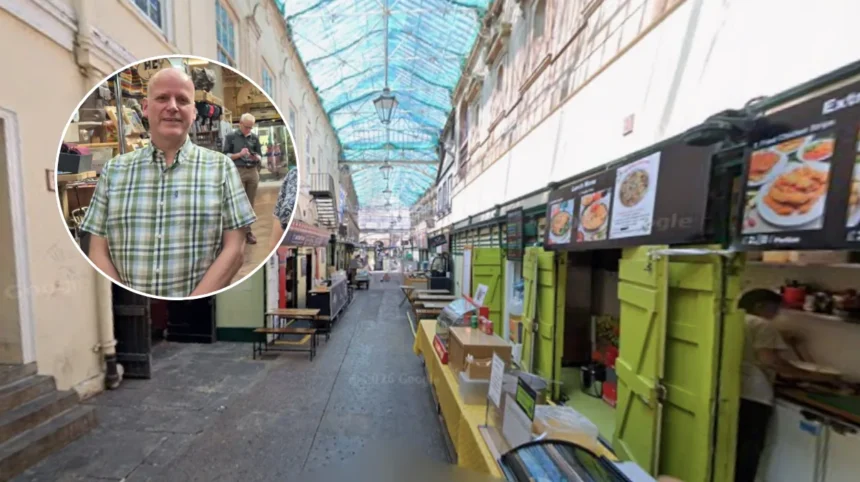
Bristol St Nicholas Market (Bristol Express News) September 28, 2026 – A hugely popular city centre market dating back to the late 1700s could extend its trading hours to include Sundays and weekend evenings under new proposals, as reported by Alex Seabrook of the Local Democracy Reporting Service (LDRS).
Later on Monday, Bristol City Council is scheduled to discuss a comprehensive new vision for St Nicholas Market, which houses the city’s largest collection of independent retailers. According to the document produced by the Local Democracy Reporting Service, current operating hours limit trader income and prevent the venue from capitalising on peak customer demand, particularly during evenings and weekends. To facilitate these changes safely, extra security and staff could be put on for Sundays or Friday and Saturday evenings.
Beyond extended hours, the council’s vision document sets out plans for better maintenance and cleaning, improved signposting, advertising, and more ambitious long-term plans such as opening a rooftop venue.
Why is this discussion taking place now following previous tensions?
The discussion regarding the market’s future arrives approximately a year after traders clashed with Bristol City Council over proposals to increase stall fees. That contentious move was ultimately deferred after more than 5,000 people signed a petition opposing the fee hikes.
In the wake of those difficulties, the establishment of a new stakeholder group has offered reassurance to traders who have spent decades operating inside the historic indoor market. Long-term trader Lynn Hanby, who has run an arts and crafts stall at St Nicholas Market for more than three decades, told the Local Democracy Reporting Service that the stakeholder group represents a step “in the right direction”.
As reported by Alex Seabrook of the Local Democracy Reporting Service, Lynn Hanby stated that: “What we’ll be looking at, alongside making sure that any changes don’t affect the viability and stability of businesses here, is that we don’t lose that essential quality that makes St Nick’s loved by everyone.”
Lynn Hanby also noted to the Local Democracy Reporting Service that:
“It’s been at times a difficult process, but I think we’ve come a long way since the beginning of that process and now we’re hopeful that we will have a proper voice at the table.”
Furthermore, regarding policy integration, Lynn Hanby stated to the Local Democracy Reporting Service that:
“Matters that affect traders’ businesses need to come to that group and need to come early enough for it to be meaningful, and to have the potential to shape policy.”
Explore more Bristol Council News:
Bristol Council Faces £14m Bill for Pay Top-Up in Bristol 2026
Bristol Council Rules Out Residents-Only Rat Run Scheme In Bristol 2026
How have independent traders reacted to the new council vision?
Reaction among long-standing business owners has been largely positive regarding the collaborative approach being adopted by the local authority. Andrew Keith-Smith, who runs a T-shirt shop and stall at the market and has also been trading there for over 30 years, expressed enthusiasm about the trajectory of the discussions.
As reported by Alex Seabrook of the Local Democracy Reporting Service, Andrew Keith-Smith stated that he was “delighted” with the move, adding:
“It’s been quite a journey… it’s been really quite gratifying to see that we’ve progressed to a stage, where traders feel their voices are being heard and incorporated into the future strategy that the market direction is going in.”
Concluding his remarks reported by the Local Democracy Reporting Service, Andrew Keith-Smith stated: “I think there’s an awful lot of love for St Nicholas Market, its independent spirit and its unique nature.”
Background of the particular development
St Nicholas Market has long served as a vital cultural and commercial hub in the heart of Bristol, representing the city’s largest concentration of independent traders and occupying a historic footprint dating back to the late 18th century. Over recent years, the relationship between market vendors and Bristol City Council experienced friction, notably catalysed by disputes over proposed fee increases that threatened the financial viability of small businesses.
The strong public backlash, evidenced by a petition signed by over 5,000 citizens, forced the local authority to defer those measures and reconsider its engagement strategy. This current policy shift toward extended weekend and evening openings, coupled with the creation of a dedicated stakeholder consultation framework, stems directly from the necessity to rebuild trust, safeguard the market’s independent character, and find sustainable economic models that support both traders and civic management.
The potential transition toward Sunday and weekend evening trading, alongside structural improvements like enhanced security, cleaning, and long-term ambitions such as a rooftop venue, is poised to reshape the economic landscape for St Nicholas Market vendors and local visitors. For the particular audience of independent traders, small business owners, and regular city-centre shoppers, these changes offer a dual prospect: increased revenue opportunities by tapping into peak evening and weekend footfall, paired with the reassurance of a formalized stakeholder voice in council policymaking.
However, success will depend heavily on balancing extended operational costs—such as staffing and security—with manageable overheads for micro-businesses, ensuring that the unique, historic charm and affordability cherished by the local community are not compromised by commercial expansion.