
Moving from Cardiff to Bristol is a cross-border relocation between two closely connected UK cities. The move involves changing from Wales to England while remaining within the same regional travel corridor. Housing costs, employment, transport, council services, healthcare administration and everyday routines are the main differences to plan.
- Why are people moving to Bristol from Cardiff?
- How far is Bristol from Cardiff?
- What is the main difference between living in Bristol and Cardiff?
- How much does housing cost in Bristol compared with Cardiff?
- Which Bristol areas are suitable for someone moving from Cardiff?
- How should you budget for moving from Cardiff to Bristol?
- What is commuting from Bristol to Cardiff like?
- What public transport options are available after moving to Bristol?
- What changes when moving from Wales to England?
- How should families plan a move from Cardiff to Bristol?
- What should renters know before moving to Bristol from Cardiff?
- What should homeowners know before buying in Bristol?
- How can someone move their belongings from Cardiff to Bristol?
- What should Cardiff residents do before moving to Bristol?
- Is moving from Cardiff to Bristol a good option for long-term living?
- What should you check before moving from Cardiff to Bristol?
Cardiff and Bristol are separated by roughly 26 miles (42 km) between their central railway stations. Direct rail services connect Cardiff Central with Bristol Temple Meads, and Transport for Wales describes the journey as usually taking less than an hour.
The short distance makes Bristol practical for people already familiar with South Wales and the wider Severn corridor. The relocation still requires careful preparation because Bristol is governed by English local authorities and operates under English public-service systems.
Why are people moving to Bristol from Cardiff?
People move from Cardiff to Bristol for access to a larger South West employment market, different housing choices, universities, business districts and cultural opportunities while remaining close to Wales. The direct rail connection also keeps Cardiff accessible for family, work and leisure.
Bristol is a major city in South West England and the administrative centre of the Bristol local authority. It developed as an important port and commercial centre around the River Avon. Modern Bristol has a diversified economy covering professional services, engineering, creative industries, technology, education, healthcare and advanced manufacturing.
Cardiff is the capital of Wales and the country’s largest city. Its economy also has strong professional, public-sector, education, media and financial services sectors.
The two cities therefore have substantial economic overlap. A person moving to Bristol does not necessarily sever links with Cardiff. The rail distance supports continued travel between both cities.
The relocation also changes the national administration surrounding everyday life. Cardiff residents are moving from Wales to England. This affects council services, education administration, transport arrangements and some healthcare processes.
How far is Bristol from Cardiff?
Bristol and Cardiff are approximately 26 miles apart by the direct rail route between Cardiff Central and Bristol Temple Meads. Direct trains provide a fast connection, with typical journeys taking under an hour and making regular cross-city travel practical.
Cardiff Central is the principal railway station in central Cardiff. Bristol Temple Meads is Bristol’s major railway station and an important gateway to the city centre.
Transport for Wales identifies Cardiff-to-Bristol as a direct rail journey and describes Bristol as usually less than an hour from Cardiff Central.
Current journey information also shows an average Cardiff Central to Bristol Temple Meads rail journey of about 57 minutes over approximately 42 kilometres, with direct trains available. Exact journey times depend on the service and timetable.
Road travel uses the M4 corridor for much of the journey. The Severn crossings form an important part of the road connection between South Wales and South West England.
This proximity is important for movers. A Cardiff resident can relocate to Bristol without becoming geographically distant from Cardiff. Weekend visits, family journeys and occasional work trips remain relatively straightforward.

What is the main difference between living in Bristol and Cardiff?
The biggest difference is administrative and economic rather than geographic. Bristol is an English city in South West England, while Cardiff is the Welsh capital. Moving to Bristol therefore changes local government, public services, transport arrangements and the surrounding housing and employment market.
Cardiff operates within Wales’s devolved public-service framework. Bristol operates within England’s local-government and public-service framework.
The distinction affects practical administration. Education, health, transport and local-government services have different structures across the Welsh-English border.
Bristol’s location also places residents closer to other major South West destinations. Bath, Gloucester, Cheltenham and the wider South West become part of the regional travel network.
Cardiff provides direct access to South Wales destinations such as Newport, Swansea and the Valleys. Bristol provides a stronger geographical connection with the South West of England.
The cities retain similar advantages in several areas. Both have universities, major hospitals, historic districts, cultural venues, green spaces and established public-transport networks.
The important relocation issue is therefore not simply distance. It is the change in the administrative system surrounding everyday life.
How much does housing cost in Bristol compared with Cardiff?
Housing in Bristol is substantially more expensive than in Cardiff. In July 2026, Bristol’s average house price was £352,000 compared with £272,000 in Cardiff, while average private rent was £1,883 in Bristol compared with £1,177 in Cardiff.
The Office for National Statistics reported an average Bristol house price of £352,000 in July 2026. The corresponding Cardiff figure was £272,000.
That represents a difference of approximately £80,000 in the average property price.
The rental gap is also significant. Bristol’s average private rent reached £1,883 per month in August 2026, compared with £1,177 in Cardiff.
The difference affects relocation budgets.
A renter moving from Cardiff to Bristol needs to reassess monthly housing expenditure rather than simply transferring an existing Cardiff budget. A homeowner also needs to examine mortgage affordability, deposit requirements and property taxes.
Bristol’s average first-time buyer price was £313,000 in July 2026. Cardiff’s corresponding figure was £234,000.
Property averages cover an entire local authority. Prices differ considerably between neighbourhoods and property types. Buyers therefore need local comparisons before choosing a specific area.
Which Bristol areas are suitable for someone moving from Cardiff?
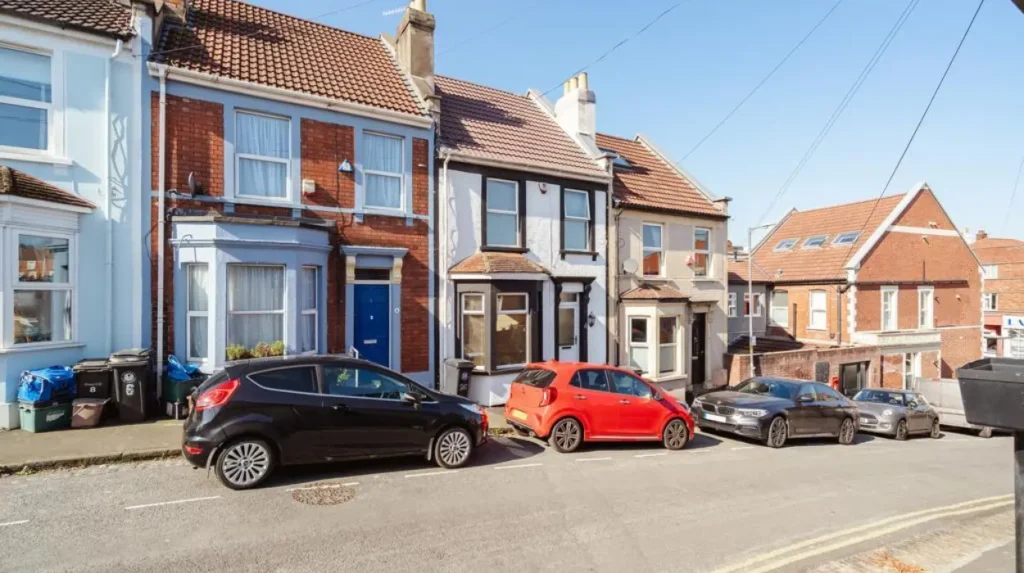
Suitable Bristol areas depend on budget, commuting needs, household size and lifestyle. Central districts offer shorter city journeys, while areas such as Clifton, Redland, Bishopston, Bedminster, Southville, Horfield and Fishponds provide different housing and neighbourhood environments.
Clifton is a well-known residential district close to central Bristol and the University of Bristol. It includes substantial Georgian and Victorian architecture and sits close to Clifton Suspension Bridge.
Redland and Bishopston provide established residential streets with access to independent shops, cafés, schools and transport routes.
Southville and Bedminster sit south of the city centre and provide access to North Street, local businesses and central Bristol.
Horfield and Fishponds provide additional residential choices with connections towards the city centre and employment areas.
St George provides access to green space and established residential neighbourhoods east of the centre.
Stoke Bishop and Henleaze are established northern areas with larger residential properties and proximity to green space.
People moving from Cardiff should compare neighbourhoods according to daily destinations rather than reputation alone. A workplace near Temple Quarter creates different priorities from a workplace near the University of Bristol or Southmead Hospital.
How should you budget for moving from Cardiff to Bristol?
A Bristol relocation budget should include rent or mortgage costs, deposit requirements, removal expenses, transport, council tax, utilities, insurance and initial household costs. Bristol’s higher average housing costs make the monthly affordability calculation especially important.
Renters normally need money for a tenancy deposit and initial rent. The exact amount depends on the tenancy agreement and applicable legal requirements.
Homebuyers need to budget for the property deposit, mortgage costs, legal fees, surveys, removals and other transaction expenses.
Moving costs also depend on the quantity of furniture and the distance between the old and new properties. Cardiff-to-Bristol is a relatively short relocation route, but larger household moves still require professional planning.
Council tax forms another recurring expense. The exact amount depends on the Bristol property band and the applicable local authority charge.
Utilities include electricity, gas where applicable, water, broadband and mobile services. New residents should arrange essential services before or immediately after moving.
The higher Bristol rent average makes income-to-housing-cost calculations particularly important for renters. ONS figures show Bristol’s average private rent substantially above Cardiff’s current average.
What is commuting from Bristol to Cardiff like?
Commuting between Bristol and Cardiff is supported by direct railway services and the M4 road corridor. The train journey between Cardiff Central and Bristol Temple Meads is generally under an hour, making occasional cross-border commuting practical.
Rail travel is particularly useful for commuters who work in central Cardiff or central Bristol.
Cardiff Central provides direct access to Bristol Temple Meads. Bristol Temple Meads connects passengers with Bristol’s wider rail network.
Transport for Wales states that Cardiff-to-Bristol journeys can be completed in less than an hour by train.
Driving provides another option through the M4 corridor. Road journey times vary according to traffic, incidents, weather and peak travel conditions.
People relocating for work should calculate the complete commuting cost. This includes tickets, parking, fuel, vehicle maintenance and travel time.
A Bristol resident working in Cardiff should also consider the frequency of required office attendance. A hybrid worker travelling twice a week has a different transport requirement from someone commuting five days a week.
What public transport options are available after moving to Bristol?
Bristol’s public transport network includes buses and rail services, with additional active-travel infrastructure across the city. Residents can combine local transport with regional trains for journeys to Cardiff, Bath, South Gloucestershire and other surrounding destinations.
Buses form an important part of daily travel within Bristol. Services connect residential areas with the city centre and major employment, education and shopping destinations.
Rail services operate from stations including Bristol Temple Meads and Bristol Parkway. Temple Meads provides the most direct central-city connection for Cardiff travellers.
Cycling is also significant in Bristol. The city has established cycling routes and active-travel infrastructure.
Walking works well for some central neighbourhoods because many destinations are concentrated within a relatively compact urban area.
New residents should identify their workplace, nearest supermarket, GP surgery, railway station and regular leisure destinations before deciding whether to own a car.
Transport choices can influence neighbourhood selection as strongly as property price.
What changes when moving from Wales to England?
Moving from Wales to England changes the public-service and administrative framework surrounding daily life. Bristol residents use English systems for local government, education and many public services, while Cardiff residents previously used corresponding Welsh systems.
The United Kingdom contains separate legal and administrative systems in several policy areas. Wales and England therefore operate distinct arrangements even though both form part of the UK.
The NHS remains a UK-wide public healthcare institution, but services are administered differently in England and Wales. Registration and local service arrangements therefore need checking after relocation.
Education also operates through separate Welsh and English systems. School admissions, curricula and local authority procedures differ.
Transport policy is similarly divided between national and regional institutions.
For most movers, these differences are manageable. They require administrative updates rather than major disruption.
The practical rule is simple: register with the appropriate Bristol-area services after moving instead of continuing to rely on Cardiff-based arrangements.
How should families plan a move from Cardiff to Bristol?
Families should assess schools, childcare, housing size, commuting distances, green space and healthcare access before choosing a Bristol neighbourhood. The best location depends on the family’s daily destinations, property budget and preferred balance between urban access and residential space.
School admissions require particular attention. Families moving into Bristol should review the relevant Bristol City Council admissions information and identify schools serving the intended address.
The location of a home affects school accessibility. A property near one school does not automatically guarantee a place.
Families should also calculate commuting time for each working adult. A larger property farther from employment centres can produce additional transport costs.
Green space is another important consideration. Bristol includes large parks, recreational areas and accessible outdoor spaces.
Childcare arrangements require separate planning. Nursery availability, opening hours and travel distances should form part of the relocation decision.
Families moving from Cardiff should also transfer healthcare arrangements where appropriate and identify local GP, dental and pharmacy services.
What should renters know before moving to Bristol from Cardiff?
Renters should compare Bristol neighbourhoods, calculate the full monthly housing cost, verify tenancy terms and budget for the deposit and moving expenses. They should also confirm property condition, transport access and local services before signing a tenancy.
Bristol’s average private rent was £1,883 per month in August 2026 according to ONS data. Cardiff’s average was £1,177.
Those figures are citywide averages. Individual properties vary by location, size, condition and type.
Renters should inspect properties carefully and confirm the tenancy agreement before committing.
The property location should be assessed at different times of day. Traffic, parking, public transport and local amenities affect practical living conditions.
The commute should be tested before signing a long-term tenancy where possible.
Tenants should also understand the responsibilities set out in the tenancy agreement, including rent payments, repairs, utilities and property access.
What should homeowners know before buying in Bristol?
Homebuyers should compare Bristol neighbourhoods using property prices, commuting distances, school access, local amenities and long-term affordability. Current ONS figures show Bristol has a substantially higher average house price than Cardiff, making detailed financial planning essential.
Bristol’s average house price was £352,000 in July 2026. Cardiff’s was £272,000.
Bristol’s property market includes flats, terraced houses, semi-detached houses and detached homes.
In July 2026, ONS recorded Bristol averages of £246,000 for flats and maisonettes, £388,000 for terraced properties, £452,000 for semi-detached properties and £696,000 for detached properties.
Cardiff’s corresponding figures were lower, including an average of £161,000 for flats and maisonettes, £262,000 for terraced homes, £325,000 for semi-detached homes and £519,000 for detached homes.
These figures demonstrate why property type is essential when comparing the two cities.
How can someone move their belongings from Cardiff to Bristol?
A Cardiff-to-Bristol household move is a relatively short-distance relocation, but preparation still reduces cost and disruption. Movers should inventory possessions, arrange transport, protect valuable items, confirm access arrangements and schedule utilities around the moving date.
A small move can use a van or self-drive vehicle. Larger household relocations often require a removal company.
The moving route should account for the property locations rather than simply the city centres. Parking access, narrow streets, controlled areas and building access can affect loading and unloading.
Residents should separate essential items needed immediately after arrival from possessions that can remain packed.
Important documents should travel securely with the household rather than inside an inaccessible removal container.
The final meter readings at the Cardiff property and initial readings at the Bristol property should be recorded where relevant.
A moving checklist should cover the former property, journey and new property separately.
What should Cardiff residents do before moving to Bristol?
Before moving, Cardiff residents should secure accommodation, organise employment and finances, arrange removals, update addresses, plan healthcare and transport, and confirm school or childcare arrangements where relevant. Completing these steps early reduces administrative problems after arrival.
The first stage is to confirm the Bristol property and moving date.
The second stage is to calculate the complete relocation budget.
The third stage is to arrange transport and essential services.
Address changes should cover banks, insurers, employers, government records and other organisations that require a residential address.
Families should address school admissions and childcare separately.
People working remotely should confirm broadband availability before moving into a property where reliable connectivity is essential.
Car owners should update vehicle and insurance information when their residential address changes.
The process is straightforward when organised as a sequence rather than handled entirely on moving day.
Explore More Area Guide
Moving to Bristol From Manchester: Complete Relocation Guide
Moving to Bristol From Birmingham: Complete Relocation Guide
Is moving from Cardiff to Bristol a good option for long-term living?
Moving from Cardiff to Bristol provides access to a major English city while retaining close connections with South Wales. The decision depends mainly on employment, housing affordability, transport requirements, household needs and the long-term value of Bristol’s location.
Bristol offers a large employment market, universities, cultural institutions, green spaces and connections across South West England.
Its strongest financial disadvantage is housing cost relative to Cardiff. ONS data show both purchase prices and private rents are substantially higher in Bristol.
Its geographical advantage is the close connection with Cardiff. Direct rail services make cross-border travel practical, while the M4 provides a major road connection.
For people whose careers, education or household circumstances align with Bristol, the move can represent a logical long-term relocation.
The decision should be based on actual neighbourhood-level costs and daily travel requirements rather than citywide reputation.
What should you check before moving from Cardiff to Bristol?
The key checks are housing affordability, employment location, commuting costs, council services, healthcare, schools, transport, utilities and moving logistics. Bristol’s higher housing costs require particular attention when converting an existing Cardiff household budget to Bristol living costs.
Bristol and Cardiff remain closely connected cities, but they are not interchangeable housing or administrative markets.
The most important financial comparison is housing. Current ONS data show Bristol’s average house price and private rent materially above Cardiff’s.
The most important transport consideration is the location of the new home relative to work and major stations.
The most important administrative difference is the move from Welsh to English public-service arrangements.
The most important practical decision is neighbourhood selection.
A successful Cardiff-to-Bristol relocation therefore begins before the removal van arrives. Comparing housing, employment, transport and services provides a stronger basis for choosing where and how to live in Bristol.
Is Bristol more expensive than Cardiff?
Yes. Bristol is more expensive than Cardiff for both housing and private rent. In July 2026, the average Bristol house price was £352,000 compared with £272,000 in Cardiff. Average private rent was also higher in Bristol.