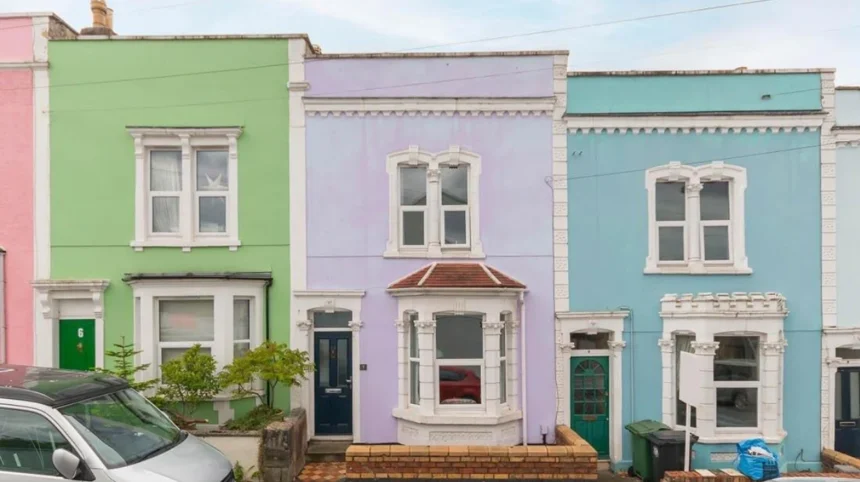
Bristol’s property market includes Victorian terraces, Georgian townhouses, modern city-centre apartments, suburban family homes and new-build developments. Understanding local house prices, rental demand, transport links, employment opportunities and planning policies helps buyers, sellers, landlords and renters make informed property decisions.
- What defines the Bristol property market?
- How much does property cost in Bristol?
- How has Bristol’s property market changed over time?
- Which Bristol neighbourhoods offer different property opportunities?
- Is Bristol a good place to buy a property?
- What are Bristol’s current rental market conditions?
- How do new developments affect Bristol’s property market?
- What risks should property buyers and investors consider in Bristol?
- What is the process for buying a property in Bristol?
- What does the future hold for Bristol’s property market?
- How can readers make informed Bristol property decisions?
What defines the Bristol property market?
The Bristol property market covers residential property sales, private rentals, affordable housing and new developments within the City of Bristol. Its prices reflect location, property type, household income, employment access, transport connections, housing supply and demand from local buyers and tenants.
Bristol is a major city in South West England. Its housing market serves first-time buyers, families, professionals, students, landlords, retirees and people relocating from other parts of the United Kingdom.
The market includes established residential neighbourhoods, central apartments, suburban housing estates and regeneration areas. Each segment has different prices, property conditions, transport options and living costs.
The Office for National Statistics (ONS) publishes local house price and private rental data using information from HM Land Registry and other official housing statistics. These figures provide a consistent way to assess market conditions rather than relying exclusively on estate agent asking prices.
According to the ONS, Bristol’s average house price reached approximately £357,000 in June 2026, representing a 3.5% annual increase. The average was higher than the South West regional average of £305,000 for the same month. These figures are provisional and are subject to revision.
This distinction matters because Bristol is not a single-price market. A flat near the city centre and a detached family house in an outer neighbourhood serve different budgets and housing requirements.
How much does property cost in Bristol?
Bristol property prices vary by housing type, size and location. Official June 2026 figures placed the average house price at £357,000, with detached houses averaging £696,000, semi-detached homes £452,000, terraced properties £388,000 and flats £246,000.
These figures provide a useful starting point for comparing properties. They represent average completed-sale prices across the local authority area, not guaranteed prices for individual homes.
The ONS and HM Land Registry reported the following average prices in Bristol in June 2026.
- Detached houses: £696,000.
- Semi-detached houses: £452,000.
- Terraced houses: £388,000.
- Flats and maisonettes: £246,000.
Detached properties generally provide more internal space and private outdoor areas, while flats often offer a lower entry price. Terraced houses appeal to buyers who want more space than a typical apartment without paying detached-house prices.
These averages also reflect the mix of homes sold during the reporting period. A month with more expensive detached-house transactions produces a different overall average from a month dominated by smaller flats.
What affects the final purchase price?
The asking price is only one part of a property’s financial cost. Buyers also need to consider the deposit, mortgage interest, legal fees, survey costs, moving expenses, maintenance and applicable property taxes.
For leasehold flats, service charges and ground rent provisions require particular attention. Buyers should examine the lease, planned building works, reserve funds and any restrictions on alterations or subletting.
For older houses, the survey should assess roof condition, damp, insulation, windows, drainage and structural movement. Bristol’s historic housing stock makes these checks especially relevant when purchasing period properties.
Comparing recently completed sales for similar properties on the same street provides a stronger valuation reference than comparing a home with a different property type in another neighbourhood.
How has Bristol’s property market changed over time?
Bristol’s housing market developed through industrial expansion, population growth, suburban development and the conversion of older buildings into modern homes. Its current market combines historic housing, post-war estates, regenerated urban districts and contemporary apartment developments.
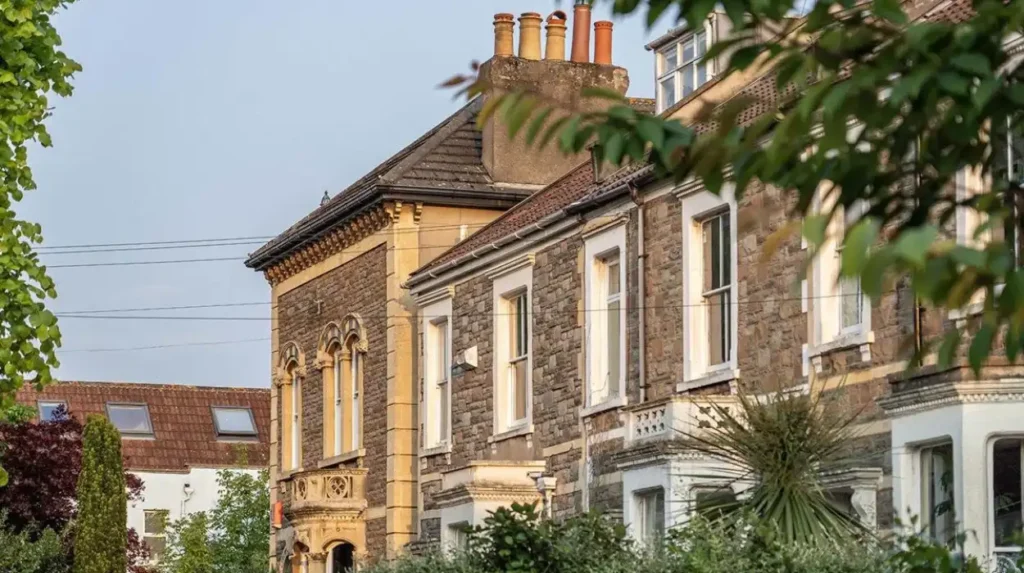
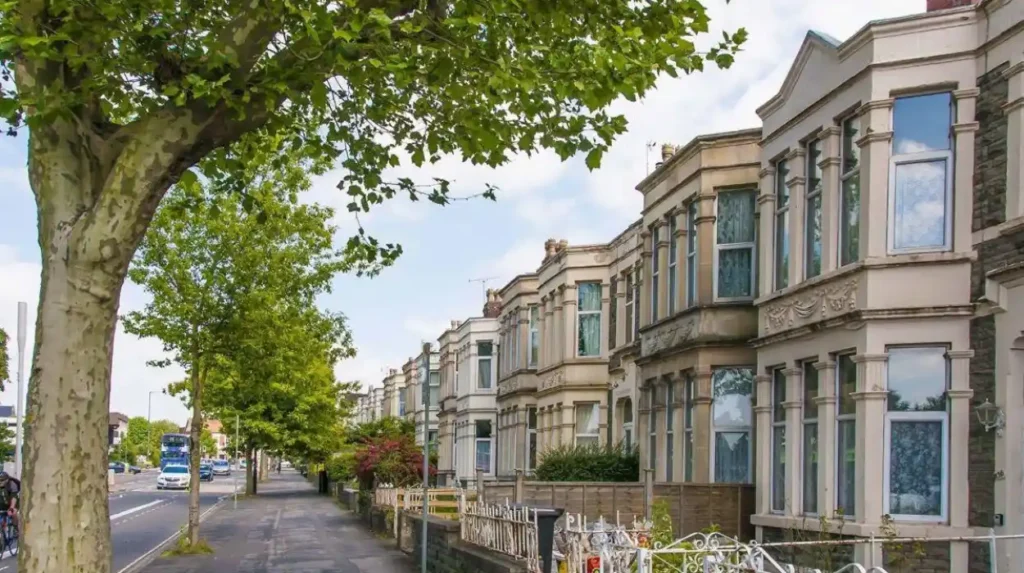
Bristol’s historic prosperity as a port and commercial centre shaped its built environment. Georgian terraces, Victorian streets and traditional workers’ housing remain important parts of the city’s residential landscape.
During the nineteenth century, industrial employment and population growth increased demand for housing. Residential development expanded beyond the historic centre as transport networks and employment locations changed.
Twentieth-century development introduced new suburban housing, public housing estates and redevelopment schemes. These changes created a wide range of housing types and neighbourhood layouts across the city.
More recent regeneration has increased the residential role of former industrial and commercial locations. Areas around the Floating Harbour, Temple Quarter and other central districts have attracted apartment developments, employment projects and improvements to public spaces.
Bristol’s property market also reflects wider national changes. Mortgage availability, interest rates, inflation, construction costs and household incomes influence how much buyers can afford.
Why does historical housing matter to buyers?
Historic housing can offer distinctive architecture, established streets and convenient access to central amenities. However, older buildings require careful maintenance and sometimes specialist repairs.
Buyers considering Georgian or Victorian homes should check whether a property is listed or lies within a conservation area. Listed building controls and conservation policies affect certain alterations, including changes to windows, external materials and building features.
Energy efficiency is another important consideration. Solid walls, older heating systems and single-glazed windows can increase energy consumption. Improvements require suitable materials and careful assessment of moisture management.
A modern apartment presents different considerations, including building management, service charges, fire safety documentation, lift maintenance and lease terms.
The age of a property does not determine its overall value by itself. Condition, location, usable space, maintenance costs and buyer demand remain central to a reliable assessment.
Which Bristol neighbourhoods offer different property opportunities?
Bristol’s residential areas provide different combinations of property styles, transport access, local services and prices. Clifton, Redland, Bedminster, Southville, Bishopston, Horfield, Fishponds and the city centre each contain distinct housing markets and lifestyle considerations.
Neighbourhood comparisons help buyers narrow their search before arranging viewings. The right location depends on budget, household size, commuting requirements, schools, accessibility and preferred property type.
Clifton and Redland
These established residential areas include Georgian and Victorian houses, period conversions and apartments. Buyers often investigate access to green spaces, independent shops, schools and central Bristol employment. Historic building maintenance and conservation restrictions deserve attention.
Bedminster and Southville
These inner-south neighbourhoods feature terraced houses, renovated properties and access to local shopping streets. Buyers compare walking routes, bus connections, property condition and the distance to employment around the centre and Temple Meads.
Bishopston and Horfield
These northern areas include Victorian and Edwardian terraces, family homes and residential streets with local amenities. Buyers assess commuting routes, school access, garden space and the cost of maintaining older buildings.
Fishponds and outer residential districts
These areas offer a mixture of traditional terraces, semi-detached houses and suburban properties. Buyers compare floor space, parking, garden access and bus journeys with their available budget.
Bristol city centre and Harbourside
Central locations contain modern apartments, converted buildings and flats near offices, restaurants and cultural venues. Buyers and investors examine service charges, lease terms, building management and the relationship between purchase price and achievable rent.
How should buyers compare neighbourhoods?
A practical comparison starts with the total monthly cost rather than the property price alone. Mortgage payments, commuting expenses, council tax, utilities and maintenance all affect affordability.
Buyers should visit shortlisted streets at different times of day. Traffic, parking availability, noise, street lighting and pedestrian access can vary considerably within the same neighbourhood.
School catchments and admissions arrangements require separate verification through the relevant local authority and school. A property’s address does not guarantee admission to a particular school.
Likewise, proximity to a station or bus route should be assessed using actual journey times and service frequency. A map distance alone does not establish how convenient a daily commute will be.
Is Bristol a good place to buy a property?
Bristol offers property options for first-time buyers, growing families, professionals and long-term homeowners. Purchase suitability depends on affordability, employment stability, property condition, mortgage costs, household needs and the length of time a buyer intends to remain.
The city’s employment base, universities, transport connections and range of neighbourhoods support residential demand. However, a strong local economy does not make every property affordable or guarantee future price growth.
First-time buyers should begin with a mortgage agreement in principle and a realistic deposit budget. The ONS reported an average first-time buyer purchase price of £317,000 in Bristol in June 2026, up 3.8% from the previous year.
That figure is a market benchmark, not a minimum price. Individual first-time buyers purchase different property types across a range of neighbourhoods.
What should first-time buyers calculate?
A purchase budget should include the deposit and all associated transaction costs. Buyers also need to maintain emergency savings after completion rather than using every available pound for the deposit.
Mortgage affordability depends on income, existing debt, household expenditure, interest rates and the lender’s criteria. The advertised mortgage rate does not guarantee approval or determine the amount a specific applicant can borrow.
Buyers should also understand the difference between a fixed-rate mortgage, where the interest rate remains fixed for an agreed period, and a variable-rate mortgage, where payments respond to changes in the applicable rate.
For homes requiring renovation, obtain realistic quotations before committing to the purchase. Electrical work, heating upgrades, roof repairs and structural improvements can materially increase the total cost.
What should families consider?
Families often prioritise additional bedrooms, outdoor space, school access and practical commuting routes. These requirements can shift the search from central flats towards terraced, semi-detached or detached houses in suitable residential areas.
The decision also involves future flexibility. A household planning to work remotely, accommodate relatives or expand its family should consider the layout and adaptability of a property.
Buyers who expect to relocate within a short period need to account for selling costs and the possibility that market conditions will change before resale.
A property purchase works best when the financial commitment fits the household’s circumstances without relying on assumed future price increases.
What are Bristol’s current rental market conditions?
Bristol’s private rental market serves students, graduates, professionals, families and relocating workers. The ONS recorded average monthly private rent of £1,880 in July 2026, a 6.5% annual increase from £1,765 in July 2025.
Rental costs vary by property size, location, condition and tenancy arrangements. Central apartments attract tenants seeking access to offices, restaurants and transport, while houses in residential neighbourhoods accommodate households requiring additional bedrooms.
Official ONS figures for July 2026 show how rents differed by bedroom count:
- One-bedroom properties: £1,223 per month.
- Two-bedroom properties: £1,541 per month.
- Three-bedroom properties: £1,755 per month.
- Properties with four or more bedrooms: £2,542 per month.
These figures represent averages across Bristol, not guaranteed asking rents for a particular property. The actual rent depends on the individual home and local competition.
What should tenants budget for?
Tenants should calculate the full cost of renting rather than focusing exclusively on monthly rent. Other expenses include energy bills, water, broadband, council tax where payable, transport and household contents insurance.
Before signing a tenancy agreement, tenants should check the rent, deposit arrangements, repair responsibilities, inventory, notice provisions and applicable legal protections.
A property viewing should include checks of heating, ventilation, water pressure, windows, locks and visible signs of damp. Tenants should document existing damage and retain copies of the inventory and relevant communications.
How do landlords assess rental demand?
Landlords assess comparable rents, vacancy periods, maintenance costs and the characteristics of local tenants. Proximity to universities, hospitals, employment centres and public transport influences the tenant market for particular properties.
Gross rental yield provides an initial comparison between annual rent and the purchase price.
\[ \text{Gross rental yield}=\frac{\text{Annual rent}}{\text{Purchase price}}\times100 \]
For example, a property purchased for £250,000 and rented for £1,250 per month generates £15,000 in annual rent. Its gross yield is 6%.
Gross yield excludes mortgage interest, repairs, insurance, letting fees, tax, service charges and periods without a tenant. Net income therefore provides a more meaningful measure of the property’s financial performance.
Landlords should also check current tenancy law, property licensing requirements, gas and electrical safety obligations, energy performance requirements and deposit protection rules before letting a home.
How do new developments affect Bristol’s property market?
New housing developments increase the range of homes available to Bristol residents and influence local housing supply. Their market effects depend on completion rates, affordability, location, infrastructure, construction costs and the balance between new homes and household demand.
Development changes Bristol’s property market by introducing additional housing types and bringing underused land into residential use. Projects include apartment buildings, mixed-use schemes, affordable housing and family homes.
Bristol City Council’s Homes for Bristol: Interim Affordable Housing Delivery Plan 2025–27 sets out the city’s approach to delivering affordable housing. The council reported 607 affordable homes delivered during 2023/24 and 1,390 affordable homes delivered between 2021/22 and 2023/24.
Affordable housing includes homes offered through arrangements such as social rent, affordable rent and eligible affordable homeownership schemes. These options serve households that cannot meet their housing needs through the full private market.
Where do development policies fit in?
The Bristol Local Plan provides a framework for decisions about land use, housing and development. Planning policies guide where homes are built, the form of development and the infrastructure needed to support communities.
Developers must follow the planning requirements that apply to each site. Depending on the scheme, these include requirements concerning design, transport, environmental effects, affordable housing and contributions to local infrastructure.
The council publishes development monitoring reports and evidence about housing delivery, helping residents and property professionals understand construction activity and planning performance.
What should buyers check before purchasing a new-build home?
Buyers should review the developer’s track record, construction specification, completion timetable, warranty arrangements and management provisions. They should also examine the surrounding development plan rather than evaluating the property in isolation.
Important checks include:
- Whether the property has the required building and completion documentation.
- Whether roads, public transport and local facilities are already available or remain planned.
- Whether the home carries a new-build warranty.
- Whether service charges apply to communal areas.
- Whether the purchase contract explains the completion date and remedies for delay.
Buyers should verify planning permissions and approved plans with the relevant authority. Marketing illustrations do not establish that every proposed feature or neighbouring development will be completed exactly as shown.
What risks should property buyers and investors consider in Bristol?
Bristol property buyers and investors face financial, structural, legal and market risks. Mortgage affordability, unexpected repairs, changing rental conditions, lease restrictions, planning decisions and environmental hazards all affect the long-term cost and suitability of a property.
The first risk is overpaying. An attractive property can still represent poor value if its price exceeds comparable completed sales or the buyer’s sustainable budget.
Mortgage risk also deserves attention. A buyer using a variable-rate mortgage should assess whether repayments remain manageable if interest rates increase. A buyer using a fixed-rate mortgage should understand what happens when the fixed period ends.
Structural and maintenance risks vary by property age and construction. A qualified surveyor can identify problems that require specialist investigation before exchange of contracts.
What legal and environmental checks matter?
Buyers should establish whether a property is freehold or leasehold. Freehold generally provides ownership of the property and land, subject to applicable law, while leasehold ownership gives rights for a defined term under a lease.
Leasehold buyers should examine remaining lease length, service charges, ground rent provisions, planned major works and restrictions on property use. A solicitor should explain the legal and financial implications before the purchase proceeds.
Environmental checks are also important. Bristol’s rivers, harbour, slopes and varied urban landscape mean buyers should assess flood risk, drainage, ground conditions and any relevant contamination history for the specific address.
The Environment Agency’s flood-risk information and the property’s survey provide useful starting points. Insurance availability and premiums should be confirmed before the transaction becomes unconditional.
How should landlords manage investment risk?
Landlords need to distinguish rental income from actual profit. A property with a high advertised yield can still deliver weak returns when maintenance, financing, taxation, management and vacancy costs are included.
They should calculate projected income using realistic rents and maintain reserves for repairs and periods without a tenant. They should also review licensing rules, fire safety, energy efficiency and current landlord obligations.
Property investment should be assessed against the investor’s financial circumstances, time horizon and capacity to absorb losses. Past price growth does not guarantee future capital appreciation.
What is the process for buying a property in Bristol?
Buying a Bristol property involves setting a budget, obtaining mortgage advice, researching locations, viewing suitable homes, making an offer, arranging a survey, completing legal checks and exchanging contracts before completion. Each stage reduces financial or legal uncertainty.
The buying process begins with establishing affordability. Buyers should account for their deposit, mortgage repayments, transaction costs and expected maintenance before deciding on a maximum offer.
Next, research completed sales and arrange viewings. When a suitable home is identified, the buyer submits an offer through the estate agent or seller.
An accepted offer does not normally create a legally binding residential property sale in England. The transaction becomes legally binding at exchange of contracts, subject to the contract terms.
Which checks should take place before exchange?
The buyer’s solicitor conducts searches and reviews the legal title, contract and relevant property documents. The buyer arranges a survey appropriate to the building’s age and condition.
Mortgage lenders usually require a valuation for lending purposes. This valuation is not a substitute for a detailed building survey.
Buyers should resolve significant survey findings, clarify boundaries and rights of way, and confirm the source and availability of funds before exchanging contracts.
After exchange, the parties proceed towards completion according to the agreed contract. On completion, the purchase funds are transferred, the buyer receives the keys and the solicitor handles the relevant registration and tax requirements.
The applicable Stamp Duty Land Tax rules depend on the purchase price, buyer circumstances and current legislation. Buyers should confirm the rules in force when purchasing rather than relying on outdated thresholds.
Explore More Area Guide
Bristol Property Developments: Housing and Regeneration Guide
Victorian Homes in Bristol: History, Features and Areas
What does the future hold for Bristol’s property market?
Bristol’s future property market will depend on housing delivery, household incomes, mortgage affordability, employment, transport investment and planning policy. Monitoring official sale prices, rents and construction data provides a stronger basis for decisions than relying on forecasts alone.
Housing affordability remains a central issue. Rising prices increase the deposit and income required to purchase a home, while rising rents place pressure on households saving for ownership.
The council’s affordable housing programme and planning framework address aspects of housing supply and access. Their impact depends on the number of homes completed, their affordability, their locations and the needs of local households.
Transport improvements and employment development can influence the attractiveness of particular neighbourhoods. However, their effects on property values vary according to project delivery, existing prices, local demand and the wider economic environment.
Which indicators should readers monitor?
Buyers, sellers and landlords should review several indicators together:
- Average completed-sale prices: track the direction of the market and differences between property types.
- Private rental prices: indicate changes in tenant housing costs and potential rental income.
- Mortgage rates: affect borrowing costs and purchasing power.
- Housing completions: show how quickly new supply enters the market.
- Local employment and earnings: help explain household purchasing capacity.
- Planning decisions: identify approved development and infrastructure changes.
The ONS and HM Land Registry provide official housing price data, while Bristol City Council publishes local planning and housing evidence. Reviewing these sources regularly helps readers distinguish measured changes from asking-price movements and speculative claims.
How can readers make informed Bristol property decisions?
Informed Bristol property decisions combine verified market data, realistic budgets, local neighbourhood research and property-specific checks. Buyers should assess affordability and condition, tenants should compare total housing costs, and landlords should calculate net returns and comply with current regulations.
Bristol offers a broad residential market, from central flats to historic terraces and suburban family houses. Its average prices and rents provide useful context, but individual property decisions require more detailed investigation.
For buyers, the priority is finding a suitable property within a sustainable budget. For tenants, it is understanding the complete cost and legal terms of a tenancy. For landlords, it is balancing rental income against financing, maintenance and compliance expenses.
Use official statistics to establish market trends, local planning information to investigate development, and qualified legal and property professionals to check individual transactions.
A careful assessment of price, location, condition and long-term costs provides a reliable foundation for navigating the Bristol property market.
What is the average house price in Bristol?
The average house price in Bristol was approximately £357,000 in June 2026, according to the Office for National Statistics (ONS). Prices vary by property type, size, condition and neighbourhood.