Bristol is one of the most established cycling destinations in South West England, offering routes through historic railway corridors, riverside landscapes, urban greenways, parks and surrounding countryside. Its cycling network connects neighbourhoods such as Easton, Fishponds, Bedminster, Southville, Clifton, Stoke Bishop and Whitchurch with destinations across the wider Bristol region.
- What Makes Bristol One of the Best Cities for Cycling?
- What Are the Best Cycling Routes in Bristol?
- Bristol and Bath Railway Path
- Festival Way
- Concorde Way
- River Avon Trail
- Frome Valley Greenway
- Whitchurch Railway Path
- Downs Way
- Which Bristol Cycling Routes Are Best for Beginners and Families?
- Bristol and Bath Railway Path for Beginners
- Harbourside Cycling for Short Rides
- River Avon Trail for Family Outings
- Which Bristol Cycling Routes Offer the Best Scenic Views?
- What Are the Best Long-Distance Cycling Routes From Bristol?
- Where Can Cyclists Find Traffic-Free Routes in Bristol?
- How Difficult Are Bristol’s Cycling Routes?
- What Is the Best Time of Year for Cycling in Bristol?
- How Can Cyclists Plan Safe Cycling Journeys in Bristol?
- Use Official Bristol Cycling Maps
- Check Bicycle Condition
- Follow Cycling Regulations
- Prepare for Changing Weather
- Which Bristol Cycling Routes Are Best for Commuting?
- East Bristol to the City Centre
- North Bristol to Central Bristol
- South Bristol to Central Bristol
- West Bristol to Central Bristol
- How Does Cycling Support Bristol’s Environment and Local Economy?
- What Cycling Infrastructure Improvements Are Planned for Bristol?
- How Can Visitors Explore Bristol’s Attractions by Bicycle?
- Explore Bristol Harbourside
- Visit Clifton
- Discover Ashton Court
- Connect With Bristol’s Historic Railway Heritage
- Why Should Residents and Tourists Explore Bristol by Bicycle?
The best cycling routes in Bristol include the Bristol and Bath Railway Path, Festival Way, Concorde Way, River Avon Trail, Frome Valley Greenway, Whitchurch Railway Path and Downs Way. These routes accommodate different cycling needs, from traffic-free recreational rides and family outings to daily commuting and longer-distance cycling.
Bristol City Council’s cycling network combines dedicated cycle infrastructure, quiet residential streets, shared-use paths and connections to the National Cycle Network. The council’s transport strategy identifies fourteen Freeways and sixteen Quietways as part of its planned cycling network. Freeways provide direct connections along major corridors, while Quietways prioritise quieter streets and traffic-free routes.
Cycling provides access to Bristol’s historic attractions, waterways, green spaces and neighbouring communities. Understanding the different routes, their surfaces, connections and difficulty levels helps residents and visitors choose suitable journeys.
What Makes Bristol One of the Best Cities for Cycling?
Bristol offers an extensive cycling network connecting residential neighbourhoods, historic attractions, riverside destinations and neighbouring towns. Dedicated cycle paths, railway trails, greenways and quieter streets support recreational cycling, commuting and longer journeys across the city and surrounding countryside.
Bristol’s cycling infrastructure reflects its geographical position between the River Avon, the Severn Estuary and the hills of South Gloucestershire and North Somerset. Its landscape creates opportunities for varied cycling experiences, including relatively flat riverside journeys and more demanding routes through elevated neighbourhoods.
The city has a strong connection with the development of sustainable transport in Britain. The Bristol and Bath Railway Path became an important early example of converting redundant railway infrastructure into a shared walking and cycling corridor. The project established a foundation for further greenway development.
Bristol also benefits from its connection to the National Cycle Network (NCN), a collection of signed cycling and walking routes across the United Kingdom. National Cycle Route 4 connects Bristol with Bath and forms part of a much longer east-west route.
The city’s cycling network includes several important infrastructure types:
- Traffic-free paths: Routes separated from motor traffic, including the Bristol and Bath Railway Path.
- Shared-use greenways: Paths used by cyclists and pedestrians, including sections of the River Avon Trail.
- Quietways: Routes using quieter streets and traffic-free connections, including Concorde Way.
- Cycle lanes: Designated road space for cyclists, including sections of Bristol’s major transport corridors.
- National Cycle Network connections: Signed routes connecting Bristol with destinations beyond the city.
These infrastructure types serve different purposes. Traffic-free paths support recreational journeys, while direct cycle corridors provide practical connections for commuters.
What Are the Best Cycling Routes in Bristol?
The best cycling routes in Bristol include the Bristol and Bath Railway Path, Festival Way, Concorde Way, River Avon Trail, Frome Valley Greenway, Whitchurch Railway Path and Downs Way. Each route offers different distances, landscapes, surfaces and connections for cyclists.
These routes represent different parts of Bristol’s cycling network. Some provide long-distance connections, while others offer shorter journeys through residential areas and green spaces.
Bristol and Bath Railway Path
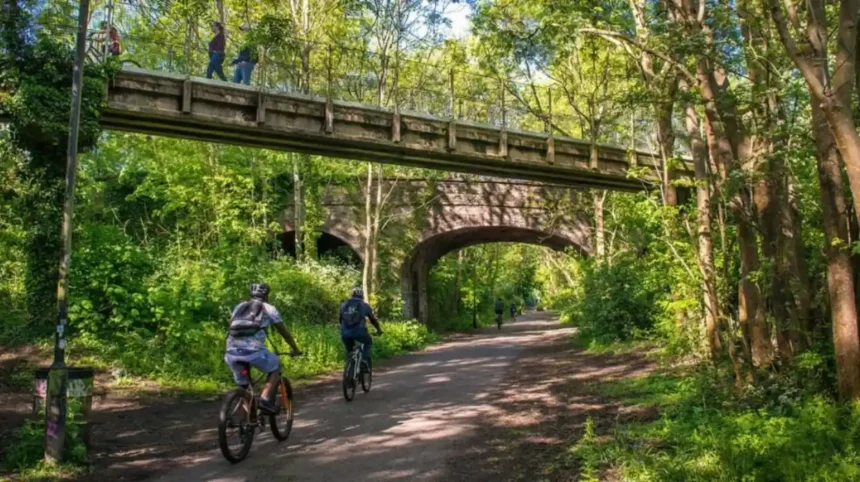
The Bristol and Bath Railway Path is one of the most recognised cycling routes in the region. It connects Bristol and Bath through a largely flat, traffic-free corridor following a former railway line.
The route is approximately 13–14 miles (21–23 kilometres) long, depending on the measured endpoints. It forms part of National Cycle Route 4 and provides an important connection between two major South West cities.
The former Midland Railway track closed to passenger traffic during the 1960s. Between 1979 and 1985, the railway corridor was converted into the shared path used today.
The route passes through East Bristol and continues towards Staple Hill, Mangotsfield, Warmley, Bitton and Saltford before reaching Bath. Former railway stations provide useful stopping points and historical interest.
The surface is predominantly tarmac, and the path is approximately three metres wide. Its relatively gentle gradients make it suitable for leisure cyclists, families with appropriate cycling experience and commuters.
Bitton and Warmley offer recognised stopping points. Bitton also has a historic railway station and connections with heritage steam railway activities.
The route is particularly useful for cyclists seeking a longer journey without relying on busy main roads. However, cyclists must share the path with pedestrians and other users. Construction and maintenance activity on the Bristol section also requires attention to current notices.
Festival Way
Festival Way provides a connection between Bristol and the North Somerset area through a combination of cycling infrastructure and quieter routes.
The corridor is associated with connections towards Ashton Court, Long Ashton and the wider North Somerset countryside. It forms part of Bristol’s wider cycling network and is identified as Quietway Q8 in the city’s transport strategy.
The route appeals to cyclists interested in combining urban cycling with access to open landscapes. Ashton Court Estate is a particularly useful destination because it provides extensive parkland, woodland and recreational space.
Festival Way also supports journeys between residential communities and employment areas. Its connections make it relevant to both leisure cycling and practical transport.
Cyclists should check the route map before departure because the corridor includes different path conditions and connections rather than one uninterrupted traffic-free surface.
Concorde Way
Concorde Way is a recognised cycling corridor connecting parts of north and east Bristol. Bristol City Council identifies it as Quietway Q2 within its planned cycling network.
The route uses a combination of quieter streets and off-road connections. It provides access to residential neighbourhoods and links with other cycling corridors.
Concorde Way is useful for cyclists who want to explore the northern and eastern parts of Bristol without depending entirely on major roads. Its connections also support journeys towards the wider cycle network.
The route’s urban character makes it suitable for people combining cycling with everyday activities, including commuting, shopping and visiting local destinations.
As some sections use public streets, cyclists should check junction arrangements, road conditions and current traffic management before travelling.
River Avon Trail
The River Avon Trail follows the River Avon through Bristol and the surrounding countryside. It connects urban waterfront areas with greener riverside environments and neighbouring communities.
The trail provides a mixture of traffic-free paths and on-road sections. Bristol’s cycling maps identify it as an important route within the city’s wider network.
Within Bristol, cyclists can explore sections around the Floating Harbour, the Avon New Cut and the Riverside Greenway. The route also provides connections towards Pill and the wider North Somerset landscape.
The river corridor offers views of historic industrial infrastructure, bridges, waterfront buildings and natural habitats. It also connects with places of interest such as the Harbourside and areas near the Avon Gorge.
The route is appropriate for cyclists seeking a mixture of urban scenery and natural landscapes. However, its different surfaces and road connections require more attention than a fully traffic-free railway path.
Frome Valley Greenway
The Frome Valley Greenway connects parts of north and east Bristol through green spaces and quieter transport corridors.
It is identified as Quietway Q3 in Bristol City Council’s transport network and appears on the city’s cycling map.
The greenway provides access to the wider Frome Valley landscape, including sections associated with the River Frome and surrounding green spaces.
Cyclists can use its connections to explore areas around Frenchay, Stapleton and neighbouring communities, depending on the selected route section.
The corridor is particularly relevant to residents seeking local recreational rides and alternative journeys between neighbourhoods. Its green surroundings also provide opportunities to observe riverside vegetation and urban wildlife.
The exact riding experience depends on the section selected. Cyclists should consult an updated map to distinguish traffic-free stretches from connecting streets and shared paths.
Whitchurch Railway Path
The Whitchurch Railway Path follows part of the former Bristol and North Somerset Railway corridor.
The route is associated with National Cycle Route 3 and Quietway Q6 in Bristol’s transport network.
Its railway heritage provides the foundation for a relatively direct corridor through south Bristol. The route also offers access to quieter green spaces and connections with nearby residential neighbourhoods.
The path is useful for cyclists travelling around Whitchurch and neighbouring areas. It provides an alternative to relying exclusively on busier roads.
Its natural surroundings make it relevant to people interested in combining cycling with local outdoor recreation. Cyclists should check the latest route map for connecting roads, surface conditions and access points.
Downs Way
Downs Way provides access to Bristol’s northern green spaces and connections towards Henbury.
The route is identified as Quietway Q1 in Bristol City Council’s cycling network. Its alignment includes sections through The Downs and other off-road connections.
The Downs are extensive open spaces associated with Clifton and Stoke Bishop. They provide a combination of recreational landscapes, established paths and viewpoints.
Cycling along suitable sections of Downs Way gives riders access to green surroundings while remaining connected to the urban transport network.
The terrain is not uniformly flat. Bristol’s elevated northern neighbourhoods and connecting roads create gradients that require more physical effort than the railway paths.
Downs Way is therefore particularly relevant to cyclists who want a combination of city cycling, open spaces and moderate physical activity.
Which Bristol Cycling Routes Are Best for Beginners and Families?
The Bristol and Bath Railway Path, selected Harbourside paths and suitable sections of the River Avon Trail are useful choices for beginner cyclists and families. Their relatively accessible sections provide opportunities to practise cycling away from heavy motor traffic.
Beginners benefit from routes with predictable surfaces, fewer road crossings and manageable gradients. Families also need suitable stopping points, accessible facilities and enough space to ride comfortably.
Bristol and Bath Railway Path for Beginners
The Bristol and Bath Railway Path is a practical starting point because much of its length follows a former railway corridor. Its predominantly level alignment reduces the physical difficulty associated with Bristol’s steeper streets.
Families can choose shorter sections rather than attempting the entire Bristol-to-Bath journey. The Easton, Fishponds and Staple Hill sections provide opportunities for shorter recreational rides.
However, the path is shared with pedestrians, runners and other cyclists. Children should remain supervised, particularly around junctions and busier access points.
Harbourside Cycling for Short Rides
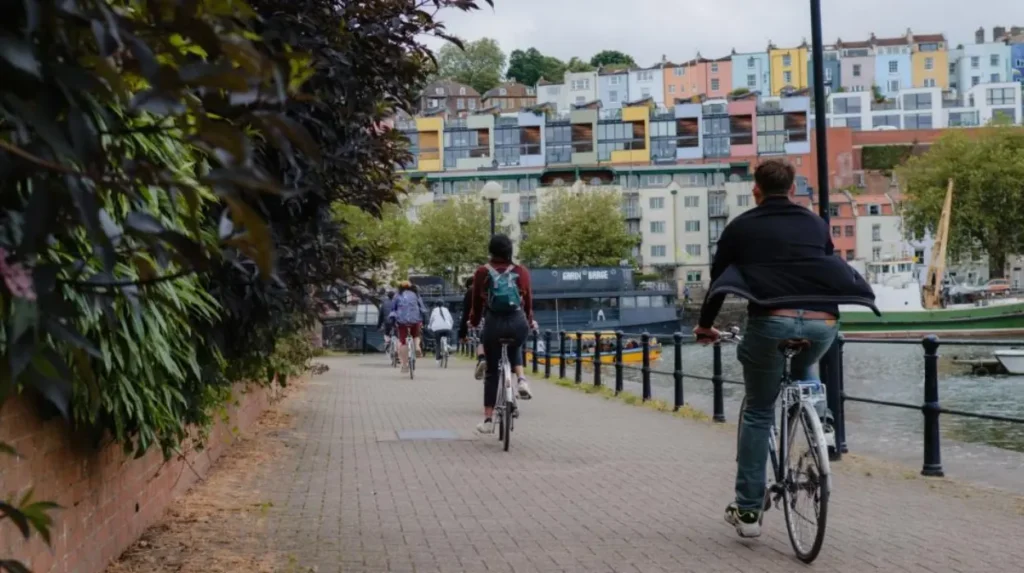
Bristol Harbourside provides an attractive environment for short cycling journeys. The waterfront connects several central attractions and offers relatively level sections around the Floating Harbour.
Cyclists can explore the area around Millennium Square, Wapping Wharf and the historic harbour. The route also provides access to cafés, museums and waterfront public spaces.
Some sections are busy with pedestrians, particularly during weekends and events. Riders should reduce their speed and follow shared-path signs.
River Avon Trail for Family Outings
The River Avon Trail offers family cycling opportunities along suitable sections of its riverside corridor. Families can select shorter journeys that avoid more demanding road connections.
The route’s mixture of urban and natural landscapes creates opportunities to observe bridges, river habitats and historic waterfront structures.
Parents should check individual sections before travelling because the entire trail does not have a uniform traffic-free surface.
Which Bristol Cycling Routes Offer the Best Scenic Views?
The River Avon Trail, Downs Way, Festival Way and Bristol and Bath Railway Path offer some of Bristol’s most distinctive cycling scenery. These routes combine riverside views, open parkland, historic railway structures and green countryside.
Bristol’s geographical diversity gives cyclists access to several different landscape types. Rivers, hills, parks and former transport corridors create contrasting outdoor environments.
Clifton and the Avon Gorge
The Avon Gorge is one of Bristol’s most recognisable natural landscapes. The River Avon flows through a steep limestone gorge between Clifton and Leigh Woods.
The Clifton Suspension Bridge provides a prominent landmark overlooking the gorge. Designed by Isambard Kingdom Brunel, the bridge opened in 1864.
Cyclists can reach viewpoints and surrounding routes through the wider city cycling network. The bridge itself has specific access arrangements, so riders must follow current cycling and pedestrian restrictions rather than assume unrestricted access.
The nearby Leigh Woods area provides additional connections for outdoor activities.
Ashton Court Estate
Ashton Court Estate offers extensive parkland and woodland on the western edge of Bristol.
The estate is a recognised destination for outdoor recreation, including walking, cycling and mountain biking on designated trails.
Its open landscapes provide a contrast with Bristol’s built-up central neighbourhoods. Cyclists can explore suitable estate routes and connect with surrounding cycling corridors.
Riders should distinguish between shared paths, designated mountain-bike trails and pedestrian routes. Not every path is intended for every type of bicycle.
Bristol Harbourside and the Floating Harbour
Bristol’s Floating Harbour is a historic waterfront area associated with the city’s maritime and industrial development.
Cycling around suitable harbour paths provides views of historic vessels, converted warehouses, modern waterfront buildings and public spaces.
Important nearby attractions include M Shed, SS Great Britain and Millennium Square. These locations make the harbour suitable for cyclists combining recreation with cultural visits.
The waterfront is a shared public environment. Pedestrian activity, outdoor seating and visitor attractions require careful riding.

What Are the Best Long-Distance Cycling Routes From Bristol?
Bristol connects with several longer-distance cycling corridors, including National Cycle Route 4, National Cycle Route 3, the River Avon Trail and the West Country Way. These routes connect the city with Bath, North Somerset and wider South West destinations.
Bristol’s position within the National Cycle Network makes it an important starting point for regional cycling journeys.
Long-distance routes require more preparation than short city rides. Cyclists need to consider distance, elevation, surface conditions, food, water and opportunities to return by public transport.
National Cycle Route 4
National Cycle Route 4 is one of the most important cycling connections through Bristol.
The route forms part of a longer journey connecting London with Fishguard in Wales. Its Bristol section includes the Bristol and Bath Railway Path, which provides a major traffic-free connection between the two cities.
Cyclists can use the route for regional journeys, recreational cycling and longer touring trips.
The railway path section is particularly useful because it avoids much of the motor traffic associated with the main road connection between Bristol and Bath.
National Cycle Route 3
National Cycle Route 3 forms part of a wider cycling connection through southern England. Within the Bristol area, it is associated with routes including the Whitchurch Railway Path.
Its regional connections provide opportunities for cyclists to travel beyond the city and explore surrounding communities.
The exact alignment and conditions vary by section. Cyclists should use current National Cycle Network mapping rather than relying on an outdated route description.
West Country Way
The West Country Way is a longer-distance touring route connecting Bristol and Bath with destinations across South West England.
The route passes through varied landscapes, including countryside, river valleys, canal corridors and coastal environments. Its wider itinerary connects with places in Cornwall and Somerset.
The Bristol and Bath Railway Path forms part of the route’s eastern connection through the region. Walk
This route is more suitable for experienced cyclists and touring riders than people seeking a short afternoon ride.
Long-distance riders should plan accommodation, food stops and transport arrangements before departure.
Where Can Cyclists Find Traffic-Free Routes in Bristol?
Bristol has several traffic-free and largely off-road cycling corridors, including the Bristol and Bath Railway Path, sections of the River Avon Trail, Whitchurch Railway Path and local greenways. These routes reduce direct interaction with motor traffic.
Traffic-free infrastructure is an important part of Bristol’s cycling network. It provides alternatives to busy roads and supports recreational journeys across residential and natural environments.
Bristol City Council’s cycling maps distinguish between traffic-free paths, shared-use routes, on-road connections, cycle lanes and other infrastructure.
Railway Paths
Former railway lines provide some of the most useful traffic-free cycling corridors.
The Bristol and Bath Railway Path is the strongest example. Its former railway alignment creates a relatively continuous connection between the two cities.
The Whitchurch Railway Path also demonstrates how redundant transport infrastructure supports modern active travel.
Greenways
Greenways are routes through parks, riverside environments and other green corridors. They connect neighbourhoods while providing access to outdoor spaces.
Examples in Bristol include the Frome Valley Greenway and Malago Greenway.
Greenways often include shared-use sections. Cyclists must respect pedestrian priority, signage and local access restrictions.
Riverside Paths
Riverside cycling routes provide access to natural environments while connecting different urban destinations.
The River Avon Trail is an important example. Its different sections offer a mixture of traffic-free paths and on-road connections.
Cyclists should check surface conditions after prolonged rainfall because riverside routes can experience standing water, mud and localised flooding.
How Difficult Are Bristol’s Cycling Routes?
Cycling difficulty in Bristol depends on distance, gradient, surface quality, traffic exposure and route continuity. Railway paths generally offer easier riding, while elevated routes around Clifton, the Downs and surrounding hills require greater fitness and cycling confidence.
Bristol’s topography influences the physical demands of cycling. The city has steep streets, elevated residential areas and lower-lying river corridors.
Choosing a route based only on distance produces an incomplete assessment. A short journey through a steep neighbourhood can require more effort than a longer journey along a flat railway path.
Easy Cycling Routes
The Bristol and Bath Railway Path is a suitable example of an easier longer-distance route. Its former railway alignment provides relatively gentle gradients and a predominantly tarmacked surface.
Shorter Harbourside sections also offer accessible riding opportunities, although pedestrian activity affects riding conditions.
Moderate Cycling Routes
Festival Way and sections of the River Avon Trail provide moderate riding experiences depending on the selected route.
Their mixture of shared paths, connecting streets and varied surfaces requires basic navigation and traffic awareness.
More Challenging Cycling Routes
Routes through elevated areas around Clifton, Stoke Bishop and the northern Downs require greater physical effort.
Cyclists travelling towards the wider countryside also encounter hills and longer distances.
Mountain-bike routes at Ashton Court involve different technical requirements from ordinary city cycling. Riders should select trails according to their experience and bicycle type.
What Is the Best Time of Year for Cycling in Bristol?
Spring and summer provide longer daylight hours and generally favourable opportunities for cycling in Bristol. Autumn offers attractive woodland and riverside scenery, while winter cycling requires additional attention to visibility, weather, surface conditions and daylight.
Bristol supports year-round cycling because its transport network includes both commuter corridors and recreational paths.
However, seasonal conditions influence the quality and safety of different journeys.
Spring Cycling
Spring is suitable for exploring greenways and railway paths. Longer daylight hours gradually improve opportunities for evening cycling.
Riverside vegetation and parks also become more active during this period.
Summer Cycling
Summer provides longer daylight hours for recreational rides and regional journeys.
The Bristol and Bath Railway Path and Festival Way are useful choices for longer outings.
Popular routes become busier during weekends and school holidays. Early departures help cyclists avoid some of the busiest periods.
Autumn Cycling
Autumn offers woodland colours and changing riverside landscapes.
Cyclists should watch for wet leaves, mud and reduced visibility. These conditions increase the importance of maintaining appropriate braking distances.
Winter Cycling
Winter cycling requires preparation for darkness, rain and slippery surfaces.
Front and rear bicycle lights, reflective clothing and suitable waterproof layers improve visibility and comfort.
Riders should also check weather warnings and route notices before travelling.
How Can Cyclists Plan Safe Cycling Journeys in Bristol?
Safe cycling in Bristol requires route planning, appropriate bicycle maintenance, visible clothing and awareness of road conditions. Cyclists should use official maps, check temporary closures, follow traffic regulations and select routes that match their experience and confidence.
Route planning helps cyclists identify suitable paths before leaving home. It also reduces unexpected exposure to busy roads and difficult junctions.
Use Official Bristol Cycling Maps
Bristol City Council provides cycling information and route-planning resources to help residents and visitors identify suitable journeys.
The Better By Bike website provides regional cycling maps covering Bristol, Bath, North Somerset and South Gloucestershire.
The maps identify different route types, including traffic-free paths, on-road connections, cycle lanes and shared-use infrastructure.
These resources help cyclists compare routes and identify connections with surrounding towns.
Check Bicycle Condition
A properly maintained bicycle improves reliability and reduces mechanical problems during journeys.
Cyclists should inspect several important components before departure:
- Brakes: Check braking performance and brake-pad condition.
- Tyres: Maintain appropriate pressure and inspect for damage.
- Lights: Check front and rear lights, particularly during winter.
- Chain: Keep the chain clean and lubricated.
- Gears: Check that gear changes operate correctly.
Long-distance cyclists should also carry a puncture repair kit, tyre levers and a suitable pump.
Follow Cycling Regulations
Cyclists using public roads must follow applicable road traffic regulations. The Highway Code provides guidance on road positioning, junctions, crossings, lighting and interactions with other road users.
Cyclists should give pedestrians sufficient space on shared-use paths. They should also slow down around children, dogs and crowded public areas.
Riders should use designated cycling infrastructure where appropriate and observe local signs governing access and movement.
Prepare for Changing Weather
Rain, strong winds and low temperatures affect cycling conditions.
Wet roads reduce grip, while standing water can conceal potholes and damaged surfaces. Cyclists should reduce speed and increase braking distances when conditions deteriorate.
Checking weather forecasts and local route notices before departure helps prevent avoidable problems.
Which Bristol Cycling Routes Are Best for Commuting?
The Bristol and Bath Railway Path, Concorde Way, Festival Way and other designated cycle corridors support commuting across Bristol. Their connections with residential areas, employment locations and central destinations make them useful alternatives to motorised transport.
Cycling is an important part of Bristol’s sustainable transport strategy. It supports everyday journeys while reducing dependence on private cars.
The most appropriate commuting route depends on the starting point, destination and available infrastructure.
East Bristol to the City Centre
The Bristol and Bath Railway Path provides connections from Easton, Fishponds and other eastern neighbourhoods towards central Bristol.
It offers an alternative to busy arterial roads and supports journeys towards employment and educational destinations.
North Bristol to Central Bristol
Concorde Way and other northern cycling corridors provide connections between residential areas and central destinations.
Cyclists should check the exact alignment because some journeys include on-road sections and signal-controlled junctions.
South Bristol to Central Bristol
The Malago Greenway and Whitchurch Railway Path support connections from southern neighbourhoods.
The River Avon Trail also provides useful links towards the city centre and waterfront.
West Bristol to Central Bristol
Festival Way and connections around Ashton Court and the wider western corridor support journeys between western communities and central Bristol.
The most suitable alignment depends on the exact destination and available cycle infrastructure.
How Does Cycling Support Bristol’s Environment and Local Economy?
Cycling supports Bristol’s environmental objectives by encouraging active travel, reducing reliance on private cars and improving access to local destinations. It also supports nearby businesses, recreational facilities and tourism through regular journeys and visitor spending.
Cycling contributes to several aspects of urban sustainability.
Its environmental benefits are particularly relevant in a city where transport, air quality and congestion remain important planning considerations.
Environmental Benefits
Replacing short car journeys with bicycle journeys reduces direct vehicle emissions and fuel consumption.
Cycling also requires less road space than private motor vehicles. This makes cycling infrastructure an important consideration in urban transport planning.
Greenways and riverside routes provide additional recreational access to natural environments.
Health and Physical Activity
Regular cycling contributes to physical activity and cardiovascular fitness.
The NHS identifies cycling as a form of moderate-intensity physical activity. Its physical activity guidance recommends that adults complete at least 150 minutes of moderate-intensity activity each week, or 75 minutes of vigorous activity, alongside strengthening activities on at least two days.
Cycling provides an opportunity to incorporate physical activity into everyday transport and recreation.
Benefits for Local Businesses
Cyclists regularly visit cafés, independent shops, pubs and attractions along popular routes.
The Bristol and Bath Railway Path provides access to refreshment stops around Warmley, Bitton and Saltford.
Harbourside cycling also connects visitors with restaurants, museums and cultural attractions.
These connections help distribute visitor activity across different neighbourhoods rather than concentrating spending in one central location.
Sustainable Tourism
Bristol’s cycling network connects visitors with its maritime history, architectural heritage and natural surroundings.
Regional routes also support longer cycling holidays, particularly journeys connecting Bristol and Bath.
The continued development of active travel infrastructure strengthens Bristol’s position as a destination for sustainable tourism.
What Cycling Infrastructure Improvements Are Planned for Bristol?
Bristol’s cycling infrastructure strategy focuses on improving direct routes, expanding quieter connections and strengthening links between neighbourhoods. The planned Freeway and Quietway networks provide a framework for making cycling more convenient across the city.
Bristol City Council’s adopted 2019 transport strategy identifies a network of fourteen Freeways and sixteen Quietways.
Freeways are designed as direct cycling corridors along major roads, with extensive segregation where provided. Quietways prioritise quieter streets, traffic-free connections and more comfortable cycling environments.
Examples of planned corridors include:
- F1: The Portway.
- F2: Whiteladies Road and Westbury Road.
- F3: Gloucester Road.
- F4: Fishponds and Stapleton Road.
- F6: Bath Road.
- Q1: Downs Way.
- Q2: Concorde Way.
- Q3: Frome Greenway.
- Q4: Bristol and Bath Railway Path.
- Q7: Malago Greenway.
- Q8: Festival Way.
These designations describe the network strategy, not a guarantee that every section is fully completed or provides uninterrupted protected cycling infrastructure.
The West of England Combined Authority also publishes Local Cycling and Walking Infrastructure Plan material covering Bristol and surrounding areas. These documents support regional transport planning and identify proposed infrastructure connections.
Future improvements to route continuity, junction design, accessibility and cycle parking remain important for encouraging more people to cycle.
Explore More Area Guide
Accessible Walks in Bristol: Best Parks, Trails and Waterfront Routes
Best Walks in Bristol: Scenic Trails, Parks and Riverside Routes
How Can Visitors Explore Bristol’s Attractions by Bicycle?
Visitors can use Bristol’s cycling network to connect major attractions, historic neighbourhoods and waterfront destinations. The Harbourside, Clifton, Ashton Court and central railway corridors provide opportunities to combine cycling with museums, architecture and outdoor recreation.
Cycling allows visitors to explore different parts of Bristol without relying entirely on public transport or private vehicles.
Explore Bristol Harbourside
The Harbourside is an important destination for visitors interested in Bristol’s maritime heritage.
Cyclists can explore the surroundings of M Shed, Millennium Square and the historic waterfront.
The SS Great Britain is another major attraction. Designed by Isambard Kingdom Brunel, the historic steamship represents an important part of Britain’s maritime engineering history.
Visit Clifton
Clifton offers Georgian architecture, independent shops and access to the Clifton Suspension Bridge.
The neighbourhood’s elevated position creates some challenging cycling sections. Visitors should plan suitable connections and avoid assuming that every central street is appropriate for inexperienced cyclists.
Discover Ashton Court
Ashton Court provides access to parkland and woodland near Bristol.
It is particularly relevant to visitors interested in outdoor recreation, mountain biking and countryside landscapes.
The estate also provides opportunities to combine cycling with walking and other leisure activities.
Connect With Bristol’s Historic Railway Heritage
The Bristol and Bath Railway Path offers opportunities to explore former railway infrastructure.
Its historic station locations, including Bitton, provide a connection between transport history and contemporary recreational cycling.
Visitors interested in industrial heritage can combine the journey with other attractions across Bristol and Bath.
Why Should Residents and Tourists Explore Bristol by Bicycle?
Bristol’s cycling routes provide practical transport connections, access to green spaces and opportunities to explore local heritage. The combination of railway paths, greenways, riverside trails and regional cycling corridors makes cycling relevant to residents, commuters and visitors.
The city’s cycling network offers different experiences according to individual interests and physical ability.
Residents can use established paths for commuting, shopping and regular exercise. Families can select shorter traffic-free sections for recreational outings. Experienced cyclists can use National Cycle Network connections for longer regional journeys.
Visitors benefit from cycling routes connecting Bristol’s waterfront, parks, historic attractions and surrounding countryside.
The Bristol and Bath Railway Path remains an important regional asset because it combines transport functionality, railway heritage and recreational access. Festival Way, Concorde Way and the River Avon Trail provide additional opportunities to explore the wider area.
Bristol’s future cycling development depends on maintaining existing routes, improving connections and making cycling infrastructure accessible to more people.
Choosing an appropriate route, checking current conditions and following cycling guidance helps riders enjoy Bristol’s outdoor spaces and transport network responsibly.
What are the best cycling routes in Bristol?
The best cycling routes in Bristol include the Bristol and Bath Railway Path, Festival Way, Concorde Way, River Avon Trail, Frome Valley Greenway and Whitchurch Railway Path. These routes offer recreational cycling, commuting connections and scenic landscapes.