Bristol offers a wide range of accessible walking opportunities, from flat waterfront promenades and traffic-free railway paths to historic parks, riverside trails and open green spaces. The city’s walking network includes routes suitable for wheelchair users, people with limited mobility, older adults, families with pushchairs and visitors who prefer shorter, less physically demanding outdoor activities.
- What Makes a Walking Route Accessible in Bristol?
- Where Can Visitors Find Accessible Waterfront Walks in Bristol?
- Is the Bristol and Bath Railway Path Suitable for Accessible Walking?
- How Long Is the Railway Path?
- What Can Visitors See Along the Railway Path?
- Is the Railway Path Suitable for Wheelchair Users?
- Which Accessible Walks Can Visitors Enjoy at Eastville Park?
- Which Paths Are Accessible at Eastville Park?
- What Facilities Are Available?
- Can Visitors Continue Towards Snuff Mills?
- Is The Downs a Good Location for Accessible Walking in Bristol?
- Which Walking Trails Are Available on The Downs?
- What Accessibility Facilities Are Available?
- Why Is The Downs Important for Nature and Outdoor Recreation?
- Can Visitors Enjoy Accessible Walks at Brandon Hill?
- Which Entrances Provide Wheelchair Access?
- What Can Visitors Explore at Brandon Hill?
- Is Brandon Hill Suitable for a Short Walk?
- Are Ashton Court and Blaise Castle Suitable for Accessible Walking?
- What Should Visitors Know About Ashton Court Estate?
- Is Blaise Castle Estate Suitable for Wheelchair Users?
- Which Other Bristol Parks Offer Accessible Walking Opportunities?
- Can Visitors Walk Around Castle Park?
- Is College Green Suitable for Accessible Walking?
- What Makes Canford Park a Useful Option?
- How Can Visitors Plan an Accessible Walking Route in Bristol?
- How Should Visitors Check Route Accessibility?
- Which Walking Surfaces Are Easiest to Navigate?
- How Can Visitors Find Accessible Toilets?
- Which Transport Options Support Accessible Walking?
- When Is the Best Time to Enjoy Accessible Walks in Bristol?
- What Are the Benefits of Spring Walking?
- Why Is Summer Suitable for Accessible Outdoor Activities?
- What Should Visitors Consider During Autumn and Winter?
- How Do Accessible Walks Contribute to Bristol’s Communities and Environment?
- How Does Accessible Walking Support Public Health?
- How Does Accessible Walking Support Local Tourism?
- Why Is Inclusive Green Space Important for Bristol?
- Which Accessible Walks in Bristol Should Visitors Choose?
Accessible walks in Bristol provide opportunities to explore the city’s historic harbour, Victorian parks, wildlife habitats and surrounding landscapes without relying exclusively on steep hills or challenging terrain. Popular locations include Bristol Harbourside, the Bristol and Bath Railway Path, Eastville Park, Brandon Hill and The Downs. Each location offers different accessibility features, including surfaced paths, accessible facilities, seating areas and connections to public transport.
However, accessibility varies between individual routes. Some parks contain steep gradients, uneven woodland paths, cobbled sections or steps alongside otherwise accessible pathways. Understanding these differences helps visitors select suitable routes according to their mobility requirements, walking distance and preferred surroundings.
What Makes a Walking Route Accessible in Bristol?
An accessible walking route provides suitable surfaces, manageable gradients, sufficient path width, convenient entrances and opportunities to rest. In Bristol, accessibility also depends on wheelchair access, dropped kerbs, accessible toilets, nearby transport and the condition of paths throughout the year.
Accessible walking describes outdoor routes designed or maintained to accommodate people with different mobility requirements. These requirements include wheelchair access, walking aids, limited stamina, visual impairments, balance difficulties and other physical conditions that affect movement.
Bristol’s landscape presents particular accessibility considerations because the city contains hills, historic streets, waterfront infrastructure and extensive green spaces. A route that appears relatively short on a map can include significant gradients or uneven surfaces.
What Features Should an Accessible Walk Include?
An accessible walk generally benefits from several practical features:
- Firm surfaces: Tarmac, concrete and well-maintained paving provide more predictable movement than loose gravel, mud or uneven grass.
- Manageable gradients: Gentle slopes reduce the physical effort required from wheelchair users and people with restricted mobility.
- Adequate width: Wider paths allow wheelchairs, mobility scooters and pedestrians to pass more comfortably.
- Resting facilities: Benches and seating areas support visitors who need regular breaks.
- Accessible toilets: Suitable facilities improve the practicality of longer outdoor visits.
- Step-free entrances: Level entrances and dropped kerbs make it easier to reach walking routes.
- Transport connections: Nearby bus stops, railway stations and accessible parking improve journey planning.
These features do not automatically make an entire park accessible. Visitors need to assess individual paths, entrances and facilities before travelling.
Why Is Accessible Walking Important?
Accessible walking supports outdoor recreation, social participation and physical activity. It enables people with different mobility requirements to enjoy public spaces, spend time with family and explore local heritage.
The accessibility of public parks also contributes to inclusive urban planning. Well-maintained paths connect residential neighbourhoods with green spaces, community facilities and transport networks.
For Bristol, improving access to outdoor environments remains important because the city combines a dense urban centre with extensive parks, nature reserves and historic walking routes.
Where Can Visitors Find Accessible Waterfront Walks in Bristol?
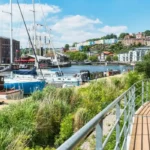
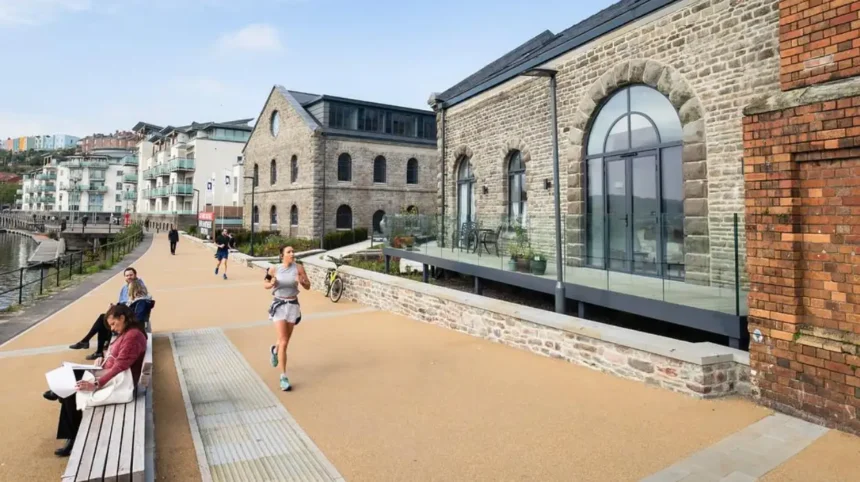
Bristol Harbourside provides one of the city’s most convenient waterfront walking environments, with pedestrian promenades, accessible harbour landing stages and connections to historic attractions. Its Millennium Promenade and central harbour paths offer opportunities for shorter, relatively level walks.
Bristol Harbourside is a historic waterfront district surrounding the Floating Harbour, a sheltered section of the River Avon developed to support the city’s maritime trade.
The harbour area has undergone substantial regeneration, transforming former industrial and shipping locations into public promenades, cultural attractions, restaurants and leisure spaces.
Its waterfront setting makes it an important destination for visitors looking for accessible walks close to central Bristol.
What Is the Millennium Promenade?
The Millennium Promenade is a pedestrian waterfront route within Bristol’s Harbourside. It provides access to sections of the harbour without requiring visitors to follow the city’s steeper residential streets.
The promenade connects with Cathedral Walk and other waterside paths. AccessAble’s Harbour Loop guidance identifies a gently sloping section leading towards Porto Quay and the Millennium Promenade.
The route also includes connections to the surrounding waterfront through accessible alternatives to certain stairways. AccessAble identifies a public platform lift beside a flight of steps on the wider Harbour Loop route. The lift provides an alternative connection between levels, although visitors should check its operational condition before travelling.
Visitors can enjoy views of:
- Bristol Floating Harbour.
- Historic waterfront buildings.
- Boats and harbour infrastructure.
- Millennium Square.
- Waterfront cafés and restaurants.
The Millennium Promenade is particularly suitable for visitors who want to explore the central harbour without committing to a lengthy countryside walk.
Which Accessible Facilities Are Available Around Bristol Harbour?
Bristol City Council identifies several accessible harbour landing stages, including Castle Park, Baltic Wharf, Harbour Inlet, SS Great Britain, St Augustine’s Reach, Temple Quay, The Buttery and The Mardyke.
The council also identifies accessible toilet and shower facilities at Bathurst Basin, Harbour Inlet, Mud Dock and Wapping Wharf. Access codes are required, and visitors can obtain information from the Harbour Office.
The cross-harbour ferry, Mary Brunel, has a ramp and provides an accessible connection between the SS Great Britain pontoon and Harbour Inlet.
These facilities make the harbour particularly useful for visitors who need accessible transport connections and nearby amenities.
Is the Bristol and Bath Railway Path Suitable for Accessible Walking?
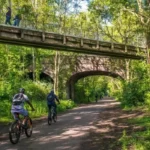
The Bristol and Bath Railway Path is one of the strongest options for accessible longer-distance walking. It follows a former railway corridor, offering a predominantly flat, traffic-free route with an almost entirely asphalt surface between Bristol and Bath.
The Bristol and Bath Railway Path is a shared walking and cycling route developed along the former Midland Railway line.
The railway closed to passenger traffic in the 1960s. Its conversion into a walking and cycling route took place between 1979 and 1985, creating an important recreational and transport corridor.
The route now connects Bristol with Bath through residential districts, green spaces and countryside.
How Long Is the Railway Path?
Walk Wheel Cycle Trust identifies the route as approximately 13.9 miles (23.3 kilometres) long.
Its published route information records:
- 97.6% traffic-free.
- 99.7% asphalt surface.
- 0.3% unsealed loose surface.
The route is almost entirely flat and provides access for disabled users. However, the organisation also advises that the route is not necessarily accessible to everyone.
Visitors do not need to complete the entire distance. Shorter sections provide opportunities for accessible outdoor recreation without requiring a full-day walking commitment.
What Can Visitors See Along the Railway Path?
The route passes through a mixture of urban and rural environments.
Notable stopping points include:
Old Market: The Bristol starting area connects the railway path with central neighbourhoods and historic streets.
Staple Hill: This section provides access to residential communities and nearby green spaces.
Warmley: The former railway station provides a recognisable historical stopping point.
Bitton: Visitors can explore the nearby Avon Valley Railway, which preserves elements of the area’s railway heritage.
Saltford: The route continues through the Avon Valley landscape towards Bath.
Former railway infrastructure, local wildlife and riverside environments contribute to the route’s recreational and historical significance.
Is the Railway Path Suitable for Wheelchair Users?
The largely asphalt surface and gentle railway gradients make the route a practical option for many wheelchair users and people using mobility equipment.
However, visitors should consider the following:
- Shared use with cyclists requires awareness and suitable passing space.
- Surface conditions change during prolonged wet weather.
- Junctions and access points differ in design.
- The route’s total length makes planning important.
- Resting facilities and refreshments are not evenly distributed.
A shorter out-and-back section is a practical alternative to completing the full route. Visitors can also investigate nearby public transport connections when planning a one-way journey.
Which Accessible Walks Can Visitors Enjoy at Eastville Park?
Eastville Park provides accessible walking opportunities in northeast Bristol, particularly around its main park facilities. Firm tarmac paths connect the car park with the children’s play area and Community Hub, while its ornamental lake and green spaces provide additional scenery.
Eastville Park is a Victorian public park located between Eastville and Fishponds, approximately two miles northeast of Bristol city centre.
The park contains an ornamental lake, woodland, wildflower meadows, recreational facilities and open green spaces.
Its combination of established paths and natural features makes it an important local destination for outdoor recreation.
Which Paths Are Accessible at Eastville Park?
The Friends of Eastville Park identify accessible paths connecting the car park with the children’s play area, Community Hub and bowling club.
AccessAble also records several firm tarmac paths across the park. Most are sufficiently wide for wheelchair users, although some sections have steep gradients that require additional assistance.
Visitors should therefore concentrate on the established paths around the main facilities rather than assuming every woodland path offers equivalent access.
What Facilities Are Available?
Eastville Park offers several facilities that support longer outdoor visits.
These include:
- An ornamental fishing lake.
- Children’s play areas.
- A bowling green.
- Tennis courts.
- Football pitches.
- A one-mile running circuit.
- Public toilets near the upper park car park.
The park’s accessible toilet facilities are located near the car park in the upper park. The Friends of Eastville Park state that these facilities automatically lock at 6pm.
The council lists seasonal opening hours of 8am to 10pm from April to October and 8am to 8pm from November to March.
Can Visitors Continue Towards Snuff Mills?
Eastville Park connects with the Frome Valley Walkway, which provides a longer walking corridor towards Snuff Mills and Oldbury Court Estate.
The wider route includes riverside scenery, woodland and natural habitats. However, visitors should distinguish between the accessible paths inside Eastville Park and the more varied terrain along the extended Frome Valley route.
People using wheelchairs or mobility scooters should check the surface, gradients and access conditions of each section before extending their journey.
Is The Downs a Good Location for Accessible Walking in Bristol?
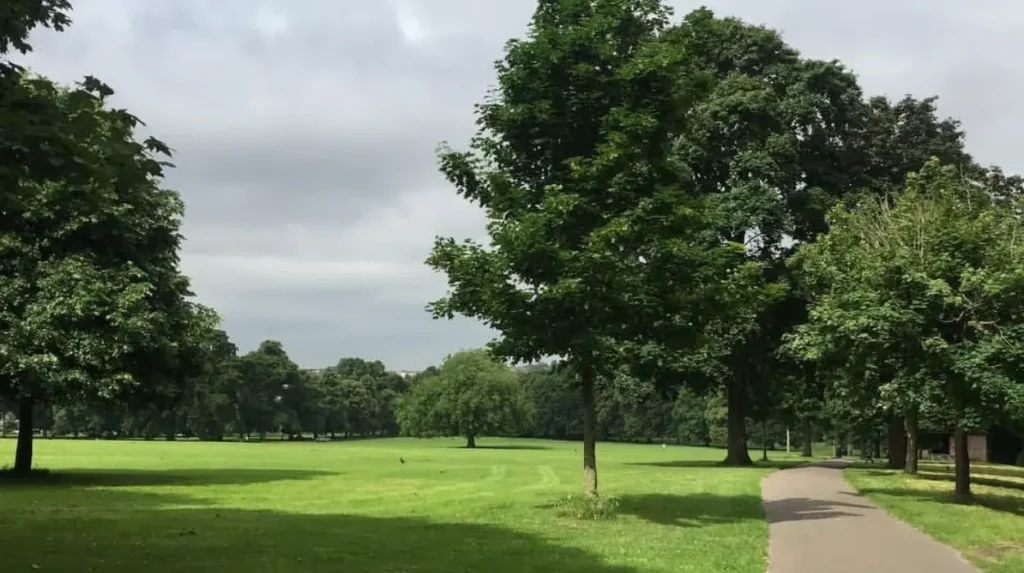
The Downs provides extensive open green space in northwest Bristol, with walking trails, benches, viewpoints and recreational facilities. Its relatively open landscape supports shorter outdoor visits, although individual routes include grass, slopes and occasional steps.
The Downs consists of two major areas: Clifton Down and Durdham Down.
These open spaces sit along the northwestern edge of central Bristol and provide access to the surrounding Avon Gorge landscape.
The Downs is particularly popular for walking, picnics, outdoor exercise and recreational activities.
Which Walking Trails Are Available on The Downs?
Bristol City Council provides several walking trail options across The Downs.
These include:
- Bird Trail: 1.4 miles, approximately one hour.
- Lichen Trail: 0.4 miles, approximately 30 minutes.
- Meadow Trail: 0.7 miles, approximately 30 minutes.
- Tree Trail: 1.4 miles, approximately one hour.
The routes explore different elements of the area’s landscape, including trees, grassland and wildlife habitats.
The Tree Trail is particularly useful for visitors interested in combining a relatively manageable walk with environmental education.
The council’s Tree Trail leaflet states that its complete route measures approximately 2.2 kilometres and takes around one hour. It is generally flat, without significant slopes or stiles, although it contains two locations with steps and suggested diversions.
What Accessibility Facilities Are Available?
The Downs provides several visitor facilities, including:
- Benches and picnic areas.
- The Downs Café.
- Toilets and baby-changing facilities at Sea Walls.
- A children’s playground on Sion Hill.
- Outdoor exercise stations.
- Access to Clifton Observatory and the Avon Gorge landscape.
Bristol City Council provides an accessibility guide for the site, which visitors should consult before selecting a route.
For wheelchair users, choosing firm surfaced paths and avoiding steep or grassy sections provides a more manageable experience.
Why Is The Downs Important for Nature and Outdoor Recreation?
The Downs combines recreational green space with an important natural landscape.
Its grasslands, mature trees and proximity to the Avon Gorge support local biodiversity. The open setting also provides opportunities for birdwatching and environmental education.
Visitors can enjoy the landscape without following the more demanding routes through Bristol’s surrounding hills.
Can Visitors Enjoy Accessible Walks at Brandon Hill?
Brandon Hill offers a central green space with wheelchair access through Great George Street and Berkeley Square. Its nature reserve, mature vegetation and views towards Cabot Tower provide a convenient outdoor destination, although some entrances contain steps and slopes.
Brandon Hill is one of Bristol’s oldest public parks and contains a nature reserve managed through cooperation between Avon Wildlife Trust and Bristol City Council.
The reserve covers approximately two hectares and supports wildlife within the central urban environment.
Its location near Park Street and the city centre makes it convenient for visitors staying in central Bristol.
Which Entrances Provide Wheelchair Access?
Avon Wildlife Trust identifies wheelchair access through Great George Street and Berkeley Square.
The reserve has several entrances, but some contain steps and slopes. Visitors using wheelchairs should therefore approach through the identified accessible entrances rather than relying on the nearest entrance.
The Trust describes the reserve as wheelchair friendly and pushchair friendly, subject to these access limitations. Avon Wildlife Trust
What Can Visitors Explore at Brandon Hill?
The park provides opportunities to experience urban nature and enjoy views across Bristol.
Its main features include:
- Cabot Tower.
- Woodland vegetation.
- Wildlife habitats.
- Established parkland.
- Scenic viewpoints.
- Benches and open green spaces.
Cabot Tower is a prominent landmark within Brandon Hill. It was completed in 1898 to commemorate John Cabot’s voyage from Bristol to North America in 1497.
However, reaching the tower and exploring its immediate surroundings involves steeper terrain. Visitors seeking an easier experience should remain on the more accessible lower paths.
Is Brandon Hill Suitable for a Short Walk?
Brandon Hill is particularly suitable for shorter outdoor visits because it sits close to central attractions and public transport.
Visitors can explore the accessible entrance routes, enjoy the surrounding vegetation and return towards Park Street without completing a lengthy walking circuit.
Its relatively small size also makes it practical for people who prefer shorter outdoor activities.
Are Ashton Court and Blaise Castle Suitable for Accessible Walking?
Ashton Court and Blaise Castle Estate offer extensive parkland and attractive walking opportunities, but neither location provides uniformly accessible terrain. Visitors should select individual routes carefully because woodland trails, steep inclines, grass and uneven surfaces restrict access.
Two major green spaces on Bristol’s outskirts are Ashton Court Estate and Blaise Castle Estate.
Both provide extensive outdoor environments with historic buildings, woodland, grassland and recreational facilities.
However, visitors should not automatically classify their walking routes as wheelchair accessible.
What Should Visitors Know About Ashton Court Estate?
Ashton Court Estate covers approximately 850 acres of woodland and grassland.
The estate includes a historic mansion, landscaped gardens, deer parks, cafés, picnic areas and several walking routes.
Its landscape provides a mixture of surfaced estate roads, woodland paths, grassland and uneven terrain.
Bristol City Council specifically states that wheelchair users, people with restricted mobility and visually impaired visitors can experience difficulties moving around the estate because of its terrain and topography.
The stables courtyard provides a relatively level area, although its surface is cobbled. The formal gardens also have limited wheelchair access.
The estate provides two disabled toilets in the stables courtyard and disabled parking spaces at its main parking locations.
Visitors looking for accessible walking should prioritise the level courtyard and investigate the condition of individual estate roads before selecting longer routes.
Is Blaise Castle Estate Suitable for Wheelchair Users?
Blaise Castle Estate covers approximately 650 acres and is a Grade II* registered historic parkland.
It includes Blaise Castle, Blaise Museum, woodland, lily ponds, gardens, open grassland and recreational facilities.
The council provides several mapped walking routes, including:
- Castle Walk: approximately one mile.
- Gorge Walk: approximately one mile.
- Kings Weston Down Walk: approximately one mile.
- Rhododendron Walk: approximately three miles.
- The Royals and St Mary’s Church Walk: approximately one mile.
However, these routes include different surfaces, steep gradients, grass and woodland trails.
The Castle Walk contains steep woodland inclines, while the Gorge Walk combines surfaced and woodland paths with steep sections.
The council directs visitors towards an AccessAble guide for detailed disability access information.
Blaise Castle is therefore better approached as a mixed-accessibility destination rather than a completely wheelchair-friendly walking location.
Which Other Bristol Parks Offer Accessible Walking Opportunities?
Several additional Bristol parks provide opportunities for shorter accessible outdoor visits. Castle Park, College Green and selected paths in Canford Park offer convenient urban alternatives, although individual entrances, surfaces and facilities require checking before visiting.
Bristol’s wider public park network includes several smaller green spaces that support accessible outdoor recreation.
These locations are particularly useful for residents and visitors who want convenient walks close to residential neighbourhoods or central attractions.
Can Visitors Walk Around Castle Park?
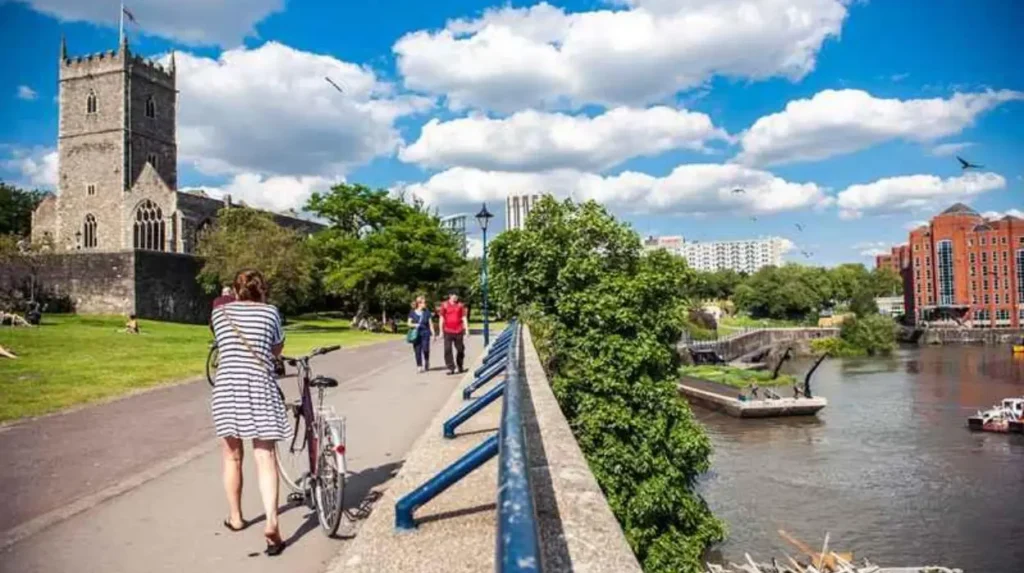
Castle Park is a central green space beside the River Avon.
Its location makes it convenient for visitors exploring the city centre, shopping districts and historic waterfront.
The park contains open lawns, mature trees and historic remains. Its riverside position also provides connections to nearby pedestrian routes.
Visitors should check current path conditions and access arrangements when planning a wheelchair-accessible visit.
Is College Green Suitable for Accessible Walking?
College Green is an open public space near Bristol Cathedral and the City Hall area.
Its central location makes it useful for short outdoor breaks between visits to nearby attractions.
The surrounding streets include pedestrian routes, historic buildings and public transport connections.
Visitors should consider the surrounding pavement conditions and road crossings when planning a complete walking circuit.
What Makes Canford Park a Useful Option?
Canford Park is a Victorian park in northwest Bristol.
The park includes a children’s play area, bowling green, tennis courts, football pitches and landscaped green spaces.
Its tarmac paths provide access to the play area for wheelchairs and pushchairs. However, the lily pond and sunken rose garden contain steps that restrict access.
This makes the park useful for visitors seeking an accessible recreational space without assuming that every landscaped feature is step-free.
How Can Visitors Plan an Accessible Walking Route in Bristol?
Planning an accessible walk requires checking path surfaces, gradients, entrances, toilets, transport and weather conditions before travelling. Visitors should select routes according to their mobility requirements, walking distance and available facilities rather than relying on general accessibility descriptions.
Bristol offers different types of accessible outdoor environments. A successful visit depends on matching the route with the visitor’s individual requirements.
How Should Visitors Check Route Accessibility?
Visitors should use detailed accessibility information rather than relying exclusively on general walking descriptions.
AccessAble provides venue-specific accessibility guides covering path surfaces, gradients, entrances, toilets and other facilities.
Bristol City Council also publishes accessibility information and maps for its parks and estates.
These resources help visitors understand whether a particular entrance or pathway meets their requirements.
For example, Brandon Hill has designated wheelchair access through two entrances, while Ashton Court contains significant terrain-related restrictions.
Which Walking Surfaces Are Easiest to Navigate?
Surface quality has a direct impact on outdoor mobility.
Tarmac and smooth concrete generally provide more predictable movement for wheelchair users and people using walking aids.
The Bristol and Bath Railway Path is particularly notable because almost all its surface is asphalt.
The following surface characteristics are important:
Tarmac: Provides a firm and generally predictable walking surface.
Concrete: Offers a stable surface when properly maintained.
Paving slabs: Provide convenient access when joints and surface irregularities are limited.
Gravel: Loose stones can make wheelchair movement more difficult.
Grass: Wet or uneven grass creates additional resistance for mobility equipment.
Woodland tracks: Mud, exposed roots and changes in elevation can restrict access.
Visitors should also consider temporary obstructions, construction work and seasonal maintenance.
How Can Visitors Find Accessible Toilets?
Accessible toilet availability is an important part of planning longer outdoor visits.
Bristol City Council provides information about public toilets, while VisitBristol directs visitors towards resources for locating accessible facilities and Changing Places toilets.
Changing Places facilities provide additional equipment and space for people with more complex access requirements, including suitable changing benches and hoists. visitbristol.co.uk+1
Visitors should check opening hours and access arrangements before travelling because facilities within parks are not necessarily available throughout the day.
Which Transport Options Support Accessible Walking?
Public transport connections make many Bristol walking locations easier to reach.
Visitors can investigate accessible bus services, nearby railway stations and suitable parking facilities before travelling.
The Bristol and Bath Railway Path connects with railway stations near sections of the route, while Eastville Park has bus stops within approximately 150 metres according to its AccessAble guide.
Visitors arriving by car should check whether designated disabled parking spaces are available at their chosen entrance.
For example, Bristol City Council identifies five disabled parking bays at the main Blaise Castle car park and ten at Ashton Court’s Mansion House car park. Bristol City Council+1
When Is the Best Time to Enjoy Accessible Walks in Bristol?
Spring and summer provide longer daylight hours and generally more opportunities to explore Bristol’s parks, waterfronts and walking trails. Autumn offers changing woodland colours, while winter visits require additional attention to wet surfaces, daylight and seasonal facility opening times.
Bristol’s walking environments remain available throughout the year, although seasonal conditions influence accessibility and visitor comfort.
What Are the Benefits of Spring Walking?
Spring brings longer daylight hours, fresh vegetation and seasonal wildlife activity.
Brandon Hill, Eastville Park and The Downs provide opportunities to observe changing plant life and enjoy outdoor recreation.
Visitors should still check muddy sections after rainfall, particularly in parks with woodland paths and grassland.
Why Is Summer Suitable for Accessible Outdoor Activities?
Summer provides longer daylight hours and more opportunities to enjoy waterfront routes and open parkland.
The Bristol Harbourside and Bristol and Bath Railway Path offer suitable options for visitors seeking longer outdoor activities.
However, hot weather increases the importance of hydration, shade and regular rest periods.
What Should Visitors Consider During Autumn and Winter?
Autumn creates seasonal changes across Bristol’s parks and woodland environments.
Winter brings shorter daylight hours and increased rainfall, which can affect path conditions.
Visitors should consider:
- Wet and slippery paving.
- Muddy park entrances.
- Reduced daylight.
- Seasonal toilet opening hours.
- Temporary maintenance work.
- Colder temperatures and wind exposure.
The Bristol Harbourside and other established surfaced routes generally provide more predictable walking conditions than muddy woodland trails during wet weather.
Explore More Area Guide
Best Walks in Bristol: Scenic Trails, Parks and Riverside Routes
Best Photography Spots in Bristol | Scenic Locations
How Do Accessible Walks Contribute to Bristol’s Communities and Environment?
Accessible walking routes strengthen community participation by connecting residents with public parks, historic attractions and natural environments. They also support inclusive recreation, active travel, environmental awareness and opportunities for people with different mobility requirements to enjoy Bristol’s outdoor spaces.
Accessible walking infrastructure has benefits beyond individual recreation.
It contributes to the quality of public spaces and improves connections between residential areas, cultural destinations and natural environments.
How Does Accessible Walking Support Public Health?
Walking is a recognised form of physical activity that supports cardiovascular health, mobility and general wellbeing.
Accessible outdoor environments help more people participate in regular movement according to their individual abilities.
Short walks around parks, waterfronts and residential green spaces provide practical opportunities for outdoor activity.
For older adults and people with restricted mobility, convenient seating and predictable pathways can make outdoor recreation more manageable.
How Does Accessible Walking Support Local Tourism?
Bristol attracts visitors interested in maritime heritage, architecture, museums, wildlife and outdoor recreation.
Accessible walking routes connect important destinations and improve the visitor experience.
The Harbourside links with attractions such as M Shed, Brunel’s SS Great Britain and Bristol Aquarium.
VisitBristol identifies several major attractions as accessible to wheelchair users and mobility scooters.
This relationship between accessible attractions and outdoor routes allows visitors to combine cultural activities with outdoor recreation.
Why Is Inclusive Green Space Important for Bristol?
Public parks provide environmental and social benefits.
They support wildlife habitats, improve access to green environments and provide spaces for community activities.
Eastville Park, Brandon Hill, The Downs and Blaise Castle Estate demonstrate how Bristol’s green spaces combine recreation with nature conservation.
Improving accessible paths, entrances and facilities helps more people benefit from these environments.
Future improvements to Bristol’s walking infrastructure remain important as the city continues developing its public spaces, transport connections and recreational networks.
Which Accessible Walks in Bristol Should Visitors Choose?
The best accessible walk in Bristol depends on individual mobility requirements, preferred scenery and walking distance. The Harbourside and Bristol and Bath Railway Path provide strong surfaced-route options, while Eastville Park, Brandon Hill and The Downs offer additional green-space experiences.
Bristol provides accessible walking opportunities across its historic centre, waterfront and surrounding parks.
Visitors seeking relatively level, surfaced routes should prioritise the Bristol Harbourside and Bristol and Bath Railway Path. Both provide established pedestrian environments with useful connections to local attractions.
Eastville Park offers a combination of firm paths, recreational facilities and natural scenery, although some sections contain steep gradients.
Brandon Hill provides a convenient central nature reserve with designated wheelchair-accessible entrances, while The Downs offers extensive open space and walking trails with varying surfaces.
Ashton Court and Blaise Castle Estate provide attractive historic landscapes but require more detailed accessibility planning because of their mixed terrain.
Choosing the correct route starts with understanding individual access requirements. Checking surfaces, entrances, facilities, transport and current conditions helps visitors enjoy Bristol’s outdoor spaces with greater confidence.
Accessible walks are an important part of Bristol’s recreational and tourism infrastructure. They make the city’s waterfront, parks, heritage and natural environments available to a broader range of people while supporting a more inclusive approach to outdoor exploration.
What are the best accessible walks in Bristol?
Some of the best accessible walks in Bristol include Bristol Harbourside, the Bristol and Bath Railway Path, Eastville Park, Brandon Hill and selected routes across The Downs. These locations offer a mixture of surfaced paths, green spaces and scenic views.