Bristol is one of England’s most rewarding cities for scenic walking. Its combination of historic harbourside paths, landscaped parks, woodland trails, riverside routes and elevated viewpoints creates walking opportunities for visitors and local residents. The city’s varied landscape connects historic landmarks with green spaces, residential neighbourhoods and natural habitats.
- What Makes Bristol a Good City for Scenic Walks?
- Where Can Visitors Enjoy the Best Scenic Walks in Bristol?
- 1. Bristol Harbourside Walk
- 2. Clifton Suspension Bridge and Avon Gorge
- 3. Brandon Hill and Cabot Tower
- 4. Ashton Court Estate
- 5. Leigh Woods
- 6. Castle Park
- 7. Victoria Park
- 8. The Downs
- 9. Blaise Castle Estate
- 10. Oldbury Court Estate and Snuff Mills
- 11. Troopers Hill Nature Reserve
- 12. Bristol South Skyline Walk
- Which Long-Distance Walking Routes Are Available in Bristol?
- What Historical Landmarks Can Walkers Discover in Bristol?
- When Is the Best Time to Enjoy Scenic Walks in Bristol?
- How Can Visitors Choose a Scenic Walk According to Distance and Difficulty?
- Are Bristol’s Scenic Walking Routes Suitable for Families and Wheelchair Users?
- What Wildlife and Natural Landscapes Can Walkers Discover in Bristol?
- How Should Walkers Prepare for Scenic Routes in Bristol?
- How Do Scenic Walks Support Bristol’s Tourism and Local Communities?
- Supporting local businesses
- Encouraging sustainable tourism
- Supporting physical activity
- Protecting natural heritage
- What Is the Future of Scenic Walking in Bristol?
- Why Should You Explore Bristol on Foot?
Scenic walks in Bristol offer access to important attractions, including Clifton Suspension Bridge, Brandon Hill, the Floating Harbour, Leigh Woods, Ashton Court Estate and the Avon Gorge. These locations provide different walking environments, from accessible urban promenades to longer countryside routes.
Bristol’s walking network also supports sustainable tourism, outdoor recreation and everyday physical activity. Residents use local paths for exercise and commuting, while visitors explore the city’s architectural heritage and natural environment on foot.
This guide explains the best scenic walks in Bristol, their main attractions, route characteristics, historical importance, accessibility considerations and practical planning information.
What Makes Bristol a Good City for Scenic Walks?
Bristol is an excellent city for scenic walks because it combines historic waterfronts, public parks, woodland, river valleys and elevated viewpoints. Its walking routes connect major landmarks with natural landscapes, giving visitors access to varied scenery without travelling far beyond the city.
Bristol occupies a landscape shaped by the River Avon, the River Frome and surrounding hills. Its geographical position creates differences in elevation, with some neighbourhoods offering panoramic views across the city and others providing sheltered riverside paths.
The city’s historic development also contributes to its walking appeal. Bristol grew as an important port and commercial centre. Its harbour, former industrial buildings, historic streets and bridges remain visible along several walking routes.
Green spaces provide another important part of Bristol’s character. Public parks, nature reserves and woodland areas support wildlife while offering recreational space for residents.
The city’s main scenic walking environments include:
- Waterfront routes: Bristol Harbour, the Floating Harbour and the River Avon.
- Historic walking areas: Clifton, Harbourside and the Old City.
- Urban parks: Brandon Hill, Castle Park and Victoria Park.
- Woodland landscapes: Leigh Woods and Ashton Court.
- Riverside environments: River Avon Trail and Frome Valley Walkway.
These environments allow walkers to choose routes according to distance, accessibility, terrain and available time.
Where Can Visitors Enjoy the Best Scenic Walks in Bristol?
The best scenic walks in Bristol include the Harbourside, Clifton Suspension Bridge, Brandon Hill, Ashton Court Estate, Leigh Woods and the River Avon Trail. Each location offers distinctive scenery, combining historic architecture, green landscapes, waterfront views and opportunities to observe local wildlife.
Bristol has several established walking destinations. Some are close to the city centre, while others provide longer routes through woodland and countryside.
1. Bristol Harbourside Walk
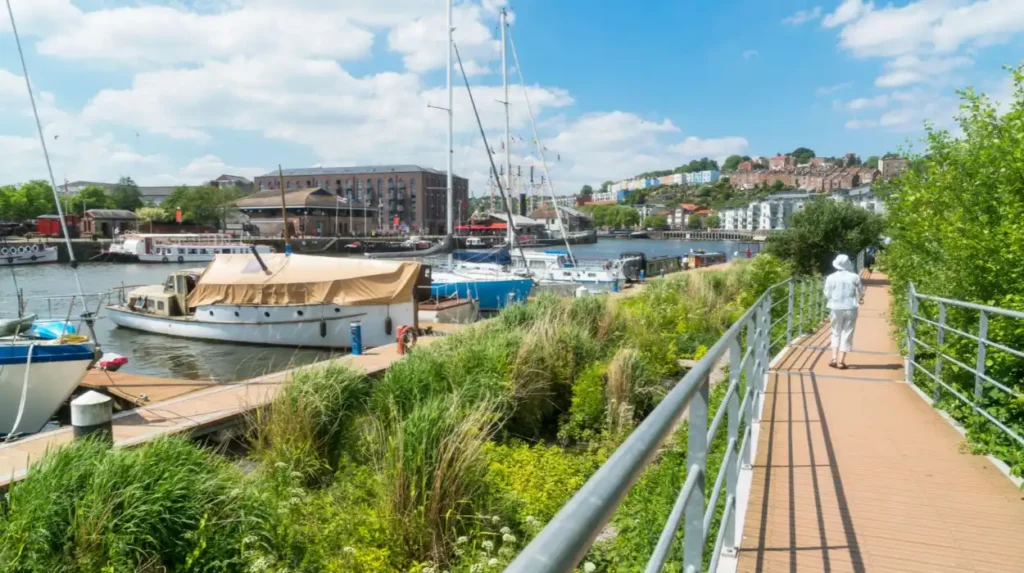
Bristol Harbourside is one of the city’s most recognisable walking destinations. The route follows sections of the Floating Harbour, a historic waterway that played a major role in Bristol’s maritime development.
The harbour area contains historic warehouses, converted industrial buildings, waterfront restaurants, museums and public spaces. Walkers encounter attractions such as M Shed, the Arnolfini and the SS Great Britain.
The Floating Harbour was created to maintain a stable water level for ships despite tidal changes in the River Avon. This engineering development helped Bristol maintain its importance as a commercial port.
The Harbourside provides relatively level walking surfaces along many sections. It is suitable for casual walks, sightseeing and photography.
Walkers can extend the route towards Wapping Wharf, Millennium Square and the city centre. The surrounding cafés and public facilities make the area convenient for longer visits.
2. Clifton Suspension Bridge and Avon Gorge
Clifton Suspension Bridge is one of Bristol’s most famous landmarks. Designed by engineer Isambard Kingdom Brunel, the bridge opened in 1864 and crosses the Avon Gorge.
The surrounding walking area provides dramatic views of the gorge, wooded slopes and River Avon. The bridge connects Clifton in Bristol with Leigh Woods in North Somerset.
Visitors can walk across the bridge and explore nearby viewpoints. The Clifton Observatory and the surrounding public paths provide additional opportunities to appreciate the landscape.
The Avon Gorge is also an important natural environment. Its limestone cliffs support distinctive plant communities, including rare species adapted to the area’s geological conditions.
The combination of engineering heritage and natural scenery makes this area a significant destination for walkers.
3. Brandon Hill and Cabot Tower
Brandon Hill is one of Bristol’s oldest public parks. It stands close to the city centre and provides elevated views across surrounding neighbourhoods.
The park contains Cabot Tower, a historic landmark built to commemorate John Cabot’s voyage from Bristol to North America in 1497. The tower opened in 1898.
Walking paths pass through landscaped gardens, open lawns and mature trees. The higher sections provide views towards Bristol Harbour, Clifton and surrounding residential districts.
Brandon Hill is particularly useful for visitors seeking a short scenic walk without leaving the central area.
The park’s combination of historic architecture, green surroundings and city views makes it an important part of Bristol’s urban walking network.
4. Ashton Court Estate
Ashton Court Estate provides an extensive outdoor walking environment west of Bristol city centre. The estate includes historic parkland, woodland, open grassland and landscaped grounds.
The landscape is associated with Ashton Court Mansion, a historic country house surrounded by substantial parkland.
Walkers encounter mature trees, open fields and areas used by grazing deer. The estate’s paths support different walking distances, making it suitable for short visits and longer outdoor excursions.
The elevated parts of the estate provide views towards Bristol and the surrounding countryside.
Ashton Court also hosts outdoor activities and major public events. Visitors should check event arrangements and access information before travelling.
5. Leigh Woods
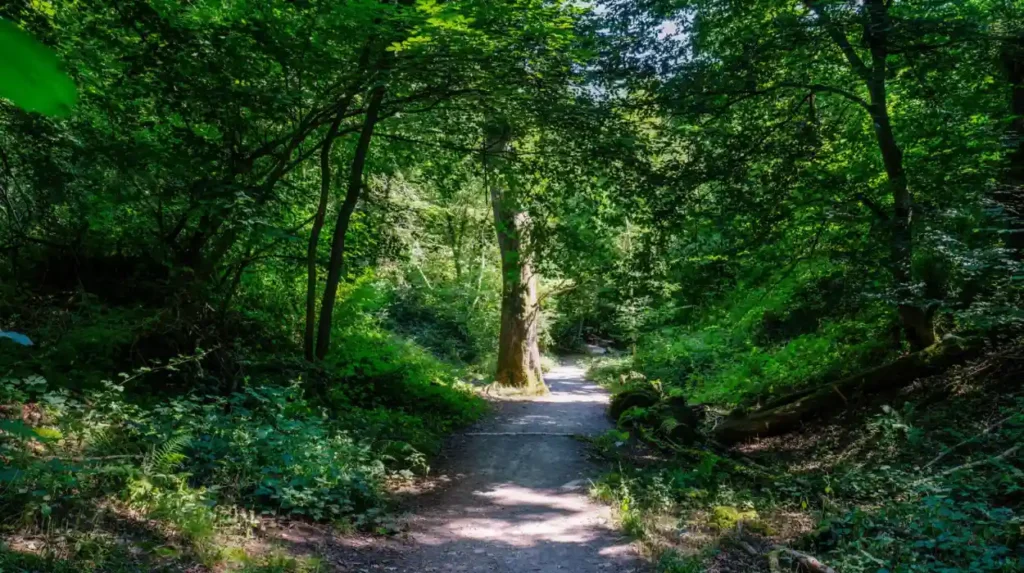
Leigh Woods is a woodland area on the western side of the Avon Gorge. It provides a quieter walking environment close to Clifton Suspension Bridge.
The woodland contains mature trees, established footpaths and habitats supporting different plant and animal species. Its location beside the gorge creates opportunities to experience both woodland scenery and dramatic geological features.
Leigh Woods is managed as a National Nature Reserve by the National Trust. Its conservation importance makes it a valuable destination for nature-focused walks.
Walkers should remain on designated paths in sensitive areas and follow local conservation guidance.
6. Castle Park
Castle Park is a central green space beside the Floating Harbour and River Frome. It provides a convenient place to combine a short walk with exploration of Bristol’s historic centre.
The park contains landscaped lawns, mature trees and the remains of St Peter’s Church, which was heavily damaged during the Second World War.
Its position connects the shopping district with the waterfront and historic streets. Visitors can continue towards Bristol Bridge, Queen Square and the Harbourside.
Castle Park is especially suitable for people with limited time who want to experience a mixture of urban history and green space.
7. Victoria Park
Victoria Park is located in south Bristol, close to Bedminster and Totterdown. The park provides open lawns, mature trees, landscaped paths and elevated views across parts of the city.
Its position on higher ground makes it a useful destination for photography and relaxed outdoor recreation.
Walking through Victoria Park also provides access to nearby residential streets and local neighbourhood facilities.
The park is particularly suitable for residents seeking accessible green space within an urban environment.
8. The Downs
The Downs consist of Clifton Down and Durdham Down, two large areas of open green space in north-west Bristol.
These landscapes provide broad grassland, mature trees, walking paths and views across the surrounding neighbourhoods. The open setting creates a different walking experience from Bristol’s enclosed parks and woodland trails.
The Downs are popular for walking, jogging, picnics and outdoor recreation. Their proximity to Clifton makes them easy to include in a longer sightseeing itinerary.
Visitors can combine a walk across the Downs with a visit to Clifton Village and the Suspension Bridge.
9. Blaise Castle Estate
Blaise Castle Estate is a historic parkland destination in north-west Bristol. It contains woodland, open fields, gardens, a historic mansion and the distinctive Blaise Castle folly.
The estate provides several walking environments, including wooded paths and open parkland. The elevated castle area offers views across the surrounding landscape.
The estate also contains Blaise Hamlet, a group of historic cottages associated with architect John Nash. The cottages provide an additional heritage attraction for walkers.
Blaise Castle Estate is suitable for families, nature enthusiasts and visitors interested in Bristol’s historic landscapes.
10. Oldbury Court Estate and Snuff Mills
Oldbury Court Estate and Snuff Mills offer attractive riverside and woodland walking opportunities in north-east Bristol.
The River Frome passes through this landscape, creating a route with flowing water, mature trees, historic mill features and footbridges.
Snuff Mills takes its name from the area’s industrial history. The former mill buildings reflect the historical use of the River Frome for industrial activities.
The riverside paths provide opportunities to observe birds, vegetation and changing water conditions. Walkers can extend their visit through Oldbury Court Estate, which includes parkland and recreational facilities.
11. Troopers Hill Nature Reserve
Troopers Hill is a nature reserve in east Bristol overlooking the River Avon and surrounding industrial landscape.
The hill contains grassland, heathland and woodland habitats. Its elevated position provides views towards the river valley and nearby neighbourhoods.
The site also reflects Bristol’s industrial history. Its landscape was influenced by former quarrying and industrial activity, leaving distinctive geological and ground features.
Troopers Hill is particularly valuable for visitors interested in combining urban history, nature conservation and panoramic walking routes.
12. Bristol South Skyline Walk
The Bristol South Skyline Walk is a longer walking route that explores the southern edge of the city. It connects urban neighbourhoods, green spaces and elevated viewpoints.
The route starts near Bristol Temple Meads and provides opportunities to discover parts of south Bristol that receive less attention from conventional tourist itineraries.
Its landscape includes residential areas, open spaces and sections overlooking the Avon Valley.
The walk is available in longer and shorter versions. It provides an opportunity to explore Bristol’s geographical diversity beyond the central waterfront.
Which Long-Distance Walking Routes Are Available in Bristol?
Bristol has several longer walking routes, including the 33-mile Bristol Ring, the 23-mile South Bristol Circular Walk, the River Avon Trail and the Frome Valley Walkway. These routes connect neighbourhoods, nature reserves, historic landmarks and surrounding countryside.
Bristol’s walking network extends beyond individual parks. Longer routes connect different parts of the city and provide opportunities for full-day outdoor activities.
The Bristol Ring
The Bristol Ring is a 33-mile circular walking route around the city. It is divided into six sections, each accessible by public transport.
Its highlights include Troopers Hill Nature Reserve, Clifton Suspension Bridge, Nightingale Valley, Ashton Court Estate, Stoke Park Estate and the River Frome at Snuff Mills.
The route allows walkers to explore different geographical and cultural parts of Bristol without completing the entire distance in one day.
South Bristol Circular Walk
The South Bristol Circular Walk covers approximately 23 miles around the city’s southern edge.
It is divided into four sections:
- Temple Meads to Brislington Village.
- Brislington Village to Whitchurch.
- Whitchurch to Bedminster Down.
- Bedminster Down to Temple Meads.
The route includes the Avon Valley, Stockwood Nature Reserve, Dundry Hill, Ashton Court and Bristol Waterfront.
Bristol Ramblers developed the route with funding and assistance from Bristol City Council. Its sections provide different options for walkers with varying levels of experience. Bristol Ramblers
River Avon Trail
The River Avon Trail follows the River Avon through the landscape surrounding Bristol. It connects riverside environments with countryside and settlements.
The route provides opportunities to experience the river’s changing character, including open landscapes, wooded sections and waterside paths.
Walkers should check the official route information before setting out because access conditions and individual path sections differ.
Frome Valley Walkway
The Frome Valley Walkway follows the River Frome through north-east Bristol and surrounding communities.
The route includes riverside landscapes, green spaces and woodland. Snuff Mills and Oldbury Court Estate are notable locations along the valley.
The walkway is useful for people seeking a nature-focused alternative to the central Harbourside.
Visit Bristol identifies the Bristol Ring, Bristol Bridges Walk, South Bristol Skyline Walk, River Avon Trail and Frome Valley Walkway among the city’s established walking opportunities. Visit Bristol
What Historical Landmarks Can Walkers Discover in Bristol?
Bristol’s walking routes reveal important historical landmarks, including Clifton Suspension Bridge, Cabot Tower, the Floating Harbour, M Shed, SS Great Britain and Blaise Castle. These places explain the city’s maritime development, engineering achievements, industrial heritage and architectural history.
Walking provides a practical way to understand Bristol’s historical development. Many significant buildings and monuments stand along public routes.
Clifton Suspension Bridge
Clifton Suspension Bridge represents an important achievement in nineteenth-century engineering. Isambard Kingdom Brunel designed the structure, which opened in 1864.
The bridge crosses the Avon Gorge and provides a connection between Bristol and North Somerset. Its construction transformed movement across the gorge and created one of the region’s most recognisable landmarks.
Bristol Floating Harbour
The Floating Harbour reflects Bristol’s historical relationship with maritime trade. Its engineering system maintained water levels and helped ships remain afloat during changing tides.
The surrounding warehouses and historic buildings provide evidence of Bristol’s former commercial importance.
SS Great Britain
The SS Great Britain was designed by Isambard Kingdom Brunel and launched in 1843. It represents a significant development in steamship engineering.
The ship is preserved at its original Bristol dock location and forms part of the city’s maritime heritage.
Cabot Tower
Cabot Tower commemorates John Cabot’s 1497 voyage from Bristol across the Atlantic. The landmark opened in 1898 and remains an important feature of Brandon Hill.
M Shed
M Shed is a museum on Bristol’s Harbourside. Its exhibitions explain the city’s history, including trade, transport, industry and social development.
These historical destinations allow walkers to combine outdoor recreation with educational visits.
When Is the Best Time to Enjoy Scenic Walks in Bristol?
Spring and summer provide longer daylight hours, flowering plants and favourable conditions for exploring Bristol’s parks, gardens and woodland. Autumn offers colourful foliage, while winter provides quieter walking conditions and clear views across open landscapes.
Bristol offers different walking experiences throughout the year. Seasonal changes affect vegetation, wildlife activity, daylight and path conditions.
Spring: March to May
Spring is an excellent season for woodland and nature walks. Flowers emerge across parks, gardens and nature reserves.
Brandon Hill, Leigh Woods and Ashton Court provide opportunities to observe seasonal vegetation and wildlife.
Bluebells and other woodland flowers create attractive scenery in suitable habitats. Walkers should remain on established paths to protect sensitive plants.
Summer: June to August
Summer provides the longest daylight hours and more opportunities for extended walking routes.
The Harbourside, Clifton Downs and Ashton Court are popular destinations during warmer weather.
Visitors should carry drinking water, wear suitable footwear and use sun protection. Open grassland routes have limited shade in some locations.
Autumn: September to November
Autumn brings changing leaf colours across Bristol’s woodland and parkland.
Leigh Woods, Blaise Castle Estate and Ashton Court are particularly suitable for seasonal woodland walks.
Wet leaves and muddy surfaces increase slipping risks. Waterproof footwear improves comfort on woodland trails.
Winter: December to February
Winter provides opportunities to explore Bristol’s historic waterfront and open green spaces with fewer seasonal visitors.
The Harbourside and central parks offer convenient shorter walks. Woodland routes require additional attention because of mud, reduced daylight and slippery surfaces.
Walkers should check daylight hours and local access information before starting longer routes.
How Can Visitors Choose a Scenic Walk According to Distance and Difficulty?
Walkers should choose Bristol routes according to distance, terrain, elevation, available facilities and personal fitness. The Harbourside suits shorter urban walks, Brandon Hill provides a brief uphill route, while the Bristol Ring and South Bristol Circular Walk suit experienced walkers.
The best walking route depends on the time available and the type of landscape visitors want to experience.
Short walks are suitable for sightseeing, family outings and visitors with limited time. Longer routes provide more opportunities to explore wildlife habitats and less central neighbourhoods.
Short scenic walks
Short walks provide access to Bristol’s main attractions without requiring a full day.
Suitable destinations include:
- Bristol Harbourside.
- Castle Park.
- Brandon Hill.
- Victoria Park.
- Clifton Village and the Suspension Bridge.
These routes work well for visitors combining sightseeing with cafés, museums and shopping.
Moderate walking routes
Moderate routes include more varied terrain and longer distances.
Examples include:
- Clifton Suspension Bridge to Leigh Woods.
- Ashton Court woodland paths.
- Oldbury Court and Snuff Mills.
- Blaise Castle Estate.
- The Downs and Clifton circuit.
These routes provide a mixture of natural scenery, open landscapes and historic features.
Longer walking routes
Longer walks require additional preparation and time.
Examples include the 33-mile Bristol Ring, the 23-mile South Bristol Circular Walk and extended sections of the River Avon Trail.
Walkers should plan transport, refreshments, navigation and rest stops before starting these routes.
Are Bristol’s Scenic Walking Routes Suitable for Families and Wheelchair Users?
Bristol has family-friendly and accessible walking destinations, including sections of the Harbourside, Castle Park and selected paths around Brandon Hill. However, steep gradients, steps, uneven woodland surfaces and changing path conditions affect accessibility across the wider walking network.
Accessibility differs significantly between Bristol’s urban waterfront and countryside routes.
Family-friendly walks
Families can enjoy several destinations with convenient facilities and opportunities for shorter visits.
The Harbourside provides attractions, cafés and relatively level walking sections. Castle Park offers open space close to the city centre.
Ashton Court provides extensive outdoor space, picnic areas, toilets and family activities. Its woodland and parkland paths provide opportunities for children to experience nature.
Parents should consider the walking distance, toilet availability and surface conditions before choosing a route.
Wheelchair-accessible walks
Some central walking routes provide relatively level surfaces and better access than woodland destinations.
The Harbourside offers suitable sections for wheelchair users, although individual paths and crossing points require checking.
Avon Wildlife Trust identifies Brandon Hill as wheelchair-friendly, with wheelchair access through Great George Street and Berkeley Square. Other entrances include steps and slopes.
Accessibility at Ashton Court
Ashton Court has accessible parking and disabled toilets in the stables courtyard. However, Bristol City Council explains that the estate’s terrain and topography create difficulties for wheelchair users, people with restricted mobility and visually impaired visitors.
Visitors should check individual access arrangements rather than assume that every route within a park has the same accessibility standard.
What Wildlife and Natural Landscapes Can Walkers Discover in Bristol?
Bristol’s scenic walking routes provide access to woodland, grassland, riverside habitats and urban nature reserves. Leigh Woods, Ashton Court, Brandon Hill and Troopers Hill support wildlife, native vegetation and important ecological habitats across the city.
Bristol’s green spaces have environmental importance beyond recreation. They provide habitats for birds, insects, mammals and different plant communities.
Woodland wildlife
Leigh Woods and Ashton Court contain woodland habitats that support birds, insects and other wildlife.
Walkers can observe seasonal flowers, mature trees and woodland birds. Quiet walking and responsible behaviour help reduce disturbance.
Grassland and wildflowers
Ashton Court contains extensive grassland habitats. Bristol City Council identifies wildflower-rich meadows, orchids and skylarks among the estate’s conservation interests.
The council also identifies a temporary summer conservation zone to protect wildflowers and ground-nesting birds. Visitors should respect rope barriers and follow dog-control instructions.
Riverside habitats
The River Avon and River Frome provide habitats for water-associated wildlife.
Riverside walking areas support opportunities to observe birds, aquatic vegetation and seasonal changes in the surrounding landscape.
Urban nature reserves
Brandon Hill demonstrates how green spaces within a busy city support wildlife.
Avon Wildlife Trust describes the reserve as a two-hectare nature area. Its partnership with Bristol City Council began in 1980 to develop the site as an urban wildlife haven.
These natural environments make walking an important way to experience Bristol’s biodiversity.
How Should Walkers Prepare for Scenic Routes in Bristol?
Successful walking trips in Bristol require suitable footwear, route planning, weather checks and awareness of local access conditions. Walkers should identify starting points, transport connections, available facilities and route distances before visiting unfamiliar parks or countryside paths.
Preparation improves safety and makes longer walks more comfortable.
Check route information
Use official walking guides and maps to identify entrances, paths and possible route closures.
Visit Bristol provides information about city-centre walks, heritage trails and longer walking routes. Bristol City Council also publishes information about individual parks and estates.
Wear suitable clothing
Walking shoes with good grip are important for woodland paths and uneven surfaces. Waterproof clothing provides protection during wet weather.
Open spaces such as Clifton Downs and Ashton Court require additional sun protection during summer.
Plan public transport
Bristol has bus connections serving many major walking destinations.
Clifton is accessible through central Bristol bus services. Ashton Court can be reached using local bus services and walking connections from Clifton Suspension Bridge.
Forestry England identifies bus services X3, X3a and X4 as options for reaching Leigh Woods. Forestry England
Respect local environments
Responsible walking protects Bristol’s natural and historic attractions.
Visitors should:
- Follow designated paths and public access signs.
- Keep dogs under control.
- Avoid disturbing wildlife.
- Take litter home.
- Respect conservation barriers.
- Check restrictions during public events.
These practices help maintain walking routes for future visitors.
How Do Scenic Walks Support Bristol’s Tourism and Local Communities?
Scenic walks support Bristol’s tourism economy by connecting visitors with museums, independent businesses, historic attractions and public green spaces. Walking also encourages physical activity, sustainable transport, environmental awareness and greater appreciation of local neighbourhoods.
Walking is an important part of Bristol’s visitor experience because it connects destinations without requiring private transport.
Supporting local businesses
Popular walking areas generate opportunities for nearby businesses.
The Harbourside contains cafés, restaurants, museums and independent attractions. Clifton Village provides shopping and hospitality facilities close to the Suspension Bridge.
Visitors walking through neighbourhood parks also encounter local cafés, shops and community facilities.
Encouraging sustainable tourism
Walking reduces dependence on short car journeys and provides an environmentally responsible way to explore urban attractions.
Routes connecting railway stations, museums, parks and waterfront destinations encourage visitors to experience Bristol through public spaces.
Supporting physical activity
Walking provides accessible physical activity for people with different fitness levels.
Short urban walks support everyday movement, while longer countryside routes provide opportunities for endurance and outdoor recreation.
Protecting natural heritage
Walking routes increase public awareness of conservation areas, historic landscapes and biodiversity.
Responsible visitor behaviour helps protect sensitive habitats and maintain public access to green spaces.
Explore More Area Guide
Historic Walking Routes in Bristol: Heritage Trails
Harbour Walks in Bristol: Best Routes and Waterfront Attractions
What Is the Future of Scenic Walking in Bristol?
The future of scenic walking in Bristol depends on maintaining public paths, improving accessibility, protecting wildlife habitats and connecting green spaces with sustainable transport. Investment in urban greenery and walking infrastructure strengthens the city’s environmental and recreational value.
Bristol’s existing walking network provides a foundation for future sustainable development.
Maintaining established footpaths is important as visitor numbers and recreational demand change. Better signage and route information also help visitors explore less familiar neighbourhoods.
Accessibility improvements remain important for residents and tourists with different mobility requirements.
Environmental protection is another major priority. Woodland management, grassland conservation and river restoration contribute to healthier walking environments.
The Bristol Ring and other long-distance routes also demonstrate the potential for connected walking experiences across different neighbourhoods.
Future walking improvements benefit from coordination between Bristol City Council, conservation organisations, local communities and transport providers.
Why Should You Explore Bristol on Foot?
Bristol offers a diverse selection of scenic walking opportunities, from the historic Floating Harbour and Clifton Suspension Bridge to the woodland landscapes of Leigh Woods and Ashton Court Estate.
The city’s walking network combines maritime heritage, engineering landmarks, public parks, nature reserves and countryside connections. Short urban routes provide convenient sightseeing opportunities, while longer trails offer more extensive exploration.
The Bristol Ring, South Bristol Circular Walk, River Avon Trail and Frome Valley Walkway demonstrate the geographical variety available to walkers.
Whether exploring historic attractions, enjoying riverside scenery or discovering local wildlife, walking remains one of the most effective ways to experience Bristol’s landscape and character.
What are the best scenic walks in Bristol?
Some of the best scenic walks in Bristol include Bristol Harbourside, Clifton Suspension Bridge, Leigh Woods, Ashton Court Estate, Brandon Hill and Blaise Castle Estate. These destinations offer waterfront views, woodland trails, historic landmarks and beautiful green spaces.