Bristol offers a wide range of family walking routes, from woodland trails and riverside paths to historic estates and open city parks. Families can explore natural landscapes, discover local history, observe wildlife and enjoy outdoor activities without travelling far from the city.
- Why Are Family Walks in Bristol Popular With Local Residents and Visitors?
- Which Family Walking Routes in Bristol Are Best for Different Ages?
- 1. Ashton Court Estate
- 2. Blaise Castle Estate
- 3. Oldbury Court Estate and Snuff Mills
- 4. The Downs
- 5. Leigh Woods
- 6. Brandon Hill and Cabot Tower
- 7. Eastville Park
- 8. Arnos Vale Cemetery
- What Are the Best Short Family Walks in Bristol for Young Children?
- Choose a circular route
- Include playground stops
- Select routes with interesting features
- Plan around children’s energy levels
- Which Bristol Family Walks Are Suitable for Pushchairs and Wheelchairs?
- What Can Children Learn During Family Walks in Bristol?
- Wildlife and biodiversity
- Local history and heritage
- Rivers and freshwater environments
- Trees and seasonal changes
- When Is the Best Time of Year for Family Walks in Bristol?
- How Can Families Plan a Safe and Enjoyable Walk in Bristol?
- Check the route before departure
- Wear appropriate footwear
- Carry essential supplies
- Check toilets and refreshments
- Supervise children around natural hazards
- How Can Families Reach Bristol’s Main Walking Destinations?
- What Other Scenic Walking Routes Can Families Explore Around Bristol?
- How Do Family Walks Benefit Bristol’s Environment and Local Communities?
- Supporting physical activity
- Developing environmental awareness
- Protecting green spaces
- Supporting community facilities
- How Can Families Make Bristol Walks More Engaging for Children?
- Organise a nature spotting activity
- Introduce a walking treasure hunt
- Use seasonal learning activities
- Let children help select the route
- Which Family Walk in Bristol Should You Choose?
Family walks in Bristol provide accessible opportunities for children and adults to exercise, spend time together and explore the city’s green spaces. Popular destinations include Ashton Court Estate, Blaise Castle Estate, The Downs, Oldbury Court Estate, Snuff Mills and Leigh Woods. These locations offer different walking environments, facilities and levels of difficulty.
The best family walking destination depends on children’s ages, walking abilities, available facilities and preferred surroundings. Short park routes suit younger children, while woodland trails and longer countryside paths provide more adventurous experiences for older children.
Why Are Family Walks in Bristol Popular With Local Residents and Visitors?
Family walks in Bristol combine outdoor exercise, nature discovery and local heritage in accessible public spaces. The city has hundreds of parks, gardens and green areas, giving families opportunities to explore woodland, riversides, historic estates and open landscapes throughout the year.
Bristol has an established network of public parks and recreational landscapes. These spaces support walking, cycling, wildlife observation, outdoor play and community activities. Families benefit from having different environments within relatively short distances of residential neighbourhoods and the city centre.
According to Visit Bristol, the city has more than 400 parks and gardens. These include historic municipal parks, nature reserves, woodland estates and large open spaces. Their variety makes Bristol suitable for short family outings and longer walking adventures.
Walking also supports children’s physical development. Regular outdoor activity encourages movement, balance, coordination and stamina. It gives children opportunities to explore different surfaces, including grass, woodland paths, gravel tracks and paved walkways.
Family walks also introduce children to Bristol’s natural and historical environment. A visit to Ashton Court introduces deer and ancient trees, while Blaise Castle combines woodland exploration with an eighteenth-century historic estate.
The city’s walking destinations serve different family requirements. Parents with pushchairs benefit from accessible, surfaced paths, while families with older children often prefer longer routes with hills, woodland and viewpoints.
Which Family Walking Routes in Bristol Are Best for Different Ages?
Bristol has family walking routes for toddlers, primary-school children and teenagers. Ashton Court, Blaise Castle, Oldbury Court, The Downs and Snuff Mills offer different combinations of accessible paths, playgrounds, wildlife, open spaces and woodland exploration.
Choosing an appropriate route improves the experience for everyone. Walking distance, terrain, toilet facilities and opportunities for breaks are important considerations when planning an outing.
1. Ashton Court Estate
Ashton Court Estate is one of Bristol’s largest outdoor destinations. The estate covers approximately 850 acres of woodland and grassland on the western side of the city.
Its extensive landscape provides space for families to choose short walks or longer countryside routes. Open grassland, wooded areas, historic buildings and deer habitats create different opportunities for exploration.
Children can observe red and fallow deer in designated areas. The estate also contains ancient oak trees, wildflower-rich grasslands and ponds. Some trees are more than 700 years old.
The estate is a nationally designated Site of Special Scientific Interest (SSSI). This designation recognises its important wildlife and natural habitats. The site includes approximately 300 hectares of protected land.
Families can explore the mansion grounds, woodland paths and open countryside. The estate also offers cycling, miniature railway activities and a high-ropes adventure course for children aged six and above.
Practical information:
- Location: Long Ashton, Bristol, BS41 9JN.
- Estate opening: Normally from 8am daily.
- Admission: Normally free.
- Parking: Three main car parks.
- Facilities: Toilets, café facilities and picnic opportunities.
Parents should remember that the terrain varies across the estate. Some routes are unsuitable for wheelchairs and pushchairs. The level stables courtyard provides an easier area for visitors with restricted mobility.
The council also operates seasonal conservation restrictions to protect wildflowers and ground-nesting birds. Families should follow marked boundaries and keep dogs under control. Bristol City Council
2. Blaise Castle Estate
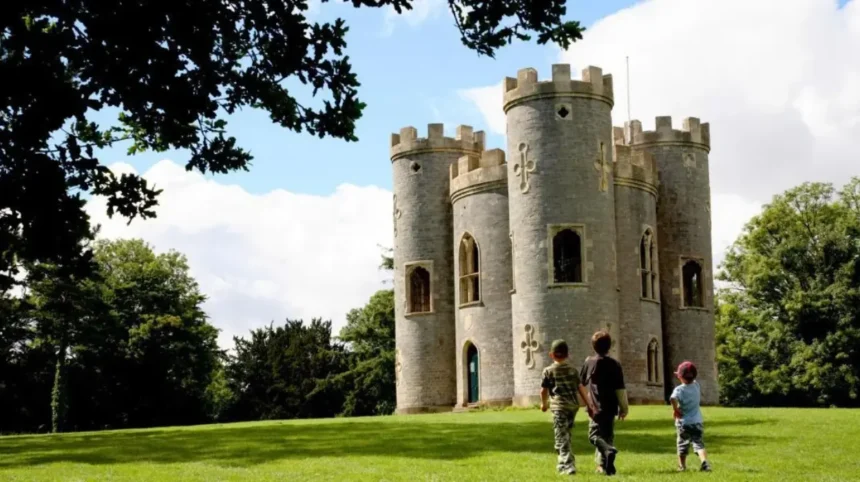
Blaise Castle Estate is a major family walking destination in north Bristol. Its approximately 650 acres of Grade II* registered parkland contain woodland, grassland, streams, historic buildings and walking paths.
The estate is particularly suitable for families because it combines outdoor recreation with educational attractions. Children can explore woodland trails, visit the castle folly and enjoy the children’s play area.
The castle itself is an eighteenth-century folly. A folly is a decorative building constructed primarily for visual interest rather than practical residential use. Its elevated position provides views across the surrounding landscape.
Blaise Museum offers another educational opportunity. The museum explores Bristol’s social history through collections relating to domestic life, clothing, toys and everyday objects.
The council provides several mapped walking routes:
- Castle Walk: approximately one mile and 40 minutes.
- Gorge Walk: approximately one mile and 50 minutes.
- Kings Weston Down Walk: approximately one mile and 35 minutes.
- Rhododendron Walk: approximately three miles and one hour 45 minutes.
- The Royals and St Mary’s Church Walk: approximately one mile and 50 minutes.
The routes have different terrain requirements. Some include steep slopes, muddy woodland paths and uneven ground. The Royals and St Mary’s Church route includes surfaced paths and grass, while its main drive is suitable for buggies.
The estate also provides a café, toilets, baby-changing facilities, picnic areas and children’s play equipment.
Blaise Castle is normally free to enter and remains open throughout the day. However, individual attractions and facilities have separate opening arrangements. Bristol City Council
3. Oldbury Court Estate and Snuff Mills
Oldbury Court Estate and Snuff Mills provide a popular combination of parkland, riverside scenery and woodland walking.
The River Frome runs through this area, creating a natural setting for family exploration. Children can observe flowing water, birds, trees and other riverside wildlife.
Oldbury Court has open green spaces and a children’s play area. These facilities make it suitable for families who want to combine walking with outdoor play.
Snuff Mills provides a more woodland-focused experience. Its historic industrial features and riverside setting introduce visitors to the area’s past.
The wider Frome Valley Walkway offers opportunities to extend a family walk beyond the main parkland. Families can select shorter sections according to children’s ages and walking abilities.
Parents should supervise children near the river. Water levels, slippery surfaces and uneven riverbanks create potential hazards, particularly after rainfall.
This destination is suitable for families who want a nature-focused outing without travelling far from residential Bristol.
4. The Downs
The Downs consists of Clifton Down and Durdham Down. Together, these extensive open spaces provide walking opportunities on the northern edge of Bristol.
The area is particularly suitable for families who prefer open landscapes rather than enclosed woodland. Wide grass areas allow children to play, run and enjoy outdoor activities.
Sea Walls is one of the area’s most recognisable viewpoints. Visitors can see the Avon Gorge, Clifton Suspension Bridge and surrounding woodland.
Bristol City Council provides several designated walking trails:
- Bird Trail: 1.4 miles, approximately one hour.
- Lichen Trail: 0.4 miles, approximately 30 minutes.
- Meadow Trail: 0.7 miles, approximately 30 minutes.
- Tree Trail: 1.4 miles, approximately one hour.
The council also publishes seasonal family trails for spring, summer, autumn and winter. These routes introduce children to seasonal changes, wildlife and different features of the landscape.
The Downs is suitable for family picnics, nature observation, kite flying and gentle exercise. Its open layout also provides opportunities for children to explore without following a single fixed route.
Families should check event arrangements before visiting because large public events sometimes affect access and parking. Bristol City Council+1
5. Leigh Woods
Leigh Woods provides a woodland walking experience across the Avon Gorge from Clifton.
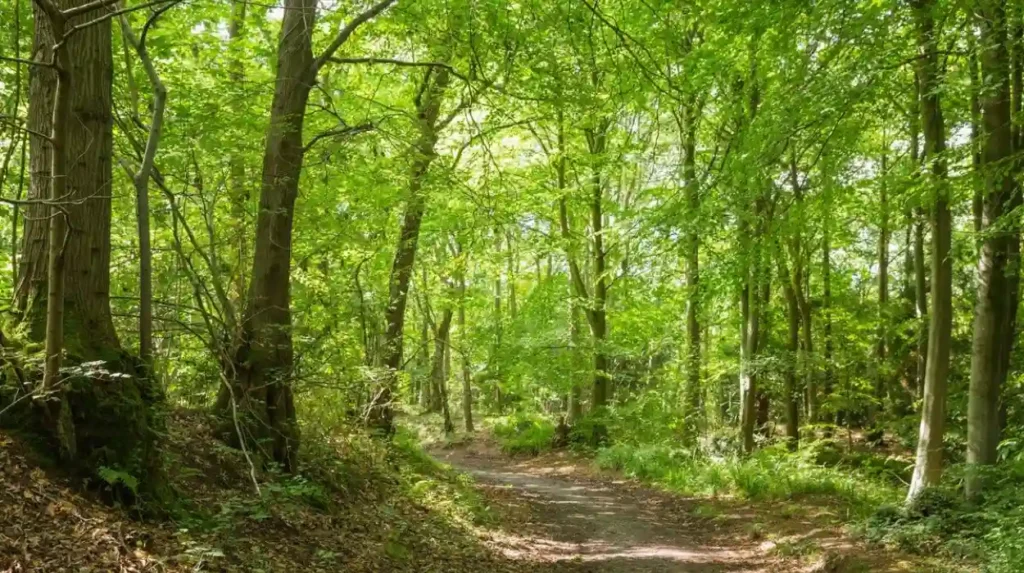
The National Trust manages much of this woodland, which contains ancient trees, diverse habitats and designated walking paths.
Families can explore shaded woodland routes and discover different tree species. The landscape includes oak, small-leaved lime and ash trees.
The woodland also offers opportunities to observe birds, insects and seasonal plant life. Children can learn about woodland ecosystems and the importance of protecting natural habitats.
Nightingale Valley is a notable area for scenic views towards the Avon Gorge and Clifton Suspension Bridge.
Some paths are steep or uneven, so parents should select routes according to children’s abilities. Designated walking paths provide different levels of accessibility, but not every woodland trail is suitable for pushchairs.
Leigh Woods works particularly well for families with older children who enjoy nature exploration and longer outdoor walks. Visit Bristol+1
6. Brandon Hill and Cabot Tower
Brandon Hill is a historic green space near Bristol city centre. It combines landscaped parkland, a nature reserve and elevated viewpoints.
The main attraction is Cabot Tower, a landmark built to commemorate John Cabot’s 1497 voyage from Bristol across the Atlantic.
The park’s slopes provide an opportunity for children to experience a short uphill walk. Visitors can explore planted areas, grassy spaces and paths around the tower.
The elevated location offers views across central Bristol. Families can combine the walk with visits to nearby Park Street, College Green and the city centre.
Brandon Hill is a practical choice for families staying in central Bristol or visiting nearby attractions. However, its slopes and steps require attention when travelling with pushchairs.
7. Eastville Park
Eastville Park is a large Victorian public park in east Bristol. Its open spaces, lake, tree-lined paths and recreational facilities provide a convenient destination for family outings.
The park offers opportunities for gentle walking and outdoor play. Families can follow paths around the lake, observe waterbirds and explore the surrounding landscaped areas.
Children can enjoy the playground and open grass areas. Parents can use benches and picnic spaces for breaks during a walk.
Eastville Park is particularly useful for families with younger children because visitors can organise a relatively short outing without committing to a long countryside route.
The lake provides an educational opportunity to discuss freshwater habitats, waterbirds and the relationship between urban parks and wildlife.
8. Arnos Vale Cemetery
Arnos Vale Cemetery offers a different type of family walk through historic landscapes and natural surroundings.
Established in the Victorian period, the cemetery combines architectural heritage, landscaped grounds, mature trees and wildlife habitats.
The site covers approximately 45 acres. Its winding paths pass historic monuments, memorials and wooded areas.
Families with older children can explore the grounds while learning about Victorian burial traditions, local history and the development of Bristol.
The environment is quieter than many recreational parks. Visitors should respect the site’s memorial purpose and behave appropriately around graves and funerary monuments.
Arnos Vale is suitable for educational walks that combine local history with nature observation. Families should check visitor arrangements and any admission or event requirements before planning a visit.
What Are the Best Short Family Walks in Bristol for Young Children?
Short family walks in Bristol work best when routes have manageable distances, accessible surfaces, nearby toilets and opportunities for play. The Downs, Blaise Castle, Oldbury Court and Eastville Park offer suitable starting points for outings with younger children.
Young children often need frequent breaks during outdoor activities. A short route with interesting features is more practical than a long walk with limited opportunities to stop.
Parents should consider the child’s walking ability rather than selecting a route based only on its published distance.
A one-mile walk can feel longer when it includes steep hills, muddy surfaces or difficult terrain. A longer route on flat, surfaced paths can sometimes be easier.
The following approaches help families plan shorter outings.
Choose a circular route
Circular routes begin and finish at the same location. They reduce the need to arrange transport between different starting and finishing points.
Families can follow a short loop around a park, lake or woodland area. This arrangement also makes it easier to return to facilities when children need a break.
Include playground stops
Playgrounds provide a useful break from continuous walking. Blaise Castle Estate and Oldbury Court Estate combine walking opportunities with dedicated children’s play areas.
Parents can allow children time to play before continuing along the walking route.
Select routes with interesting features
Children engage more readily with walks that include visible attractions. Examples include:
- A castle at Blaise Castle Estate.
- Deer at Ashton Court Estate.
- A lake at Eastville Park.
- A historic tower at Brandon Hill.
- River scenery at Snuff Mills.
These features provide natural stopping points and opportunities for learning.
Plan around children’s energy levels
Morning walks often suit families who want to complete outdoor activities before afternoon tiredness develops. Shorter routes also provide flexibility when weather conditions change.
Parents should carry water, snacks and suitable clothing. A comfortable pace allows children to enjoy the surroundings without unnecessary pressure.
Which Bristol Family Walks Are Suitable for Pushchairs and Wheelchairs?
Pushchair and wheelchair suitability depends on path surfaces, gradients, gates and accessible facilities. The Downs, selected Blaise Castle paths, Ashton Court’s courtyard and parts of Bristol’s Harbourside offer more practical options than steep or uneven woodland trails.
Accessibility is an important consideration when planning family walks. A destination with accessible parking does not automatically have wheelchair-friendly walking routes.
Parents with babies and toddlers should check whether paths are paved, surfaced or suitable for standard pushchairs.
The Downs
The Downs provides extensive open areas and established paths. Its relatively open layout makes route selection easier for families with pushchairs.
However, some sections have grass, uneven ground or slopes. Families should select suitable paths rather than assuming the entire area has the same accessibility.
Blaise Castle Estate
Blaise Castle has a mixture of surfaced routes, woodland paths and grassland tracks.
The main drive on the Royals and St Mary’s Church route is suitable for buggies. Other trails include steep inclines and uneven surfaces.
The estate also has toilets with baby-changing facilities, making it practical for families with infants.
Ashton Court Estate
Ashton Court has accessible facilities around the stables courtyard. However, the council explains that the estate’s overall terrain and topography create difficulties for some wheelchair users and visitors with restricted mobility.
Families should check the estate map and select routes carefully.
Bristol Harbourside
Bristol Harbourside provides a largely level waterside walking environment.
The route connects attractions around the Floating Harbour, including M Shed, Millennium Square and Brunel’s SS Great Britain.
Its urban setting offers access to cafés, restaurants, public facilities and transport connections. Families seeking a gentle walk without woodland terrain often find this area practical.
Visitors should still check temporary access restrictions, construction work and individual attraction accessibility before travelling.

What Can Children Learn During Family Walks in Bristol?
Family walks introduce children to Bristol’s wildlife, history, geography and environmental conservation. Parks, historic estates, rivers and nature reserves provide practical learning opportunities through observation, outdoor exploration and direct engagement with natural surroundings.
Outdoor learning helps children understand subjects beyond classroom environments. Walking routes provide opportunities to observe plants, trees, birds, insects, water systems and historical buildings.
Bristol’s different landscapes support several educational themes.
Wildlife and biodiversity
Biodiversity describes the variety of living organisms within an environment. It includes plants, animals, fungi and microorganisms.
Ashton Court Estate contains ancient woodland, grassland, ponds and deer habitats. Blaise Castle Estate supports woodland wildlife, wildflowers, great crested newts and other species.
Children can learn to recognise different habitats and understand why wildlife needs suitable places to feed, shelter and reproduce.
Parents can encourage observation without disturbing animals or removing plants.
Local history and heritage
Historic walking destinations introduce children to Bristol’s development.
Blaise Castle Estate provides examples of eighteenth-century architecture and historic parkland. Arnos Vale Cemetery introduces Victorian memorial architecture and burial traditions.
Brandon Hill and Cabot Tower connect the city’s landscape with the history of maritime exploration.
Rivers and freshwater environments
Snuff Mills and Oldbury Court provide opportunities to explore the River Frome.
Children can learn how rivers shape landscapes, support wildlife and connect different parts of a region.
Parents can explain the importance of keeping waterways clean and avoiding littering.
Trees and seasonal changes
Woodland walks provide examples of how nature changes throughout the year.
Children can observe new leaves in spring, green tree canopies in summer, changing colours in autumn and bare branches during winter.
These observations introduce basic ecological concepts and seasonal patterns.
When Is the Best Time of Year for Family Walks in Bristol?
Spring and summer provide longer daylight hours and opportunities to explore wildflowers, woodland and open parks. Autumn offers changing leaf colours, while winter suits shorter walks through accessible parks and sheltered woodland routes.
Bristol’s family walking destinations remain useful throughout the year. Each season creates different conditions and outdoor experiences.
Spring
Spring brings new plant growth and increased wildlife activity. Families can explore woodland paths, meadow trails and nature reserves.
Wildflowers become more visible in suitable grassland habitats. Children can observe seasonal changes and learn about pollinators.
The Downs and Blaise Castle Estate provide opportunities for seasonal nature walks.
Summer
Summer offers longer daylight hours and more opportunities for picnics and outdoor play.
Ashton Court, The Downs and Oldbury Court provide open spaces for extended family outings.
Families should carry drinking water, use sun protection and avoid walking during the hottest part of the day.
Visitors should also respect seasonal conservation restrictions, particularly around nesting birds and wildflower areas.
Autumn
Autumn is a popular season for woodland exploration.
Leigh Woods, Blaise Castle and Ashton Court provide opportunities to observe changing foliage and collect fallen leaves for educational activities.
Families should wear suitable footwear because fallen leaves can conceal slippery surfaces and uneven ground.
Winter
Winter walks provide quieter outdoor experiences and opportunities to observe the structure of trees and changing landscapes.
Short routes around The Downs, Brandon Hill and selected areas of Blaise Castle are practical options.
Parents should check daylight hours, weather forecasts and path conditions before leaving home.
Wet weather creates muddy surfaces and increases slipping risks on steep woodland paths.
How Can Families Plan a Safe and Enjoyable Walk in Bristol?
Successful family walks require suitable route selection, weather preparation, appropriate clothing and regular breaks. Parents should check walking distances, terrain, transport, toilets and facilities before travelling, particularly when visiting woodland, riverside paths and large country estates.
Preparation helps families avoid common problems during outdoor activities. Bristol’s walking destinations have different terrain, access arrangements and facilities.
Check the route before departure
Parents should review the route map and identify the starting point, finishing point and available shortcuts.
Bristol City Council publishes walking maps for destinations including Blaise Castle, The Downs and Ashton Court. These resources help families select routes according to distance and terrain.
Visit Bristol also provides information about walking routes and outdoor attractions across the city.
Wear appropriate footwear
Walking shoes or trainers with good grip are suitable for most established park paths.
Waterproof footwear provides additional protection during wet weather. Woodland routes often contain mud, exposed roots and slippery surfaces.
Children should wear comfortable clothing that allows movement.
Carry essential supplies
Families should prepare a small walking bag containing:
- Drinking water for every family member.
- Snacks and packed food.
- Weather-appropriate clothing.
- Sun protection during warmer months.
- Basic first-aid supplies.
- Tissues and waste bags.
- A fully charged mobile phone.
The quantity of supplies depends on the route length, weather and children’s ages.
Check toilets and refreshments
Toilet availability is particularly important when travelling with toddlers and younger children.
Blaise Castle Estate has public toilets with baby-changing facilities. Ashton Court has toilet facilities around the mansion and stables courtyard.
Families should check individual facility opening times because toilets and cafés do not necessarily follow the same schedules as public parks.
Supervise children around natural hazards
Rivers, lakes, steep slopes and woodland terrain require additional supervision.
Children should remain away from unsafe riverbanks and deep water. Parents should also explain why they must not climb unstable trees, cross barriers or approach unfamiliar animals.
These precautions are particularly important at Snuff Mills, Oldbury Court and Ashton Court.
How Can Families Reach Bristol’s Main Walking Destinations?
Bristol’s family walking destinations are accessible through a combination of buses, walking connections, cycling routes and private transport. Public transport is useful for many parks, while larger estates provide designated parking areas for visitors.
Transport arrangements affect how much time families spend outdoors. Parents should consider journey length, parking availability and the distance between bus stops and walking routes.
Public transport
Bristol has a local bus network connecting residential neighbourhoods with major recreational destinations.
Blaise Castle Estate is served by several nearby bus services, including routes 1, 3, 4, 76 and MC5, according to the council’s published visitor information.
Ashton Court can be reached using buses from the city centre, although visitors should account for the walking distance between stops and the estate entrance.
Families should check current timetables through TravelWest and First Bus before departure.
Car parking
Ashton Court has three principal car parks:
- Mansion House.
- Clifton Lodge.
- Church Lodge.
The council publishes parking charges and seasonal opening times. At the time of checking, standard parking at Mansion House and Church Lodge starts at £1 for one hour and £2 for two hours.
Blaise Castle has two car parks, including its main parking area on Kings Weston Road.
Parents should check parking restrictions during busy weekends and special events.
Walking and cycling connections
Several Bristol walking destinations connect with wider pedestrian and cycling networks.
The Bristol Ring is a 33-mile circular walking route divided into six sections. Its sections connect places such as Troopers Hill, Clifton Suspension Bridge, Nightingale Valley, Ashton Court and Stoke Park Estate.
Families do not need to complete the entire route. They can select shorter sections according to their walking experience.
The route also has public transport connections, making it easier to plan individual sections without completing a full circular journey.
What Other Scenic Walking Routes Can Families Explore Around Bristol?
Families can extend their walking experiences beyond major parks by exploring Bristol’s waterways, historic streets and neighbourhood nature reserves. The Harbourside, Bristol Ring and local green corridors provide additional routes with different scenery and educational opportunities.
Bristol has walking opportunities beyond its largest recreational estates. These alternatives are useful for families who want to explore the city’s urban heritage and smaller natural spaces.
Bristol Harbourside Walk
The Bristol Harbourside follows the historic Floating Harbour through the city’s central waterfront.
The route passes important attractions, including M Shed, Brunel’s SS Great Britain, Millennium Square, Arnolfini and Underfall Yard.
The Floating Harbour is a historic dock system that supported Bristol’s maritime trade. Today, the area combines historic waterfront buildings, museums, restaurants and recreational spaces.
Families can enjoy waterside scenery while learning about Bristol’s industrial and maritime history.
The relatively level walking environment makes the Harbourside a practical alternative to steep countryside trails. Parents should supervise children close to the water’s edge. Visit Bristol+1
Troopers Hill Nature Reserve
Troopers Hill is a local nature reserve overlooking the River Avon.
Its hillside landscape provides panoramic views and opportunities to explore local wildlife habitats.
The area contains grassland, woodland and industrial heritage features. Children can learn how former industrial landscapes develop into important urban wildlife spaces.
Some sections are steep, so families with younger children should select manageable paths.
Manor Woods Valley
Manor Woods Valley provides another nature-focused destination in south-west Bristol.
The reserve includes woodland, wildflower meadows and natural green spaces.
It is suitable for families interested in observing plants, insects and birds. The landscape also introduces children to the importance of protecting local habitats.
The Bristol Bridges Walk
The Bristol Bridges Walk offers another way to explore the city’s urban environment.
Visit Bristol describes a route covering all 45 bridges in the city without crossing the same bridge twice.
Families can choose a shorter section rather than attempting the entire walk. The route provides opportunities to explore Bristol’s waterways, historic infrastructure and different neighbourhoods.
How Do Family Walks Benefit Bristol’s Environment and Local Communities?
Family walks support healthier communities, environmental awareness and appreciation of public green spaces. Responsible visits also encourage conservation, support local facilities and help children understand the importance of protecting Bristol’s parks, wildlife habitats and historic landscapes.
Public parks provide environmental and social benefits beyond recreation.
Supporting physical activity
Walking provides a form of physical activity that families can incorporate into everyday routines.
Children develop movement skills and build familiarity with outdoor environments. Adults benefit from regular exercise and opportunities to spend time outside.
Family walks also create opportunities for shared activities without requiring expensive equipment or organised sports memberships.
Developing environmental awareness
Nature reserves and parkland expose children to local biodiversity.
Observing birds, trees, insects and wildflowers helps children understand how different organisms depend on natural habitats.
Families can reinforce this learning by following marked trails, respecting wildlife and avoiding damage to plants.
Protecting green spaces
Bristol’s parks require ongoing management and conservation.
Ashton Court and Blaise Castle contain protected habitats and species-rich grasslands. Visitors contribute to their protection by following signs, using established paths and keeping litter out of natural areas.
Responsible behaviour also includes respecting seasonal restrictions and keeping dogs under control where required.
Supporting community facilities
Family visits create opportunities to use local cafés, visitor facilities and nearby attractions.
Many parks also benefit from community participation through volunteer groups and conservation activities.
Friends of Blaise, for example, works with Bristol City Council to support the management and improvement of Blaise Castle Estate.
These activities demonstrate how public participation contributes to the long-term maintenance of local green spaces.
Explore More Area Guide
Scenic Walks in Bristol: Best Parks, Trails and Views
Historic Walking Routes in Bristol: Heritage Trails
How Can Families Make Bristol Walks More Engaging for Children?
Children enjoy walking experiences that include achievable challenges, wildlife observation and opportunities to explore interesting landmarks. Parents can introduce simple activities, nature spotting and educational conversations to make outdoor visits more engaging.
Walking becomes more interactive when children participate rather than simply follow adults.
Organise a nature spotting activity
Parents can encourage children to identify trees, birds, flowers and insects.
A simple checklist can include a robin, a fallen leaf, an oak tree, a butterfly and a squirrel.
The activity works particularly well at Ashton Court, Blaise Castle and Leigh Woods.
Introduce a walking treasure hunt
Children can search for specific natural or historical features during the walk.
Examples include an unusual tree, a wooden bridge, a historic building or a particular type of leaf.
Families should avoid collecting protected plants, disturbing wildlife or removing objects from historic sites.
Use seasonal learning activities
Seasonal changes provide opportunities to discuss weather, plant growth and wildlife behaviour.
Spring walks introduce new growth and flowers. Autumn walks provide examples of changing leaves and seed dispersal.
Let children help select the route
Older children can participate in reading maps and identifying landmarks.
Parents can explain distances, directions and route markers. These activities develop basic navigation skills and confidence in outdoor environments.
Which Family Walk in Bristol Should You Choose?
The best family walk in Bristol depends on children’s ages, walking abilities and interests. Blaise Castle suits families seeking playgrounds and woodland, Ashton Court offers countryside and deer, while The Downs provides open space and shorter trails.
The following recommendations help families select a suitable destination:
Bristol’s walking destinations provide different experiences for families throughout the year. Parents can select short routes for younger children or longer woodland and countryside walks for older children.
The city’s combination of historic estates, nature reserves, riverside paths and public parks makes outdoor exploration accessible to a broad range of visitors.
Planning ahead, respecting local wildlife and choosing suitable routes help families enjoy these destinations responsibly. Regular family walks also encourage healthy habits, environmental awareness and stronger connections with Bristol’s natural and cultural heritage.
What are the best family walks in Bristol?
Some of the best family walks in Bristol include Ashton Court Estate, Blaise Castle Estate, The Downs, Oldbury Court Estate, Snuff Mills and Leigh Woods. These destinations offer woodland trails, open parks, riverside scenery and opportunities to explore local wildlife.