Clifton is one of Bristol’s best-known residential districts, located west of the city centre beside the Avon Gorge. It combines historic architecture, university life, independent businesses, large green spaces and strong access to central Bristol. Its identity is shaped by Clifton Village, Clifton Down, Whiteladies Road and the Clifton Suspension Bridge.
- What is Clifton like to live in?
- Why is Clifton historically important?
- What types of homes are available in Clifton?
- How expensive is living in Clifton?
- What transport options are available when living in Clifton?
- What are Clifton Downs and the Avon Gorge like for residents?
- What is Clifton Village like?
- How does the University of Bristol affect life in Clifton?
- What shops, restaurants and services are available in Clifton?
- Is Clifton suitable for families?
- What are the main advantages and challenges of living in Clifton?
- How does Clifton’s conservation status affect residents?
- Is Clifton a good location for professionals and students?
- What should you check before moving to Clifton?
- What is the future relevance of living in Clifton?
What is Clifton like to live in?
Living in Clifton means having historic streets, green open spaces, independent shops, restaurants, university facilities and central Bristol within easy reach. The neighbourhood combines residential streets with busy commercial areas, while the Avon Gorge and Downs provide extensive outdoor space.
Clifton sits in western-central Bristol and forms part of the wider area around Clifton, Cliftonwood, Hotwells, Clifton Village and Clifton Down. The district is closely associated with the University of Bristol, which has its main Clifton campus around Tyndall Avenue, Woodland Road and Queens Road.
The neighbourhood has a distinctive built environment. Georgian and Victorian terraces sit alongside later residential buildings, independent businesses and institutional buildings. Several parts of Clifton are protected through conservation-area planning.
Bristol City Council identifies 33 conservation areas across the city. Conservation areas protect places with special architectural and historic character, including historic road patterns, buildings, boundaries, trees, green spaces and distinctive views.
Clifton also has an important geographical advantage. It is close to Bristol city centre but sits beside major green spaces and the Avon Gorge. This gives residents access to urban services and outdoor recreation without travelling far across the city.
The area is particularly significant for students, academics, professionals, families and residents seeking a central Bristol location. Housing ranges from period terraces and converted flats to modern apartments and purpose-built accommodation.
Why is Clifton historically important?
Clifton developed from a rural settlement into an affluent Bristol suburb during the Georgian and Victorian periods. Its history is strongly connected with the Avon Gorge, Clifton Down, nineteenth-century development and the construction of Clifton Suspension Bridge, completed in 1864.
Clifton’s history is closely connected with Bristol’s expansion westwards. Its elevated position beside the Avon Gorge made it an important landscape and residential location.
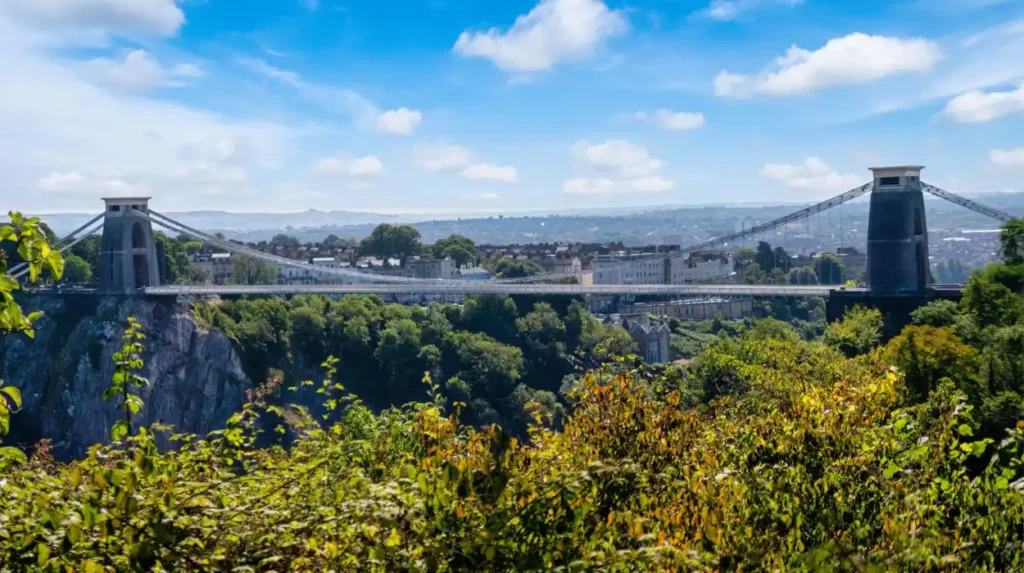
The Clifton Suspension Bridge is the area’s defining historic structure. Bristol merchant William Vick left £1,000 in his will to support construction of a bridge across the Avon Gorge. The money was invested before a bridge competition was launched in 1829.
Isambard Kingdom Brunel became the engineer associated with the project. Construction began in 1831, although progress stopped because of financial and political difficulties. Work restarted in 1836, but the project again ran out of funds.
Brunel died in 1859 without seeing the completed bridge. Engineers Sir John Hawkshaw and William Henry Barlow later revised the design and completed the structure between 1860 and 1864. The bridge opened on 8 December 1864.
The bridge spans approximately 214 metres across the Avon Gorge and stands around 75 metres above high water. Historic England lists it at Grade I because of its architectural, engineering and historic importance.
The Clifton Suspension Bridge remains privately owned and managed by the Clifton Suspension Bridge Trust. The Trust was established in 1953 and is responsible for maintaining the historic structure.
This history directly affects modern residential life. Properties around Clifton Suspension Bridge, Clifton Village and the gorge sit within a highly protected historic environment.
What types of homes are available in Clifton?
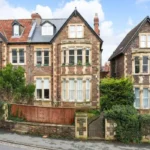
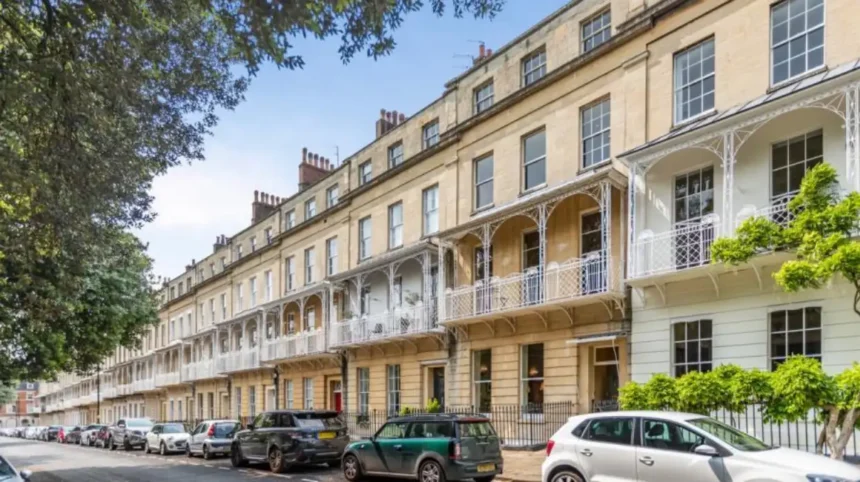
Clifton housing includes Georgian and Victorian terraces, converted period apartments, purpose-built flats, modern apartments and larger residential properties. Housing character varies between Clifton Village, Clifton Down, Whiteladies Road and streets near the University of Bristol.
Period architecture is one of Clifton’s defining residential characteristics. Many streets contain terraces constructed during Bristol’s nineteenth-century expansion.
Large properties have frequently been divided into flats. This creates a substantial apartment market alongside traditional houses.
Clifton Village has a particularly distinctive architectural character. Its streets contain historic buildings, independent commercial premises and residential properties. The area has a strong village-centre identity despite its proximity to central Bristol.
Clifton Down provides a different residential environment. Streets around the Downs have direct access to large areas of open land and the Avon Gorge.
Whiteladies Road and surrounding streets combine residential properties with shops, restaurants, cafés and professional services. This makes the area particularly convenient for residents who prefer to live close to everyday amenities.
The University of Bristol also influences the housing structure. Its Clifton campus occupies a major part of the district, creating demand for student accommodation and private rented housing.
Anyone considering a property in Clifton should check its planning history, tenure, maintenance requirements and conservation status. Bristol City Council states that conservation areas have stricter planning controls, so property alterations can require additional permissions.
How expensive is living in Clifton?
Clifton is a high-demand residential area within Bristol, with housing costs influenced by its central location, historic architecture, university presence, green spaces and access to employment and cultural facilities. Actual costs vary significantly by property type, size, condition and exact street.
Housing costs represent the largest part of a typical Clifton household budget. Prices differ between small flats, large period apartments, terraces and detached or substantial properties.
Rental costs also vary according to the same factors. Furnished student accommodation, professional flat shares and long-term residential lets form different parts of the local rental market.
The property’s location within Clifton also affects its practical value. A home close to Clifton Village has different characteristics from one near Whiteladies Road, Clifton Down or the University of Bristol.
Period properties require particular attention to maintenance. Older buildings can contain traditional windows, roofs, stonework and other features that require specialist care.
Leasehold apartments require additional checks. Prospective buyers should review service charges, lease length, reserve funds, building insurance and planned maintenance before purchasing.
Current Bristol housing statistics are available through Bristol City Council’s Census 2021 and population-data resources, which provide information on housing type, tenure, car availability and other indicators at local levels.
For anyone comparing Clifton with other Bristol neighbourhoods, housing should therefore be assessed by property category rather than relying on a single average figure.
What transport options are available when living in Clifton?
Clifton has strong bus, walking and cycling connections with central Bristol and neighbouring districts. The number 8 bus connects Temple Meads, the city centre, Clifton Village and Clifton Downs, while walking provides direct access to many central destinations.
Public transport is important because Clifton is close to central Bristol but contains steep streets and limited parking in several locations.
First Bus operates service 8 between Bristol Temple Meads and Clifton Downs. The route travels through Temple Quarter, Bristol city centre and Clifton Village. Current timetables also show stops around College Road and Clifton Village.
Temple Meads provides Bristol’s main railway connection. Residents can travel from the station to destinations across the South West and the wider UK, with connections to major cities.
Walking is particularly practical for journeys between Clifton, Clifton Village, Park Street, Harbourside and the city centre. The University of Bristol describes the Clifton campus as being within walking distance of cafés, shops, supermarkets, restaurants, theatres and central attractions.
Cycling provides another option for local journeys. The Downs has an off-road cycle path between Saville Road and Stoke Road, although cycling is restricted on its footpaths, woodland and grass areas.
Cars remain useful for journeys outside Bristol, but parking requires careful consideration. Residents should check local parking restrictions, permits and road conditions before choosing a property.
The combination of public transport, walking and cycling reduces the need for a car for many local journeys.
What are Clifton Downs and the Avon Gorge like for residents?
Clifton Downs and the Avon Gorge provide Clifton residents with extensive access to open landscapes, walking routes, recreation areas, wildlife habitats and major viewpoints. The Downs is open throughout the year and includes sports facilities, a playground, exercise stations and picnic areas.
The Downs consists of Clifton Down and Durdham Down. Bristol City Council describes the area as large green space suitable for picnics, exercise, sport and events.
The area includes more than 14 hectares of species-rich grassland. Bristol City Council identifies it as a Site of Nature Conservation Interest and records wildlife habitats containing species such as bee orchids and autumn ladies’ tresses.
The Downs also has geological significance. Parts of the area are classified as a Regionally Important Geological and Geomorphological Site.
Residents can use several marked walking routes. These include a 1.4-mile bird trail, a 0.4-mile lichen trail, a 0.7-mile meadow trail and a 1.4-mile tree trail.
Facilities include football pitches, changing rooms, outdoor exercise stations, picnic areas, benches, toilets, baby-changing facilities and a children’s playground.
The Avon Gorge forms the western landscape boundary and provides views towards the Clifton Suspension Bridge and Leigh Woods.
These green spaces have practical value for everyday life. They provide places for walking, running, informal recreation, family activities and outdoor exercise without requiring residents to travel outside the neighbourhood.
What is Clifton Village like?
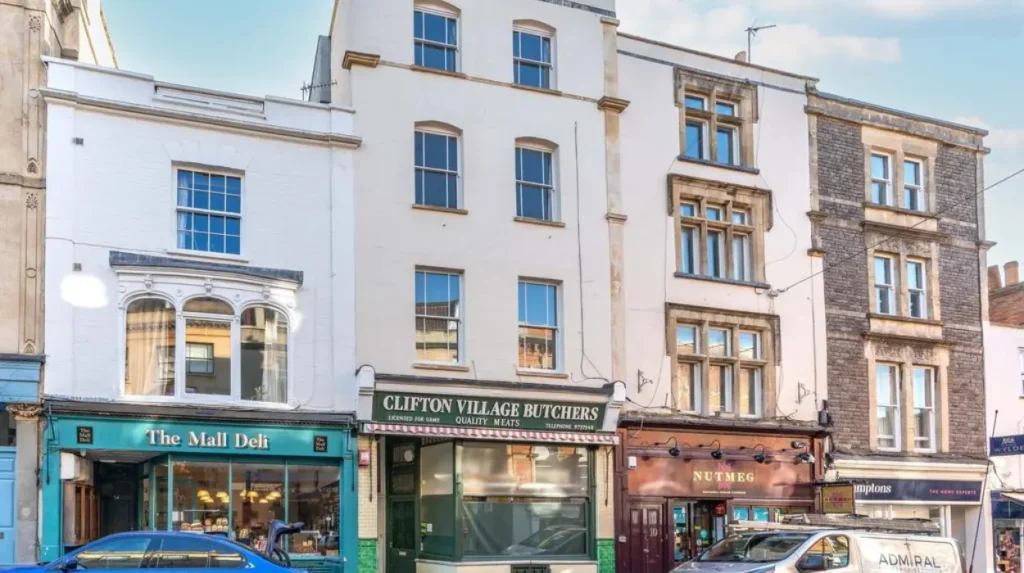
Clifton Village is the historic commercial heart of Clifton, with period buildings, independent shops, cafés, restaurants, food businesses and residential streets. Its compact layout creates a walkable neighbourhood centre close to Clifton Suspension Bridge and the Avon Gorge.
Clifton Village occupies the eastern part of the wider Clifton area. Its historic streets differ from the larger roads around Whiteladies Road and Clifton Down.
Independent retail is an important part of the local economy. Residents can find cafés, restaurants, specialist food shops, boutiques and other independent businesses within walking distance.
The village is also a major visitor destination because of its proximity to Clifton Suspension Bridge. This creates a mixture of residential and visitor activity.
The University of Bristol describes Clifton Village as an area featuring high-end dining, artisan produce and picturesque streets.
Living near the village provides convenient access to everyday services. It also places residents close to one of Bristol’s most recognisable tourist areas.
For residents who value quieter streets, the exact location of a property matters. Streets immediately around commercial areas experience more visitor and customer activity than purely residential roads.
How does the University of Bristol affect life in Clifton?
The University of Bristol is a major institution within Clifton and shapes the area’s population, housing, transport and commercial activity. Its Clifton campus includes academic buildings, student facilities and services around Queens Road, Tyndall Avenue and surrounding streets.
The University of Bristol’s Clifton campus is a major feature of the neighbourhood. The Wills Memorial Building is one of its most recognisable buildings and stands at the centre of the university’s historic precinct.
The university attracts students and staff from the UK and overseas. This creates continuous demand for accommodation, cafés, restaurants, supermarkets, study facilities and local services.
University activity also affects the housing market. Student houses, private rentals and purpose-built accommodation form an important part of the area’s residential structure.
The university describes Clifton as a walkable city-university environment. Its campus is close to shops, cafés, supermarkets, restaurants, theatres and the Harbourside.
The university’s transport policies also demonstrate the area’s parking constraints. Students generally cannot park at the Clifton Campus unless they qualify for specific exemptions, including disability-related arrangements.
This makes walking, cycling and public transport important parts of student life in Clifton.
What shops, restaurants and services are available in Clifton?
Clifton provides a broad range of everyday services through Clifton Village, Whiteladies Road and surrounding commercial streets. Residents have access to supermarkets, cafés, restaurants, independent retailers, professional services, food shops and other local businesses.
Commercial activity is concentrated along several main streets rather than distributed evenly across every residential road.
Whiteladies Road is an important commercial corridor. It connects Clifton with Redland and provides access to food businesses, cafés, restaurants, retail outlets and professional services.
Clifton Village provides a more compact shopping environment. Independent businesses form a significant part of its identity.
The area also benefits from its proximity to Bristol city centre. Larger retail centres, cultural venues, public institutions and employment locations are accessible by walking, cycling or public transport.
For residents, this creates a practical balance between neighbourhood shopping and access to larger city-centre services.
Is Clifton suitable for families?
Clifton is suitable for families who value central Bristol access, green space, schools, cultural facilities and walkable local services. The Downs provides children’s recreation areas and sports facilities, while nearby parks and educational institutions add further family-oriented facilities.
The Downs is particularly important for family recreation. Bristol City Council lists a children’s playground on Sion Hill, sports pitches, exercise facilities and picnic areas.
Clifton and Durdham Downs also has a dedicated play area with climbing towers, slides, swings, monkey bars, springers and trampolines.
Brandon Hill is another green space classified by Bristol City Council within the Clifton area. It provides a play area and open space close to Bristol city centre.
Family suitability also depends on the individual property. Period homes often have stairs, limited private outdoor space and different layouts from modern developments.
Parents should therefore assess school catchments, walking routes, traffic levels, storage, outdoor access and proximity to daily services when choosing a home.
What are the main advantages and challenges of living in Clifton?
Clifton combines central accessibility, historic architecture, green space, cultural facilities, local businesses and strong public transport. Its main practical challenges involve housing costs, parking pressure, steep streets, visitor activity and the maintenance requirements associated with older properties.
The strongest advantage is location. Clifton sits close to central Bristol while providing access to the Downs and Avon Gorge.
The second advantage is housing variety. Residents can choose between period flats, terraces, modern apartments and other property types.
The third advantage is local infrastructure. Shops, cafés, restaurants, university facilities and transport services are concentrated within or near the neighbourhood.
The fourth advantage is outdoor access. The Downs provides extensive green space, sports facilities, walking routes and wildlife habitats.
Parking is one of the key practical considerations. University parking restrictions and limited dedicated parking around the Downs demonstrate the importance of alternative transport.
Older housing also requires careful inspection. Conservation status can restrict alterations and affect renovation procedures. Bristol City Council confirms that conservation areas have stricter planning controls.
Clifton also attracts visitors throughout the year because of the Suspension Bridge and surrounding attractions. Residents close to major visitor routes experience more pedestrian activity.
How does Clifton’s conservation status affect residents?
Clifton’s conservation status protects historic character while influencing property alterations, development and building maintenance. Residents must check conservation-area and listed-building requirements before undertaking significant external changes, extensions, demolition or other controlled works.
Bristol City Council uses conservation areas to preserve or enhance areas with special architectural and historic character. The Clifton and Hotwells Conservation Area has a dedicated character appraisal covering its historic environment.
Conservation controls affect windows, roofs, extensions, external materials, shopfronts and other changes depending on the property and proposed work.
Listed buildings have additional statutory protection. Listed building consent is separate from ordinary planning permission and applies to qualifying works affecting the special architectural or historic interest of a listed building.
A recent development is particularly relevant to Clifton homeowners. Bristol City Council introduced a Local Listed Building Consent Order for certain solar-panel installations within the Clifton Conservation Area. The order was endorsed by the Planning Committee in July 2025 after a 28-day public consultation.
This demonstrates how conservation policy continues to evolve around modern environmental requirements.
Residents planning home improvements should check the property’s designation and the latest Bristol City Council planning guidance before beginning work.
Is Clifton a good location for professionals and students?
Clifton is strongly connected to Bristol’s professional and academic economy through its proximity to the city centre, University of Bristol, transport links, restaurants, cafés and cultural venues. Its walkable relationship with central Bristol supports commuting without relying entirely on private cars.
Students benefit from proximity to the University of Bristol’s main Clifton facilities.
Professionals benefit from the area’s location between residential districts and central employment areas. Many city-centre workplaces are accessible on foot, by bicycle or by bus.
The university also creates a large local knowledge economy. Academic buildings, research facilities, libraries and related services contribute to the area’s employment and population structure.
Clifton’s relationship with Bristol city centre is particularly important. The University of Bristol states that its Clifton campus is within walking distance of major city attractions, restaurants, theatres and the Harbourside.
The planned expansion of Bristol’s educational and employment infrastructure also strengthens connections between Clifton and other parts of the city. The University of Bristol’s Temple Quarter Enterprise Campus is scheduled as a major additional campus location from 2026.
Explore More Area Guide
Guide to Clifton Village Bristol 2026
Best Things to Do Around Bristol Harbourside 2026
What should you check before moving to Clifton?
Before moving to Clifton, check the exact property location, housing tenure, conservation status, parking arrangements, transport options, maintenance requirements, local services and nearby noise levels. These factors vary considerably between Clifton Village, Clifton Down, Whiteladies Road and university areas.
Start with the property itself. Check whether it is freehold or leasehold and review all relevant charges.
Next, establish whether the building sits within a conservation area or has listed status. This affects future renovation and development.
Parking should be checked before signing a tenancy or purchase agreement. Confirm whether the property has private parking, whether permits apply and what restrictions operate on surrounding roads.
Transport should be assessed according to your normal journeys. Check bus routes, walking distances, cycling conditions and connections to Temple Meads.
Noise is another location-specific issue. Properties close to restaurants, university buildings, commercial streets or major visitor routes have different noise patterns from properties on residential roads.
Green-space access should also be assessed. Homes near The Downs have particularly strong access to outdoor recreation, while homes closer to Clifton Village provide faster access to local shops and restaurants.
What is the future relevance of living in Clifton?
Clifton’s future residential importance is linked to its protected historic environment, central Bristol location, university economy, transport connections and access to major green spaces. These characteristics support its continuing role as an established residential district within Bristol’s expanding urban economy.
Clifton has a strong foundation for long-term residential relevance because its main characteristics are geographically fixed.
The Avon Gorge cannot be relocated. The Clifton Suspension Bridge remains a protected historic landmark. The Downs remains a major public green space. The University of Bristol continues to maintain a major campus in the area.
Planning policy will continue to balance development with conservation. Bristol City Council’s conservation-area framework provides a mechanism for managing change while protecting historic character.
Transport connections will also remain important. Current bus services connect Clifton with Temple Meads and central Bristol, including Clifton Village and Clifton Downs.
Environmental considerations are increasingly relevant to property owners. The 2025 Clifton solar-panel consent order shows how planning policy is adapting to renewable-energy requirements while retaining heritage protections.
For residents, the long-term appeal of Clifton therefore rests on the combination of location, heritage, green infrastructure, education, services and established residential communities.
Living in Clifton provides access to one of Bristol’s most distinctive urban environments. The neighbourhood combines historic Georgian and Victorian architecture with modern apartments, university facilities, independent businesses and extensive open space.
The Clifton Suspension Bridge gives the district international recognition, while The Downs provides more than 14 hectares of species-rich grassland and a wide range of recreational facilities.
The University of Bristol adds a major academic presence and supports demand for housing, shops, cafés and transport. Clifton Village provides a compact local centre, while Whiteladies Road connects residents with a broader range of services.
The area also has practical limitations. Housing costs, parking, steep streets, conservation controls and older-building maintenance require careful consideration.
For residents choosing between Bristol neighbourhoods, Clifton stands out because of its combination of central location, heritage, green space, university infrastructure, local services and transport connections. These characteristics define living in Clifton and explain its continuing importance within Bristol’s residential landscape.
Is Clifton a good place to live in Bristol?
Yes. Clifton is a popular Bristol neighbourhood known for historic architecture, green spaces, independent businesses, restaurants, strong transport connections and proximity to the University of Bristol and city centre.