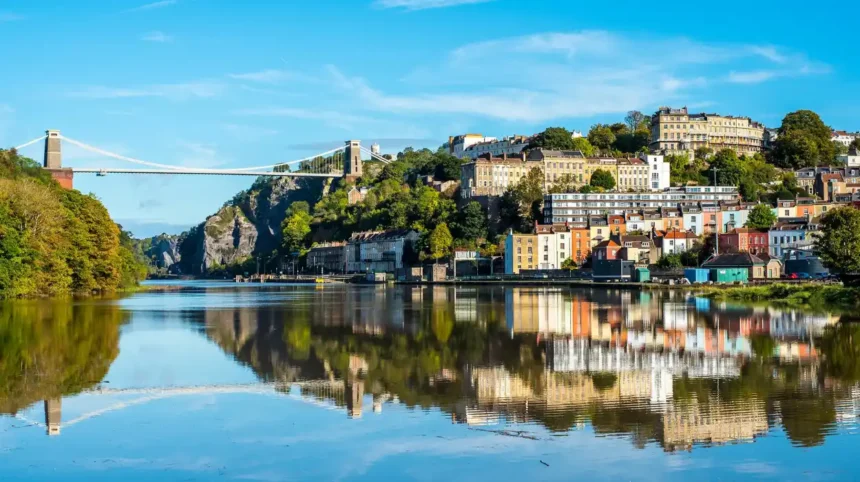
Clifton Village is one of Bristol’s best-known historic neighbourhoods. It sits beside Clifton Down and the Avon Gorge, close to the Clifton Suspension Bridge. The area combines Georgian architecture, independent shops, cafés, restaurants, historic landmarks, green spaces and major engineering heritage.
- What is Clifton Village in Bristol?
- Why is Clifton Village historically important?
- Which historic landmarks should you see in Clifton Village?
- What can you see at Clifton Observatory?
- What is Clifton Village like for shopping?
- Where can you eat and drink in Clifton Village?
- How can you explore Clifton Suspension Bridge from Clifton Village?
- What is Royal York Crescent known for?
- What outdoor spaces are near Clifton Village?
- How should you plan a visit to Clifton Village?
- Why is Clifton Village important to Bristol’s identity?
- What should first-time visitors remember about Clifton Village?
The village forms part of the wider Clifton and Hotwells area. Bristol City Council recognises Clifton and Hotwells as a conservation area, reflecting the importance of its historic townscape and architectural character.
Clifton Village is also a practical starting point for exploring several major Bristol attractions. Visitors can reach the Clifton Suspension Bridge, Clifton Observatory, Royal York Crescent, Clifton Arcade and Clifton Down within the wider neighbourhood.
What is Clifton Village in Bristol?
Clifton Village is a historic shopping and residential quarter in Bristol, known for Georgian architecture, independent businesses, Clifton Suspension Bridge, Clifton Observatory, Royal York Crescent and views across the Avon Gorge. It forms part of the wider Clifton area.
Clifton Village occupies an elevated position west of Bristol city centre. Its streets developed around Clifton’s historic settlement and later expansion during the Georgian and Victorian periods.
The area is recognised for its architectural character. Historic terraces, crescents, squares and streets create a distinctive built environment. The neighbourhood also contains commercial premises, residential properties, public spaces and heritage attractions.
Visit Bristol describes Clifton Village as a thriving hub with boutiques, restaurants and the Victorian Clifton Arcade. The area also provides access to Royal York Crescent, Clifton Observatory and the Clifton Suspension Bridge.
The term “Clifton Village” generally refers to the commercial and historic core of Clifton rather than the entire Clifton district. The village centres on streets around The Mall, Cliftonwood Road, Princess Victoria Street, Regent Street and surrounding lanes.
Its position makes it particularly important for visitors. Clifton Village connects the urban centre of Bristol with Clifton Down, the Avon Gorge and the bridge crossing towards Leigh Woods in North Somerset.
Why is Clifton Village historically important?
Clifton Village is historically important because its architecture, streets and landmarks reflect Bristol’s Georgian expansion, Victorian development and engineering heritage. The neighbourhood is closely connected with Clifton Suspension Bridge, Clifton Observatory, the Avon Gorge and the city’s wider conservation history.
Clifton developed substantially during the Georgian period. Wealthy residential development transformed the area into one of Bristol’s most prominent elevated neighbourhoods.
The Avon Gorge was also central to Clifton’s development. The gorge created both a physical boundary and a major transport challenge. Its eventual bridge crossing became one of Bristol’s defining engineering achievements.
The story of the Clifton Suspension Bridge began with a bequest from Bristol merchant William Vick. Vick left £1,000 in his will to support the construction of a bridge across the Avon Gorge. The original concept involved a stone bridge between Clifton Down and Leigh Woods.
An Act of Parliament was passed in 1830 to permit construction of a tolled suspension bridge. Isambard Kingdom Brunel subsequently became the engineer responsible for the project.
Construction began in 1831 but stopped during a period of financial difficulty and wider economic disruption. Work eventually resumed in 1836.
Brunel died in 1859 before the bridge was completed. Sir John Hawkshaw and William Henry Barlow subsequently worked on the project. The Clifton Suspension Bridge finally opened on 8 December 1864.
This history gives Clifton Village a direct connection with one of the most important engineering landmarks in Britain.
Which historic landmarks should you see in Clifton Village?
The principal historic landmarks around Clifton Village include Clifton Suspension Bridge, Clifton Observatory, Royal York Crescent, Clifton Arcade and Christ Church Clifton. Each site represents a different aspect of Bristol’s architectural, engineering, commercial or religious heritage.
Clifton Suspension Bridge is the area’s most recognisable landmark. The Grade I listed bridge crosses the Avon Gorge between Clifton and Leigh Woods.
Historic England records the bridge as a remarkable engineering structure spanning approximately 214 metres across the gorge and standing about 75 metres above high water. It was designed by Brunel and completed after his death by Hawkshaw and Barlow.
The bridge remains accessible to pedestrians and cyclists. The Clifton Suspension Bridge Trust states that footpaths run along both sides of the bridge. Vehicle crossings operate under a toll system that supports maintenance of the privately owned structure.
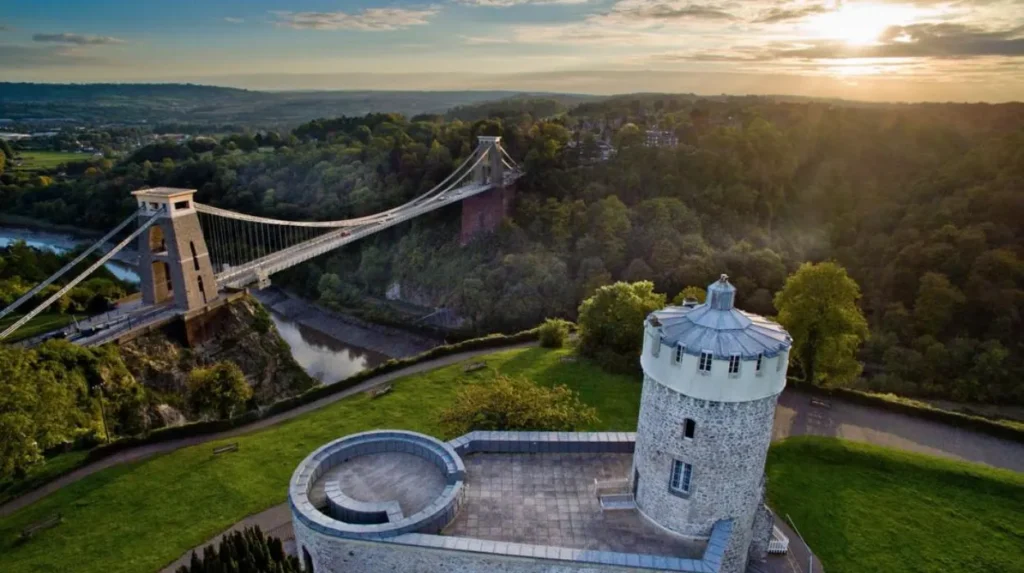
Clifton Observatory provides another major heritage attraction. The building began as a windmill and was subsequently converted into an observatory by William West.
Historic England lists Clifton Observatory at Grade II*. The building includes the historic tower, Camera Obscura and a tunnel leading towards the Giant’s Cave.
Royal York Crescent is another defining feature. Its sweeping terrace forms one of the longest residential terraces in Europe and demonstrates the scale of Clifton’s Georgian and early Victorian residential development. Visit Bristol identifies the crescent as one of Clifton’s significant architectural features.
Clifton Arcade provides a different type of heritage experience. The Victorian arcade contains independent shops and contributes to the commercial character of the village.
Christ Church Clifton is another important architectural landmark. Its prominent tower forms part of the wider Clifton skyline and reflects the religious architecture associated with the neighbourhood’s nineteenth-century expansion.
What can you see at Clifton Observatory?
Clifton Observatory combines architectural history, panoramic views, a working Camera Obscura and access to Giant’s Cave. The building has connections with William West, nineteenth-century astronomy, Bristol’s artistic community and the development of tourism around the Avon Gorge.
Clifton Observatory occupies a prominent position above the Avon Gorge. Its elevated location provides views towards Clifton Suspension Bridge, Leigh Woods and the surrounding landscape.
The site has a complex history. The original structure was associated with a windmill dating from the eighteenth century. A fire damaged the windmill in 1777.
William West leased the ruined mill in 1828 and converted it into an observatory. He later developed additional facilities, including astronomical equipment and the Camera Obscura.
The Camera Obscura remains one of the defining attractions. It uses optical principles to project an external image onto an internal viewing surface.
The Giant’s Cave is reached through a historic tunnel. The cave is positioned within the gorge and provides a distinctive geological and heritage element to the attraction.
The Observatory’s development also reflects the growth of leisure tourism during the nineteenth century. Clifton’s landscape, architecture and views attracted artists, residents and visitors.
The site became a Grade II* listed building in recognition of its architectural and historic importance. Historic England records the observatory as a former windmill converted into an observatory, with later additions including the Camera Obscura and tunnel.
What is Clifton Village like for shopping?
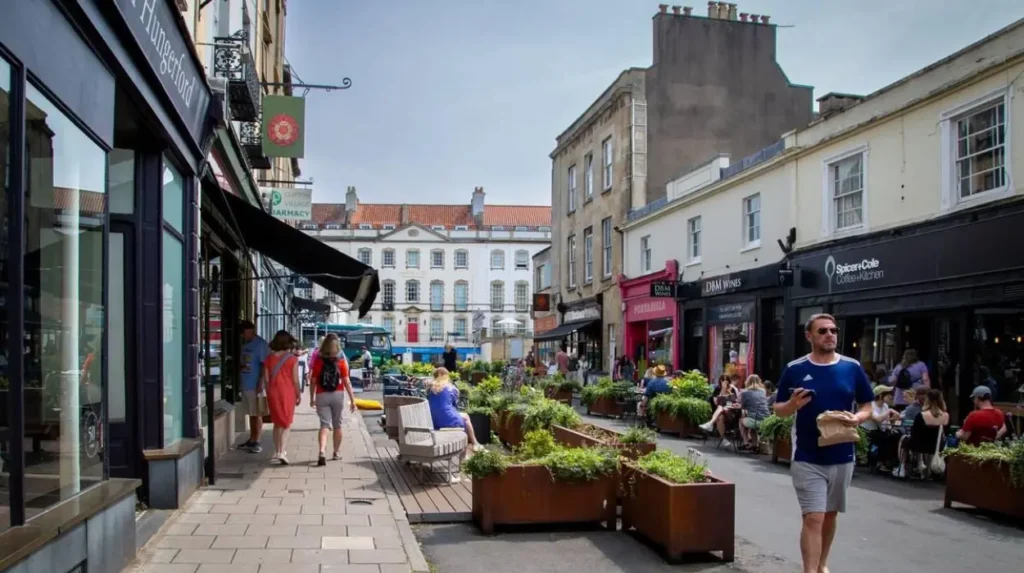
Clifton Village provides an independent shopping environment centred on boutiques, specialist retailers, vintage businesses, homeware shops and the Victorian Clifton Arcade. Its commercial character differs from large shopping centres because many premises occupy historic streets and smaller architectural units.
Shopping is concentrated around several streets in and around the village centre. The compact layout allows visitors to combine shopping with cafés, restaurants and heritage sightseeing.
Clifton Arcade is one of the best-known shopping destinations. The Victorian arcade contains independent businesses selling specialist products, fashion, jewellery, gifts and home interiors.
Visit Bristol specifically identifies the arcade as a destination for unusual shopping, including vintage jewellery and home interiors.
The village also supports independent retail businesses operating from Georgian and Victorian buildings. These premises contribute to the visual character of the streets.
The shopping environment suits visitors interested in smaller retailers rather than large national shopping centres. The area also provides opportunities to browse specialist products while exploring Clifton’s historic architecture.
Retail activity forms an important part of the local economy. Shops operate alongside cafés, restaurants, professional services and residential properties.
Visitors should distinguish Clifton Village from Bristol’s main city-centre retail district. Broadmead and Cabot Circus provide large-scale retail facilities, while Clifton Village focuses on a smaller independent and heritage-led commercial environment.
Where can you eat and drink in Clifton Village?
Clifton Village has a broad food and drink scene covering cafés, restaurants, bars, bakeries and specialist food businesses. Dining is concentrated around the village streets, with additional venues offering views towards the Avon Gorge and Clifton Suspension Bridge.
Food and drink form a major part of Clifton Village’s visitor economy. Cafés provide daytime options, while restaurants and bars support evening activity.
The concentration of independent premises allows visitors to combine meals with shopping and sightseeing. Many businesses occupy historic buildings, reinforcing the relationship between commercial activity and Clifton’s architectural environment.
Views are another important part of the local dining experience. Venues around the edge of Clifton provide sightlines towards the Avon Gorge and Clifton Suspension Bridge.
Visit Bristol highlights viewpoints from venues including The White Lion Bar and The Avon Gorge by Hotel du Vin, alongside the roof terrace at Clifton Observatory.
The food scene also connects Clifton Village with Bristol’s wider reputation for independent hospitality. Visitors can find casual daytime cafés as well as more formal dining.
For a full-day visit, the village works well as a combined food, shopping and heritage destination. A typical itinerary can include a morning walk, a heritage attraction, lunch, independent shopping and an afternoon visit to the bridge or Observatory.
How can you explore Clifton Suspension Bridge from Clifton Village?
Clifton Village provides convenient access to Clifton Suspension Bridge, where visitors can walk or cycle across the Avon Gorge and continue towards Leigh Woods. Pedestrian access is free, while vehicle crossings operate under the bridge’s toll arrangements.
The Clifton side of the bridge is close to Clifton Village. Visitors can approach the bridge through the surrounding streets and viewpoints.
The bridge opened on 8 December 1864. It is now managed by the Clifton Suspension Bridge Trust, a charitable organisation responsible for maintaining the structure and preserving its heritage.
The bridge is a Grade I listed structure. Historic England identifies its architectural, engineering and historic importance and records the span at approximately 214 metres.
Walking across the bridge provides direct views into the Avon Gorge. The crossing also connects Bristol with Leigh Woods in North Somerset.
Cyclists can also use the crossing. Drivers face a toll, while pedestrians and cyclists do not pay the vehicle toll.
The bridge’s visitor centre and museum are located on the Leigh Woods side. The Trust states that the museum presents the design, construction, maintenance and use of the bridge. A permanent museum building opened in 2014.
The bridge is therefore more than a viewpoint. It is an active transport connection, a listed heritage structure and a major visitor attraction.
What is Royal York Crescent known for?
Royal York Crescent is known for its sweeping residential terrace, Georgian and early Victorian architectural character and prominent position within Clifton. It demonstrates the scale and ambition of Clifton’s historic residential development and remains one of the neighbourhood’s most recognisable streets.
Royal York Crescent is a major architectural feature of Clifton. Its long curved frontage creates a strong visual relationship between individual houses and the wider landscape.
The crescent reflects the development of Clifton as an affluent residential district. Large terraces were designed to provide substantial homes while creating an organised urban streetscape.
The architecture contributes to Clifton’s conservation value. The wider Clifton and Hotwells conservation area protects the character of the historic environment and recognises the importance of buildings, streets, spaces and landscape relationships.
Visitors can walk along the crescent while exploring nearby streets. The location also provides access to other parts of Clifton, including Clifton Village and Clifton Down.
The importance of Royal York Crescent is architectural rather than commercial. Unlike Clifton Arcade, which is associated with retail activity, the crescent primarily represents Clifton’s residential heritage.
Its scale also demonstrates how the neighbourhood developed beyond a small rural settlement into a substantial urban district.
What outdoor spaces are near Clifton Village?
Clifton Village is close to Clifton Down, the Avon Gorge, Clifton Observatory grounds and viewpoints overlooking Leigh Woods. These spaces provide opportunities for walking, photography, landscape observation and heritage exploration within a short distance of the village centre.
Clifton Down is one of the major open spaces associated with the area. It provides a large expanse of grassland and connects Clifton with the wider Bristol landscape.
The Avon Gorge forms the most dramatic natural feature. The gorge separates Bristol from Leigh Woods and provides a significant geological and landscape setting for Clifton Suspension Bridge.
Clifton Observatory sits beside the gorge and provides elevated views. The Observatory’s location has been important to the development of tourism around the area since the nineteenth century.
Leigh Woods lies across the bridge in North Somerset. The National Trust manages Leigh Woods, providing woodland trails and access to the wider landscape.
Outdoor exploration also helps visitors understand Clifton’s geography. The elevated position explains the extensive views, while the gorge explains the bridge’s engineering importance.
The Bristol City Council Clifton Down history trail also records historic features around the area, including the Observatory, Giant’s Cave, Clifton Suspension Bridge and historic roads.
How should you plan a visit to Clifton Village?
A Clifton Village visit works best when heritage attractions, walking routes, shopping and food are combined. A practical itinerary starts in the village, continues to Clifton Observatory and the Suspension Bridge, then explores Clifton Down, Royal York Crescent and local businesses.
Start around the central streets of Clifton Village. Explore the historic buildings, independent shops and Clifton Arcade.
Continue towards Clifton Observatory. The Observatory provides access to the Camera Obscura and Giant’s Cave and offers views over the Avon Gorge. Current opening arrangements should be checked before visiting because attraction hours change seasonally.
Walk towards Clifton Suspension Bridge after visiting the Observatory. The two attractions are closely connected geographically and historically.
Cross the bridge on foot if conditions and access arrangements permit. Continue towards the Leigh Woods side for the bridge visitor centre and museum.
Return to Clifton Village for lunch or an afternoon coffee. Continue through Royal York Crescent and surrounding streets to experience the residential architecture.
The area is particularly suitable for visitors who prefer walking-based sightseeing. Several major attractions sit within a compact geographical area.
Public transport provides another option for reaching Clifton from central Bristol. Visitors should check current bus routes and service changes before travelling.
Car users should account for parking restrictions and the bridge toll. Clifton’s historic streets have limited space, making advance planning important.
Explore More Area Guide
Best Things to Do Around Bristol Harbourside 2026
Pet-Friendly Accommodation in Bristol: Complete Guide 2026
Why is Clifton Village important to Bristol’s identity?
Clifton Village is important to Bristol because it combines historic architecture, engineering heritage, tourism, independent commerce and access to the Avon Gorge. Its landmarks connect Bristol’s Georgian development with Brunel’s engineering legacy and the city’s modern visitor economy.
Clifton represents several layers of Bristol’s history within one neighbourhood.
Its Georgian and Victorian architecture records the city’s residential expansion. Its independent commercial streets demonstrate the continuing economic role of the historic centre. Its landmarks support tourism and heritage education.
The Clifton Suspension Bridge provides the strongest connection with Bristol’s engineering identity. The Grade I listed structure remains a functioning bridge as well as a heritage attraction.
Clifton Observatory provides a separate scientific and cultural connection. Its history includes astronomy, optical technology, artistic activity and tourism. Historic England records its Camera Obscura and nineteenth-century development.
The conservation area framework provides another layer of protection. Bristol City Council maintains a character appraisal for the Clifton and Hotwells Conservation Area, demonstrating the formal planning importance of the district’s historic environment.
Clifton Village therefore functions as more than a shopping quarter. It is a concentrated heritage landscape that connects architecture, engineering, commerce, natural geography and tourism.
Its long-term relevance depends on maintaining historic buildings, managing visitor activity, protecting the landscape and supporting sustainable local businesses.
What should first-time visitors remember about Clifton Village?
First-time visitors should treat Clifton Village as a compact historic district rather than a single attraction. The most important experiences include its independent streets, Clifton Arcade, Royal York Crescent, Clifton Observatory, Clifton Suspension Bridge and views across the Avon Gorge.
Clifton Village is best explored on foot. The neighbourhood contains a dense concentration of historic buildings and visitor destinations.
The Clifton Suspension Bridge should be included in any first visit because of its engineering significance and relationship with the Avon Gorge.
Clifton Observatory provides a second major heritage experience. Its Camera Obscura and Giant’s Cave distinguish it from conventional viewpoints.
Royal York Crescent provides an architectural perspective on Clifton’s residential history. Clifton Arcade provides a commercial perspective through independent retail.
Visitors should also allow time for Clifton Down and the surrounding viewpoints. These spaces explain the relationship between the neighbourhood and the landscape.
Clifton Village combines several aspects of Bristol within a relatively small area. Its architecture reflects historic urban development. Its bridge represents nineteenth-century engineering. Its shops and restaurants support the contemporary visitor economy. Its elevated position provides direct access to the Avon Gorge landscape.
For these reasons, Clifton Village remains one of Bristol’s most significant areas for heritage, architecture, independent commerce and tourism.
What is Clifton Village famous for?
Clifton Village is famous for its Georgian and Victorian architecture, independent shops, Clifton Arcade, Clifton Observatory, Royal York Crescent and its close connection to the iconic Clifton Suspension Bridge.