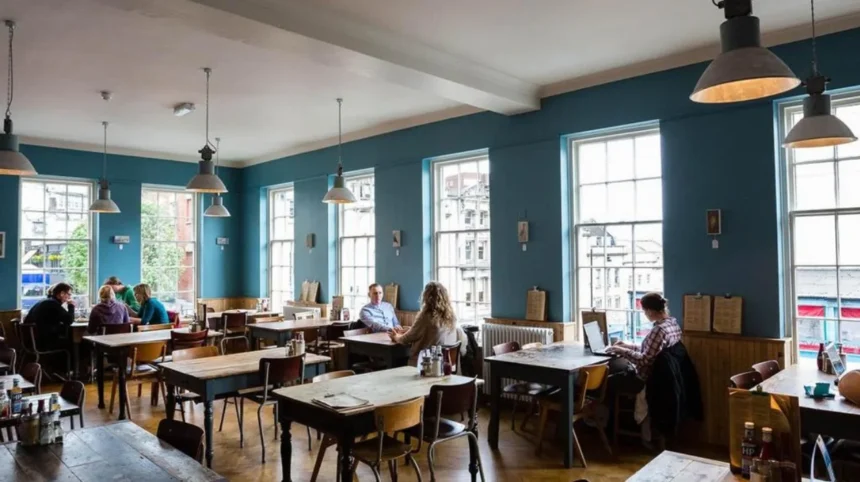
Bristol has a large student and higher-education population, a dense city-centre café network and several neighbourhoods with independent coffee shops. These factors create many alternatives to traditional libraries for reading, revision, coursework, research and laptop-based study.
- What makes a café suitable for studying in Bristol?
- Which Bristol cafés are popular for studying?
- Is Boston Tea Party good for studying in Bristol?
- Is Arnolfini suitable for studying?
- Which cafés near the University of Bristol are suitable for studying?
- Where can students study in Bristol city centre?
- Are Bristol cafés suitable for long study sessions?
- Which Bristol cafés are best for laptop study?
- Are Bristol libraries better than cafés for studying?
- Which Bristol cafés work well for group study?
- What are the best areas of Bristol for café studying?
- How should students choose a Bristol café for studying?
- What should students know before studying in Bristol cafés?
- Why does Bristol have strong demand for alternative study spaces?
A study café is a commercial or cultural café where customers can sit with books, notes or a laptop while purchasing food and drinks. A suitable study café needs more than good coffee. Seating, table size, Wi-Fi, electrical sockets, lighting, background noise, opening hours and customer traffic all affect how effectively a student can work.
Bristol also has formal study facilities. The University of Bristol operates libraries, study centres, open-access computers and other learning spaces across its campus. Its study spaces provide desks, chairs and Wi-Fi, although electrical power is not available at every desk.
For students who need a change from university buildings, Bristol cafés provide a different working environment. The best options range from dedicated coffee shops to cultural venues, gallery cafés and large independent café chains.
What makes a café suitable for studying in Bristol?
A suitable study café combines usable tables, dependable Wi-Fi, accessible power, comfortable seating, appropriate noise levels, suitable opening hours and food or drinks. Bristol cafés differ substantially in these facilities, so students need to match each venue with their study requirements.
A café designed primarily for quick coffee purchases is different from a venue where customers regularly remain for longer sessions. Study suitability therefore depends on the physical layout and operating pattern of each café.
Wi-Fi is important for university research, cloud documents, online lectures, academic databases and communication. Power sockets are equally important during extended laptop sessions. Large tables support notebooks, textbooks and laptops without forcing equipment into a small area.
Noise levels also matter. Some students work effectively with conversation and background music, while others need a quieter environment for reading and concentration. Bristol has both types of café.
Opening hours provide another practical consideration. Morning students need early access, while students working on essays or revision in the evening need later closing times.
The University of Bristol itself separates study spaces into silent and non-silent areas. Silent spaces include locations such as the Arts and Social Sciences Library and Beacon House Study Centre, while non-silent areas support quiet learning and group study.
This distinction also helps explain why cafés work for some study tasks but not others. A café generally provides a social environment rather than a controlled silent-study environment.
Which Bristol cafés are popular for studying?
Popular Bristol study cafés include Arnolfini, Dareshack, Boston Tea Party, Society Café, East Village Café, Coffee No. 1, Rough Trade, The Crafty Egg and other laptop-friendly venues across the city centre and neighbourhoods.
VisitBristol identifies several cafés and cultural venues as study options, including Arnolfini, Dareshack, Bristol Museum & Art Gallery, M Shed Café, Spicer + Cole at the RWA, Coffee No. 1, Boston Tea Party, East Village Café, Rough Trade and The Crafty Egg.
These venues represent different types of study environment.
Arnolfini is a contemporary arts venue at Bristol Harbourside. Its study room provides a more dedicated workspace than a conventional café. VisitBristol notes that the space supports individual work and group study, with the café providing food and drinks elsewhere in the building.
Dareshack is a city-centre café with seating and plug sockets. It serves speciality coffee, matcha drinks, juices, sandwiches and cakes, giving students access to food during longer sessions.
Boston Tea Party has multiple Bristol locations and is particularly relevant to students because of its combination of indoor seating, food and Wi-Fi. Its Gloucester Road branch currently lists free Wi-Fi, step-free access and seating for larger groups among its facilities.
Society Café has also been identified as a laptop-friendly Bristol venue, particularly at its Harbourside location. Bristol24-7 previously highlighted its plug sockets and café layout as useful for laptop study.

Is Boston Tea Party good for studying in Bristol?
Boston Tea Party provides a practical study environment through multiple Bristol locations, Wi-Fi, substantial seating and full food and drink menus. Its branches include Park Street and Gloucester Road, placing study spaces close to major student areas and central transport routes.
Boston Tea Party is one of Bristol’s established café brands and operates several locations across the city.
Its Park Street branch sits close to the University of Bristol and the city centre. The location has substantial indoor seating and a garden, making it suitable for students who need different seating options during a study session. VisitBristol identifies Boston Tea Party as a popular student café with free Wi-Fi and extensive food choices.
The Gloucester Road branch provides another useful option for students living around Bishopston, St Andrew’s and nearby North Bristol neighbourhoods. Its current official listing provides opening hours and identifies free Wi-Fi, larger-group suitability, outdoor seating and step-free access.
Study sessions at busy cafés work best when students choose appropriate times. Morning periods generally provide more seating capacity than peak lunch periods. Students using a café for several hours should also purchase food or drinks and respect the venue’s seating arrangements.
Boston Tea Party therefore fits students who need food, coffee, Wi-Fi and a conventional café environment rather than a silent study room.
Is Arnolfini suitable for studying?
Arnolfini is suitable for students who need a cultural venue with dedicated study space, Wi-Fi and café facilities. Its Harbourside location provides a different environment from university libraries, while its study room supports individual work and group discussions.
Arnolfini is a contemporary arts centre located at Narrow Quay on Bristol Harbourside. The organisation presents visual arts, performance, film and cultural programmes.
Its study facilities distinguish it from many ordinary coffee shops. VisitBristol describes a study room where visitors can work and bring their own food and drinks. The venue also has a café serving food and drinks.
The combination makes Arnolfini relevant for students who need a longer study session rather than a quick coffee stop.
The Harbourside location also places Arnolfini close to other central destinations. Students can combine a study session with a walk around the waterfront without needing to travel far across the city.
The café and study areas serve different purposes. Students requiring stronger concentration should use the designated study environment rather than relying solely on the café seating.
Arnolfini therefore works particularly well for students who prefer cultural surroundings and a structured workspace while remaining outside a conventional university building.
Which cafés near the University of Bristol are suitable for studying?
Cafés around Clifton, Park Street, Queen’s Road and the University of Bristol campus provide convenient study options for students. Boston Tea Party, Spicer + Cole, East Village Café and university cafés offer different combinations of seating, food, drinks and study-friendly locations.
The University of Bristol occupies a large area around Clifton and central Bristol, creating a dense café network around student accommodation, teaching buildings and study centres.
Beacon House is one important location. The University of Bristol operates a Source café at Beacon House, serving coffee, tea, smoothies, sandwiches and other food. The café is open to staff, students and the public.
The Richmond Building also contains the Balloon Café. The university lists locally roasted Clifton Coffee Roasters coffee, Fairtrade tea, smoothies, sandwiches, pastries and hot food. The café is open to the public.
Spicer + Cole at the Royal West of England Academy provides another nearby café environment. VisitBristol highlights its indoor and outdoor seating and its location close to Beacon House, the Victoria Rooms and the University of Bristol.
Boston Tea Party on Park Street is also within convenient walking distance of the university’s central campus.
These locations are useful when students want to remain close to university buildings but need a different environment for reading, planning or informal group work.

Where can students study in Bristol city centre?
Bristol city centre offers study cafés around Broad Street, Park Street, Narrow Quay, St Nicholas Market, Stokes Croft and the Harbourside. These areas provide coffee shops, cultural venues and food outlets within walking distance of central transport and university destinations.
City-centre study locations are useful because students can reach them from different parts of Bristol using buses, walking routes and cycling infrastructure.
Full Court Press on Broad Street is a long-established specialty coffee venue in Bristol. Current local café coverage identifies it as an Old City coffee destination with espresso and filter coffee.
Society Café at Farr’s Lane is another central option. Its Harbourside location places it near Narrow Quay and other waterfront destinations. Previous Bristol24-7 coverage specifically identified its plug sockets as useful for laptop users.
Playground Coffee on St Nicholas Street combines specialty coffee with a more social environment. Local Bristol café coverage identifies its board-game facilities and central location.
Watershed is another significant Harbourside venue. It is a cultural centre combining cinema, arts activity and a café-bar environment. Previous Bristol café guidance identifies free Wi-Fi and workspace suitability at the venue.
Students who need a quiet environment should distinguish between café seating and dedicated cultural study spaces. Central locations become busier during lunch and weekend periods.
Are Bristol cafés suitable for long study sessions?
Bristol cafés support long study sessions when they provide adequate seating, Wi-Fi, charging access and food. Students should choose quieter periods, purchase refreshments and avoid occupying high-demand tables during busy service periods or peak lunchtime periods.
A long study session requires more than a comfortable chair. Students need a table large enough for a laptop and written materials, access to power, reliable internet and food or drinks.
Café occupancy changes throughout the day. Breakfast periods attract morning customers, lunchtime creates higher demand for tables and afternoons often provide more opportunities for longer laptop sessions.
Students should also consider the purpose of their work. Reading a textbook requires fewer technical resources than attending a video lecture or completing collaborative online coursework.
A café with background conversation can support individual writing and research but is less suitable for activities requiring uninterrupted concentration.
Group work creates additional pressure on café seating. Several students occupying one table reduces capacity for other customers. Larger cafés and venues with group seating provide a better setting for collaborative assignments.
Students should also check current policies before beginning a long session. Café operating practices, opening hours and Wi-Fi arrangements change over time.
For students who require guaranteed desk access, the University of Bristol provides formal booking facilities. Students can reserve study seats for up to 20 hours per week, subject to availability. Group study spaces can be booked for up to two hours per day, while digital study pods also have two-hour daily limits.
Which Bristol cafés are best for laptop study?
Laptop study works best in Bristol cafés with Wi-Fi, accessible power, suitable tables and seating designed for longer visits. Society Café, Boston Tea Party, Dareshack, The Crafty Egg, Arnolfini and Watershed are established options identified in local study and laptop guides.
Laptop-friendly café directories currently identify dozens of Bristol venues with combinations of Wi-Fi, sockets, tables and longer-stay suitability. These listings include Society Café, The Crafty Egg, Boston Tea Party, Watershed, Arnolfini and other cafés.
The Crafty Egg operates in Stokes Croft and other Bristol locations. Local study guides identify it as a casual environment with Wi-Fi, sizeable tables and food.
Stokes Croft is particularly useful for students who prefer an informal café atmosphere. The area contains several food, coffee, arts and cultural businesses within a compact area.
At The Well combines café facilities with a launderette on Cheltenham Road. Local coverage identifies Wi-Fi, computer stations and printing facilities, making the venue unusual among Bristol study cafés.
Laptop users should also consider screen glare and table placement. Window seats provide natural light but can create reflections on screens. Interior tables provide more consistent lighting.
Charging availability should be confirmed at the individual venue rather than assumed from general café recommendations.
Are Bristol libraries better than cafés for studying?
Bristol libraries provide more controlled study conditions than cafés, including dedicated desks, reading areas, computers and Wi-Fi. Cafés provide food, informal social surroundings and flexible environments, making each option suitable for different study tasks and concentration preferences.
Bristol Libraries operate public study facilities across the city. The council states that its libraries provide welcoming spaces for studying, free computers and Wi-Fi.
Central Library on College Green provides study space, Wi-Fi, computers, printing facilities, a reading room and a café. Its current published opening hours extend into the evening on Tuesdays and Thursdays.
Libraries therefore provide an important free alternative to commercial cafés.
The University of Bristol also provides extensive formal study infrastructure. Its campus includes multiple libraries and study centres with silent and non-silent spaces.
The Arts and Social Sciences Library provides an especially extensive study schedule. From 14 September 2026, its published term-time hours are 24 hours a day, seven days a week, with supported self-service overnight.
The comparison is therefore functional rather than absolute. Libraries are appropriate for silent reading, intensive revision and research. Cafés are useful for changing environment, informal writing, lighter reading and social study.
Students should choose the environment based on the task rather than treating cafés and libraries as interchangeable.
Which Bristol cafés work well for group study?
Group study requires larger tables, flexible seating, accessible food and drinks, suitable background noise and enough space for multiple laptops or notebooks. Arnolfini, Boston Tea Party and larger café spaces provide practical settings for collaborative academic work.
Group study creates different requirements from individual revision.
Students need enough table space for laptops, notebooks and shared documents. They also need to communicate without disturbing customers who expect a quieter environment.
Arnolfini is particularly relevant because VisitBristol identifies its study room as suitable for group studying and discussions.
Boston Tea Party also accommodates larger groups at selected locations. Its Gloucester Road branch officially lists suitability for larger groups among its facilities.
University cafés provide another option for students who need to remain near teaching buildings. The Exchange Hall Café at the University of Bristol has space for 90 covers and serves students, staff, partners and the public.
Group work should remain proportionate to the available space. A large table used by several students during a busy period creates greater pressure than individual laptop use.
Students should also distinguish between discussion-based collaboration and silent co-working. A café can support discussion more naturally, while a library group-study room provides a more controlled environment.
What are the best areas of Bristol for café studying?
Clifton, the city centre, Stokes Croft, the Harbourside and neighbourhoods around Gloucester Road contain concentrated groups of cafés suitable for study. These areas combine student populations, transport connections, food outlets and established coffee businesses.
Clifton is particularly relevant because it sits beside the University of Bristol’s main campus. Cafés around Park Street, Queen’s Road, Clifton Village and surrounding streets provide alternatives to campus libraries.
The city centre provides another strong concentration. Broad Street, St Nicholas Street, Park Street and the Harbourside contain cafés, cultural venues and restaurants suitable for different study patterns.
Stokes Croft is known for its independent cultural and food businesses. The area includes The Crafty Egg, Café Kino and The Canteen, alongside other coffee shops and food venues identified in laptop-friendly listings.
Gloucester Road provides a useful North Bristol corridor. Boston Tea Party operates a Gloucester Road branch with free Wi-Fi and other customer facilities.
The Harbourside offers a distinct environment around Arnolfini, Watershed and Society Café.
Choosing an area close to home or university reduces travel time. This is particularly useful during examination periods when students require repeated study sessions rather than occasional café visits.
How should students choose a Bristol café for studying?
Students should choose a Bristol study café according to task, location, noise level, table space, Wi-Fi, power access, opening hours and food availability. The most suitable venue depends on whether the session involves revision, writing, research, laptop work or group study.
Start with the study task.
Silent revision requires a quieter environment. Essay writing can work in moderate background noise. Group assignments require larger tables and conversational space. Online lectures require dependable Wi-Fi and electrical power.
Next, consider location. Students based around Clifton have access to cafés near the university. Students living in North Bristol can use Gloucester Road and nearby neighbourhoods. Harbourside venues work well for city-centre residents and visitors.
Check opening hours before travelling. Café schedules change according to weekdays, weekends, university terms and seasonal periods.
Check facilities where possible. Free Wi-Fi is useful, but Wi-Fi availability does not automatically mean every table has power. The University of Bristol explicitly notes that not every study desk on campus has a power point, demonstrating why charging access should be treated as a separate requirement.
Finally, consider the expected duration. A short one-hour reading session requires less infrastructure than a six-hour dissertation session.
Bristol offers enough variety to support both approaches. Commercial cafés provide flexible social study environments, while public and university libraries provide dedicated facilities for intensive academic work.
Explore More Area Guide
Best Cafés for Working in Bristol | WiFi & Study
Best Specialty Coffee in Bristol: Roasters & Coffee Shops
What should students know before studying in Bristol cafés?
Students should check opening hours, Wi-Fi, seating, power access and venue policies before starting a study session. They should purchase refreshments, keep tables organised, manage noise and move to formal study spaces when cafés become unsuitable.
Café conditions change during the day. A quiet morning can become a busy lunchtime environment. Weekend conditions also differ from weekday patterns.
Students should therefore avoid assuming that a venue remains equally suitable throughout the day.
Food and drink purchases also form part of the café environment. Students using commercial seating for extended periods should behave as customers rather than treating a café as a free coworking office.
Power consumption requires additional planning. A fully charged laptop reduces dependence on sockets. A portable charger provides another option where power availability is limited.
Wi-Fi security also matters. Students accessing university systems or sensitive accounts should follow institutional cybersecurity guidance when using public networks.
For academic work requiring silence, guaranteed seating or specialist facilities, Bristol’s libraries remain important alternatives. Bristol Central Library provides public Wi-Fi, study space and computers, while the University of Bristol provides bookable study seats and specialist spaces.
The strongest study strategy is therefore flexible. Students can use cafés for environmental variety and informal work while retaining libraries and university study centres for intensive sessions.
Bristol’s café culture gives students a broad range of study environments. The city combines independent coffee shops, national and local café brands, cultural institutions, university cafés and public libraries. That range supports different academic tasks without requiring students to rely on one location throughout the academic year.
Why does Bristol have strong demand for alternative study spaces?
Bristol’s concentration of higher-education facilities, students, cultural venues and cafés creates sustained demand for alternative study environments. University libraries remain central, while cafés provide additional locations for individual work, informal collaboration and changes in study routine.
The University of Bristol operates numerous libraries and study centres across the city, including Arts and Social Sciences Library, Beacon House Study Centre, Senate House Study Centre, Wills Memorial Library and Sloane Robinson Building Study Centre.
Its study infrastructure demonstrates the scale of demand for different learning environments.
Sloane Robinson Building Study Centre at the Temple Quarter Campus provides desks and rooms for individual, group and silent study. It also includes a café and food shop. Its published hours extend into evenings and weekends.
The University’s cafés further expand the available study environment. Source cafés provide food and drinks across campus, with several locations open to the public as well as students and staff.
Public libraries add another layer of accessible study provision. Bristol Libraries explicitly provide study spaces, computers and free Wi-Fi.
This combination makes Bristol’s study ecosystem broader than its commercial café sector alone.
For students, the practical benefit is choice. A café can provide a change from a bedroom or library desk. A public library can provide free study space. A university study centre can provide specialist academic facilities. Each environment serves a different purpose.
The future relevance of Bristol’s study cafés therefore remains connected to the wider city infrastructure. As university campuses, neighbourhoods, cultural venues and flexible working patterns continue to develop, cafés remain part of the city’s wider network of informal learning spaces.
What are the best cafés for studying in Bristol?
Popular study-friendly options in Bristol include Boston Tea Party, Arnolfini, Dareshack, Society Café, The Crafty Egg, Watershed, East Village Café and Spicer + Cole. Facilities vary by location.