Fitness classes in Bristol provide structured exercise options for beginners, experienced gym users, older adults, and people returning to physical activity. The city has council leisure centres, community sports facilities, private gyms, specialist studios, and referral programmes offering different forms of exercise.
- What are fitness classes in Bristol?
- Why are fitness classes important for Bristol residents?
- What types of fitness classes are available in Bristol?
- Cardio fitness classes
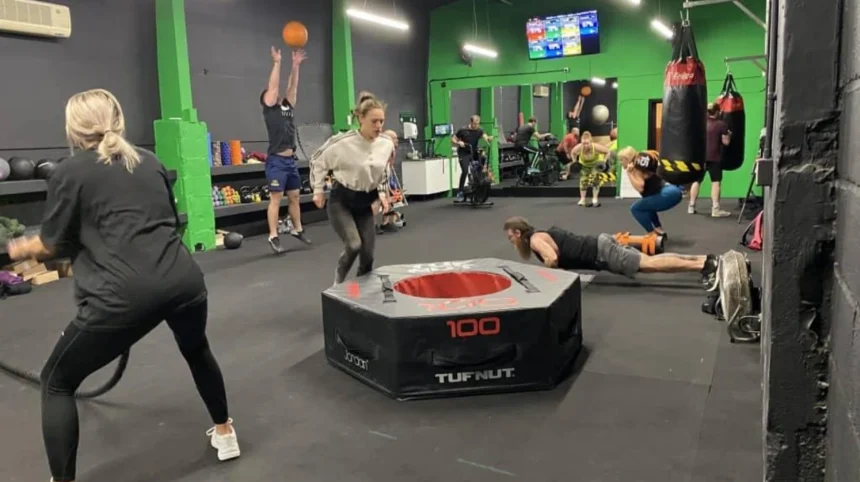
- Strength and conditioning classes
- Mind and body classes
- Balance and strength classes
- Where can you take fitness classes in Bristol?
- How do Bristol fitness classes work?
- Which fitness classes are best for beginners in Bristol?
- Which Bristol fitness classes are suitable for strength training?
- Can older adults find suitable fitness classes in Bristol?
- Are there fitness classes for people with health conditions in Bristol?
- How much do fitness classes in Bristol cost?
- How do you book fitness classes in Bristol?
- What should you take to a fitness class in Bristol?
- How can you choose the right fitness class in Bristol?
- What is the future of fitness classes in Bristol?
Bristol is a major city in South West England with a large and diverse population. Its fitness infrastructure reflects the needs of different neighbourhoods and age groups. Public leisure facilities operate alongside independent fitness businesses, sports centres, community organisations, and specialist exercise providers.
For visitors and residents searching for fitness classes in Bristol, the main decision involves matching the activity, intensity, location, timetable, cost, and instructor support with a specific fitness objective. Options include cardiovascular exercise, strength training, flexibility work, aquatic exercise, dance-based workouts, balance sessions, and medically supported physical activity.
What are fitness classes in Bristol?
Fitness classes in Bristol are organised exercise sessions led by instructors in gyms, leisure centres, sports facilities, studios, and community venues. They include cardio, strength, Pilates, yoga, cycling, dance, aqua exercise, circuits, and specialist programmes.
A fitness class provides a planned exercise session rather than independent gym training. An instructor normally demonstrates movements, explains technique, manages the session structure, and controls the intensity.
Class formats differ according to their training objective. Cardio classes, such as HIIT and group cycling, focus on raising heart rate and improving cardiovascular fitness. Strength classes, such as circuit training and conditioning, focus on muscular endurance and resistance exercise.
Mind and body classes, such as Pilates, yoga, and Tai Chi, focus on controlled movement, flexibility, balance, mobility, and body awareness.
Bristol City Council lists swimming pools, leisure centres, sports facilities, and community sports centres across the city. Its official directory includes facilities such as Easton Leisure Centre, Henbury Leisure Centre, Hengrove Park Leisure Centre, Horfield Leisure Centre, Kingsdown Sports Centre, Bristol South Swimming Pool, Jubilee Swimming Pool and St Pauls Community Sports Academy.
The availability of classes changes according to venue and timetable. Users should check the individual centre before attending because schedules, prices, booking arrangements, and facilities differ.
Why are fitness classes important for Bristol residents?
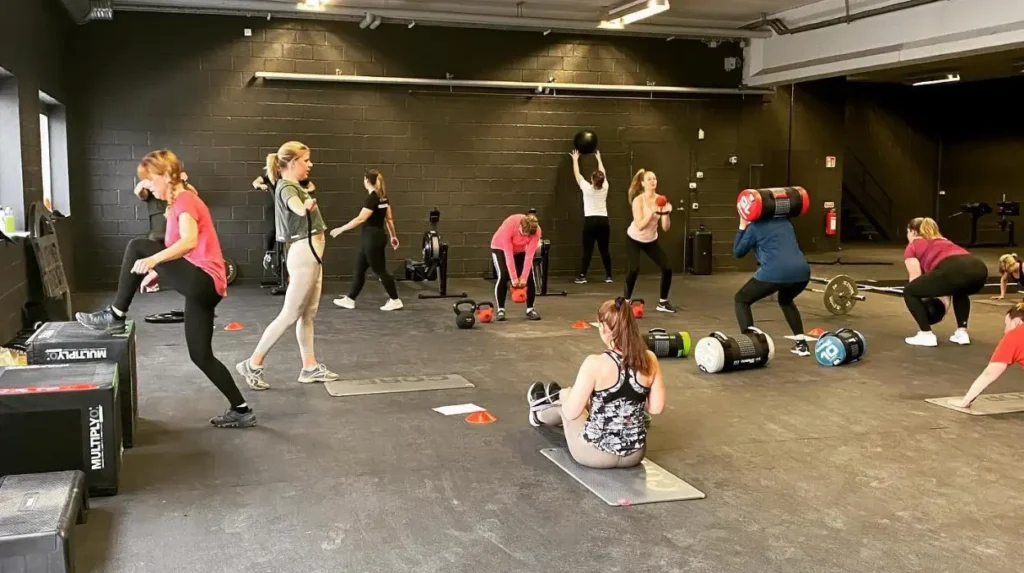
Fitness classes give Bristol residents structured opportunities to complete aerobic, strength, flexibility, balance, and mobility exercises. Regular participation supports physical activity targets while instructor-led sessions provide planned routines, equipment guidance, progression, and social opportunities.
The NHS recommends that adults complete at least 150 minutes of moderate-intensity aerobic activity each week, or 75 minutes of vigorous-intensity aerobic activity, alongside muscle-strengthening activity on at least two days each week.
Fitness classes can contribute to these targets when their intensity and duration match the relevant activity guidelines.
For example, a weekly programme can combine three exercise formats: group cycling, strength training, and Pilates. Group cycling provides aerobic exercise. Strength training works major muscle groups. Pilates develops controlled movement, core strength, and flexibility.
The NHS identifies major muscle groups including the legs, hips, back, abdomen, chest, shoulders, and arms. It recommends gradually increasing strength exercise and using appropriate repetitions and sets.
Group classes also provide an organised schedule. A fixed timetable creates a clear exercise routine. This structure helps people fit physical activity around work, study, family responsibilities, and other commitments.
What types of fitness classes are available in Bristol?
Bristol offers several major fitness class categories, including cardio, strength and conditioning, mind and body, dance, aquatic exercise, balance training, and beginner sessions. Examples include HIIT, circuit training, Pilates, yoga, aqua aerobics, dance fitness, and strength classes.
Cardio fitness classes
Cardio classes increase heart rate and breathing through continuous or interval-based movement.
Examples include:
HIIT uses short periods of high-intensity exercise followed by recovery periods. Exercises include squats, running movements, jumping exercises, and bodyweight drills.
Group cycling uses stationary bikes and instructor-led resistance changes. It provides a controlled cardiovascular workout.
Dance fitness combines choreographed movement with aerobic exercise. Sessions often use continuous movement and music.
Aqua aerobics uses water resistance for cardiovascular and muscular exercise. It provides a lower-impact environment than many land-based activities.
Better describes its cardio category as including HIIT, Group Cycle, Aqua Aerobics, and other high-energy group sessions.
Strength and conditioning classes
Strength and conditioning classes focus on muscular strength, endurance, stability, and general physical conditioning.
Examples include:
Circuit training moves participants through different exercise stations.
Legs, Bums and Tums classes target the lower body and core. Exercises include weighted squats, lunges, glute bridges, planks, and other bodyweight movements.
Resistance-based classes use weights, resistance bands, bodyweight exercises, or other training equipment.
Mind and body classes
Mind and body sessions use controlled movement and deliberate technique.
Examples include:
Pilates focuses on controlled movements, posture, core stability, and flexibility.
Yoga combines physical postures, movement, flexibility, balance, and breathing techniques.
Tai Chi uses slow, controlled movements and weight shifting.
Better categorises Pilates, Yoga, and Tai Chi within its mind and body fitness programme.
Balance and strength classes
Bristol also provides dedicated strength and balance classes. These sessions support mobility, confidence, stability, and independence.
Bristol City Council states that its strength and balance classes are designed to help participants build strength, walk steadily, and reduce the risk of falling. Sessions last one hour and include seated or standing exercises. Equipment such as bands, balls, and hoops is provided.
Where can you take fitness classes in Bristol?
Fitness classes are available across Bristol through council leisure centres, community sports facilities, gyms, specialist studios, and private fitness providers. Examples include Easton, Henbury, Hengrove, Horfield, Kingsdown, Bristol South, St Pauls, and community sports centres.
Bristol City Council maintains information about the city’s swimming pools, leisure centres, and sports facilities. The council’s listed facilities cover different parts of Bristol and provide information about opening hours, classes, prices, accessibility, parking, and available activities.
East Bristol
East Bristol includes facilities such as Easton Leisure Centre and Brunel Fitness Centre in Speedwell.
Easton Leisure Centre operates an exercise referral programme as part of Bristol’s physical activity referral provision. Brunel Fitness Centre also participates in the referral programme.
North Bristol
North Bristol includes Henbury Leisure Centre and Horfield Leisure Centre.
These facilities form part of Bristol’s network of leisure and physical activity venues. The city council provides individual facility information covering classes, activities, opening times, prices, and accessibility.
South Bristol
South Bristol includes Hengrove Park Leisure Centre and Bristol South Swimming Pool.
Hengrove Park also appears in Bristol’s physical activity referral programmes and Better Breathing provision.
Central Bristol
Central Bristol has facilities such as Kingsdown Sports Centre and St Pauls Community Sports Academy.
Kingsdown Sports Centre does not have a swimming pool but operates as a sports facility. St Pauls Community Sports Academy is also included in Bristol City Council’s sports facility network.
How do Bristol fitness classes work?
Most fitness classes follow a structured sequence involving preparation, instructor demonstration, active exercise, recovery, and conclusion. The exact format depends on the class, with HIIT using intervals, Pilates using controlled movements, and circuits using multiple exercise stations.
A typical class begins with preparation or warm-up activity. The instructor introduces the movements and explains important technique points.
The main section then follows the class objective.
A HIIT class uses repeated work and recovery intervals.
A circuit class uses several stations, with participants completing exercises before moving to another station.
A Pilates class uses controlled repetitions and positions.
An aqua class uses water resistance and movement patterns performed in a pool.
The final section normally reduces exercise intensity and provides recovery movements.
The instructor’s role is important because technique affects how exercises are performed. Participants should follow instructions and use an appropriate intensity.
Better states that its beginner classes use lower-intensity movements and simpler exercises to help participants establish confidence and exercise foundations.
Which fitness classes are best for beginners in Bristol?
Beginners benefit from classes that provide clear instruction, manageable intensity, simple movements, and progression. Suitable examples include beginner Pilates, beginner cardio, beginner dance, beginner strength and conditioning, gentle yoga, and introductory aquatic exercise.
A beginner should select a class based on current ability rather than the name of the workout.
Better’s Basics programme specifically includes beginner options across mind and body, cardio, dance, and strength and conditioning. The organisation describes these sessions as lower intensity with simpler movements.
A person returning to exercise after a long break should start with a manageable workload. Gradual progression allows the body to adapt to increased physical activity.
A beginner should also consider class duration. A 30-minute introductory class provides a different workload from a 60-minute high-intensity session.
Instructor accessibility is another important factor. A class with clear demonstrations and exercise modifications provides more opportunities for participants to adjust movements.
The best beginner class is therefore determined by fitness level, exercise history, health needs, confidence, location, and preferred activity.
Which Bristol fitness classes are suitable for strength training?
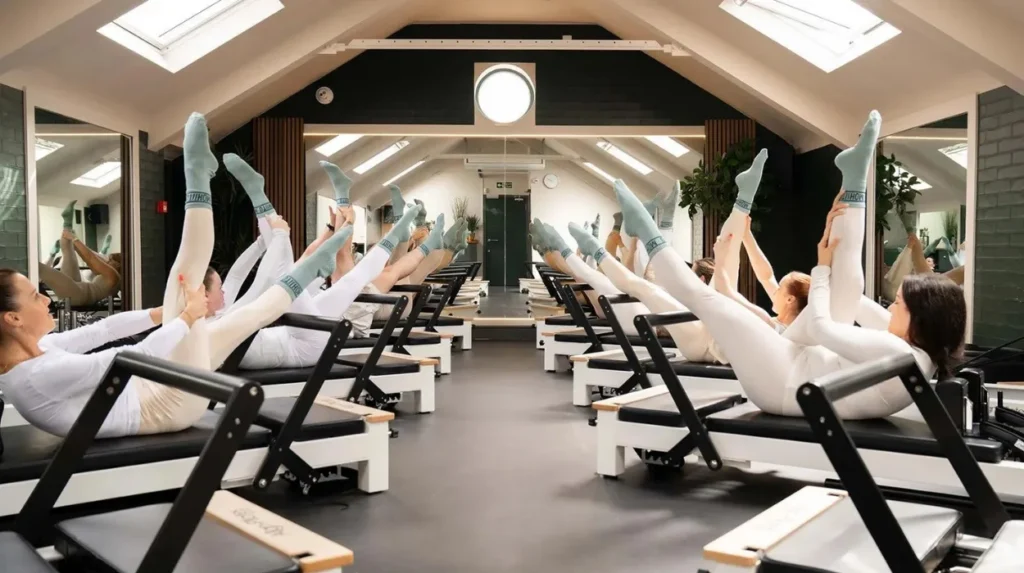
Strength-focused classes include circuit training, strength and conditioning, resistance exercise, Legs Bums and Tums, and other instructor-led resistance sessions. Examples include squats, lunges, presses, rows, glute bridges, planks, and resistance-band exercises.
Strength training is an important part of adult physical activity guidance.
The NHS recommends muscle-strengthening activities on at least two days each week. It recommends exercises involving all major muscle groups and advises people to increase training gradually.
Fitness classes provide several ways to achieve this.
Circuit training combines resistance exercises with repeated movement.
Strength and conditioning classes combine resistance work with general physical conditioning.
Legs, Bums and Tums focuses on lower-body and core exercises while also incorporating cardiovascular movements. Better identifies weighted squats, walking lunges, glute bridges, crunch variations, planks, and mountain climbers among common exercises.
People seeking maximum strength development should distinguish between general group fitness and specialist strength coaching. A standard fitness class provides broad conditioning. A dedicated strength programme provides more detailed load progression and exercise programming.
Can older adults find suitable fitness classes in Bristol?
Older adults can access fitness sessions designed around mobility, balance, strength, flexibility, and confidence. Bristol provides dedicated strength and balance classes, while leisure providers also offer lower-intensity sessions and activities for different ages and fitness levels.
Age-specific exercise requires appropriate movement selection and intensity.
Bristol City Council’s strength and balance classes include seated and standing exercises. Instructors can adapt exercises to individual needs, and equipment such as resistance bands and balls is supplied.
These classes address practical physical functions. Balance affects stability. Strength supports everyday movement. Mobility supports activities such as walking, standing, and changing position.
Better also identifies senior and beginner exercise sessions within its wider fitness class programme. Its classes are designed for different experience levels and include options for people who are less confident in a gym.
Older adults should select activities according to current physical ability and any professional medical guidance they have received.
Are there fitness classes for people with health conditions in Bristol?
Bristol operates physical activity referral programmes for eligible people with specific health conditions. These programmes provide personalised exercise plans, trained instructors, and structured participation through approved leisure centres and sports facilities.
Bristol’s Physical Activity Referral Scheme is designed for people who are currently inactive and have a low or medium-risk health condition. The programme lasts 12 weeks, with participants attending a participating leisure centre or gym at least twice weekly.
The programme uses trained referral instructors. Exercise plans are based on health conditions and individual objectives.
Bristol City Council states that its physical activity referral programmes aim to help eligible participants achieve the Department of Health recommendation of 150 minutes of moderate physical activity each week.
The scheme operates across several venues.
Examples include Brunel Fitness Centre, Easton Leisure Centre, Elite Sports Centre Kingsdown, Henbury Leisure Centre, and other participating facilities.
Certain specialist programmes have additional referral requirements. Better Breathing classes, for example, require referral through an appropriate medical professional.
People with health conditions should follow the relevant referral process rather than selecting an intensive class without professional guidance.
How much do fitness classes in Bristol cost?
Fitness class costs in Bristol depend on the venue, membership status, class type, and booking arrangement. Public leisure centres, private gyms, specialist studios, and pay-as-you-go providers use different pricing structures, so current prices require checking directly.
Pricing varies across the Bristol fitness market.
Council and leisure-centre facilities can offer membership packages, individual sessions, activity bookings, or concession arrangements. Private studios often operate through individual class payments, packages, memberships, or subscriptions.
Better also provides flexible day passes in participating locations. Its day-pass system provides access to selected gym, swimming, and fitness facilities without requiring a full membership.
For visitors, a day pass can provide a practical option when a long-term membership does not fit the length of the stay.
People should compare the full cost rather than the headline class price. Important factors include membership fees, joining charges, booking fees, equipment requirements, cancellation terms, and access restrictions.
Because prices and timetables change, the official venue booking page provides the most reliable current information.
How do you book fitness classes in Bristol?
Fitness classes are generally booked through the individual venue, online booking system, mobile application, reception desk, or class provider. Booking requirements differ between facilities, so users should confirm availability, eligibility, payment rules, cancellation policies, and arrival requirements before attending.
Better uses its online booking system and Better UK app for fitness class reservations. The app allows registered users to book activities, swimming sessions, and fitness classes.
The booking process normally involves selecting a venue, choosing an activity, checking the timetable, selecting a session, and completing payment or membership confirmation.
Some classes have limited capacity because they use studios, specialist equipment, or instructor-led stations.
Advance booking is therefore relevant for popular sessions.
People using day passes should also check activity-specific booking requirements. Better states that advanced booking is required for some activities.
Private studios use their own booking systems. Users should check the class provider’s official timetable before travelling.
What should you take to a fitness class in Bristol?
Most fitness classes require comfortable sports clothing, suitable footwear, water, and a small towel. Some activities require specialist equipment or clothing, while studios often provide class equipment such as mats, resistance bands, weights, or other training accessories.
Clothing should allow unrestricted movement.
Footwear depends on the activity. Indoor cardio and strength classes normally require suitable training shoes. Aquatic classes require appropriate swimwear.
Hydration is important during exercise, particularly during higher-intensity sessions.
Better recommends comfortable leisure or sports clothing, suitable footwear, water, and a small towel. It states that equipment is provided when a class requires it, although participants can bring personal equipment such as a yoga or Pilates mat.
Participants should avoid carrying unnecessary belongings into exercise studios. Leisure centres often provide lockers for personal items.
A first-time participant should arrive early enough to check in, locate the studio, and speak with the instructor if additional information is required.
Explore More Area Guide
Gyms in Bristol: Fitness Guide for Every Goal 2026
Bristol Property Market Trends and House Prices 2026
How can you choose the right fitness class in Bristol?
Choose a Bristol fitness class by matching the session to your goal, current fitness level, preferred exercise style, location, schedule, instructor support, and budget. Examples include Pilates for controlled movement, cycling for cardio, and strength classes for resistance training.
The first decision is the fitness objective.
Someone targeting cardiovascular fitness should prioritise aerobic sessions such as cycling, dance fitness, or HIIT.
Someone targeting muscular strength should select strength and conditioning or resistance-based classes.
Someone focusing on mobility and controlled movement should consider Pilates or yoga.
Someone improving balance should investigate dedicated strength and balance sessions.
The second decision is intensity.
Beginners should select introductory or lower-intensity sessions. Experienced participants can select more demanding classes.
The third decision is location. Bristol’s fitness facilities are distributed across the city, so proximity affects travel time and routine consistency.
The fourth decision is scheduling. A class that fits consistently around work, education, or family commitments provides a more practical routine than an unsuitable timetable.
The fifth decision is accessibility. Users should check step-free access, changing facilities, parking, pool access, and any other relevant requirements before booking.
What is the future of fitness classes in Bristol?
The future of Bristol fitness classes centres on accessible exercise, digital booking, personalised programmes, inclusive facilities, health referrals, and varied group training. Public leisure services and private providers continue to support different ages, abilities, fitness levels, and exercise objectives.
Fitness provision increasingly connects exercise with wider health and wellbeing.
Bristol’s physical activity referral programmes demonstrate this connection by integrating structured exercise with health-related support.
Digital booking also makes class access more straightforward. Better provides online and app-based booking for activities and fitness sessions.
The range of class formats also continues to support different preferences. Cardio, strength, mind and body, dance, aquatic exercise, and specialist programmes address distinct training objectives.
Inclusive provision remains important. Bristol City Council identifies disability sport among its wider sports and physical activity services.
This creates a broad fitness ecosystem rather than a single gym-based model.
For residents, the most effective approach is to identify an appropriate activity, select a realistic schedule, begin at a suitable intensity, and progress consistently. For visitors, flexible classes and day passes provide alternatives to long-term memberships.
Bristol therefore offers a broad and structured market for fitness classes, ranging from beginner exercise and group cardio to strength training, Pilates, balance classes, aquatic workouts, and health-related referral programmes.
What fitness classes are available in Bristol?
Bristol offers a wide range of fitness classes, including HIIT, Pilates, yoga, group cycling, circuit training, strength and conditioning, dance fitness, aqua aerobics, and strength and balance sessions.