Bristol has developed into one of the United Kingdom’s strongest regional environments for startups, technology businesses, university spinouts and research-led companies. The city combines a large higher-education base, established engineering expertise, creative industries, digital capability, specialist innovation facilities and business-support organisations.
- What is the startup scene in Bristol?
- How did Bristol become a major startup and innovation hub?
- Which industries are strongest in Bristol’s startup ecosystem?
- How do startups in Bristol develop from ideas into companies?
- Which organisations support Bristol startups?
- How large is Bristol’s startup economy?
- What is the role of Temple Quarter in Bristol’s startup future?
The startup scene in Bristol is broader than a collection of new technology companies. It includes founders commercialising university research, student entrepreneurs developing early-stage products, software businesses serving national markets, health technology ventures, engineering companies, creative technology firms and science-based spinouts.
Bristol City Council’s Bristol Key Facts 2025 recorded 33,655 active companies in June 2025. The city recorded 4,500 new company incorporations during 2024, while 3,964 enterprises ceased trading. The same publication recorded 60 startups per 10,000 working-age residents during 2024–25.
The city also has a significant small-business base. In 2024, Bristol had 18,330 business units, with 86.7% classified as micro businesses employing between zero and nine people. This structure provides a substantial pool of businesses, founders and specialist suppliers around the startup economy.
What is the startup scene in Bristol?
Bristol has a mature startup ecosystem built around technology, universities, research, creative industries, finance, engineering and specialist support. Its core infrastructure connects founders with incubators, investors, researchers, skilled graduates, workspace and regional business networks across the city and regional economy.
The Bristol startup scene refers to the network of entrepreneurs, newly established companies, investors, universities, incubators, accelerators, researchers, professional advisers and public-sector organisations involved in creating and growing new businesses across Bristol.
A startup is a young business designed to develop a product or service and establish a scalable commercial model. Bristol’s ecosystem contains both technology-focused startups and businesses operating in sectors such as engineering, health, professional services, creative industries and environmental technology.
The city’s business environment benefits from its position in the West of England, a regional economy that links Bristol with Bath, South Gloucestershire and North Somerset. This wider geography provides access to research institutions, skilled workers, industrial companies, transport infrastructure and investment networks.
Bristol also has a strong concentration of knowledge-intensive businesses. The University of Bristol and UWE Bristol contribute graduates, research capability and entrepreneurial programmes. SETsquared Bristol, operated through the University of Bristol, provides dedicated support for technology startups and university spinouts.
The ecosystem therefore operates across several stages. An idea can begin inside a university research group, student programme or existing company. It can then progress through validation, incorporation, prototyping, investment, commercial launch and scale-up.
How did Bristol become a major startup and innovation hub?
The Bristol startup scene developed from strong university research, engineering expertise, creative industries and technology businesses. SETsquared Bristol began in 2002, while Temple Quarter regeneration and university innovation programmes have strengthened the city’s commercialisation infrastructure and founder pipeline over time.
Bristol’s modern startup environment has deep roots in research, engineering and technology. The city has long maintained links between academic research and commercial activity, particularly through the University of Bristol and its associated innovation programmes.
A major milestone came in 2002, when SETsquared Bristol was launched by the University of Bristol. The programme became part of the wider SETsquared Partnership, involving the universities of Bath, Bristol, Cardiff, Exeter, Southampton and Surrey. The partnership focuses on helping research-led and technology businesses become commercially viable.
SETsquared Bristol has since supported hundreds of companies. University of Bristol figures published in 2025 stated that the incubator had supported more than 400 companies across 30 sectors, helping them raise more than £740 million in funding.
The University of Bristol’s wider entrepreneurship infrastructure has also expanded. Student enterprise programmes, research-commercialisation teams, startup competitions and specialist incubators provide routes for ideas to move from academic or student environments into commercial ventures.
Bristol’s physical development has reinforced this process. The Temple Quarter Enterprise Zone, launched in 2012, established a major regeneration and business-development area around Bristol Temple Meads railway station.
Temple Quarter has increasingly become associated with research, innovation, entrepreneurship and knowledge-intensive economic activity. The development framework identifies incubation, collaboration, research, coworking and specialist space for startups, spinouts, scale-ups and established businesses.
This historical development explains why Bristol’s startup scene is not dependent on one accelerator or one industry. It has evolved through connections between universities, technology companies, engineering, creative businesses, public investment and specialist research.
Which industries are strongest in Bristol’s startup ecosystem?
Bristol’s startup economy spans software, artificial intelligence, health technology, fintech, engineering, climate technology, creative technology, quantum technology and life sciences. Examples include university spinouts, digital health ventures, advanced engineering companies and research-led deep-tech businesses across diverse sectors and markets nationally.
Technology remains one of the most important parts of the Bristol startup ecosystem. Software companies benefit from the city’s digital talent, university research and established technology community.
Artificial intelligence is another important area. The University of Bristol states that the university has worked at the forefront of AI research for more than two decades. It hosts UKRI-supported AI research hubs and has links to advanced computing infrastructure, including Isambard AI.
Health technology and life sciences form another major component. These businesses develop digital health products, diagnostics, medical technologies, pharmaceutical innovations and research-based solutions. The university’s research strengths provide a route for scientific discoveries to become commercial ventures.
Fintech also has a presence in Bristol. Financial technology startups use software, data and digital infrastructure to develop products for payments, financial management, lending and related services.
Advanced engineering reflects Bristol’s wider industrial heritage. Startups and scale-ups work on engineering systems, aerospace-related technologies, clean technologies, materials and industrial applications.
Climate and green technology is another growing field. Businesses work on energy efficiency, low-carbon technologies, sustainable transport, industrial decarbonisation and environmental monitoring.
Quantum technology and deep technology have become increasingly important. The University of Bristol’s Quantum Technologies Innovation Centre provides specialist infrastructure for businesses working with quantum technologies and other advanced scientific applications.
The creative economy adds another dimension. Bristol has established strengths in film, television, animation, music, digital production and creative technology. These industries create opportunities for startups working with digital media, immersive technology, production tools and creative software.
This sector diversity reduces dependence on a single startup category. It also creates opportunities for collaboration between scientific, technological and creative businesses.
How do startups in Bristol develop from ideas into companies?
Founders in Bristol typically move from problem identification and research through validation, company formation, prototype development, funding, customer acquisition and scaling. Local incubators, universities, investors and specialist facilities provide support at different stages of that progression for new ventures effectively.
Startup development begins with identifying a problem, market opportunity or research discovery. Founders then test whether the problem is commercially relevant and whether customers will pay for a solution.
University-based startups often follow a research-commercialisation pathway. Researchers identify intellectual property or scientific discoveries with commercial potential. Specialist teams then assess markets, intellectual-property ownership, investment requirements and routes to company formation.
Student entrepreneurs follow a different but connected route. The University of Bristol operates programmes that provide funding, mentoring and business-development support to student and graduate founders.
Its Runway startup accelerator launched in March 2022. The university reported in 2025 that four startups receiving an initial combined £50,000 had subsequently raised £3.8 million from angel investors and innovation grants and created 18 jobs.
The next stage is usually product development. Technology founders build prototypes or minimum viable products. Science-based companies require specialist laboratories, testing facilities and regulatory development. Engineering startups require equipment, technical expertise and manufacturing relationships.
Funding then becomes important. Early-stage companies commonly combine founder capital, grants, angel investment, venture capital, university support and commercial revenue.
SETsquared Bristol provides investor-readiness support, business advice and connections to investment networks. Its member companies have also demonstrated the employment impact of successful scaling. In 2023, SETsquared-supported businesses created 300 new jobs, generated more than £45 million in revenue and raised £50 million in funding.
Customer acquisition follows product development. A startup needs evidence that its solution addresses a genuine market requirement. Revenue, customer contracts and repeat demand become important indicators of commercial progress.
Scale-up is the later stage. Businesses recruit employees, expand operations, enter new markets and secure larger investment rounds. Bristol’s ecosystem provides connections to investors, universities, professional advisers and larger businesses that support this process.
Which organisations support Bristol startups?
Universities, incubators, investors, public bodies, specialist facilities and founder communities form Bristol’s startup infrastructure. The University of Bristol, UWE Bristol, SETsquared Bristol, Future Space, Engine Shed and Temple Quarter provide research, workspace, mentoring, talent and commercial connections for entrepreneurs.
The University of Bristol is one of the central institutions in Bristol’s startup economy. It provides research, academic expertise, student talent, entrepreneurship programmes and commercialisation support.
SETsquared Bristol is a major technology incubator. It supports technology startups and university spinouts through business guidance, investor networks, training and specialist support. The University of Bristol describes the programme as supporting more than 80 innovative ventures at its current stage.
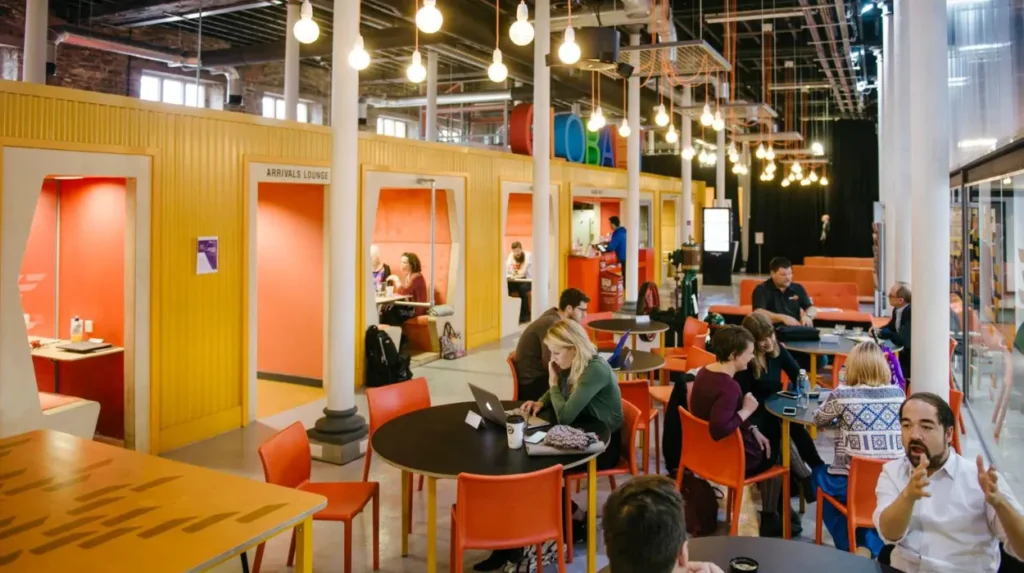
Engine Shed is another important part of the ecosystem. Located beside Bristol Temple Meads, it functions as an innovation and enterprise centre and has hosted startup events, business programmes, investor activity and technology showcases.
UWE Bristol contributes through applied research, graduate talent and entrepreneurship. Its Future Space facility provides specialist workspace for science and technology businesses.
Future Space describes itself as an innovation centre for high-tech businesses working across health technology, AI and digital technology, advanced engineering and green technology. It combines workspace with university-linked research expertise, business support and access to emerging talent.
Bristol Innovations is expanding this university-business connection further. The University of Bristol states that its Bristol Innovations Zone is scheduled to open in September 2026. The facility includes collaborative workspace, specialist laboratories, equipment, training, business incubation and research partnerships.
Bristol City Council also influences the ecosystem through economic development, planning, regeneration and infrastructure. Temple Quarter is particularly significant because it brings business, education, transport and development activity together around Temple Meads.
These organisations create a connected support structure rather than operating in isolation. Founders can access different forms of assistance depending on whether their business is at the idea, prototype, investment, commercialisation or scale-up stage.
Explore More Area Guide
Best Coworking Spaces in Bristol 2026
After-School Activities Guide Bristol 2026
How large is Bristol’s startup economy?
Bristol’s startup scene contributes through company formation, investment, employment, research commercialisation and productivity. In 2024, Bristol recorded 4,500 new company incorporations, while local startup programmes generated jobs, revenue and investment across technology and innovation sectors for the wider economy locally.
Bristol’s business statistics show a substantial base for entrepreneurial activity. The city recorded 33,655 active companies in June 2025, according to Bristol City Council. The number of new companies incorporated in 2024 reached 4,500.
The council also recorded 3,964 enterprises ceasing trading during the same period. Business creation and closure are normal features of a dynamic economy. The Office for National Statistics defines a business birth as a newly registered enterprise identified through VAT and/or PAYE registrations.
Startup survival is another important indicator. Bristol City Council reported that 47.7% of companies incorporated in Bristol in 2019 survived for five years, compared with 48.6% across England. The one-year survival rate was 88.8%, compared with 89.9% for England.
These figures provide a useful distinction between startup formation and startup longevity. A strong ecosystem needs both new company creation and mechanisms that help viable businesses survive and grow.
University-linked businesses also contribute measurable economic value. SETsquared Bristol companies created 300 jobs in 2023, with 200 of those jobs located in the South West. The largest job-creation sectors included fintech, healthtech and engineering.
Research spinouts form another important part of the economy. In 2025, the University of Bristol reported that it had more than 90 active spinout companies, which collectively raised more than £700 million in investment over the previous two years.
The university was ranked fifth in the UK and tenth in Europe for life-sciences and deep-tech spinouts in the 2025 European Spinout Report referenced by the university. Bristol also ranked first for the value created by its quantum spinouts in that analysis.
The figures demonstrate that Bristol’s startup economy extends beyond the number of newly incorporated companies. Research commercialisation, investment, employment and technology development are important components of its overall economic contribution.
What is the role of Temple Quarter in Bristol’s startup future?
Temple Quarter, university innovation facilities, deep-tech investment and research commercialisation are strengthening Bristol’s long-term startup capacity. Bristol Innovations Zone opens in September 2026, while new investment and specialist facilities expand routes from research discovery to scalable companies and economic growth.
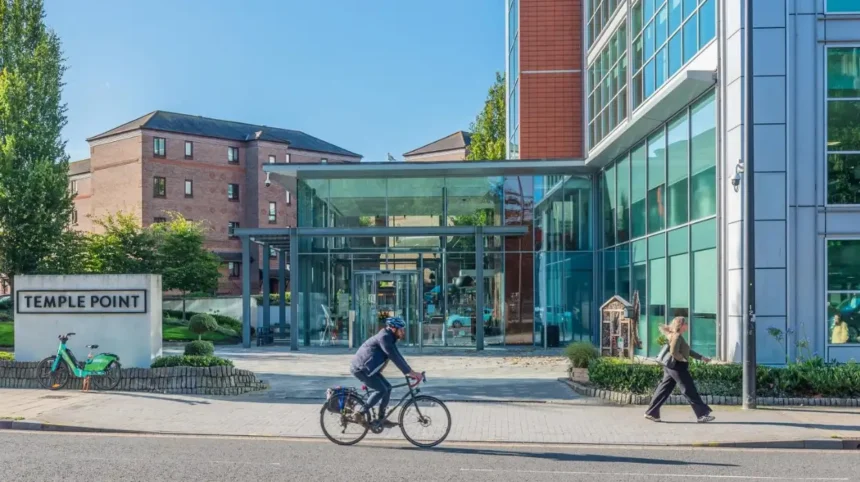
Temple Quarter is becoming one of the most important physical locations for Bristol’s future innovation economy. The regeneration area surrounds Bristol Temple Meads and connects transport infrastructure with new commercial, educational and research facilities.
The Temple Quarter Enterprise Zone was launched in 2012. Bristol City Council identifies the area as a location for new homes, jobs, businesses and economic opportunities.
The University of Bristol’s Temple Quarter Enterprise Campus is central to this transformation. The university states that its enterprise campus will bring together academic, industrial and entrepreneurial expertise around digital, business and social innovation.
The university estimates that its Enterprise Campus will deliver approximately £626 million of employment and financial benefit to the regional economy over the following decade.
The campus also strengthens the connection between research and entrepreneurship. Its location beside Temple Meads improves access for founders, researchers, investors, employees and business partners.
The Bristol Innovations Zone, scheduled to open in September 2026, adds another layer. It is designed to provide collaborative workspace, laboratories, specialist equipment, business incubation, skills training and access to academic researchers.
Deep-tech investment is also becoming more structured. In 2024, SETsquared Bristol partnered with regional investment firm QantX to announce a planned £300 million spinout-focused investment vehicle intended to support science and technology companies in the region.
These developments strengthen the commercialisation pathway. Researchers can develop discoveries within university environments, receive entrepreneurial support, access specialist facilities and connect with investment networks without leaving the wider Bristol innovation ecosystem.
The long-term relevance is significant for Bristol. New technology companies require research talent, investment, specialist facilities, skilled employees and commercial networks. Temple Quarter brings several of these requirements together within a concentrated innovation district.
Bristol’s startup scene therefore has an established foundation and an expanding physical and institutional infrastructure. The combination of universities, technology incubators, research facilities, investment programmes and regeneration projects positions the city for continued startup activity across digital technology, life sciences, engineering, artificial intelligence, climate technology and deep technology.
Is Bristol a good city for startups?
Yes. Bristol has a strong startup ecosystem supported by universities, technology incubators, investors, research organisations and business networks. Its strengths include technology, engineering, life sciences, artificial intelligence, fintech, creative industries and climate technology.