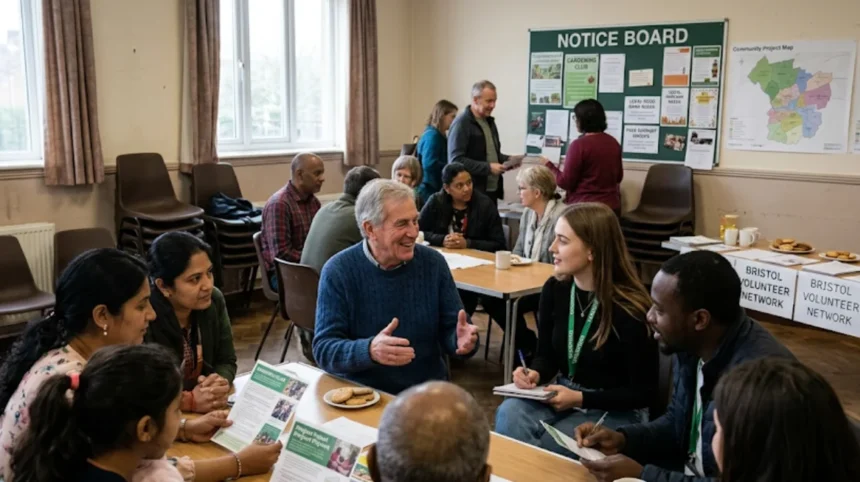
Community groups in Bristol are local organisations that bring people together around shared needs, interests, or causes. They include volunteer-led groups, charities, neighbourhood associations, peer-support networks, social clubs, and community projects that operate outside government and profit-making sectors.
- What are community groups in Bristol?
- Why do community groups matter in Bristol?
- How is Bristol’s community sector organised?
- What kinds of community groups exist in Bristol?
- How do community groups support residents?
- How do people find a group in Bristol?
- What role does the city council play?
- How do community groups build local impact?
- What is the future of Bristol community groups?
What are community groups in Bristol?
Community groups in Bristol are organised local networks that support residents, solve shared problems, and build social connection. They include charities, peer-support groups, social enterprises, neighbourhood associations, and issue-based campaigns that work for community benefit.
These groups form an important part of city life. They help people connect, share resources, and take action on local concerns such as isolation, youth support, housing, health, environment, arts, and community safety. A community group can be a small street association, a large citywide charity, or a peer group built around a shared experience.
Bristol has a strong community culture, so these groups appear in many forms. Some focus on practical support, while others focus on social activity, identity, or advocacy. Together, they create a wider network of support across the city.
Why do community groups matter in Bristol?
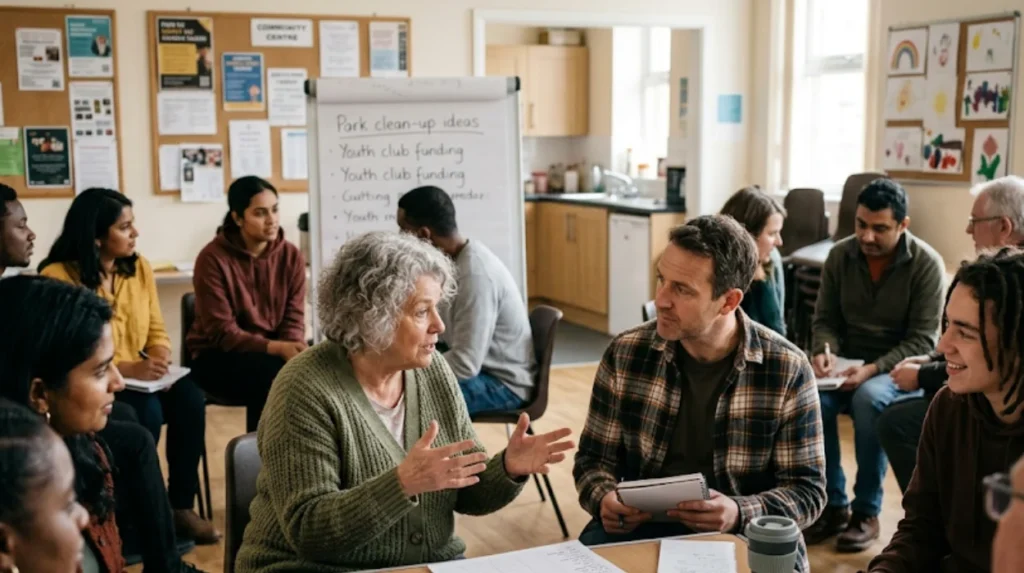
Community groups matter because they help Bristol residents meet practical needs, reduce isolation, improve local services, and strengthen participation in city life. They also give communities a direct way to influence decisions and local development.
They often fill gaps that formal institutions do not cover well. A group can help people who feel isolated, support residents through shared experience, or create a space where local issues are discussed in a practical way. That makes them valuable in a city where neighbourhood change and service pressure affect many communities.
They also build trust and participation. When people join a group, they often become more involved in volunteering, local events, and civic action. Over time, that strengthens community resilience and makes local networks more stable.
How is Bristol’s community sector organised?
Bristol’s community sector is organised as a third-sector ecosystem made up of charities, community benefit groups, social enterprises, and volunteer-led organisations. Local support bodies and the council provide funding, advice, influence channels, and access to buildings.
This structure helps groups survive and grow. Many community organisations need more than volunteers and ideas. They need space, funding, governance, and administrative support. Bristol’s community sector includes organisations that deliver services, organise activities, and represent community interests.
A key part of this system is access to physical places. Community centres, halls, and shared buildings give groups a base for meetings, events, and support sessions. Without that infrastructure, many groups would struggle to remain active over time.
What kinds of community groups exist in Bristol?
Bristol has many kinds of community groups, including peer-support groups, neighbourhood associations, volunteering organisations, arts groups, cultural networks, youth services, and social-interest communities. Examples include mental health groups, women’s groups, and local activity networks.
The range is broad because community need is broad. Some groups focus on wellbeing and emotional support. Others focus on volunteering, the arts, the environment, or local neighbourhood issues. Some groups are open to everyone, while others are formed around a specific identity, age group, or shared experience.
Examples include peer-support groups for adults, city-based volunteering networks, and interest groups for people who want to meet others through activities such as games, culture, or discussion. This diversity makes the Bristol community scene more flexible and more accessible to different types of residents.
How do community groups support residents?
Community groups support residents through peer support, volunteering, advocacy, shared activities, and local problem-solving. They reduce barriers to participation by offering nearby, familiar, and community-based help rather than relying only on formal institutions.
Peer-support groups give people a chance to talk in a safe and structured setting. Volunteering groups connect residents with opportunities to contribute to local causes. Interest groups give people routine, friendship, and a sense of belonging.
Some groups also provide practical help, such as advice, referrals, or signposting to other services. Others work through advocacy, raising local concerns with decision-makers or helping residents understand their rights and options. This makes community groups useful both socially and practically.
How do people find a group in Bristol?
People find Bristol community groups through council pages, charity directories, volunteering platforms, event listings, and local resource hubs. The best approach is to search by interest, need, or neighbourhood, then narrow by format and meeting style.
Some people look for support groups, while others want volunteering roles or social meetups. Bristol has enough variety that most people can find a group that fits their situation. Online listings make discovery easier, especially for people who want something close to home or suited to a specific interest.
The most effective search usually starts with a clear goal. For example, someone looking for emotional support will search differently from someone looking for a creative group, a volunteering option, or a neighbourhood project. That simple filtering process saves time and improves the chance of finding a suitable group.
What role does the city council play?
The city council supports community groups through grants, service funding, building access, and policy influence. It also helps groups secure long-term space through community asset transfers and provides pathways for local voice and representation.
Council support matters because many groups depend on stable resources to continue their work. Funding helps pay for activities, staff, and administration. Access to buildings gives groups a place to meet and serve residents. Influence channels help groups raise concerns and shape local priorities.
Community asset transfer is especially important. It allows buildings or land to move into community stewardship, which gives local groups more control over how space is used. That can turn a building into a long-term community hub instead of leaving it underused.
How do community groups build local impact?
Community groups build local impact by turning shared needs into organised action. They create measurable effects through service delivery, volunteer mobilisation, peer support, representation, and place-based partnerships with public bodies and local institutions.
Their impact is often visible at neighbourhood level first. A group can support a housing estate, a ward, a street, or a specific community of interest. It can improve wellbeing, connect isolated residents, or create pathways into volunteering and civic involvement.
The wider impact grows when groups work together. Partnerships between local organisations, public bodies, and residents often create stronger services and better local outcomes. Over time, this makes community groups an essential part of how a city functions.
What is the future of Bristol community groups?
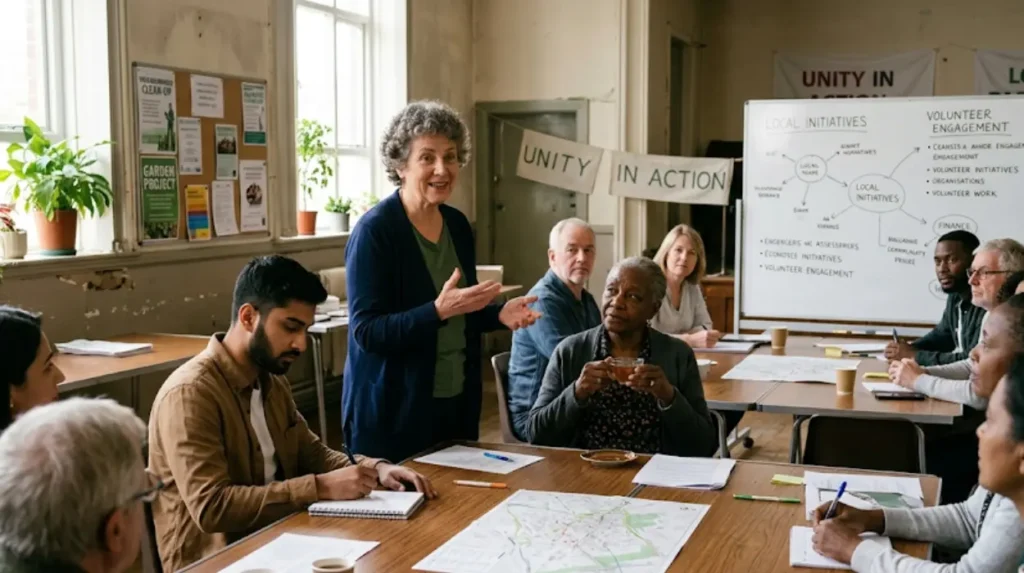
The future of Bristol community groups depends on funding, access to space, digital participation, and inclusive engagement. Bristol’s current community structure suggests that these groups will remain important in supporting wellbeing, social connection, and local participation.
Hybrid delivery will remain important. Some residents prefer in-person activity, while others need online access because of work, travel, health, or caring responsibilities. Groups that offer both formats usually reach more people and remain more adaptable.
The strongest groups will continue to combine local trust with practical organisation. Clear purpose, good governance, and community relevance will remain the main factors that keep them active. In Bristol, that makes community groups a lasting part of the city’s social fabric.
What are community groups in Bristol?
Community groups in Bristol are local organisations that bring people together around shared interests, needs, or causes. They include charities, neighbourhood associations, volunteer-led organisations, peer-support groups, social enterprises, cultural organisations, youth groups, and community projects that help strengthen local communities.