Buying your first home in Bristol involves understanding property prices, mortgage eligibility, deposits, legal fees, neighbourhoods and the UK home-buying process. Bristol is a city in South West England with a varied property market, including Victorian terraces, modern apartments, suburban family houses and new-build developments.
- Why Is Bristol a Consideration for First-Time Buyers?
- How Much Does It Cost to Buy Your First Home in Bristol?
- What Deposit Do First-Time Buyers Need in Bristol?
- How Can First-Time Buyers Get a Mortgage in Bristol?
- Which Bristol Neighbourhoods Should First-Time Buyers Consider?
- What Government Schemes Help First-Time Buyers in Bristol?
- Do First-Time Buyers in Bristol Pay Stamp Duty?
- What Should First-Time Buyers Check Before Making an Offer?
- How Does the Bristol Home-Buying Process Work?
- What Additional Costs Should Bristol First-Time Buyers Expect?
- Which monthly expenses should homeowners include?
- How much money should buyers retain after completion?
- What Mistakes Should First-Time Buyers Avoid in Bristol?
- How Can First-Time Buyers Prepare for Bristol’s Property Market?
- What Is the Final Checklist for Buying Your First Home in Bristol?
This guide explains how first-time buyers can prepare financially, compare Bristol neighbourhoods, arrange a mortgage, make an offer and complete a property purchase. It also covers government support, surveys, conveyancing and the ongoing costs of homeownership.
Why Is Bristol a Consideration for First-Time Buyers?
Bristol is a major city in South West England with established employment, transport connections, universities and varied housing options. First-time buyers need to compare property prices, household income, commuting costs and local amenities before deciding where to purchase.
Bristol has a diverse economy that includes technology, aerospace, financial services, creative industries, education and healthcare. Employment centres include the city centre, Temple Quarter, Filton and the wider Bristol–Bath economic area.
The city offers different property types across its neighbourhoods. Central districts contain apartments and converted buildings, while residential areas farther from the centre include terraced houses, semi-detached properties and detached homes.
Bristol’s housing market also reflects differences in access to public transport, green spaces, schools and employment. Properties near major employment locations or well-connected railway stations attract buyers seeking shorter commutes. Areas farther from central Bristol offer a different balance between property size, travel time and purchase price.
First-time buyers should assess affordability using their complete monthly budget rather than the advertised property price alone. Mortgage repayments, council tax, utilities, insurance, maintenance and transport all contribute to the cost of living in a purchased home.

How Much Does It Cost to Buy Your First Home in Bristol?
The cost of buying a first home in Bristol depends on the property type, location, condition and available mortgage. Buyers must budget for the purchase price, deposit, mortgage arrangement costs, legal fees, surveys, moving expenses and any applicable property taxes.
Bristol property prices vary considerably between neighbourhoods and property types. A small apartment, a two-bedroom terrace and a family-sized house have different price points, even when located within the same broad district.
The UK House Price Index, published by HM Land Registry and the Office for National Statistics, provides official information about completed property transactions and average prices. Buyers should consult the latest Bristol local-authority figures before setting a purchase budget because market values change over time.
What property costs should buyers compare?
First-time buyers should compare the asking price with recent completed sales of similar properties nearby. An asking price is the seller’s advertised figure, not proof that a property will sell for that amount.
A useful comparison considers the property’s number of bedrooms, floor area, condition, tenure, energy efficiency and proximity to transport. Leasehold apartments also require careful assessment of service charges, ground rent provisions and the remaining lease term.
How much should buyers budget beyond the deposit?
The deposit is only one part of the initial cost. Buyers also need funds for legal work, property inspections, mortgage fees, moving services and essential repairs.
Typical expenses include:
- Conveyancing: the legal process for transferring property ownership.
- Survey fees: charges for assessing the property’s condition.
- Mortgage fees: lender charges for arranging or administering a mortgage.
- Moving costs: expenses for transport, removals and essential supplies.
- Initial maintenance: repairs, decorating and replacing worn fixtures.
The actual amounts depend on the property, lender and service provider. Request written quotations before committing to a purchase, and keep an emergency reserve separate from the deposit.
The Office for National Statistics reported that Bristol’s average house price was £357,000 in June 2026, while the average price paid by first-time buyers was £317,000. Flats and maisonettes averaged £246,000, terraced houses £388,000 and semi-detached properties £452,000. These figures are provisional and describe different property categories rather than prices available to every buyer.
What Deposit Do First-Time Buyers Need in Bristol?
A first-time buyer’s deposit is the amount paid upfront towards the purchase price, with a mortgage covering the remaining balance. Many mortgage products accept deposits of 5% or 10%, although larger deposits improve the range of available borrowing options.
For a property costing £250,000, a 5% deposit equals £12,500, while a 10% deposit equals £25,000. A 15% deposit equals £37,500.
For a property priced at £317,000, the average paid by Bristol first-time buyers in June 2026, the equivalent deposits are £15,850 at 5%, £31,700 at 10% and £47,550 at 15%.
The deposit affects the loan-to-value ratio, commonly called LTV. This ratio measures the mortgage as a percentage of the property’s value. A £225,000 mortgage on a £250,000 property represents a 90% LTV.
Buyers should avoid spending their entire savings on the deposit. Retaining money for legal fees, moving costs, repairs and unexpected bills reduces the risk of financial pressure after completion.
How can buyers save for a deposit?
A deposit savings plan starts with a target amount and a realistic monthly contribution. Buyers should calculate how much they can save after rent, household bills, debt repayments and essential spending.
A Lifetime ISA is one option for eligible first-time buyers. Account holders can contribute up to £4,000 each tax year and receive a 25% government bonus, up to £1,000 annually. The account must satisfy the scheme’s age, opening and property-purchase conditions.
The purchase price limit for using a Lifetime ISA towards a first home is £450,000 across the UK. Buyers should check the full withdrawal rules before relying on the funds for a Bristol purchase.
How Can First-Time Buyers Get a Mortgage in Bristol?
A mortgage is a loan secured against a property, repaid through regular instalments over an agreed term. First-time buyers should assess income, outgoings, credit history, deposit size and interest rates before applying for a mortgage in Bristol.
Mortgage lenders assess whether applicants can afford their proposed repayments. They examine employment income, regular expenditure, existing credit commitments and other financial responsibilities.
An agreement in principle, also called a decision in principle, provides an initial indication of how much a lender is prepared to lend based on preliminary information. It is not a guaranteed mortgage offer.
Buyers can compare fixed-rate mortgages, where the interest rate remains unchanged for an agreed period, with variable-rate products, where the rate changes according to the mortgage terms. A fixed rate offers payment predictability during the fixed period, while a variable rate introduces greater repayment uncertainty.
What documents do mortgage lenders require?
Lenders commonly request identity documents, proof of address, payslips, bank statements and evidence of deposit funds. Self-employed applicants often need additional income evidence, such as tax calculations and business accounts.
The exact requirements vary by lender and employment circumstances. Buyers should provide accurate information and explain large deposits or unusual bank transactions when asked.
How much can a first-time buyer borrow?
Borrowing capacity depends on income, household spending, debts, credit history and lender affordability assessments. A salary multiple provides an initial estimate, but it does not guarantee approval.
For example, a buyer earning £40,000 annually would receive an illustrative £160,000 estimate using a four-times-income calculation. The lender’s actual offer depends on its criteria and the applicant’s financial circumstances.
Use a mortgage calculator to compare monthly payments at different interest rates and repayment terms. A longer term usually lowers the monthly payment but increases the total interest paid if all other factors remain unchanged.
Which Bristol Neighbourhoods Should First-Time Buyers Consider?
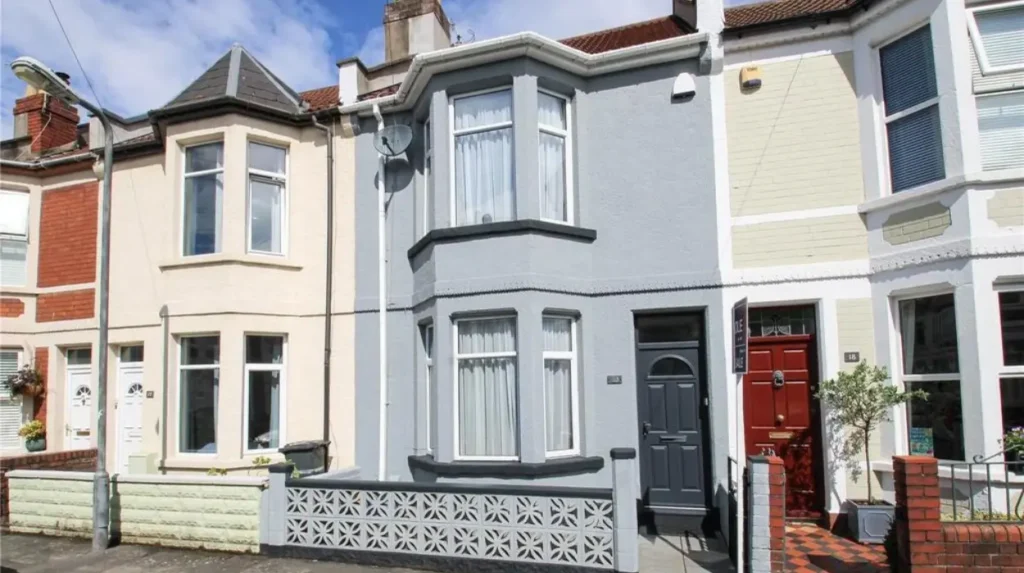
Bristol contains central, inner-city and suburban neighbourhoods with different property types, transport links and price levels. First-time buyers should compare areas such as Bedminster, Easton, Fishponds, Horfield and Southville against their budget, commuting needs and preferred housing type.
The right location depends on the buyer’s priorities. A central apartment suits some buyers seeking access to offices, shops and entertainment. A terraced house in a residential neighbourhood suits others who need more internal space or outdoor access.
Property prices change between streets and individual buildings. Buyers should use recent sold-price data and property listings rather than assuming that an entire neighbourhood has one representative price.
Bedminster
Bedminster has traditional terraced housing, local shops and connections towards central Bristol. Buyers should compare the condition of older properties, access to railway stations and bus routes, and the cost of planned improvements.
Easton
Easton contains established residential streets and local amenities. Buyers should assess each property’s condition, local transport connections, parking arrangements and proximity to their workplace before making an offer.
Fishponds
Fishponds has residential housing, shops and bus connections. Buyers comparing properties here should consider commuting time, road access, garden space and the cost of maintaining older homes.
Horfield
Horfield offers residential streets and access to facilities in north Bristol. Buyers should examine transport options, parking, local services and the distance to employment locations such as Filton.
Southville
Southville has traditional housing and access to amenities near the city centre. Buyers should compare property condition, available outdoor space, local traffic and prices against their mortgage budget.
How should buyers compare Bristol neighbourhoods?
Visit shortlisted streets at different times of day. Check the route to work, the availability of public transport, local shops and essential services.
Review flood risk through the Environment Agency’s official flood-risk service, especially for properties near the River Avon and other waterways. Examine the property’s Energy Performance Certificate (EPC), which records its energy-efficiency rating and recommendations for improvement.
Buyers should also investigate planning applications and nearby development proposals through Bristol City Council. These records help identify planned construction, road changes and other local developments that affect the property’s surroundings.
What Government Schemes Help First-Time Buyers in Bristol?
Eligible first-time buyers in Bristol can investigate government-backed savings incentives and affordable homeownership schemes. Options include a Lifetime ISA, shared ownership and First Homes properties where available, subject to eligibility rules, local availability and individual financial circumstances.
Government support differs by scheme. Some options increase deposit savings, while others allow buyers to purchase a share of a property or access a home sold at a discount.
The official GOV.UK affordable homeownership guidance provides an overview of available schemes and their conditions.
What is shared ownership?
Shared ownership allows an eligible buyer to purchase a share of a property and pay rent on the remaining share. The buyer normally takes out a mortgage for the share being purchased and pays rent to the housing provider on the portion retained by that provider.
Eligibility rules include household income limits and requirements relating to the buyer’s circumstances. Outside London, the standard household income limit is £80,000 annually. Applicants must check the property’s specific conditions and the scheme’s current rules.
Shared ownership does not eliminate all housing costs. Buyers need to account for mortgage repayments, rent, service charges where applicable, repairs and the conditions governing future increases in ownership.
What is the First Homes scheme?
First Homes is an affordable homeownership scheme in England that offers eligible first-time buyers qualifying properties at a discount against market value. The scheme’s standard guidance sets a minimum discount of 30%, with eligibility requirements and restrictions applying to subsequent sales.
Availability is property-specific. Buyers should contact participating developers or estate agents and ask Bristol City Council about local eligibility conditions and current developments.
The discount does not mean every new-build property qualifies. Buyers must verify that a specific home is part of the scheme and that they satisfy the relevant income, mortgage and residency requirements.
Do First-Time Buyers in Bristol Pay Stamp Duty?
First-time buyers in England can claim Stamp Duty Land Tax relief on qualifying residential purchases costing £500,000 or less. Eligible buyers pay no tax on the first £300,000 and 5% on the portion above £300,000 up to £500,000.
Stamp Duty Land Tax, commonly called SDLT, is a property transaction tax administered by HM Revenue and Customs. The rules differ across England, Northern Ireland, Scotland and Wales.
Under the current first-time buyer relief rules, a qualifying purchase at £300,000 or less attracts no SDLT. A qualifying purchase priced at £400,000 attracts £5,000 in SDLT, calculated at 5% on the £100,000 above £300,000.
A qualifying purchase priced above £500,000 does not receive first-time buyer relief, and standard residential rates apply. All joint purchasers must satisfy the relevant first-time buyer conditions to claim the relief.
Buyers should confirm their tax position before exchanging contracts. Their conveyancer normally calculates and submits the relevant SDLT return following completion, including when a return is required despite no tax being payable.
What Should First-Time Buyers Check Before Making an Offer?
Before making an offer on a Bristol property, buyers should examine its condition, legal ownership, energy efficiency, recent sale prices and potential repair costs. Checking these details helps buyers estimate the full cost of ownership and identify risks before entering a binding contract.
A property viewing provides an opportunity to inspect visible features, but it does not replace a professional survey or legal investigation. Buyers should look for damp patches, cracks, roof damage, ageing windows, ventilation problems and signs of previous water damage.
The asking price should be compared with recent completed sales of similar properties. Buyers should also consider how long the property has been marketed and whether the seller has disclosed known defects.
What is the difference between freehold and leasehold?
Freehold ownership generally means owning the property and the land on which it stands, subject to applicable legal restrictions. Leasehold ownership gives the buyer the right to occupy and use a property for the remaining term of a lease, subject to its conditions.
Many houses are freehold, while apartments are frequently leasehold. However, the tenure must be checked for each property rather than assumed from its type.
Leasehold buyers should review the remaining lease term, service charges, ground rent provisions, planned major works and restrictions on alterations. These factors affect ongoing costs and future resale options.
Which property survey should buyers arrange?
A property survey is an independent inspection that identifies defects and potential maintenance issues. The appropriate survey depends on the property’s age, construction, condition and complexity.
A RICS Level 2 Home Survey generally suits conventional properties in reasonable condition. A RICS Level 3 Building Survey provides a more detailed examination for older, altered or unusual buildings.
A mortgage valuation is different from a building survey. The lender uses its valuation process to assess the property’s suitability as security for the loan. It does not provide the same detailed assessment of defects as a professional survey.
How Does the Bristol Home-Buying Process Work?
Buying a home in Bristol involves preparing finances, obtaining a mortgage agreement in principle, viewing properties, making an offer, completing legal checks, securing a mortgage offer, exchanging contracts and completing the purchase. The conveyancer coordinates the legal transfer of ownership.
The process requires coordination between the buyer, seller, estate agent, mortgage lender and conveyancer. Some stages overlap, but legal commitments and payment deadlines must be handled in the correct order.
What happens at each stage?
- Set a realistic budget. Calculate your deposit, likely mortgage repayments, purchase costs and emergency savings.
- Obtain a mortgage agreement in principle. Ask a lender or mortgage adviser to assess your initial borrowing position.
- Search and view properties. Compare Bristol locations, property condition, transport links and sold prices.
- Make an offer. Submit your proposed price through the estate agent and provide evidence of your financial readiness.
- Instruct a conveyancer. The conveyancer investigates ownership, searches, contracts, restrictions and other legal matters.
- Complete the mortgage application and survey. The lender assesses the property and your finances before issuing a formal offer.
- Exchange contracts. Once the legal requirements are satisfied, both parties enter a binding agreement and the completion date is fixed.
- Complete the purchase. The funds are transferred, ownership passes to the buyer and the keys are released according to the agreed arrangements.
Before exchange, buyers should ensure that their mortgage, deposit funds, insurance arrangements and legal checks are in place. Withdrawing from a transaction after exchanging contracts can carry significant financial consequences.
The time required varies with the property chain, mortgage processing, survey findings and legal enquiries. A property chain exists when a seller’s purchase depends on another transaction completing.
What Additional Costs Should Bristol First-Time Buyers Expect?
First-time buyers should budget for legal fees, surveys, mortgage charges, insurance, removals, council tax, utilities and ongoing maintenance. The full cost depends on the property and household, so buyers should calculate initial expenses separately from their recurring monthly commitments.
Buying a property creates financial responsibilities beyond mortgage payments. A house with a low purchase price can still require substantial expenditure if it needs roof repairs, replacement windows or heating improvements.
Which monthly expenses should homeowners include?
Council tax depends on the property’s council tax band and the applicable local charge. Bristol City Council publishes information about council tax bands, billing and available reductions.
Homeowners also need to budget for electricity, gas where supplied, water, broadband, buildings insurance and routine maintenance. Apartment owners should check service charges and building insurance arrangements under the lease.
An EPC provides information about a property’s energy efficiency and recommended improvements. A less efficient home can require higher energy spending, depending on household usage, energy prices and the building’s characteristics.
How much money should buyers retain after completion?
Keep a separate reserve for unexpected repairs and temporary income disruption. The appropriate amount depends on income stability, household responsibilities, property condition and the cost of essential repairs.
Buyers should obtain quotations for known maintenance work before completing their purchase. They should also avoid relying on credit cards or additional borrowing to cover routine homeownership expenses.
What Mistakes Should First-Time Buyers Avoid in Bristol?
First-time buyers can reduce financial and legal risks by avoiding excessive borrowing, skipping surveys, overlooking leasehold costs and relying on advertised prices alone. A disciplined budget, independent professional advice and careful property checks support more informed purchasing decisions.
The following mistakes commonly create difficulties during a first property purchase.
- Borrowing the maximum available amount: lender approval does not mean every repayment level fits a household’s budget.
- Using every pound of savings: an empty savings account leaves little protection against repairs or unexpected expenses.
- Ignoring property condition: visible cosmetic improvements do not reveal every structural or maintenance problem.
- Overlooking commuting costs: a cheaper home farther from work can increase regular travel spending.
- Failing to check lease terms: service charges, lease length and restrictions can affect affordability and resale.
- Assuming government support applies automatically: schemes have specific eligibility conditions and property requirements.
- Making assumptions about future prices: property values can rise or fall, and a purchase should remain affordable without relying on appreciation.
Buyers should also check the flood risk, planning history and insurance availability of a shortlisted property. These checks are particularly relevant when purchasing older buildings or homes close to waterways.
Explore More Area Guide
Bristol Rental Market Guide: Rents, Areas and Tenant Rights
Bristol Property Market Guide: Prices, Trends and Advice
How Can First-Time Buyers Prepare for Bristol’s Property Market?
First-time buyers should prepare by reviewing current sold-price data, comparing mortgage offers, tracking suitable listings and maintaining a realistic savings plan. Bristol’s housing market changes over time, so decisions should rely on current local evidence rather than outdated national averages.
The Office for National Statistics and HM Land Registry publish housing market information that helps buyers understand changes in completed sale prices. Their local housing price service provides Bristol-specific figures and comparisons with the South West and wider UK market.
Buyers should review these figures alongside their own circumstances. Average prices do not show the exact cost of a particular street, building or property condition.
A practical preparation plan includes the following actions:
- Calculate the deposit available and the additional cash required for purchase costs.
- Compare mortgage products and estimate monthly repayments at different interest rates.
- Identify Bristol neighbourhoods that fit the budget and commuting requirements.
- Research completed sales and inspect several comparable properties.
- Obtain independent legal, mortgage and survey advice before committing.
- Review the latest government scheme eligibility rules and local property availability.
Future housing affordability will depend on factors including mortgage rates, household earnings, housing supply, employment conditions and the cost of borrowing. Buyers should reassess their budget when these circumstances change.
What Is the Final Checklist for Buying Your First Home in Bristol?
A first-time buyer is ready to proceed when the deposit and purchase costs are accounted for, mortgage affordability has been assessed, a suitable property has passed the necessary checks and a conveyancer is managing the legal process. The final decision should reflect the buyer’s long-term financial circumstances.
Before making a commitment, confirm that the property meets your needs and remains affordable after accounting for all household expenses.
Use this final checklist to organise the purchase:
- Confirm the maximum affordable purchase price.
- Calculate the deposit and retain emergency savings.
- Obtain a mortgage agreement in principle.
- Compare Bristol neighbourhoods and recent sold prices.
- Arrange a suitable property survey.
- Check tenure, lease terms and service charges.
- Review flood risk, energy efficiency and planning information.
- Confirm SDLT liability and eligibility for relief.
- Instruct a conveyancer and complete legal checks.
- Review the formal mortgage offer before exchanging contracts.
- Arrange insurance, moving services and utility accounts.
- Keep copies of all legal, mortgage and property documents.
Buying a first home in Bristol requires preparation, careful financial planning and an understanding of the legal process. By comparing local property values, checking the full cost of ownership and using reliable government information, buyers can approach the market with a clearer budget and a more structured purchasing plan.
Is Bristol a good place for first-time buyers?
Bristol offers a range of property types, employment opportunities, public transport connections and residential neighbourhoods. First-time buyers should compare local house prices, mortgage affordability, commuting costs and ongoing household expenses before choosing a property.