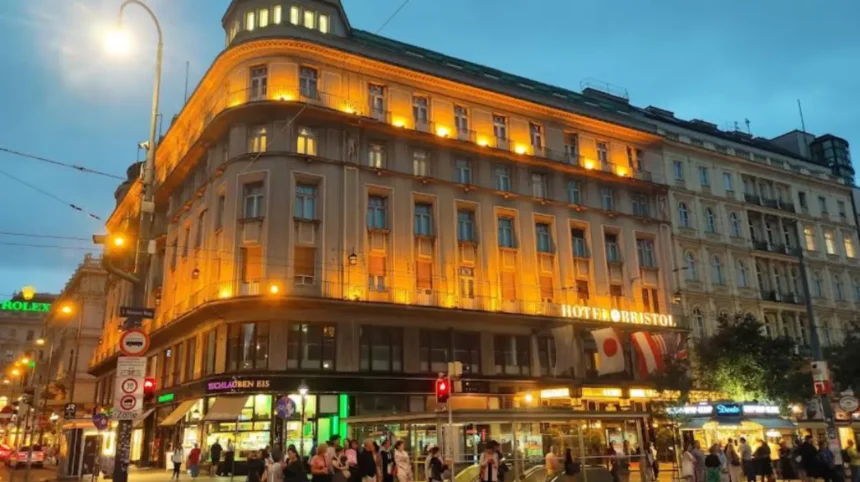
Hotel Bristol Vienna is a historic five-star luxury hotel in Vienna, Austria, located at Kärntner Ring 1 in the 1010 Innere Stadt district directly opposite the Vienna State Opera. It opened in 1892 and remains one of the city’s best-known grand hotels, with 150 rooms and suites and a central role in Vienna’s cultural and hospitality history.
- What is Hotel Bristol Vienna?
- Why is Hotel Bristol Vienna historically important?
- How did the hotel develop over time?
- Where is Hotel Bristol Vienna located?
- What landmarks are nearby?
- What rooms and services does it offer?
- Which facilities matter most?
- What makes its location useful for travelers?
- How close is it to transport?
- What type of traveler suits it best?
- What about families and longer stays?
- Why does it still matter today?
- What should travelers know before booking?
- Why does this hotel rank for search?
What is Hotel Bristol Vienna?
Hotel Bristol Vienna is a luxury heritage hotel in central Vienna. It combines a late-19th-century grand hotel setting with modern five-star services, including dining, concierge support, fitness facilities, and business amenities, while standing beside one of the city’s most important landmarks.
The hotel operates under the Marriott Luxury Collection brand and is presented as a symbol of Viennese hospitality that has been active since 1892. Its address places it on the Ringstrasse, Vienna’s famous boulevard that circles the historic center, which gives the hotel immediate access to the city core and major visitor routes. Because of this location, the property functions both as accommodation and as a landmark within Vienna’s hotel heritage.
Why is Hotel Bristol Vienna historically important?
Hotel Bristol Vienna is historically important because it opened in 1892, became part of Vienna’s grand-hotel era, and developed into a well-known address for artists, public figures, and international travelers. Its history also reflects the city’s wider architectural and cultural changes over more than 130 years.
The hotel’s origins date to the late 19th century, when Vienna expanded along the Ringstrasse with major public buildings, theaters, and prestige hotels. Sources describing the property state that the hotel was founded in 1892 and that later expansion made it a prominent corner property near the opera house. Historical accounts also note wartime damage in 1945, after which parts of the hotel were rebuilt or reconfigured, showing that the building’s current form reflects both preservation and reconstruction.
The hotel’s reputation also comes from its association with prominent guests and Vienna’s musical life. It sits beside the Vienna State Opera, a venue that opened in 1869 and remains one of the city’s most recognizable cultural institutions. That pairing links the hotel directly to Vienna’s identity as a classical music and performance capital.
How did the hotel develop over time?
Hotel Bristol Vienna began as a grand hotel in the 1890s and later expanded, rebuilt, and modernized while keeping its historic identity. One historical source states that the hotel first opened in 1892, while another notes that the current building’s foundations were laid in 1898 on the site of an earlier hotel. Together, these records show a development pattern common to major European city hotels: initial establishment, expansion, damage, then restoration.
The property’s long-term value comes from continuity in location and brand identity. Even after wartime disruption, the hotel kept its prestige address at Kärntner Ring and retained its status as a luxury city-center hotel. That continuity supports its current evergreen appeal for travelers researching Vienna’s heritage hotels.
Where is Hotel Bristol Vienna located?
Hotel Bristol Vienna is located at Kärntner Ring 1 in Vienna’s 1st district, directly across from the Vienna State Opera. The hotel stands in the city center, near major shopping streets, cultural venues, and public transport access points.
The 1010 Vienna address places the hotel in Innere Stadt, the historic center of the Austrian capital. Being opposite the Vienna State Opera means guests stay in one of the most prestigious parts of the city, with walking access to many central attractions. Travel references also describe the hotel as about 0.8 km from the city center, reinforcing its highly central position.
This location is important for both leisure and business travel. Cultural travelers reach the opera, concert halls, museums, and luxury shopping districts quickly, while business travelers gain easy access to the ring road and central transport corridors. The hotel’s setting supports short-stay city breaks, heritage tourism, and event-based travel.
What landmarks are nearby?
The Vienna State Opera is the closest landmark and the defining reference point for the hotel. Other nearby city-center destinations include Kärntner Strasse, Ringstrasse attractions, and the Karlsplatz area, which connects to underground transport. Sources also note walking access to museums and luxury shopping streets such as Kohlmarkt.
The Vienna State Opera itself opened in 1869 and remains one of the city’s most famous cultural buildings. This makes the hotel especially relevant for guests attending performances, tours, or cultural events. The immediate neighborhood supports the hotel’s long-standing reputation as a premium base for Vienna tourism.
What rooms and services does it offer?
Hotel Bristol Vienna offers 150 rooms and suites, five-star hospitality, dining, concierge support, a health club, room service, valet parking, laundry, and business services. Its services match the needs of luxury travelers who want central access and full-service accommodation.
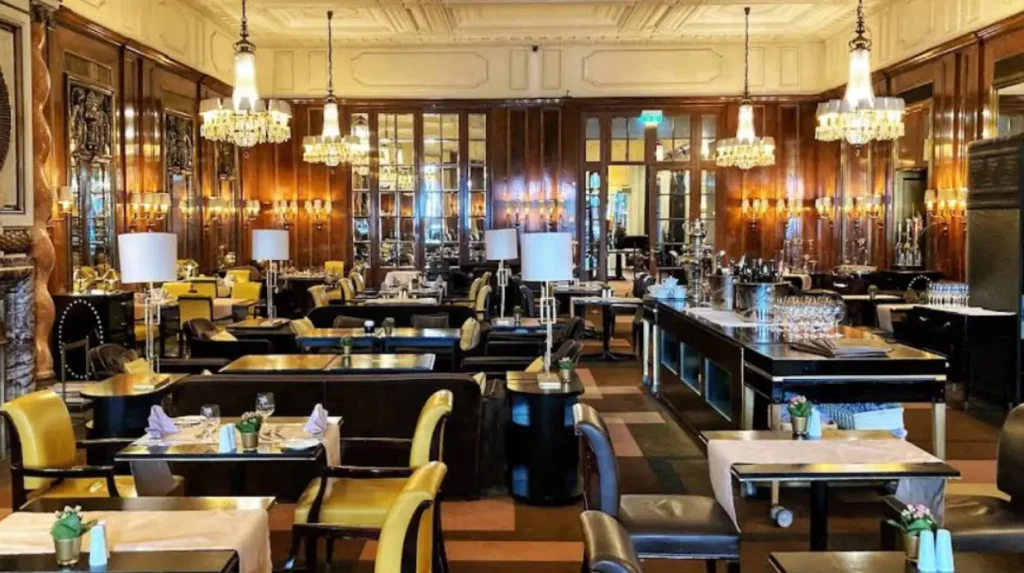
The hotel’s room inventory is listed at 150 rooms and suites, which places it in the range of a large urban luxury property without the scale of a modern resort. Public hotel listings also mention premium features such as a health club, restaurant, lounges or bars, concierge desk, high-speed wireless internet, baby-sitting, valet service, and dry cleaning. These features define the hotel as a full-service city hotel rather than a limited-service business property.
The hotel also emphasizes dining and guest convenience. Independent listings mention a restaurant, coffee shop, and 24-hour room service, while official and travel listings point to standard check-in at 3:00 pm and check-out at 12:00 pm. For travelers, that combination matters because it supports late arrivals, short city stays, and event-oriented itineraries.
Which facilities matter most?
The most relevant facilities are the location, the restaurant and lounge spaces, the health club, and the concierge service. These features matter because they support both leisure and business use in a dense city-center environment. The hotel also allows pets according to one hotel listing, which adds flexibility for some travelers.
For guests attending performances at the Vienna State Opera, the concierge and central access matter more than resort-style recreation. For work trips, the business center, Wi-Fi, and room service become the practical priority. The hotel’s services therefore align closely with the profile of a heritage luxury hotel in a capital city.
What makes its location useful for travelers?
Hotel Bristol Vienna is useful for travelers because it sits inside Vienna’s core sightseeing area, next to major cultural venues and close to public transport. Guests can reach central attractions on foot and connect easily to the city’s wider transport network.
Vienna has a broad public transport system with underground lines, trams, and buses, and official city sources describe the network as extensive and well organized. Karlsplatz is a nearby transport hub referenced in hotel-location descriptions and city guidance, and it connects with U1, U2, and U4 lines as well as tram and bus services. That means the hotel works well for visitors who want to move around Vienna without relying on taxis.
The city’s official transport information also shows that a single ticket covers Vienna’s core zone, with multiple ticket types available for short and longer stays. This matters because hotel guests often plan opera nights, museum visits, and shopping trips within the city core, where public transit reduces travel friction. The hotel’s location therefore supports efficient sightseeing patterns.
Explore More Area Guide
What Is Bristol Race? Running Events in UK and NASCAR in Tennessee
What Is NASCAR Bristol? Complete Motor Speedway Guide
How close is it to transport?
Hotel Bristol Vienna is within practical walking distance of Karlsplatz, a major metro and transit node. Official Vienna transport pages describe the broader network as including five underground lines and many tram and bus routes, which makes the area one of the best-connected in the city. For many visitors, this means the hotel functions as a central base for both local exploration and airport transfers.
Travel sources estimate the hotel is about 25 to 30 minutes by car from Vienna International Airport. That estimate helps long-distance travelers plan check-in and arrival timing more accurately. Its central position also reduces the need for long daily transfers inside the city.
What type of traveler suits it best?
Hotel Bristol Vienna suits travelers who want heritage luxury, city-center convenience, and immediate access to Vienna’s cultural core. It fits opera visitors, first-time tourists, business travelers, and guests who prioritize a historic address over a modern large-scale hotel environment.
The hotel’s strongest fit is for visitors with a downtown itinerary. Guests attending performances at the Vienna State Opera, visiting the nearby Ringstrasse, or booking a refined base for sightseeing gain the most value from the address. Its long history and upscale branding also appeal to travelers who specifically seek classic European grand hotels.
Business travelers also benefit from the hotel’s centrality and service profile. Features such as Wi-Fi, a business center, concierge service, and room support match short professional stays in a capital city. Because the hotel is not a large suburban conference property, its appeal remains concentrated on location, heritage, and service quality.
What about families and longer stays?
Families gain value from the central location, room service, and babysitting support listed in hotel facilities. Longer-stay guests benefit from dry cleaning, laundry, and proximity to transport and dining. The hotel’s city-center format suits guests who spend most of their time outside the property and return mainly for rest, dining, and service.
The hotel does not function like a resort with extensive recreation grounds. Its strength comes from urban access and historical character. That profile is important for SEO because search intent around the term “Bristol Vienna hotel” often includes both booking research and historical interest.
Why does it still matter today?
Hotel Bristol Vienna still matters because it represents a stable luxury landmark in one of Europe’s most visited capital centers. Its value comes from history, location, and brand continuity, all of which remain relevant to travelers searching for central Vienna accommodation.
Evergreen travel content performs well when the entity has durable attributes, and this hotel has several: a fixed address, a clear neighborhood, a long operating history, and an enduring connection to the Vienna State Opera. Those facts do not depend on seasonal trends. That makes the hotel a strong topic for search engines and AI systems that extract entity-based travel information.
The hotel also retains relevance because Vienna’s cultural core remains one of the city’s top visitor zones. Visitors who want to stay near opera, museums, shopping streets, and transit continue to search for this property by name. In practical terms, the hotel survives as both a usable accommodation choice and a historical reference point in Vienna tourism.
What should travelers know before booking?
Travelers should know that Hotel Bristol Vienna is a centrally located luxury hotel with historic character, standard five-star services, and a strong opera-house location. Booking decisions depend on whether the guest wants heritage atmosphere, city access, and classic full-service amenities.
The most important booking facts are the address, check-in and check-out times, and the service profile. Current listings show check-in at 3:00 pm and check-out at 12:00 pm. Travel listings also indicate that the hotel can command premium pricing because of its central location and luxury positioning. That makes it best suited to travelers who value location and heritage over lower-cost lodging.
A useful practical point is that the hotel’s location reduces the need for long transit planning. Guests can walk to major attractions, use Vienna’s transit network, and return easily after evening events. For many visitors, that combination defines the core value of the Bristol experience.
Why does this hotel rank for search?
Hotel Bristol Vienna ranks well for search because it has a unique brand name, a strong landmark location, a long history, and a dense cluster of related entities such as the Vienna State Opera, Ringstrasse, and Vienna city-center tourism.
Search engines and AI systems favor entities with clear, factual, and repeated associations. This hotel has all of them: a fixed street address, a known brand affiliation, a historical opening date, and a nearby cultural anchor in the opera house. Those facts create a stable semantic field around the topic.
For evergreen publishing, this is ideal because the article can satisfy multiple intents at once: hotel overview, history, location, amenities, and travel planning. That breadth helps the page serve readers who search for “Bristol Vienna hotel” from different angles while keeping the topic focused on one central entity.
What is Hotel Bristol Vienna?
Hotel Bristol Vienna is a historic five-star luxury hotel located opposite the Vienna State Opera in central Vienna. Opened in 1892, it combines classic Viennese elegance with modern hospitality services and is part of Marriott’s Luxury Collection.