Bristol has a broad wellness landscape that combines leisure centres, physical activity programmes, mental wellbeing services, community organisations, rehabilitation schemes and complementary health practices. The city’s approach reflects a wider understanding of wellness that includes physical fitness, mental health, social connection, healthy lifestyles and access to supportive community environments.
- What are wellness centres in Bristol?
- How has wellness developed in Bristol?
- Why are wellness centres important for Bristol residents?
- What services do wellness centres in Bristol provide?
- Fitness and gym facilities
- Swimming and aquatic activity
- Fitness classes
- Rehabilitation and referral programmes
- How does Bristol’s physical activity referral system work?
- Which Bristol wellness centres support health conditions?
- How important is physical activity in Bristol?
- How do wellness centres support mental wellbeing in Bristol?
- Are complementary therapies part of wellness in Bristol?
- Where can residents find wellness services across Bristol?
- How should you choose a wellness centre in Bristol?
- How accessible are wellness services for different Bristol communities?
- What role do wellness centres play in Bristol’s future health landscape?
- What should visitors and new residents know about wellness centres in Bristol?
- What is the overall wellness landscape in Bristol?
The World Health Organization defines health as physical, mental and social wellbeing rather than simply the absence of disease. This definition provides a useful framework for understanding what modern wellness centres and wellbeing services aim to support.
Bristol’s local health strategy follows a similar integrated approach. Bristol City Council identifies five major themes: healthy childhoods, healthy bodies, healthy minds, healthy places and healthy systems.
The city therefore offers more than conventional gyms. Residents can access swimming pools, fitness facilities, exercise referral programmes, rehabilitation activities, mental wellbeing support, community groups and services listed through Well Aware.
What are wellness centres in Bristol?
Wellness centres in Bristol are facilities or organisations that support physical, mental and social wellbeing through services such as exercise, swimming, rehabilitation, relaxation, community activities and health-focused programmes for different needs and age groups.
The term wellness centre does not describe one standard type of facility in Bristol. It covers a wide range of settings.
A traditional leisure centre can provide gym facilities, swimming pools, fitness classes and sports. A specialist wellbeing organisation can focus on mental health, counselling or community support. A rehabilitation centre can provide supervised physical activity for people managing specific health conditions.
Bristol City Council currently lists facilities including Bristol South Swimming Pool, Easton Leisure Centre, Henbury Leisure Centre, Hengrove Park Leisure Centre, Horfield Leisure Centre, Kingsdown Sports Centre, Jubilee Swimming Pool and Expressions Gym, and St Pauls Community Sports Academy.
The wider wellness system also includes community services. Bristol City Council describes Well Aware as a directory containing health and wellbeing services, support organisations, activities and groups.
This means someone searching for wellness centres in Bristol should consider the service they actually need rather than relying only on the phrase “wellness centre”.
A person seeking general fitness can focus on gyms and leisure centres. Someone recovering from an illness can investigate physical activity referral programmes. Someone seeking emotional support can use mental wellbeing services. Someone wanting social connection can look for community groups and activities.
How has wellness developed in Bristol?
Wellness in Bristol has developed from traditional public health and recreation services into a broader system covering exercise, prevention, rehabilitation, mental wellbeing, community participation and healthy environments across different neighbourhoods.
The modern concept of wellness has roots in public health, preventive medicine, physical recreation and community development. The World Health Organization formalised a broad definition of health in its Constitution, adopted in 1946 and entering into force in 1948.
This framework shifted attention beyond treating illness. Physical health remained important, but mental and social wellbeing became recognised components of health.
Bristol’s current policy reflects this broader approach. The city’s Health and Wellbeing Strategy establishes a framework focused on healthy childhoods, healthy bodies, healthy minds, healthy places and healthy systems.
The development of wellness services also reflects changing health needs. Modern public health increasingly emphasises prevention, physical activity, healthy eating, mental wellbeing and early intervention.
Bristol’s Joint Strategic Needs Assessment, or JSNA, provides evidence for local health planning. The council describes the JSNA as a source of information about health and wellbeing needs, including wider determinants of health.
The result is a wellness environment that connects leisure, healthcare, community services and prevention.
Why are wellness centres important for Bristol residents?
Wellness centres are important in Bristol because they provide practical opportunities for physical activity, rehabilitation, social participation and healthy routines while supporting the city’s wider objective of reducing health inequalities and improving wellbeing.
Bristol’s health data demonstrates why accessible wellness facilities matter.
The city’s 2025 Key Facts report states that healthy life expectancy was 60.4 years for men and 60.3 years for women during 2021–23. The same report identifies substantial differences between more and less deprived communities.
Healthy life expectancy measures the average period people can expect to live in good health. It is different from total life expectancy because it considers the quality of health during those years.
The Bristol data also identifies a significant inequality gap. People in the most deprived 10% of the city have around 16 fewer years of healthy life expectancy than people in the least deprived 10%.
This gives wellness provision a public health role.
Accessible exercise facilities can support regular physical activity. Community programmes can reduce social isolation. Rehabilitation services can help people remain active while managing health conditions.
Wellness centres do not replace GPs, hospitals or specialist medical services. They form part of the wider health and wellbeing environment.
What services do wellness centres in Bristol provide?
Wellness services in Bristol include gym-based exercise, swimming, fitness classes, rehabilitation, physical activity referral programmes, strength and balance activities, mental wellbeing support and community-based health and lifestyle activities.
The exact service mix differs between facilities.
Fitness and gym facilities
Gyms provide structured spaces for cardiovascular exercise, resistance training and general fitness. Common equipment includes treadmills, stationary bicycles, cross-trainers, resistance machines and free weights.
Fitness programmes can support people working towards general activity goals. Bristol’s council-operated and community-linked leisure network provides access to multiple facilities across the city.
Swimming and aquatic activity
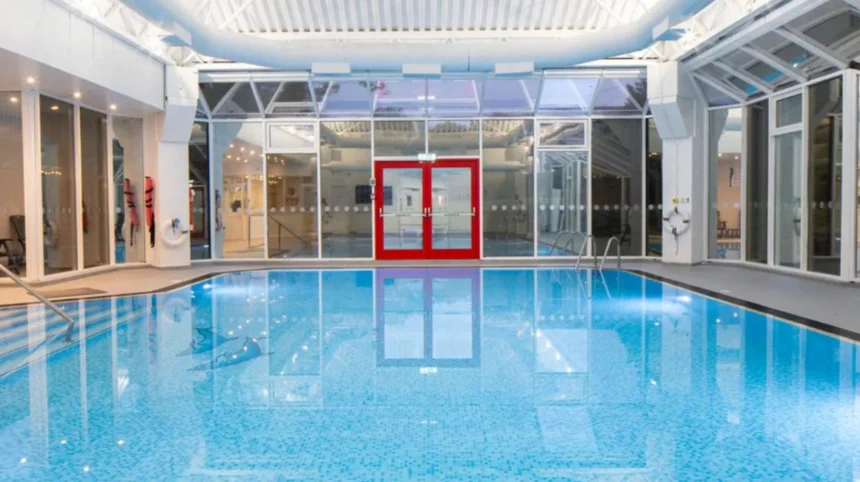
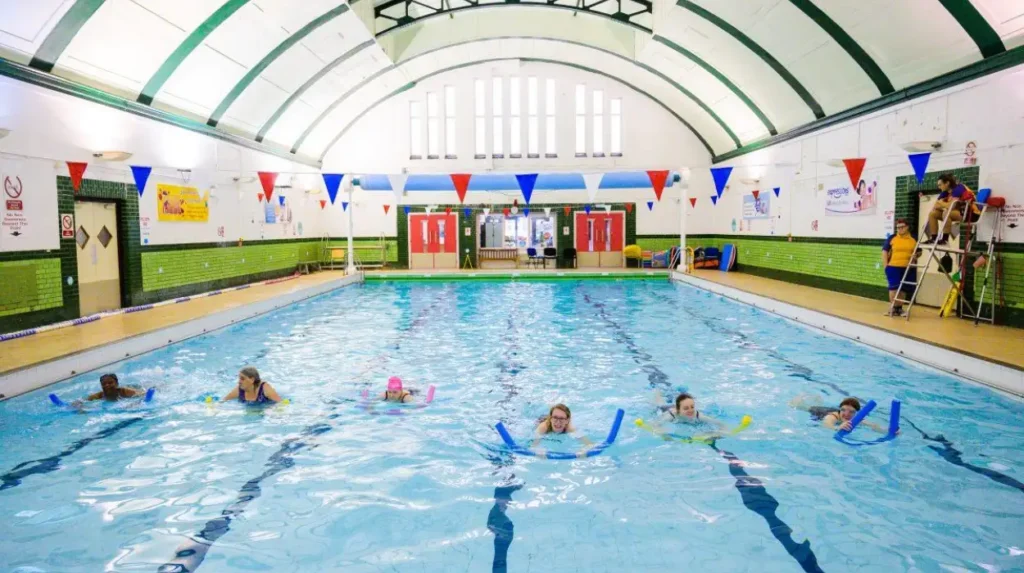
Swimming pools provide low-impact physical activity and recreational exercise. Bristol’s leisure network includes pools at locations such as Bristol South, Easton, Henbury, Hengrove Park and Horfield.
Aquatic activity is particularly relevant for people who prefer exercise with less impact on joints.
Fitness classes
Classes provide structured exercise under instructor guidance. Examples include circuit training, group fitness, strength sessions and other organised activities.
The exact timetable differs by venue, so users should check individual centre schedules before attending.
Rehabilitation and referral programmes
Bristol has a formal physical activity referral system for people with specific health conditions.
The council states that its programmes aim to help eligible participants reach the recommended 150 minutes of moderate-intensity physical activity each week.
Programmes include pulmonary rehabilitation, cardiac rehabilitation, cancer rehabilitation, Parkinson’s and stroke exercise, Life Balance for multiple sclerosis or Parkinson’s disease, Staying Steady strength and balance classes, and general physical activity referral.
These programmes demonstrate the difference between ordinary fitness provision and medically informed exercise support.
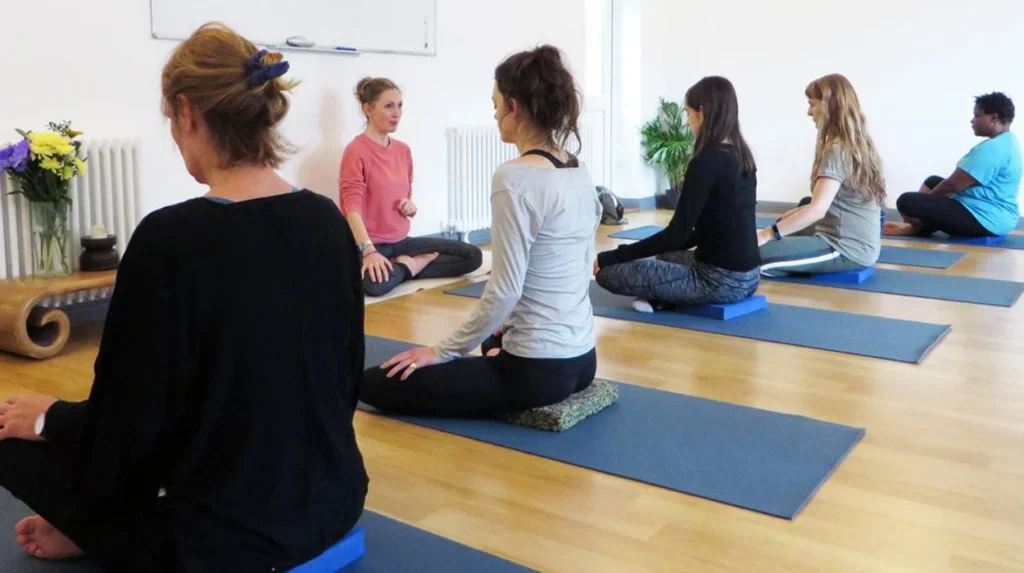
How does Bristol’s physical activity referral system work?
Bristol’s physical activity referral system connects eligible residents with trained instructors through participating leisure centres and sports facilities, using personalised programmes, health checks and follow-up sessions to support safer regular exercise.
The general physical activity referral scheme lasts 12 weeks. Participants normally attend a participating leisure centre or gym at least twice a week. A trained referral instructor develops an exercise programme based on the participant’s health condition and goals.
The first appointment includes a health check and discussion of exercise preferences and concerns.
The instructor also provides an induction for relevant gym equipment.
Follow-up contact takes place during weeks 3, 6 and 12. Health checks are used to monitor progress.
The programme is intended for people who are currently inactive and have low- or medium-risk health conditions. Referral normally comes through a GP, practice nurse, physiotherapist or hospital consultant.
This structured model gives Bristol residents a route into exercise when standard gym membership does not provide enough specialist support.
Which Bristol wellness centres support health conditions?
Bristol provides specialised exercise options for conditions including respiratory disease, cardiovascular disease, cancer recovery, Parkinson’s disease, stroke, multiple sclerosis, arthritis and some musculoskeletal conditions through referral-based programmes.
The council’s physical activity service recognises different levels of health risk and matches eligible residents with appropriate programmes.
For example, Better Breathing classes support people with respiratory conditions such as chronic obstructive pulmonary disease after pulmonary rehabilitation. Sessions are supervised by trained instructors.
Bristol also operates rehabilitation exercise for people with Parkinson’s disease or after stroke. These programmes use personalised aerobic and resistance exercises, including supervised group circuit work.
Staying Steady classes focus on strength and balance. These activities support mobility and help reduce fall risk among suitable participants.
The important distinction is that these programmes have eligibility requirements. A wellness centre should not be treated as a substitute for medical assessment when someone has a significant health condition.
How important is physical activity in Bristol?
Physical activity is a major component of wellness in Bristol, with local data showing that 67.3% of residents reported achieving recommended activity levels in the 2024/25 Quality of Life survey after several years of lower activity.
Bristol’s Joint Strategic Needs Assessment states that adults should accumulate at least 150 minutes of moderate-intensity activity each week, or 75 minutes of vigorous activity, alongside muscle-strengthening activity on at least two days each week.
The Bristol Quality of Life survey recorded physical activity at 67.3% in 2024/25.
The rate was 71.2% in 2019 and fell to 63.7% in 2022 before increasing to 66.6% in 2023 and 67.3% in 2024.
Age differences remain important.
Bristol’s 2025 physical activity inequality assessment reported that 79.5% of adults aged 16–24 and 74.5% aged 25–34 achieved at least 150 minutes of activity per week in the 2023–24 Active Lives data. Among people aged 75–84, the figure was 46.8%.
This explains why wellness centres need varied programmes rather than one standard fitness model.
How do wellness centres support mental wellbeing in Bristol?
Mental wellbeing services in Bristol extend beyond gyms and include community organisations, wellbeing courses, counselling services, support groups and activities designed to improve emotional health, resilience, connection and access to appropriate support.
Mental health is an integral component of health. The World Health Organization states that mental health is influenced by biological, social, economic and environmental factors.
Bristol’s local health strategy therefore includes healthy minds alongside healthy bodies.
The city’s mental health service information directs residents towards Well Aware and community organisations. Bristol Wellbeing College, operated by Second Step, provides workshops, courses and activities focused on mental health and wellbeing.
Other services provide counselling, advocacy, support groups and specialist assistance.
This distinction is important because a wellness centre offering yoga or relaxation sessions is not automatically a clinical mental health service.
People experiencing significant or persistent mental health difficulties need appropriate NHS or professional support. Wellness activities can complement healthy routines, but they do not replace diagnosis or treatment.
Are complementary therapies part of wellness in Bristol?
Complementary therapies form part of the wider wellness sector and can include practices such as yoga, meditation, acupuncture and massage, but evidence varies by intervention and these services should complement rather than replace appropriate medical care.
Complementary health approaches are increasingly discussed within whole-person wellbeing.
The US National Center for Complementary and Integrative Health defines integrative health as combining conventional healthcare with complementary approaches while focusing on the whole person. Examples include combining psychotherapy or rehabilitation with practices such as yoga or acupuncture.
Research evidence differs substantially between practices.
NCCIH identifies yoga, meditation, tai chi and acupuncture among complementary approaches that have been studied for particular health and wellbeing outcomes. It also states that further research is needed for some wellness applications.
Consumers should therefore check practitioner qualifications, service descriptions, costs and claims before booking.
A reputable wellness provider should clearly distinguish relaxation or lifestyle services from medical diagnosis and treatment.
Where can residents find wellness services across Bristol?
Wellness services are distributed across Bristol through leisure centres, sports facilities, community organisations, health programmes and local directories, allowing residents to search by activity, health requirement, age group, neighbourhood and type of support.
Bristol’s leisure network covers different parts of the city.
Council-listed facilities include Easton Leisure Centre, Henbury Leisure Centre, Hengrove Park Leisure Centre, Horfield Leisure Centre, Bristol South Swimming Pool, Kingsdown Sports Centre, Jubilee Swimming Pool and St Pauls Community Sports Academy.
The physical activity referral network expands this provision further. Listed venues include Brunel Fitness Centre, Easton Leisure Centre, Elite Sports Centre Kingsdown, Henbury Leisure Centre, Hengrove Park Leisure Centre, Horfield Leisure Centre, Imperial Sports Ground, St Pauls Community Sports Academy, The Park Sports Centre and Bristol South Swimming Pool.
Well Aware provides another route for discovering local health and wellbeing organisations, activities and groups.
This directory-based approach is useful because wellness provision changes by programme, timetable, eligibility and location.
How should you choose a wellness centre in Bristol?
The best wellness centre depends on your specific objective, including general fitness, swimming, rehabilitation, mental wellbeing, social activity, relaxation or condition-specific exercise, together with location, accessibility, cost and professional qualifications.
Start with the purpose of the visit.
Someone seeking general fitness needs different facilities from someone recovering from a stroke. A swimmer needs pool access. A person seeking mental health support needs an appropriate wellbeing or clinical service.
Location is another important factor. Regular attendance becomes easier when the facility is accessible by walking, cycling, public transport or private vehicle.
Accessibility also matters. Bristol City Council advises users to check individual venues for facilities, disabled access, parking, prices, opening times and activity timetables.
Users should also check whether a service requires referral.
Specialist exercise programmes often have eligibility rules. The Bristol physical activity referral scheme, for example, requires appropriate health-professional involvement for eligible participants.
Finally, verify the provider’s qualifications and the precise service being offered. Wellness terminology covers a wide range of activities, so clear service descriptions are essential.
How accessible are wellness services for different Bristol communities?
Accessibility depends on geography, cost, mobility, health status, age, disability and social circumstances, making local availability and inclusive programming important parts of Bristol’s wider health and wellbeing strategy.
Bristol’s health data shows significant inequality between communities.
The city’s 2025 Key Facts report records a 10.7-year life expectancy gap for men and a 7.2-year gap for women between the most and least deprived areas, based on 2021–23 data.
Healthy life expectancy also varies substantially across the city.
Bristol’s 2026/27 life expectancy data shows differences between localities. North and West Bristol recorded male life expectancy of 80.3 years and female life expectancy of 84.3 years for 2023–25, while Inner City and East recorded male life expectancy of 77.3 years.
These differences demonstrate why wellness services should be assessed as part of the wider social environment.
Bristol’s approach includes community services, public leisure facilities, physical activity programmes and health support. This provides multiple routes into wellbeing rather than relying on private fitness facilities alone.
What role do wellness centres play in Bristol’s future health landscape?
Wellness centres are becoming an important part of Bristol’s prevention-focused health landscape because physical activity, mental wellbeing, rehabilitation and community participation support healthier lifestyles and complement formal healthcare services.
Bristol’s health strategy places prevention and wellbeing within a broader city-wide framework.
The council’s strategy aims to help citizens thrive while reducing gaps in health outcomes between economically deprived and affluent areas.
Physical activity is central to that objective.
The city’s current evidence shows improving activity levels, but substantial age and inequality differences remain. The 2025 physical activity assessment demonstrates that activity participation falls considerably among older adults, particularly those aged 75–84.
Wellness facilities therefore have a practical role in creating opportunities for exercise across the life course.
Their future relevance also extends beyond traditional gym use. Rehabilitation, strength and balance programmes, community activities, mental wellbeing courses and accessible leisure facilities all contribute to a broader definition of wellness.
The most effective approach is integrated. Medical services address diagnosed conditions. Wellness facilities support physical activity and healthy routines. Community organisations address social connection and practical wellbeing needs.
Explore More Area Guide
Sports Clubs in Bristol: Teams, Facilities and Activities 2026
Yoga Studios in Bristol: Classes, Styles & Beginner Guide 2026
What should visitors and new residents know about wellness centres in Bristol?
Visitors and new residents can access Bristol’s wellness environment through public leisure centres, gyms, swimming facilities, community activities and wellbeing organisations, with options suitable for general fitness, recreation, rehabilitation and mental wellbeing.
Bristol is a city with an established leisure and community infrastructure.
A visitor seeking exercise can use public swimming pools or leisure centres. A resident seeking longer-term support can explore memberships, fitness classes or community programmes. Someone with a health condition can investigate referral-based programmes through a healthcare professional.
The city’s Well Aware directory provides another way to identify local organisations and activities.
People should check current opening times, prices, eligibility rules and timetables before attending because individual facilities operate different schedules and services.
For medical concerns, professional healthcare advice remains essential.
Wellness is most useful when it supports sustainable everyday behaviour. Regular physical activity, adequate sleep, healthy eating, social connection and appropriate professional care form a broader foundation than any single treatment or facility.
What is the overall wellness landscape in Bristol?
Bristol’s wellness landscape combines leisure facilities, physical activity programmes, rehabilitation, mental wellbeing support and community services, creating a broad local network that addresses physical, psychological and social dimensions of health.
The city has a strong foundation for wellness provision.
Bristol City Council operates and supports access to swimming pools, leisure centres and sports facilities across different neighbourhoods.
Its referral programmes provide more specialised exercise support for eligible people with health conditions.
Mental wellbeing services extend the network beyond physical fitness, while Well Aware connects residents with community-based organisations and activities.
The evidence also shows why these services remain relevant. Bristol has relatively strong physical activity participation compared with previous years, yet health inequalities and differences in healthy life expectancy remain significant.
For residents searching for wellness centres in Bristol, the most useful approach is therefore to identify the specific wellbeing goal first. General fitness, swimming, rehabilitation, mental wellbeing, strength and balance, community participation and complementary practices each require different services.
Bristol’s combination of public leisure facilities, specialist programmes and community support gives residents multiple routes towards healthier lifestyles while complementing the city’s wider public health system.
What are wellness centres in Bristol?
Wellness centres in Bristol are facilities and organisations that support physical, mental and social wellbeing. Services include gyms, swimming pools, fitness classes, rehabilitation programmes, strength and balance sessions, mental wellbeing support and community activities.